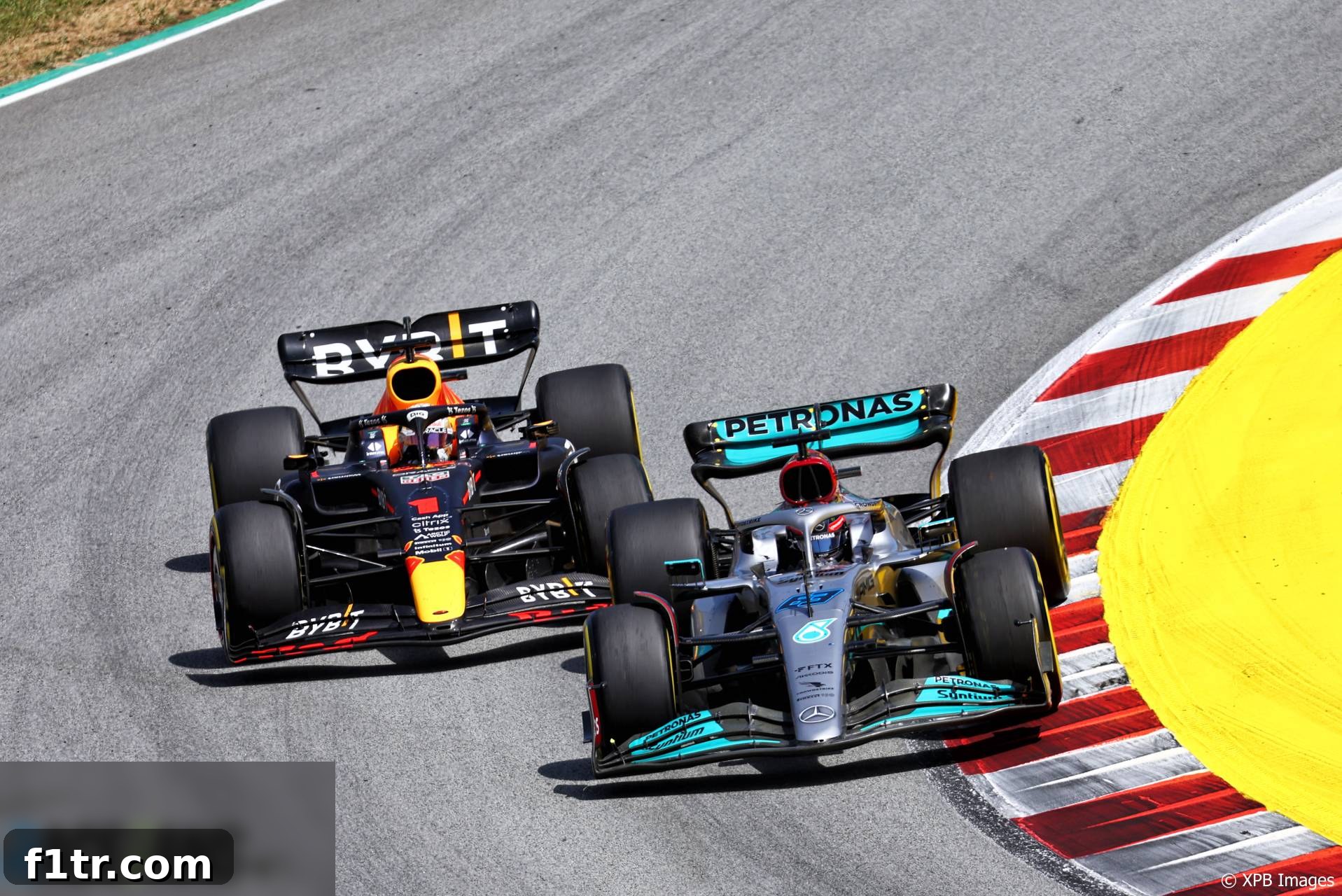
The exhilarating world of Formula 1 consistently pushes the boundaries of engineering, often forcing teams to make difficult trade-offs between sheer performance and unwavering reliability. This delicate balance was starkly illustrated during the 2022 Spanish Grand Prix weekend, where Red Bull Racing achieved a pivotal victory with Max Verstappen, yet found themselves grappling with critical technical issues. Team Principal Christian Horner candidly admitted that Red Bull might have pushed the envelope too far in its relentless quest to shave off precious grams from their RB18 challenger, directly attributing the Drag Reduction System (DRS) malfunction suffered by Verstappen to this aggressive weight reduction strategy.
The DRS malfunction cast a significant shadow over an otherwise triumphant weekend for the reigning World Champion. The problem first reared its head during the crucial qualifying session, disrupting Verstappen’s final, decisive lap and denying him a genuine opportunity to challenge Charles Leclerc for pole position. While the Red Bull mechanics worked tirelessly overnight to implement a fix, the issue proved resilient, recurring intermittently throughout the intensity of Sunday’s race. This persistent technical glitch underscored the fine line F1 teams walk, where even the smallest engineering gamble can have profound implications on race outcomes and championship aspirations.
Christian Horner, reflecting on the weekend’s challenges, articulated the team’s ongoing analysis into the root cause of the problem. “Obviously it needs further analysis,” he stated, emphasizing the continuous pursuit of every ounce of performance. “Of course, we’re chasing every ounce of performance, and weight is a factor as well. Maybe we’ve been too ambitious there.” This admission highlights the extreme pressures in Formula 1 to optimize every component. He further elaborated on the team’s efforts to rectify the issue, acknowledging the limitations encountered: “But I think we need to understand exactly what the issue is. We thought we had a fix, but unfortunately, it didn’t prove to be a reliable fix for the whole of the race.” The pursuit of lightness is a constant in F1 design, with engineers meticulously scrutinizing every part of the car, from the chassis to the smallest aerodynamic appendages, for weight reduction opportunities. However, as Red Bull discovered, pushing these limits can sometimes introduce unforeseen vulnerabilities, compromising the very reliability that is crucial for championship success.
The Drag Reduction System, a crucial aerodynamic aid designed to facilitate overtaking, becomes a potent weapon on the straights. When activated within designated zones, it opens a flap on the rear wing, significantly reducing drag and allowing the car to gain speed. For Max Verstappen, the intermittent failure of his DRS during the Spanish Grand Prix was a constant source of frustration and a significant performance impediment. Throughout the race, the Red Bull pit wall attempted various solutions, including advising Verstappen via team radio to adjust his activation timing, specifically to press the DRS button only after clearing the exit kerb at the final corner. This real-time troubleshooting exemplifies the dynamic and often improvised nature of problem-solving during a Grand Prix.
From the cockpit, Verstappen’s exasperation was palpable. Despite following team instructions and employing numerous personal strategies, he found himself locked in a relentless battle with his own car’s recalcitrant system. “There is nothing you can do because, I mean, I’m not stupid, once you get the light and the activation beep, then you press the paddle. If it doesn’t open, there’s clearly an issue,” Verstappen explained post-race. He described desperate attempts to force the system into action, revealing the intense pressure and split-second decisions drivers must make. “I spammed it like 50 times at one point on the straight and it’s just not opening, so there was clearly an issue. I tried all different kinds of things: Stay off the kerb, on the kerb, open it a tiny bit later but it was just broken, or like malfunctioning. So we clearly have an issue there on this wing.” His comments underscore the complexity of F1 technology and the immediate, debilitating impact of even a minor fault during a competitive race.
Beyond the DRS specific problem, the 2022 Formula 1 season had already presented Red Bull Racing with a concerning pattern of reliability issues. Prior to Spain, the team had endured three race-ending failures related to the power unit, along with additional problems affecting both cars during the Miami Grand Prix. These setbacks, especially in the context of a fiercely competitive championship battle against Charles Leclerc and Ferrari, highlighted a potential vulnerability. The dramatic retirement of Leclerc from the lead of the Spanish Grand Prix due to a power unit issue on his Ferrari only amplified the significance of reliability. Verstappen was quick to emphasize the necessity for Red Bull to minimize further losses stemming from technical faults, recognizing that championship outcomes are often decided not just by raw pace but by consistent performance and reliability.
Despite the inherent challenges, Red Bull’s ability to adapt and ultimately secure a victory in Spain showcased their remarkable resilience and operational flexibility. “It’s just things we can improve, right? That issue with the DRS, of course, was quite costly, but at the end, we still won the race, so as a team we are quite flexible. We adapt quickly if we have issues and we try to work around it, even during the race, so that’s good,” Verstappen commented. This triumph, achieved while overcoming significant technical hurdles, underlined the team’s capacity for rapid problem-solving, even under extreme pressure. The Dutchman further noted the critical distinction of finishing the race, unlike their rivals. “Of course, we’ll try to make sure that doesn’t happen again. But we didn’t retire, which other teams did. So that’s already a good improvement and you can see, it completely swings the championship around again.” This perspective illuminates the brutal reality of Formula 1: merely finishing, especially when competitors falter, can dramatically reshape championship fortunes.
The fluctuating championship battle between Red Bull and Ferrari serves as a compelling narrative for the 2022 season, with reliability emerging as a pivotal factor. Verstappen’s victory in Spain, despite the technical adversity, allowed him to seize the championship lead from Leclerc, transforming the competitive landscape overnight. This emphasizes that in the high-stakes environment of Formula 1, consistency is king. “So from our side, we just have to try and be really consistent and try not to make too many mistakes. I mean, you’re not a robot, mistakes will happen, but we’ll try to minimise it,” Verstappen concluded, encapsulating the team’s ongoing commitment to perfection and the human element in a technologically driven sport.
The episode at the Spanish Grand Prix serves as a powerful reminder of the delicate equilibrium in Formula 1 engineering. The constant push for marginal gains, whether through aerodynamic innovation or weight reduction, inevitably introduces risks. Red Bull’s experience with the DRS malfunction, coupled with their season-long reliability struggles, underscores the immense challenge of designing and operating F1 cars at the absolute limit. As the championship battle intensifies, the team that can best manage these engineering compromises and consistently deliver a reliable, high-performance package will undoubtedly emerge victorious. The lessons learned in Spain will be crucial for Red Bull as they continue their pursuit of another World Championship title, navigating the fine line between ambition and assurance in the pinnacle of motorsport.
2022 Spanish Grand Prix: Further Insights
- Q&A: Kubica ‘shocked’ by ‘completely different’ Alfa Romeo in Spain
- How heat and traffic trouble left F1 fans fuming after the Spanish Grand Prix
- Mercedes not yet certain their porpoising problem has “disappeared”
- Sticking to budget cap “pretty much impossible” due to rising costs – McLaren
- Ricciardo hoping to find an explanation for Spanish GP pace deficit to Norris
Browse all 2022 Spanish Grand Prix articles