Red Bull’s Brazilian Triumph: More Than Just Engine Power
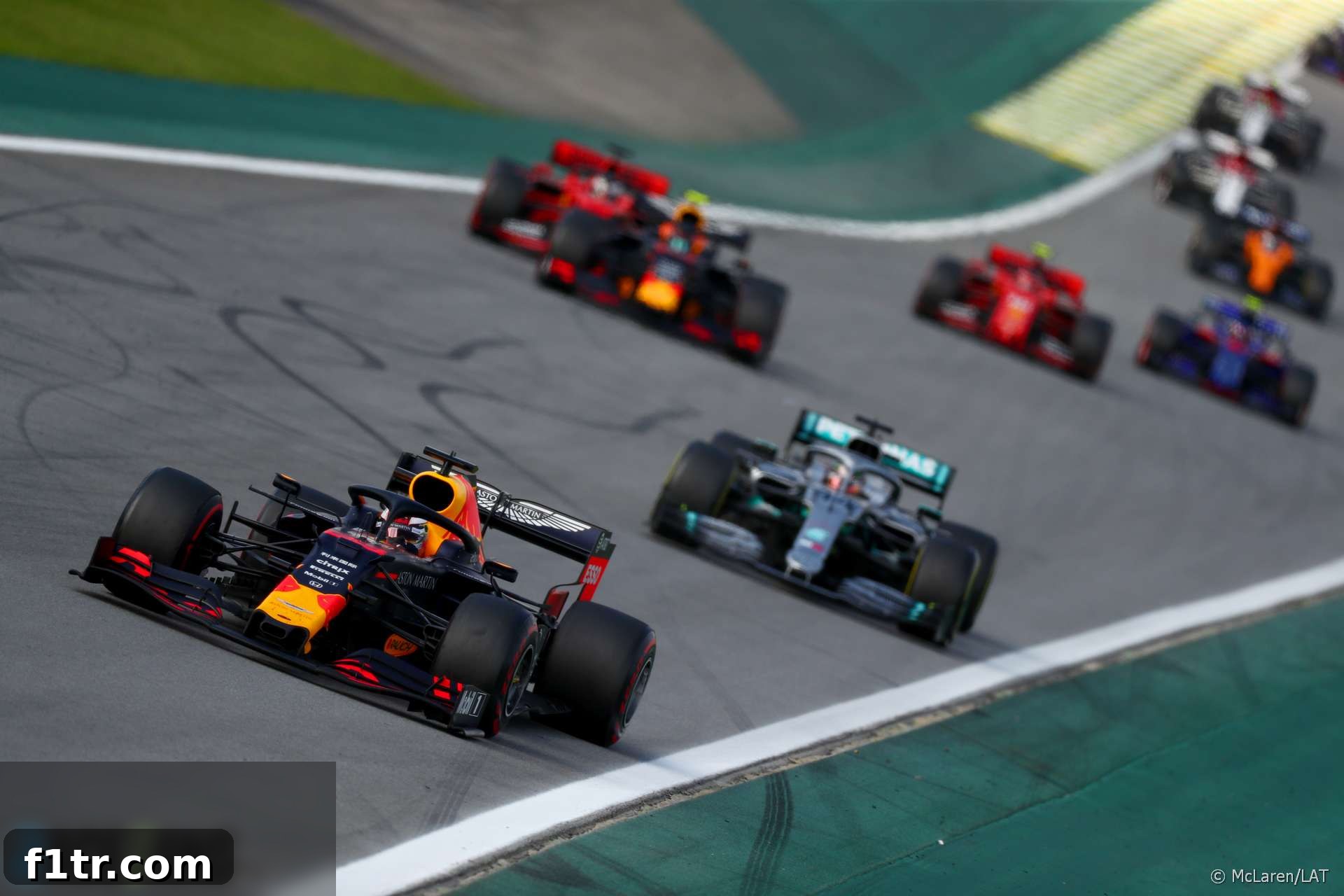
The 2019 Formula 1 season witnessed several pivotal moments, but few sparked as much discussion and re-evaluation of the competitive landscape as Red Bull Racing’s dominant performance at the Brazilian Grand Prix. Securing their first pole position to victory of the season, the team, powered by Honda, showcased a potent blend of speed and precision that left rivals Mercedes and Ferrari scrutinizing their own operations. While the natural inclination was to credit Honda’s impressive power unit development, a deeper analysis by top technical figures suggested Red Bull’s breakthrough extended far beyond mere engine gains, hinting at a masterful optimization of their overall car package.
The Brazilian Breakthrough: A Season-Defining Moment for Red Bull-Honda
Max Verstappen’s commanding win at Interlagos was a testament to the significant progress Red Bull had made throughout their inaugural season with Honda as their engine supplier. The partnership, initially met with skepticism after Honda’s challenging tenure with McLaren, had steadily delivered improvements. Prior to the race weekend, Max Verstappen himself had hinted at untapped potential, claiming the team’s true capabilities had been somewhat masked since the summer break. This victory not only validated Verstappen’s assertion but also underscored Honda’s relentless pursuit of performance and reliability, providing Red Bull with a robust platform to extract maximum potential from their renowned chassis.
The win wasn’t just about raw speed; it was about the synergy between the power unit, aerodynamics, and driver. Interlagos, with its unique blend of long straights and challenging technical sections, demands a finely tuned car capable of excelling in diverse conditions. Red Bull’s ability to dominate across the lap suggested a holistic improvement, rather than a single silver bullet. This success solidified their position as a formidable contender, signalling to the paddock that the Red Bull-Honda alliance was maturing into a genuine title threat, laying crucial groundwork for future seasons.
Engine vs. Chassis: The Expert Debate Unfolds
Following Red Bull’s impressive display, the paddock buzzed with speculation. Was this simply a demonstration of Honda’s ascendancy, or had Red Bull unlocked something more profound in their chassis? Mercedes technical director James Allison, a highly respected figure in Formula 1 engineering, was quick to weigh in, acknowledging the growing threat posed by the Milton Keynes outfit. “They were strong here, like they were strong in Mexico, but didn’t have a chance to show it,” Allison observed, highlighting a consistent underlying pace that had perhaps been overlooked in previous races.
However, Allison was equally firm in his assessment that the newfound strength was not solely attributable to the engine. “No way can you say that strength was all engine,” he added, emphasizing the multifaceted nature of Formula 1 performance. His comments suggested that while Honda’s progress was undeniable, Red Bull’s engineers had clearly found significant gains in other areas, optimizing the entire car package to achieve a level of competitiveness that transcended simple power output. This perspective set the stage for a deeper analysis into the complex interplay between engine performance, aerodynamic efficiency, and mechanical setup.
The evidence supporting Allison’s viewpoint was compelling. Throughout the Brazilian Grand Prix weekend, Red Bull demonstrated exceptional straight-line speed, a characteristic often linked directly to engine power. Yet, a telling incident during the race further complicated the narrative: Lewis Hamilton’s Mercedes, despite its own formidable engine, was famously unable to out-drag Pierre Gasly’s Honda-powered Toro Rosso – Red Bull’s sister team – before the finishing line. This specific instance hinted strongly that the Honda power unit, while undoubtedly powerful, was being complemented by an incredibly efficient aerodynamic package that minimized drag, allowing both Red Bull and Toro Rosso to achieve superior top speeds on the straights, even against the dominant Mercedes.
Ferrari’s Strategic Conundrum: A Different Path
Ferrari team principal Mattia Binotto echoed the sentiment that Red Bull’s gains were not singular but rather a result of broader improvements. Binotto, whose team had often relied on its own engine advantage throughout the season, provided a detailed, analytical perspective. “It’s the same engines they had in the last races,” he stated, referring to Honda’s power units. “They could not have done progress here in Brazil, so I’m not sure that’s the right conclusion.” This argument was crucial: engine upgrades typically occur in phases, and a sudden, dramatic leap in performance without a corresponding new specification would point away from engine-exclusive development.
Instead, Binotto articulated a belief that Red Bull had discovered a “set-up sweet spot,” an optimal configuration that allowed them to achieve greater straight-line speed without compromising their exceptional performance in the corners. This delicate balance is the holy grail for F1 engineers, as maximizing speed on straights often involves reducing downforce, which in turn can hinder cornering grip. Conversely, maximizing cornering grip often means increasing downforce, which creates more drag and reduces straight-line speed. Red Bull’s success suggested they had managed to find an aero configuration that offered the best of both worlds at Interlagos, showcasing their car’s inherent versatility and the team’s ability to fine-tune it for specific track characteristics.
Ferrari, meanwhile, found themselves on a different trajectory. Binotto explained that his team had been moving in the opposite direction, often trading off their superior top speed to find crucial time in the corners. This strategic divergence highlighted the different philosophies and inherent strengths of each car. While Ferrari sought to dominate in high-speed sections and exploit their engine power, Red Bull seemed to have engineered a more balanced approach, allowing them to be competitive across all facets of a lap, which proved particularly effective at circuits like Interlagos and Mexico.
Unpacking Red Bull’s Setup Mastery: Grip vs. Power
Mattia Binotto’s analysis further delved into the intricacies of car performance, discussing the concepts of “grip-limited” and “power-limited” sections of the track. “They were fast around the lap, that were fast on the straight as well, that we need to analyse,” he noted, expressing Ferrari’s intent to understand Red Bull’s sudden surge. He meticulously broke down the comparison: “But if I look our qualifying compared to them, I think we’re almost matching their grip-limited and very close as well on the straight lines, they’re more power-limited. So I think it’s a balance again between aero configuration, what you’re choosing.”
To elaborate, a “grip-limited” corner is one where the car’s speed is primarily determined by its mechanical and aerodynamic grip, meaning the tires’ ability to hold the road and the downforce pushing the car into the track. A “power-limited” section, typically a long straight, is where engine power and aerodynamic drag are the dominant factors. Binotto’s observation that Ferrari was “almost matching their grip-limited” performance suggested that in corners where raw grip was paramount, the Scuderia’s chassis and setup were competitive. However, his comment that Red Bull was “more power-limited” on the straights indicates that Red Bull was able to achieve higher speeds on straights, not just because of raw engine power, but because they had found a way to optimize their aero package to minimize drag without sacrificing too much downforce in the corners.
This nuanced explanation points to Red Bull’s exceptional ability to find an aerodynamic configuration that struck an optimal balance for the Interlagos circuit. By reducing drag more effectively than their rivals, they could leverage Honda’s power more efficiently on the straights. Concurrently, their chassis design and mechanical setup provided sufficient grip in the corners, leading to a formidable overall package. Binotto’s concluding thought succinctly captured the dynamic shift: “It’s the very first time maybe where [we] are so close to them in grip-limited, showing that as car Ferrari are moving a different set-up direction, giving advantage in the cornering. So maybe it’s all relative. If we have gained relative to them in the cornering, they certainly have gained to us in the straights now.” This observation underscored the constant push and pull in Formula 1 development, where gains in one area can lead to relative losses in another, making the pursuit of a perfectly balanced car an enduring challenge for all teams.
Broader Implications and the Road Ahead
Red Bull’s performance in Brazil wasn’t just an isolated victory; it represented a critical turning point that reshaped the competitive narrative towards the end of the 2019 season and ignited anticipation for the following year. It demonstrated that the Red Bull-Honda partnership had truly come of age, transforming from a promising collaboration into a race-winning force capable of challenging the established giants of Mercedes and Ferrari. For Honda, it was a validation of their immense investment and engineering prowess, proving their power unit could compete at the very pinnacle of motorsport.
For Red Bull, it highlighted the brilliance of their design philosophy, spearheaded by Adrian Newey, and their operational excellence in extracting the maximum from their machinery. The ability to find such a potent setup, balancing straight-line speed with cornering performance, underscored their strategic adaptability and profound understanding of vehicle dynamics. This holistic approach to car development, where every component works in perfect harmony, is what ultimately separates the champions from the contenders.
The lessons learned from the Brazilian Grand Prix undoubtedly influenced development directions for all three top teams heading into the winter break. Mercedes and Ferrari were compelled to reassess their own car concepts and setup philosophies, understanding that Red Bull had presented a compelling alternative path to victory. The race served as a powerful reminder that Formula 1 success is never solely about the most powerful engine or the most aerodynamic chassis; it is about the intricate synergy of every element, meticulously optimized and flawlessly executed on track. Red Bull’s Brazilian triumph was a definitive statement: they were back, and they were a complete package.
Related F1 Content
- Crying in the Melbourne car park at 2019 grand prix was my career low – Ocon
- McLaren Racing reports reduced £71 million loss in 2019
- Kvyat: Hockenheim podium last year was “my biggest achievement” so far
- How the FIA’s new encrypted fuel flow meter targets Ferrari’s suspected ‘aliasing’ trick
- “He smashed my office door”: 23 must-see moments from ‘Drive to Survive’ season two
Browse all 2019 F1 season articles