The perennial debate surrounding Formula 1 track limits and their enforcement continues to reverberate through the motorsport world, taking center stage once more at the Emilia-Romagna Grand Prix. This renewed scrutiny follows the contentious events of last month’s Bahrain Grand Prix, where a pivotal off-track overtake for the lead sparked widespread confusion and drew significant criticism. The incident involved two prominent drivers who had already received warnings regarding track limits abuse, highlighting a fundamental disconnect in the application of rules during the race.
Advert | Become a Supporter & go ad-free
The practice of drivers utilizing asphalt run-off areas to gain a marginal advantage in lap time has been a contentious issue in Formula 1 for decades, but its prominence has significantly escalated since the transformative 2017 regulation changes. The introduction of wider cars and larger, more durable tires granted drivers greater handling capabilities over kerbs, paradoxically making track limits violations both easier to execute and more tempting. What was once a natural deterrent – a spin into gravel or grass – has often been replaced by a smooth, forgiving surface, challenging the very definition of “on track.” This shift in track design and car characteristics has forced the FIA to constantly re-evaluate how best to police the boundaries of fair competition while prioritizing driver safety.
At the heart of the Bahrain controversy lay a critical inconsistency in the directives issued by FIA Race Director Michael Masi. His pre-race notes explicitly stated that the exit of Turn 4 would be rigorously policed for lap times during qualifying sessions, but notably, it would *not* be enforced during the race itself. This distinction led to an expectation among drivers that they could exploit the wider line in Turn 4 during the Grand Prix without penalty. However, during the race, both Lewis Hamilton and subsequently Max Verstappen received warnings for gaining a sporting advantage by running wide at precisely that corner. Hamilton, who was admonished for repeatedly exceeding the limits, found himself just one step away from a black-and-white flag, a severe warning for unsporting behavior. This sudden shift in enforcement mid-race ignited the debate, leaving drivers, teams, and fans perplexed about the true boundaries of competition.
The confusion and frustration stemming from Bahrain spilled over into the Thursday press conference preceding the Emilia-Romagna Grand Prix. Drivers were remarkably candid in their assessment, not only of the Bahrain situation but also regarding the broader, ongoing efforts to find viable solutions to the track limits conundrum. Their collective sentiment underscored the urgent need for clarity and consistency in motorsport regulations.
“They were really quite clear in the drivers briefing before the race; they said you can do your bit with the kerb, with the track limits in qualifying, and obviously if somebody gains a clear advantage, then they have to look into it,” commented Grand Prix Drivers’ Association director Sebastian Vettel. His statement perfectly encapsulated the drivers’ understanding that different rules might apply to different sessions, but this understanding was then fundamentally challenged during the race. As Hamilton himself articulated, responding to Vettel, “But then in the race, they said they weren’t policing it,” explaining the palpable surprise and frustration when he received his warning, putting him on the verge of a penalty.
Max Verstappen, who ultimately lost the Bahrain victory to Hamilton amidst this very controversy, was even more direct in his criticism. “It’s either you can go wide, or not,” he declared, cutting straight to the core of the issue: the demand for unequivocal, consistent rules. He further questioned the logic: “But if you know you cannot gain an advantage by doing so, going wide overtaking, why are you allowed to do it on your own? That’s what I think is not correct.” Verstappen’s comments highlighted the inherent competitive disadvantage created when one driver is allowed to run wide without penalty, while another is punished for a similar maneuver, especially in a direct battle for position. He confirmed that the drivers would be addressing this directly with Michael Masi, adding, “We’ll see what comes out of it. I think it was a little bit messy in the race,” a sentiment widely shared across the paddock and by fans.
Previous discussions between drivers and the FIA, extending beyond the standard race weekend briefings, have regrettably yielded limited tangible changes to the fundamental approach to track limits. Vettel, known for his thoughtful contributions to driver safety and sporting integrity, had previously proposed replacing flat asphalt run-off areas with gravel strips or more aggressive deterrents. When asked whether the FIA had provided any feedback on his suggestion for gravel to replace bumps, his reply was a concise, almost resigned, “No.” He elaborated on the persistent nature of the debate: “We’ve talked so much in the last couple of years about run-off areas and solutions and ideas, so I think it came up a couple of times,” indicating a long-standing, unresolved issue within the sport.
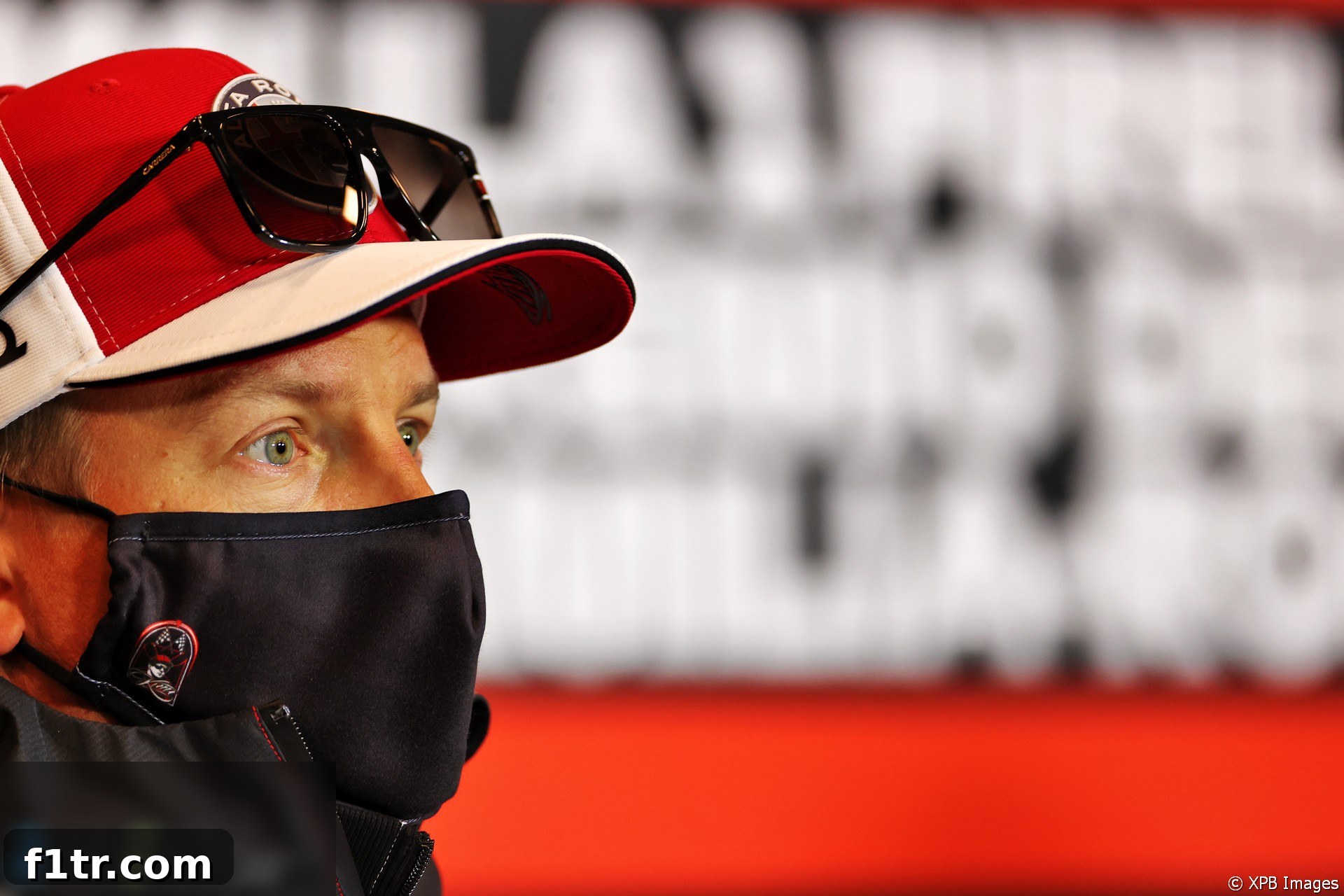
However, his former Ferrari teammate, Kimi Raikkonen, offered a dose of pragmatic skepticism, suggesting that simply adding more detection loops or reverting entirely to gravel might not be the panacea for a problem that extends far beyond Formula 1. Raikkonen’s perspective is particularly pertinent, as many modern circuits are designed to host a multitude of motorsport categories, each with distinct safety requirements and preferred run-off solutions. “It’s been going on for so many years and I don’t see it’s ever going to stop,” Raikkonen observed, acknowledging the inherent complexities. “Yes, if you put grass or sand around the track everywhere, it would be more easy to police and you will lose more when you go off. But then, how it’s been for a long time there are other cars and bikes that are using the tracks.” This highlights a critical constraint: solutions for F1 must often be compatible with the needs of MotoGP, touring cars, and other series, preventing a one-size-fits-all approach. He concluded, somewhat controversially, that despite the post-race “big story,” for him, the rules in Bahrain were clear: “I don’t think there was anything that I didn’t understand. It was a big story afterwards, but we all knew what we can do or not.”
Learning from the Bahrain experience, the FIA implemented a more unified and rigorous approach for the Imola weekend. The race director’s notes for the Emilia-Romagna Grand Prix explicitly stated that track limits would be policed in precisely the same manner across every single session, from practice to qualifying and the race. This commitment to consistency aimed to eliminate any ambiguity for drivers. Furthermore, specific locations prone to track limits abuse were clearly identified for enforcement: the exit of Piratella (Turn 9), the apex of the Turn 13 left-hander, and the exit of the Variante Alta (Turns 14 and 15). To further deter drivers from exceeding these boundaries, the run-off areas at Turn 13 and Variante Alta had been revised to incorporate more aggressive “sausage” kerbs or bumps. These physical deterrents are designed to provide an immediate and tangible penalty for running wide, making it less appealing to push beyond the track limits and reinforcing the importance of staying within the white lines.
The FIA’s proactive measures at Imola represented a clear attempt to address the drivers’ demands for clarity and consistency. While the track limits debate is likely to remain a feature of modern Formula 1, given the evolution of circuit design and car performance, the efforts to establish clear and consistent regulations are vital for maintaining the integrity and fairness of the sport. The challenge lies in balancing exciting, close-quarters racing with strict adherence to sporting rules, ensuring that competitive advantage is gained through skill and precision, not by exploiting track boundaries. The Emila-Romagna Grand Prix served as a crucial test for these revised enforcement strategies, with the hope that it would bring greater predictability and fewer controversies, allowing the focus to return to the pure racing spectacle.
Advert | Become a RaceFans supporter andgo ad-free
2021 Emilia-Romagna Grand Prix Insights
Delve deeper into the events and outcomes of the 2021 Emilia-Romagna Grand Prix with our comprehensive coverage:
- Poor Imola pace was “100% tyres”, says Bottas
- Bottas says Imola crash is “history” after reading Russell’s apology
- ‘Lewis and Valtteri are team mates to me as Nicholas is’ says Russell after ‘private’ Wolff talks
- ‘Hamilton didn’t break the rules by reversing’ shouldn’t be a story
- 2021 Emilia-Romagna Grand Prix Star Performers
Browse all 2021 Emilia-Romagna Grand Prix articles