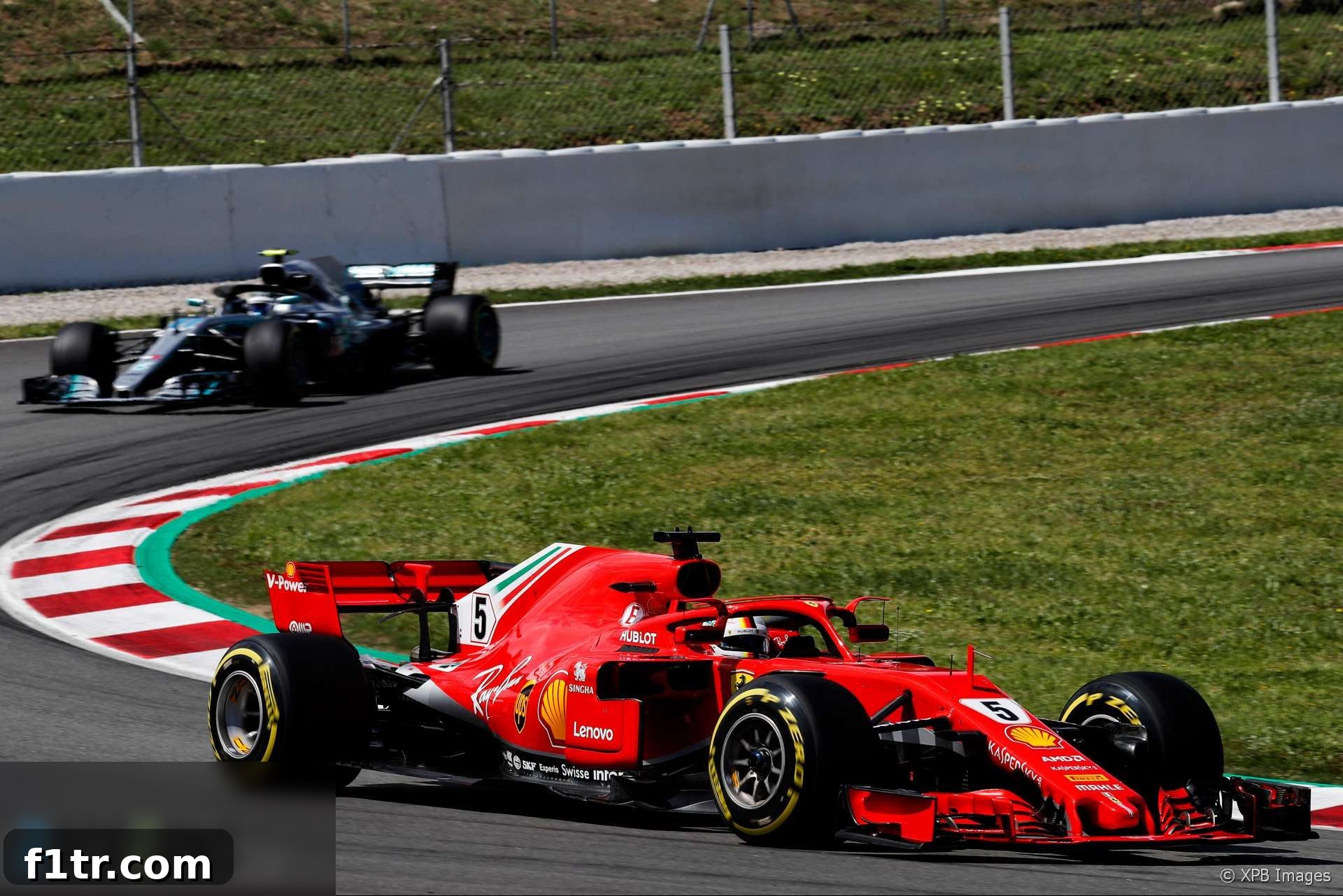
In the high-stakes world of Formula 1, where every fraction of a second can dictate the outcome of a race, the Virtual Safety Car (VSC) system plays a crucial role in maintaining competitive integrity while prioritizing driver safety. However, following the Spanish Grand Prix, four-time world champion Sebastian Vettel ignited a significant debate by openly criticizing the VSC implementation, labeling it “poor” and suggesting it contained inherent loopholes that could be exploited for performance gain. This pointed critique from a driver of Vettel’s caliber immediately brought the efficacy and fairness of the VSC regulations under intense scrutiny, prompting a detailed response from FIA Race Director Charlie Whiting.
The Virtual Safety Car system was introduced in Formula 1 to neutralize race conditions during incidents that do not warrant a full Safety Car deployment, thereby minimizing the competitive disadvantage for drivers who might have to pit under specific circumstances. When activated, the VSC mandates that all drivers slow down to a predetermined delta time, which is typically 30% slower than a normal racing lap. This system aims to freeze the gaps between cars, preventing significant gains or losses while marshals safely deal with trackside incidents. Drivers are expected to adhere strictly to this delta time, with continuous monitoring ensuring compliance across the entire circuit. The core principle is to provide a standardized, safe pace for all competitors.
Vettel’s concerns stemmed from a specific incident during the Spanish Grand Prix where he narrowly lost a position to Max Verstappen after making a pit stop during a VSC period. While acknowledging his own error in the pit lane contributed to the time loss – admitting he came in “a little bit hot and overshot the position,” forcing his mechanics to “reshuffle” and costing valuable seconds – his primary grievance was with the fundamental design of the VSC software. Vettel argued that the system, as it stands, presents a “loophole” that allows drivers to minimize their lap time lost under VSC conditions by consciously driving “unusual lines” around the track. His contention was that despite the delta time mandate, drivers could strategically manipulate their trajectory to achieve a faster overall passage through the VSC zone without technically exceeding the delta at the checkpoints.
“The FIA is supplying us with a system that makes us follow a delta time, and everybody has to slow down,” Vettel explained at the time. “But I think everybody’s aware that you can have a faster way to go under Virtual Safety Car than just follow the delta by saving distance. So I think we should have a system that hasn’t got this loop or this hole because it forces us to drive ridiculous lines around the track. Everybody’s doing it, I don’t think it’s a secret. Our sport should be in a better shape than supplying software that’s too poor and allows us to find some extra performance that way.” This impassioned plea underscored his belief that the current system undermined the spirit of fair competition and compelled drivers into potentially unsafe or “ridiculous” maneuvers in pursuit of marginal gains, thereby reflecting poorly on the sport’s technological integrity.
In response to Vettel’s criticisms, FIA Race Director Charlie Whiting offered a detailed technical explanation of the VSC’s operational mechanics, firmly asserting that the system is robust and designed to prevent such exploitation. Whiting clarified that the VSC measures each driver’s progress against the target delta time “every 50 meters of travel along the track.” This highly granular monitoring, he explained, compares the car’s real-time position against its theoretical reference lap, providing a continuous “plus or minus” reading. While drivers are indeed “allowed to go negative [quicker]” during certain segments, they must ensure they are “positive once in each marshalling sector and at the Safety Car line.” This structured approach, according to Whiting, is crucial for maintaining compliance throughout the VSC period.
Whiting expressed skepticism about the feasibility of gaining significant time by driving unusual lines. “Given that the racing line is the optimal one, normally the shortest distance, one would think it’s a little difficult,” he remarked. His reasoning suggested that deviating from the optimal racing line inherently involves covering a longer distance, which would naturally consume more time, making any perceived advantage from manipulating lines “absolutely minimal” due to the strict 50-meter measurement intervals. He acknowledged Vettel’s observation, stating, “I can sort of see what he’s saying but… if they have evidence of this, we’ll obviously have a look at that and see if it can be manipulated. But from what we can see over the course of a lap and a half, or whatever it was, as long as they’re zero at the VSC ending point then I don’t think any advantage can be gained.” This indicated the FIA’s confidence in the current system but also their openness to reviewing concrete evidence of exploitation.
Despite his defense of the VSC’s ability to counter “unusual lines” exploitation, Whiting did concede that another area of the VSC rules could indeed be exploited by teams and drivers – specifically, the pit entry and exit during a VSC period. “Where the advantage can be gained, as we’ve found out, is coming into the pits and going out,” Whiting admitted. This particular loophole has been a known factor in race strategy for some time, allowing drivers to potentially gain a significant advantage by timing their pit stops precisely during a VSC. The ability to maintain a relatively higher speed on the approach to the pit lane, or to accelerate more aggressively upon exit before fully rejoining the VSC-controlled track, has presented a strategic window for teams to undercut rivals or minimize time loss during a stop.
Recognizing this specific strategic advantage, the FIA was already actively working on a solution. Whiting outlined their plan to address this: “What we’re looking at now is to also use the SC1 line, SC2 line and the timing line as mini-sectors so as to minimize any advantage a driver might be able to get.” By dividing the pit entry and exit zones into even smaller, more precisely monitored segments, the FIA aims to enforce the delta time more rigorously in these critical areas. This refinement would drastically reduce the opportunity for drivers to gain time through aggressive pit entries or exits, thereby leveling the playing field and ensuring that pit stops under VSC conditions are truly neutral in their impact on race positions. This proactive measure highlights the FIA’s continuous commitment to refining regulations and closing any avenues for unfair advantage in the pursuit of the fairest possible racing environment.
The debate surrounding the Virtual Safety Car system underscores the perennial challenge in Formula 1: balancing driver safety with the competitive nature of the sport. Every regulation, especially one designed to neutralize race conditions, inadvertently creates new strategic dilemmas and potential loopholes that resourceful teams and drivers will inevitably explore. Vettel’s outspoken criticism, while partly influenced by his personal race outcome, served as a crucial catalyst for further discussions on refining these rules. It brought to light the fine line between driver ingenuity in exploiting the rulebook and maintaining the integrity and fairness of the competition. The FIA’s willingness to investigate and implement changes, particularly concerning the pit lane advantage, reflects an adaptive approach to governance, constantly striving to ensure that the sport remains both safe and exciting without compromising its core values of fair play.
Ultimately, the effectiveness of the Virtual Safety Car system, and indeed all F1 regulations, hinges on their clarity, enforceability, and ability to withstand the intense strategic scrutiny of the world’s best racing teams. While the FIA remains confident in the VSC’s fundamental design, the dialogue initiated by drivers like Sebastian Vettel is vital for the continuous evolution of the sport’s rulebook, ensuring it remains robust, equitable, and capable of adapting to the ever-increasing demands of Formula 1 racing.
2018 F1 season
- F1 feared “death knell” for Drive to Survive after Ferrari and Mercedes snub
- McLaren staff told us we were “totally crazy” to take Honda engines in 2018 – Tost
- ‘It doesn’t matter if we start last’: How Red Bull’s junior team aided Honda’s leap forward
- Honda’s jet division helped F1 engineers solve power unit problem
- McLaren Racing losses rise after Honda split
Browse all 2018 F1 season articles