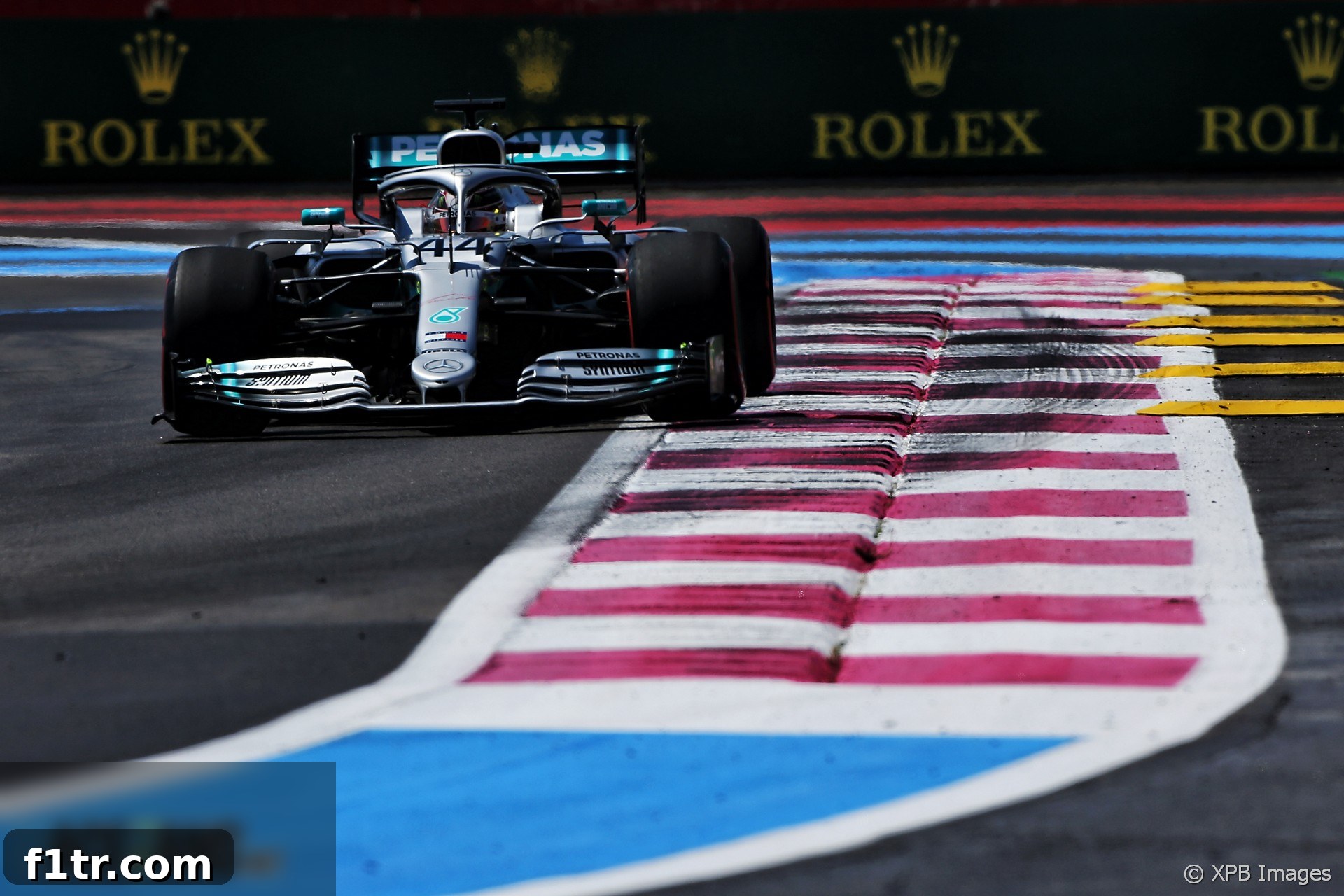
In a display of unparalleled skill and resilience, Formula 1 ace Lewis Hamilton defied challenging weather conditions to clinch a sensational pole position, further cementing his status at the pinnacle of motorsport. The Mercedes-AMG Petronas F1 Team revealed that Hamilton’s already formidable lap could have been even quicker, had he not been buffeted by an unexpected gust of wind in the closing moments of his qualifying run. This incident, while costing him valuable time, ultimately underscored the sheer brilliance of his performance and the dominant pace of his Mercedes W10.
Lewis Hamilton Dominates Qualifying Despite Fierce Wind Challenges
The qualifying session for the upcoming Grand Prix was a tense affair, with drivers battling not only each other but also the fickle elements. Hamilton’s final flying lap in Q3 was a masterclass in car control and precision, a testament to his decades of experience and innate talent. However, the closing meters of what promised to be an even more staggering lap saw him contend with a significant natural impediment. Andrew Shovlin, Mercedes’ trackside engineering director, detailed the extent of this challenge, explaining that a sudden blast of wind in the final sector alone cost Hamilton a substantial four-tenths of a second. This revelation casts his pole-winning effort in an even more impressive light, showcasing a performance that bordered on perfection despite external interference.
The Impact of Unseen Forces: How Wind Shaped Hamilton’s Pole Lap
“A gust of wind cost him four tenths to himself in the last couple of corners,” stated Shovlin, highlighting the fine margins that define success in Formula 1. For context, four-tenths of a second is an eternity in the world of F1 qualifying, often the difference between pole position and several grid places down. The fact that Hamilton managed to secure pole by a comfortable margin even after such a significant time loss speaks volumes about the quality of his lap leading up to that point. It signifies not only the raw pace he extracted from his car but also his ability to push the boundaries consistently, even when conditions are far from ideal. This incident provides a fascinating glimpse into the dynamic challenges drivers face, where split-second reactions to unseen forces can dramatically alter outcomes. The technical analysis by the team allows us to appreciate the true potential of that lap, which was on track to be one of his most dominant of the season.
Mercedes’ Unyielding Dominance: A Closer Look at the Performance Gap
Hamilton’s exceptional performance saw him outpace his talented teammate, Valtteri Bottas, by a decisive 0.286 seconds. This internal team battle often provides the clearest indication of the car’s ultimate performance, and Hamilton’s consistent edge over Bottas in qualifying had been a recurring theme throughout the season. Beyond the intra-team rivalry, the gap to the closest non-Mercedes competitor, Charles Leclerc’s Ferrari, was even more stark. Leclerc finished a considerable 0.646 seconds slower than Hamilton, a chasm in F1 terms that underlines the formidable advantage Mercedes held over the rest of the field. This significant margin over Ferrari and other teams wasn’t just a testament to Hamilton’s driving, but also to the engineering prowess of the Mercedes team, who consistently delivered a package capable of extracting maximum performance in diverse conditions. Such a gap on the grid often translates into a strategic advantage on race day, offering the leading Mercedes cars more freedom in their race management.
Mastering the Elements: Hamilton’s Skill and Adaptability
Recounting his experience from the cockpit, Hamilton himself confirmed the tumultuous nature of his final run. “I was up nearly half a second on my final run, but I lost it in the second-to-last corner,” he explained, providing a driver’s perspective on the immense pressure and the critical fine margins. He further elaborated on the meteorological challenges: “The wind has been picking up and it’s quite gusty around the track, so you have to be quite dynamic with how you attack the lap.” This statement highlights the intricate relationship between driver and machine, where an F1 car, with its sophisticated aerodynamics, becomes highly susceptible to even slight changes in wind direction and strength. Drivers must constantly adjust their inputs – steering, throttle, and brake – to counteract these forces, making each lap a unique dance with the elements. Hamilton’s profound understanding of his car’s behaviour and his exceptional feel for grip allow him to push these boundaries, even when conditions are fluctuating wildly.
The ability to adapt instantly is a hallmark of truly great drivers. Hamilton articulated this delicate balance: “There are certain points at which you can attack and there are others where you kind of have to give way a little bit to the wind.” This strategic approach to lap execution, understanding where to be aggressive and where to exercise caution, is crucial for optimizing performance in challenging conditions. His candid admission, “I took a little bit too much into that last corner and the gust just took the back end,” perfectly illustrates the razor-thin line between ultimate aggression and overstepping the mark in pursuit of a perfect lap. Yet, even with this momentary loss of control and the resulting time penalty, Hamilton’s sheer pace ensured he remained at the forefront. “But nonetheless I still was up, which was a good thing,” he concluded, a reflection of his relentless pursuit of perfection and his ability to recover from minor setbacks without compromising the ultimate goal.
Behind the Scenes at Mercedes: Strategy, Setup, and Tyre Choices
From the team’s perspective, Andrew Shovlin described the qualifying session as “straightforward” for Mercedes, an assessment that belies the inherent complexities of preparing and executing a pole-winning performance in Formula 1. This term, coming from a leading engineering director, suggests a high degree of confidence in their car’s setup and the team’s strategic planning. It also underscores the efficiency with which they managed to secure their sixth pole position of the season, a remarkable achievement that speaks volumes about their consistency and dominance throughout the year. The meticulous preparation and execution of their plan allowed them to navigate the session without major hitches, freeing their drivers to focus purely on performance.
Shovlin further detailed the preparatory work: “The car has been good to work with today, the changes overnight seemed to help the balance and the bulk of the work this morning was understanding how to get the most out of the tyres on a single lap.” This insight reveals the continuous cycle of development and refinement that characterizes a top-tier F1 team. Minor adjustments to car setup overnight, based on Friday’s practice data, can yield significant performance gains. Moreover, optimizing tyre performance for a single qualifying lap is an art form, requiring drivers and engineers to work in tandem to ensure the tyres are in their optimal operating window for maximum grip and speed. The success of these adjustments was evident in the W10’s balanced performance and Hamilton’s ability to extract blistering pace from it. This iterative process of learning, adapting, and refining is a cornerstone of Mercedes’ enduring success.
A critical strategic element for Mercedes was their choice of tyre compound for the start of the race. “We wanted to start the race on the mediums, so had to get through the second qualifying session on that compound,” Shovlin explained. This strategy is crucial because the tyres used to set the fastest time in Q2 are the ones drivers must start the race on (for those who make it to Q3). The medium compound typically offers a good balance of durability and performance, allowing for longer first stints and more strategic flexibility compared to the softer compounds. Committing to the mediums in Q2 is a high-stakes gamble; if a driver fails to progress to Q3 on them, they lose both the strategic advantage and a better grid slot. Mercedes’ confidence in their car’s pace allowed them to execute this strategy effectively, giving them a strong foundation for race day.
Interestingly, the decision to start on mediums was a more common choice among the front-runners than anticipated. “As it happened, more teams than ever were successful in doing this, but it’s no bad thing that the cars around us will be starting the race on the same rubber,” Shovlin observed. While Mercedes initially might have hoped to be one of the few front-running teams starting on mediums, the widespread adoption of this strategy among competitors implies a more level playing field at the race start in terms of tyre degradation and initial pace. This could lead to a more competitive opening stint, as fewer cars will be on significantly different strategies. However, it also means Mercedes won’t lose out on a tyre advantage to their immediate rivals, allowing them to focus on race craft and maintaining their track position without being immediately vulnerable to alternative tyre gambits. The uniformity in tyre choice among the top teams sets the stage for a race where driver skill, car reliability, and precise pit stop execution will be paramount.
Looking Ahead: The Race Day Dynamic
Securing pole position is undoubtedly a significant advantage, particularly on circuits where overtaking is challenging. Hamilton’s ability to navigate the blustery conditions and still claim the top spot reflects his extraordinary talent and the robust performance of the Mercedes W10. With both Mercedes cars starting on the medium compound tyres, alongside many of their rivals, the opening phase of the race promises to be a fascinating strategic battle. Maintaining track position will be critical, especially in the first few corners, and Hamilton’s experience in managing races from the front will be invaluable. The team’s decision to prioritize the mediums suggests a focus on a potentially longer first stint and greater flexibility in managing tyre wear, which could be a decisive factor over the full race distance. All eyes will be on Hamilton to see if he can convert this hard-earned pole into another victory, further extending his championship lead and reinforcing Mercedes’ dominance in the 2019 season.
Further Insights from the 2019 F1 Season
The 2019 Formula 1 season was a period marked by intense competition, strategic depth, and memorable performances, with Lewis Hamilton and Mercedes often at the forefront. His qualifying performance, overcoming adverse conditions and maintaining a significant gap to the rest of the field, was a microcosm of the team’s overall superiority that year. Understanding such moments requires a broader view of the season’s narratives, from driver challenges to team financial reports and rule changes. For those keen to delve deeper into the events and stories that shaped this thrilling championship year, explore the following related articles:
- Crying in the Melbourne car park at 2019 grand prix was my career low – Ocon
- McLaren Racing reports reduced £71 million loss in 2019
- Kvyat: Hockenheim podium last year was “my biggest achievement” so far
- How the FIA’s new encrypted fuel flow meter targets Ferrari’s suspected ‘aliasing’ trick
- “He smashed my office door”: 23 must-see moments from ‘Drive to Survive’ season two
Browse all 2019 F1 season articles
Lewis Hamilton’s remarkable qualifying performance serves as a powerful reminder of the intricate blend of human skill, engineering excellence, and strategic acumen required to succeed in Formula 1. Despite a momentary battle with the elements, his ability to secure pole by a significant margin underscores his enduring class and Mercedes’ relentless pursuit of perfection. As the grid prepares for the main event, all signs point to another enthralling chapter in the ongoing narrative of the 2019 F1 season, with Hamilton once again leading the charge from the front.