Formula 1 Insights: Latifi’s Ascent, NFT Innovations, and Global Expansion
The world of Formula 1 is a constant whirlwind of driver developments, technological innovations, and strategic business moves. From rising star performances on the track to groundbreaking digital ventures off it, and the ever-present buzz of expansion, F1 continues to captivate a global audience. This comprehensive roundup delves into the latest happenings, offering a closer look at the key stories shaping the sport.
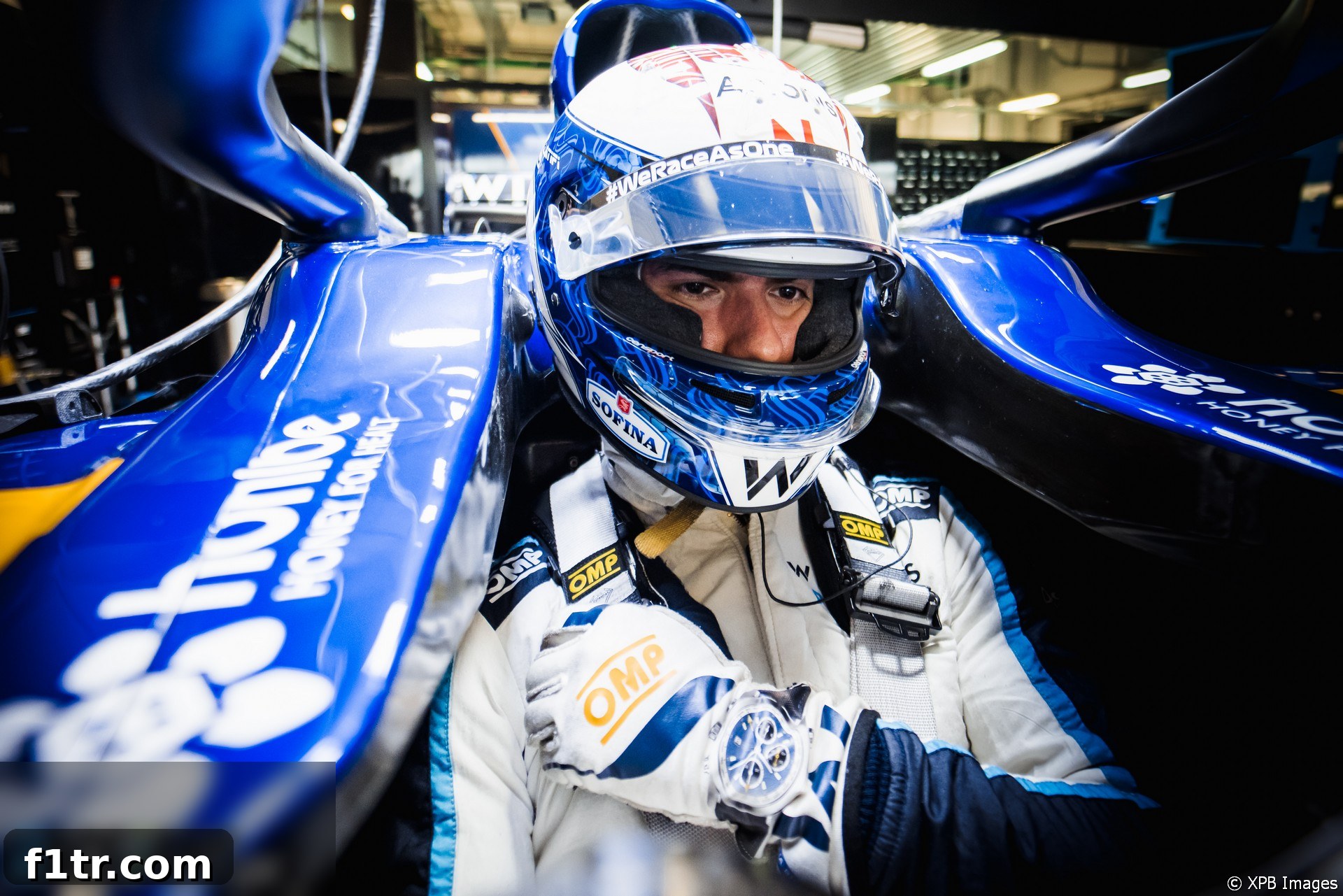
Nicholas Latifi’s Growing Stature at Williams F1
Nicholas Latifi is carving out a more significant presence in his second Formula 1 season, benefiting not only from invaluable experience but also from a notably improved car beneath him, as affirmed by his team. His journey through the junior categories into F1 was a testament to his dedication, and his initial year at Williams provided a steep learning curve typical of a rookie.
Latifi Thriving with an Enhanced Williams Chassis
Become a Supporter & go ad-free
Williams’ head of vehicle performance, Dave Robson, has openly praised Latifi’s considerable progress. Robson points to two crucial factors: experience and a superior car. “There’s little substitute for experience,” Robson stated, highlighting the cumulative knowledge gained through each race weekend, qualifying session, and strategic decision. This accumulated wisdom allows drivers to refine their race craft, better understand tire management, and extract more performance from the car under varying conditions. Latifi, now in his sophomore year, is clearly demonstrating the fruits of this experience.
Beyond individual growth, Robson also emphasized the importance of team cohesion. “He’s got a good group of people around him and they’ve really started to gel and work really well together, which has probably taken a little bit of time as it always would.” The synergy between a driver and their engineering team, mechanics, and strategists is paramount in Formula 1. A well-bonded team can react faster, communicate more effectively, and tailor the car setup more precisely to the driver’s preferences, thereby unlocking greater potential.
Crucially, the significant improvement in the Williams chassis itself cannot be overstated. Robson noted, “And actually, this car now is so much better than it was 12 months ago, that gives him an opportunity, I think.” A more competitive car allows a driver to push closer to the limits, explore different racing lines, and genuinely fight for positions, rather than merely attempting to manage a difficult machine. This improved platform provides Latifi with the tools necessary to showcase his true capabilities and challenge his rivals more consistently.
While Latifi has seldom outperformed his highly-rated teammate, George Russell – a driver widely tipped for future stardom – Robson maintains that Latifi compares favorably. “He’s been extremely good for the last six, seven, eight races,” said Robson. “He’s been strong and he’s been pushing George very hard.” This assessment indicates that Latifi’s underlying pace and race performances are strong, even if the headline results don’t always reflect it.
However, Latifi has faced a streak of bad luck in recent races. Robson explained, “Every weekend there’s been something different, that’s really just been a little bit unfortunate. So he hasn’t been able to bring it all together yet and show what he really can do relative to George. But I think that is only a matter of time.” Motorsport can be cruel, with factors like ill-timed safety cars, mechanical glitches, or unavoidable on-track incidents often masking a driver’s genuine performance. These misfortunes have prevented Latifi from converting his improved pace and experience into tangible results, but the team remains confident that his breakthrough is imminent.
No F1 Comeback for Flavio Briatore: A “New Chapter” Revealed as a Joke
Rumors of a dramatic return to Formula 1 for controversial former team principal Flavio Briatore were swiftly dispelled, much to the relief of some and the disappointment of others. A social media post featuring F1 CEO Stefano Domenicali alongside Briatore, teasing “a brand new chapter” for the championship, had ignited speculation across the motorsport world. However, RaceFans understands that the video, in which Briatore declared F1 would see “new energy, new power, new excitement,” was merely intended as a joke.
Flavio Briatore is one of Formula 1’s most flamboyant and polarizing figures, known for his instrumental roles in leading Benetton and Renault to multiple world championships with iconic drivers like Michael Schumacher and Fernando Alonso. His career in F1, however, came to an abrupt and ignominious end following the “Crashgate” scandal at the 2008 Singapore Grand Prix. This incident involved allegations that Nelson Piquet Jr. had been ordered to intentionally crash his car to benefit his teammate, Fernando Alonso. The scandal rocked the sport and ultimately led to Briatore’s departure and a ban from FIA-sanctioned events, though this ban was later overturned.
Given Briatore’s colorful past and the nature of his departure, any hint of his return immediately grabs headlines. The “joke” video, despite its lighthearted intent, underscored the perpetual fascination with his character and his potential influence on the sport. Stefano Domenicali, as the current CEO of Formula 1, is tasked with steering the sport into a new era of growth and stability. His appearance alongside Briatore, even in jest, highlights the delicate balance between acknowledging F1’s rich history and upholding its modern values and integrity.
While Briatore’s official return to a leadership role in F1 seems highly improbable, his presence on the periphery and the occasional social media appearance continue to generate buzz. It serves as a reminder that the world of Formula 1 is not just about the racing; it’s also a vibrant theatre of personalities, power dynamics, and an enduring legacy of unforgettable moments and controversies.
Pierre Gasly Leads F1 into the NFT Digital Frontier
In a groundbreaking move for Formula 1, Pierre Gasly has become the first F1 driver to launch his own series of non-fungible tokens (NFTs) for sale. This venture marks a significant step for the sport into the burgeoning world of digital collectibles, blending high-octane racing with cutting-edge blockchain technology.
NFTs are unique digital assets, verifiable on a blockchain, that represent ownership of a specific item or piece of content. Unlike cryptocurrencies, which are fungible (meaning each unit is interchangeable, like a dollar bill), each NFT is distinct and cannot be replaced by another. These digital items, ranging from art and music to virtual real estate and sports memorabilia, are exchanged using cryptocurrency, primarily Ethereum.
Gasly’s foray into NFTs offers fans unprecedented opportunities to own a piece of his career. The AlphaTauri driver’s NFT collection includes tokens that can be redeemed for highly coveted physical items, such as a race-used helmet – a truly unique piece of motorsport history. Furthermore, some NFTs offer exclusive experiences, including opportunities to meet Gasly in person. The auction, which begins today, features some NFTs with starting prices exceeding $6,000 (£4,350), reflecting the perceived value of these digital assets and the experiences they unlock.
However, the rapid rise of NFTs and cryptocurrencies has not been without its critics. A significant concern revolves around the environmental impact of processing cryptocurrency transactions. The “mining” of cryptocurrencies, particularly Proof-of-Work systems like Bitcoin and Ethereum (though Ethereum is moving to Proof-of-Stake), consumes substantial amounts of energy, often from fossil fuel sources. This energy consumption clashes with the increasingly prominent environmental responsibility initiatives being adopted by sports, including Formula 1, which aims to be Net Zero Carbon by 2030.
This environmental debate raises important questions for F1 as it embraces new technologies and sponsorship opportunities. The linked article, “Is cryptocurrency sponsorship too dirty for the greener image F1 wants to cultivate?,” perfectly encapsulates this dilemma. As more drivers, teams, and the sport itself explore partnerships with crypto and NFT platforms, they will need to carefully navigate the balance between commercial innovation and their commitment to sustainability. Gasly’s venture, while pioneering, is likely just the beginning of F1’s journey into this complex and rapidly evolving digital landscape, forcing a necessary conversation about the future of digital assets in a sport striving for a greener image.
F1’s Expanding Horizons: US Presence, Driver Debuts, and Social Media Buzz
Formula 1 is experiencing an unprecedented surge in popularity, particularly in the United States, driving ambitious expansion plans and generating a vibrant social media ecosystem. The sport’s growing footprint in North America is a key strategic focus, alongside fascinating developments involving driver talent and a diverse range of fan engagement.
The Allure of America: Vegas Rumors and COTA Buzz
The prospect of additional US races beyond the established Circuit of the Americas (COTA) and the upcoming Miami Grand Prix continues to fuel excitement. Whispers from the social media sphere suggest a group from Las Vegas is actively exploring the idea of bringing an F1 race to the iconic Strip as early as 2023. Such a race would be a monumental event, combining the glitz and glamour of Vegas with the high-octane drama of Formula 1, further solidifying F1’s presence in a crucial market.
This is big!!! A group from Vegas is heading to Austin, Texas this weekend to explore the idea of bringing an @F1 race to Vegas as early as 2023. That’s big time racing #Formula1 near or on the strip. Wow!! More details coming #8NN pic.twitter.com/WZ44nI69Iw
— Chris Maathuis (@sports8) October 18, 2021
This expansion aligns perfectly with F1 CEO Stefano Domenicali’s vision for the sport. As highlighted in a CBS interview, Domenicali believes “Space is the limit” for Formula 1’s expansion, particularly in American cities. While he noted it was “unfair” to attribute all credit to Netflix’s “Drive to Survive” docuseries, he acknowledged the show gave the sport “a big boost” among younger viewers, fueling interest and paving the way for new opportunities.
American Talent and Unexpected Connections
Adding to the US-centric buzz, there are strong indications of an IndyCar talent potentially stepping into an F1 car for a practice session. Reports suggest Andretti Autosport has been actively trying to secure a car for @coltonherta to run in first practice at COTA. Such a move would be highly significant, offering a rare glimpse of an American star in a contemporary F1 machine and potentially opening a pathway for future American F1 drivers.
#F1 #IndyCar: Multiple people have told me over several days that Andretti has tried to get a car for @coltonherta to run in first practice at COTA on Friday.
As of the typing of this tweet, no deal has been done and Andretti camp has declined to comment.
— Jenna Fryer (@JennaFryer) October 19, 2021
Beyond the track, the F1 community’s social media channels offer a glimpse into the diverse personalities and history intertwined with the sport. Recent posts included the sale of Toto Wolff’s magnificent LaFerrari Aperta, personally signed by the Mercedes team principal for its new owner, a testament to the high-value assets and personalities associated with F1.
We announced a few weeks ago that Toto’s LaFerrari Aperta was now sold, it’s off to its new owner but not before we had the man himself sign it for the new custodian! Thanks Toto#LaFerrariAperta #TotoWolff #KeepingOurClientsHappy #CustomerService #GoingThatExtraMile #TeamTHJ pic.twitter.com/op9ErPrnJL
— Tom Hartley Jnr (@TomHartleyjnr) October 18, 2021
Additionally, a heartwarming tribute to the late General Colin Powell recalled his moment driving the Indy500 pace car in 2005, highlighting the crossover appeal of motorsport to figures of global significance.
In 2005, #ColinPowell drove the @TeamChevy @IMS #Indy500 pace car. I was asked to give him a tour of our garage so he could see a car up close. Super cool memory from my @PantherRacing days! @CoachJim4UM @FastCar407 & @griffindy joined me! RIP General. pic.twitter.com/HmjCD5nnDu
— J. Douglas Boles (@jdouglas4) October 18, 2021
- Find more official F1 accounts to follow in the F1 Twitter Directory
Key Insights from the Motorsport World
Beyond the headlines, several interesting snippets offer deeper insights into driver perspectives, team strategies, and the evolving landscape of Formula 1.
Notable Motorsport Links:
Alonso Exklusiv: Das hat er von Michael Schumacher gelernt (F1 Insider – German)
Fernando Alonso, in an exclusive interview, reflected on lessons learned from racing legend Michael Schumacher. He also candidly suggested that “perhaps Ferrari wasn’t ready to have a world champion in the cockpit” during his and Sebastian Vettel’s tenures, offering a revealing perspective on the Scuderia’s championship challenges during those eras. This insight underscores the immense pressure and specific team dynamics at play within top F1 outfits.
‘Space is the limit’: Formula 1’s CEO talks about expanding races to other American cities ahead of US Grand Prix (CBS)
F1 CEO Stefano Domenicali elaborated on the sport’s aggressive expansion strategy in the United States, affirming that the potential for new American Grand Prix venues is virtually limitless. While acknowledging the pivotal role of Netflix’s “Drive to Survive” in boosting F1’s popularity, particularly among younger audiences, Domenicali emphasized that the sport’s inherent appeal and strategic planning are also key drivers of its recent success across the Atlantic.
Albon: The role of the sim driver (Red Bull)
Former F1 racer Alex Albon shed light on his critical role as a simulator driver for Red Bull Racing. He detailed how much of his work involves “studying the opposition,” meticulously analyzing rival teams’ performances. In the simulator, Albon and the team pinpoint areas of strength and weakness, especially when preparing for tracks where they anticipate challenges. This unseen work is crucial for fine-tuning car setups and developing strategic approaches that can make a difference on race weekends.
We always endeavor to credit original sources. If you have a tip for a link relating to single-seater motorsport to feature in the next RaceFans round-up please send it in via the contact form.
The Evolving Debate Around F1 Sprint Qualifying
The introduction of Sprint Qualifying has been one of Formula 1’s most significant recent innovations, sparking considerable debate among fans, drivers, and team principals. While the sprint race itself has often been criticized for lacking the intensity of a full Grand Prix, F1 CEO Stefano Domenicali suggests there’s merit in the revised race weekend format it creates. This perspective is echoed by insightful fan commentary.
Comment of the Day: The Broader Impact of Sprint Qualifying
The discussion often revolves not around the sprint race as a standalone spectacle, but its broader implications for the entire weekend structure. As user @MarinatedMonolith keenly observed, “He’s not saying that the sprint qualifying itself has been well-received, it’s the impact the sprint qualifying has on the overall weekend that’s been viewed positively. And he’s not entirely wrong.” This highlights a crucial distinction: the compressed format, with only one free practice session before qualifying for the sprint, undeniably changes the dynamic.
He’s not saying that the sprint qualifying itself has been well-received, it’s the impact the sprint qualifying has on the overall weekend that’s been viewed positively. And he’s not entirely wrong.
I’m not fully convinced on just how much the teams are disadvantaged by having one less practice session, but if it gives more chance for teams lower down the field to shine, then I’m cautiously onboard.
@MarinatedMonolith
The reduction in practice time challenges teams to find optimal setups more quickly, potentially creating more unpredictable grids and races. While the full extent of this “disadvantage” to teams remains a point of contention, the possibility that it “gives more chance for teams lower down the field to shine” is a compelling argument. By introducing an element of uncertainty and reducing the time for dominant teams to perfect their packages, Sprint Qualifying could indeed offer more opportunities for midfield and smaller teams to spring surprises, enriching the overall competitive landscape of the championship weekend.
Happy Birthday!
Wishing a very happy birthday to our fellow motorsport enthusiasts: Danthorn, Shaggymike, F1Yankee and The Abbinator!
If you want a birthday shout-out tell us when yours is via the contact form or adding to the list here.
On This Day in Motorsport: Senna’s Suzuka Masterpiece
Thirty years ago today, the legendary Ayrton Senna cemented his place in Formula 1 history by winning his third and final world championship at the iconic Suzuka circuit in Japan. The 1991 Japanese Grand Prix was a dramatic affair, with his closest rival, Nigel Mansell, spinning out, effectively handing Senna the title.
What made this victory particularly memorable, however, was Senna’s remarkable gesture of sportsmanship. Despite having secured the championship, Senna opted to let his teammate, Gerhard Berger, through to win the race on the final lap. This act underscored the camaraderie within the McLaren team and Senna’s complex character, showcasing a side often overshadowed by his fierce competitive drive. It remains one of the most iconic moments in Formula 1 history, symbolizing both triumph and team spirit.
Stay Connected with Our Motorsport Coverage
Don’t miss out on the best of our motorsport coverage! Get all the latest news, analysis, and insights after every F1 race delivered straight to your inbox. Sign up for the free RaceFans email Newsletter today and immerse yourself in the world of Formula 1.