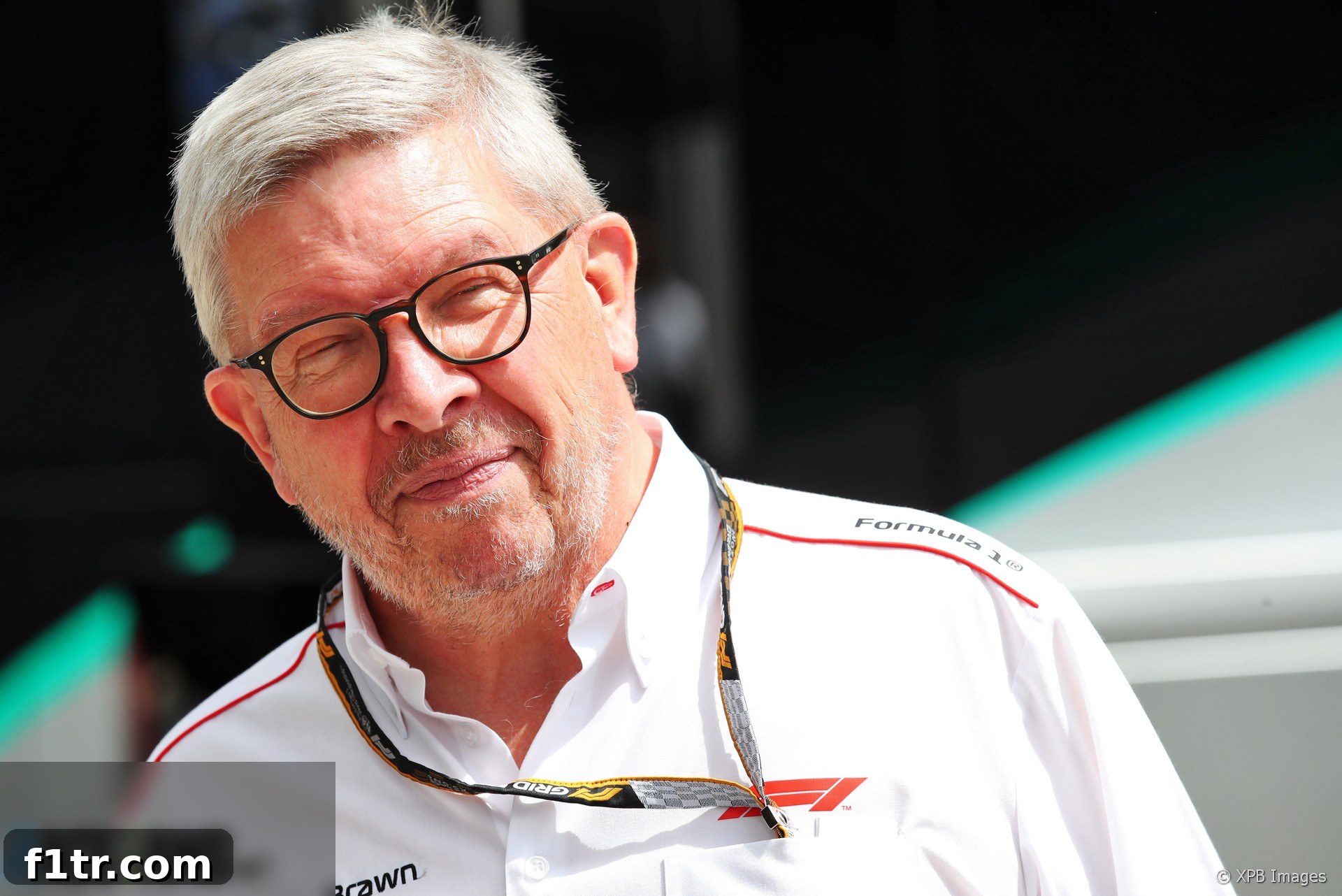
The landscape of Formula 1 has undergone significant transformation in recent years, largely under the stewardship of Ross Brawn, the series’ outgoing managing director of motorsports. As Brawn concludes a distinguished career spanning over four decades, he leaves behind a sport brimming with innovation, not least of which is the evolving format of sprint races. These shorter, Saturday events are set to double to six on the 2023 F1 calendar, a clear indicator of their growing presence, even as Brawn himself admits uncertainty about the ideal long-term number for such events.
Ross Brawn’s Enduring Legacy: Shaping Modern Formula 1
Ross Brawn’s retirement from Formula 1 marks the end of an extraordinary era for the sport. His career is synonymous with some of F1’s most iconic moments and revolutionary technical advancements, from his days orchestrating championships with Benetton and Ferrari to his triumphant leadership of Brawn GP. For the past five years, Brawn has been a pivotal figure within Formula One Management (FOM), stepping into the role of Managing Director of Motorsports following Liberty Media’s acquisition of the sport. His tenure at FOM was characterized by a relentless drive to enhance the spectacle, competitiveness, and sustainability of Formula 1.
During this period, Brawn was instrumental in introducing several landmark changes that have fundamentally reshaped the sport. Key among these initiatives were the implementation of the budget cap, a crucial step towards fostering financial parity and long-term viability among teams. He also championed the radical overhaul of technical regulations for the 2022 season, aimed at promoting closer racing. And, of course, the introduction of sprint races – a bold experiment designed to invigorate the race weekend format and deliver more on-track action for fans globally. His vision and strategic foresight have undeniably set a new trajectory for Formula 1, cementing his status as one of its most influential figures.
The Evolving Debate: Formula 1 Sprint Races on the Rise
The concept of sprint races was first trialed in Formula 1 to inject an extra layer of excitement and strategic depth into Grand Prix weekends. Initially featuring three events in each of the past two seasons, the format is set for a significant expansion in 2023, with six of the 24 rounds now incorporating a sprint race. This move underscores FOM’s belief in the format’s potential to captivate audiences and add value to the entire three-day event schedule.
Despite the expansion, the optimal number and long-term future of sprint races remain a subject of considerable discussion. Ross Brawn, reflecting on this initiative, candidly shared his perspective with the official F1 website. “The sprint was an initiative which seems to have worked,” Brawn stated, acknowledging its success in fulfilling its primary objective. However, he also admitted, “I don’t know what will be the optimum number we will settle at long-term. Some argue we should have it at every race. We’ll see if that is how it evolves. The sprint has certainly livened up the whole weekend and gives us a full three days of action.”
Criticism and Adoption: A Format Under Scrutiny
While the sprint format has found favour with some stakeholders, it has also drawn notable criticism from various quarters, including prominent drivers and segments of the fan base. World champion Max Verstappen has been a vocal opponent, frequently articulating his concerns. His primary argument revolves around the delicate balance of risk versus reward. Verstappen contends that the nature of sprint races, which offer fewer points than a Grand Prix but carry significant risk of damage or grid penalties for the main race, encourages drivers to adopt a more conservative approach. This, in his view, can diminish the intensity of the racing and detract from the purity of competition.
The debate surrounding sprint races often highlights a fundamental tension: how to enhance entertainment without diluting the prestige and significance of the traditional Grand Prix. Critics suggest that the sprint format can sometimes make the main event feel less special, or that it adds unnecessary complexity to the weekend schedule. Furthermore, questions arise about the increased workload for teams, the potential for higher repair costs, and whether the format truly caters to all types of F1 circuits.
Interestingly, the concept of sprint races is gaining traction beyond Formula 1. The motorcycle world championship, Moto GP, has adopted a similar controversial format, committing to run sprint races following qualifying at all of its rounds next season. This move by Moto GP signifies a broader trend in motorsports, where series are exploring innovative ways to maximize viewer engagement and provide more competitive action across the entire race weekend. This cross-pollination of ideas suggests that while the format may divide opinion, its appeal as a tool for increasing spectacle is undeniable, pushing the boundaries of traditional motorsport formats.
Seeking the Optimal Balance: The Future of Sprint Weekends
The journey to find the “optimum number” of sprint races is an ongoing strategic challenge for Formula 1. While the current expansion to six events for 2023 represents a significant step, it also raises questions about sustainability and fan fatigue. Should sprint races become a staple at every Grand Prix, as some proponents suggest? Or should they be strategically deployed at specific tracks that are known to encourage overtaking and exciting wheel-to-wheel action?
The arguments for more sprints include increased fan engagement, more opportunities for drivers to score points, and an additional revenue stream for the sport. However, potential drawbacks include higher operational costs for teams, greater wear and tear on components, and the risk of diluting the Grand Prix itself by turning parts of the main event into a less significant qualifying session. The strategic deployment of sprints might offer a compromise, allowing the format to thrive where it adds the most value, while preserving the traditional Grand Prix weekend structure at other iconic venues.
Upholding F1’s Foundations: Qualifying and Track Design
Beyond the innovations, Ross Brawn also emphasized the importance of recognizing and preserving the core strengths of Formula 1. He firmly believes that certain established elements of the sport are already operating at an exceptionally high standard and should be protected from excessive alteration. A prime example of this conviction is the traditional three-stage qualifying format, which Brawn sees as a well-oiled machine that consistently delivers excitement and intrigue.
“I happen to think the current qualifying spec is pretty good,” Brawn asserted, underscoring its effectiveness. The beauty of the three-stage qualifying lies in its inherent drama: Q1 eliminating the slowest, Q2 tightening the field, and Q3 culminating in a high-stakes shootout for pole position. This progressive elimination process keeps fans engaged for the entire duration, generating suspense and often throwing up unexpected variables. It’s a proven formula that provides a compelling prelude to the main race, highlighting raw speed and driver skill under immense pressure.
Another area where Brawn’s influence has been felt, though perhaps less overtly, is in the continuous effort to optimize track design for improved racing. Recognizing that the quality of racing is intrinsically linked to the circuits themselves, Formula 1 has established a dedicated group focused on ensuring tracks are as interesting and conducive to overtakes as possible. “We also have a group of people who now focus on trying to make the tracks as interesting as possible, so we don’t get tracks where we can’t race properly,” Brawn explained. This proactive approach involves meticulous assessment of every existing track on the calendar, identifying areas for improvement to facilitate closer wheel-to-wheel action. Furthermore, this team provides crucial input into the design and layout of all new tracks joining the F1 calendar, guaranteeing that they meet the highest standards for generating great racing. This commitment to circuit excellence is vital for maintaining the sport’s thrilling spectacle.
The Ground Effect Triumph: Validating the 2022 Technical Regulations
One of the most ambitious undertakings during Ross Brawn’s tenure at FOM was the radical redesign of the technical regulations for the 2022 season. The primary objective was to create a new generation of cars that could follow each other more closely without suffering from the detrimental effects of “dirty air” – the turbulent wake that made overtaking so difficult with previous aerodynamic packages. The solution involved a return to ground effect aerodynamics, meticulously crafted to minimize aero wash and allow drivers to engage in sustained battles.
For Brawn, witnessing the success of these new ground effect cars was a profound source of satisfaction and vindication. “It was a huge thrill for me when I saw the 2022 cars first race and we experienced two or three cars racing alongside each other – we hadn’t often seen that before,” he recounted. This visual proof was a powerful validation of years of theoretical work, simulations, and collaborative efforts between the FIA, FOM, and the teams. The sight of cars being able to run “hard behind another car for several laps without issues” confirmed that the fundamental goal of the new regulations had been achieved.
The impact of these regulations has been widely lauded, contributing to more dynamic races and increasing the potential for genuine on-track competition. Drivers have expressed greater satisfaction with their ability to fight for positions, leading to a more thrilling spectacle for fans. This successful implementation of a complex technical overhaul stands as a testament to Brawn’s vision and his team’s commitment to pushing the boundaries of racing technology for the benefit of the sport.
Brawn’s Farewell: Handing Over the Reins for F1’s Future
As he steps away from his executive role, Ross Brawn believes the timing of his retirement is opportune, allowing a new generation of leadership to guide Formula 1 through its next evolutionary phase. “Now is the right time for me to retire,” he stated, reflecting on his accomplishments. “We have done the bulk of the work, and we are in a consolidation period now.” This sentiment underscores his confidence that the foundational changes he spearheaded are firmly in place, providing a stable platform for future growth.
Looking ahead, the sport faces another significant technical challenge with the planned introduction of a new power unit formula in 2026. This intricate transition, which will define the next era of F1 engine technology, is a long-term project. Brawn acknowledges the distance of this horizon: “There’s a new car coming in 2026, but that’s four years away, quite distant for me, so it’s better the next group of people take on that mantle.” This thoughtful handover ensures continuity and allows fresh perspectives to tackle the complexities of future regulations, particularly in the realm of sustainable hybrid powertrains.
Brawn departs with a profound sense of accomplishment and optimism for the sport he has dedicated so much to. “I believe I’m leaving F1 in a great place,” he affirmed, a sentiment echoed by many across the paddock and among fans. His final reflection offers a personal glimpse into his enduring passion for Formula 1: “I will now watch F1 from my sofa, cheering and cursing as an F1 fan, pleased that the sport is in a fantastic place and has such a fantastic future.” This transition from a pivotal decision-maker to an avid spectator perfectly encapsulates his lifelong dedication and unwavering love for the pinnacle of motorsport.
Conclusion: A Legacy of Innovation and Spectacle
Ross Brawn’s departure from Formula 1 marks the end of an influential chapter in the sport’s history. His profound impact, characterized by a blend of astute technical insight and strategic foresight, has fundamentally reshaped F1 for the modern era. From pioneering initiatives like the expanded sprint race format to engineering the highly successful 2022 technical regulations and establishing a robust financial framework with the budget cap, Brawn has left an indelible mark.
He leaves behind a Formula 1 that is more competitive, more engaging, and poised for a future that promises continued innovation and thrilling on-track spectacle. While debates surrounding the optimal number of sprint races and other evolutions will undoubtedly persist, the foundations Brawn laid are solid. His legacy is one of continuous improvement, ensuring that Formula 1 remains at the forefront of global motorsport, captivating audiences and inspiring future generations with its blend of speed, strategy, and pure racing drama. As the sport moves into its next phase, it does so with a clear vision, thanks in no small part to the extraordinary contributions of Ross Brawn.
2022 F1 season
- Mercedes told me “you’re wrong” about 2022 car’s problems – Hamilton
- FIA confirms all 10 F1 teams complied with 2022 cost cap
- Steiner “not ashamed” of panning “slow” Schumacher in Drive to Survive
- Albon believes year out of F1 improved him as a driver
- Hamilton sees diversity gains in F1 years on from his ‘traumatising’ experience of racism
Browse all 2022 F1 season articles