Formula 1 is a sport often defined by raw speed, cutting-edge technology, and the relentless pursuit of pole position. Yet, some of its most thrilling moments don’t occur at the front of the pack, but deep within the midfield, or even from the very back of the grid. The 2019 Formula 1 season was a testament to this, delivering a spectacular array of comeback drives that left fans on the edge of their seats. While drivers from the dominant “big three” teams – Mercedes, Ferrari, and Red Bull – naturally benefit from superior machinery, 2019 saw incredible performances from athletes in less potent cars, proving that skill, strategy, and sheer determination can overcome significant disadvantages.
This article delves into the most impressive recovery drives of the 2019 season, highlighting the individuals who defied expectations, overcame adversities like grid penalties and chaotic race conditions, and clawed their way through the field to secure remarkable results. These are the stories of the drivers who transformed seemingly lost weekends into unforgettable displays of racing prowess.
The Art of the F1 Comeback: Factors Behind Incredible Recovery Drives
A successful comeback drive in Formula 1 is a complex ballet of various elements. More often than not, a driver finds themselves starting from a compromised grid position due to unforeseen technical issues in qualifying, a grid-dropping penalty for an engine component change, or even a crash. Once the lights go out, the real challenge begins. Key factors contributing to these epic recovery drives include:
- Strategic Masterstrokes: Optimal tyre management, perfectly timed pit stops, and bold decisions in changing conditions (especially wet races) can make or break a recovery.
- Exceptional Overtaking Skill: Drivers must be clinical and decisive, seizing every opportunity while minimizing risk, often in tight, high-pressure situations.
- Car Performance & Reliability: While not always the primary factor for the “underdogs,” a reliable car that can maintain strong pace throughout a race is crucial.
- Luck and Opportunism: Safety Car periods, red flags, or rival incidents can create opportunities to close gaps or make strategic pit stops, which a savvy driver and team will capitalize on.
- Mental Fortitude: Starting from the back is daunting. Maintaining focus, motivation, and belief in the face of adversity is paramount.
The 2019 season showcased all these elements, delivering a series of drives that will be etched into F1 folklore. Let’s revisit these extraordinary performances, grouped by the number of positions gained.
Dominating the Midfield: Drives Gaining 11 Places
The 2019 season saw multiple drivers make significant strides, gaining 11 positions from their starting grid slots. These performances often laid the groundwork for even more spectacular comebacks later in the year, demonstrating consistent skill and an aggressive approach.
Carlos Sainz Jnr: Austria – 19th to 8th
Carlos Sainz Jnr’s performance at the Austrian Grand Prix was a preview of the brilliant season he was about to have. Starting from a lowly 19th position after taking an updated Renault engine early and incurring a grid penalty, Sainz embarked on a relentless charge through the field. The McLaren driver systematically picked off his rivals, particularly leveraging the DRS zone on the long back straight, combined with the fresh power unit’s grunt. His ability to manage his tyres and maintain a consistent, attacking pace was exemplary. Finishing eighth, just two positions behind his teammate Lando Norris, who started much further up the grid, was a remarkable achievement that underscored his growing maturity and the improving performance of the McLaren chassis. It was a drive that showcased his potential and foreshadowed his eventual breakout year.
Daniil Kvyat: Germany – 14th to 3rd
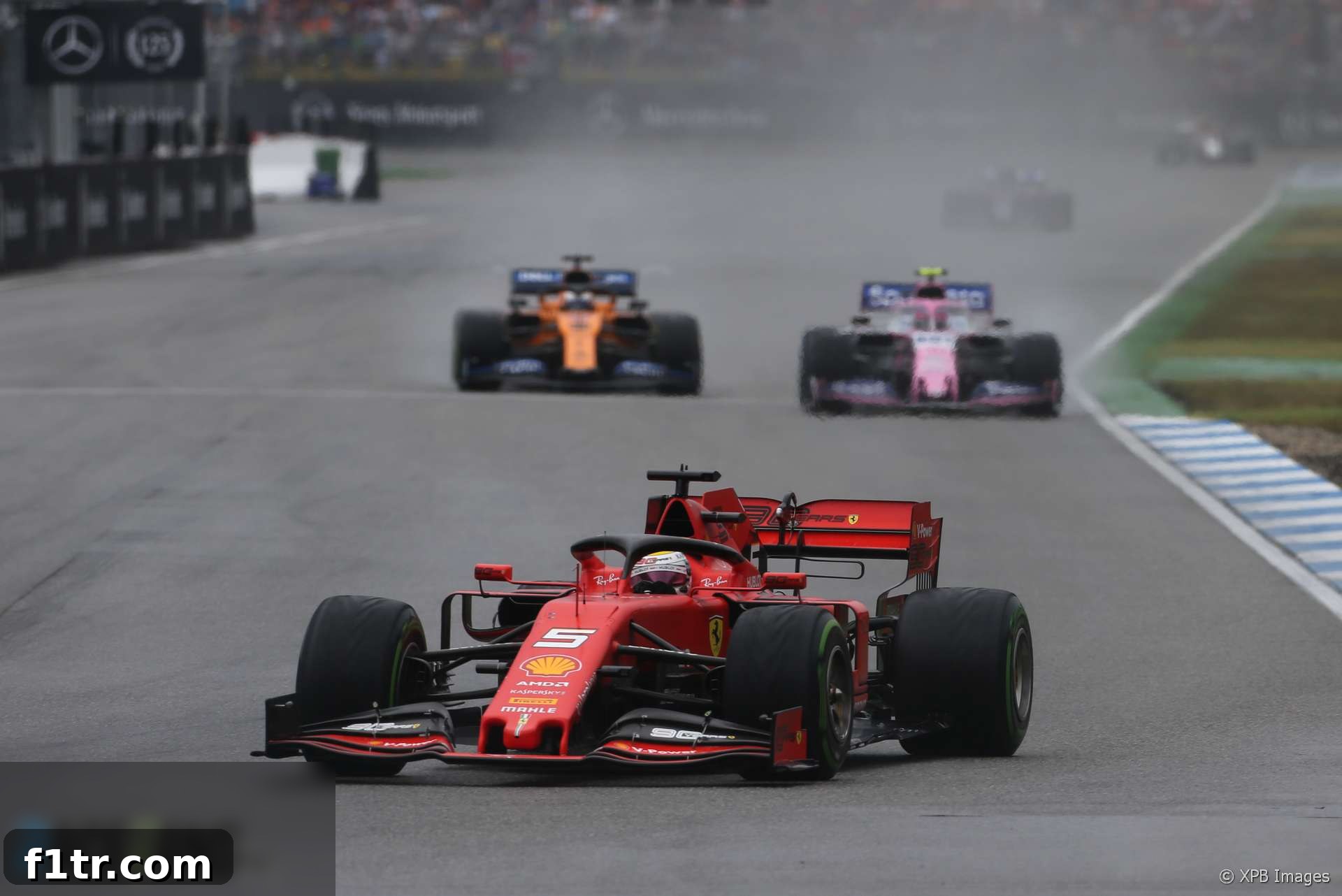
The German Grand Prix at Hockenheim was a chaotic, rain-soaked affair that provided the perfect stage for several dramatic comeback stories. Daniil Kvyat, starting 14th for Toro Rosso, initially lost ground on the opening lap, dropping three positions. However, as conditions evolved and strategy became paramount, Kvyat’s experience and the team’s shrewd decisions shone through. He was one of the few drivers to brave the intermediate tyres for an extended period during his crucial fourth stint, a move that paid massive dividends. This crucial element of his audacious four-stop strategy propelled him up the order, culminating in a provisional second place. Although Sebastian Vettel managed to pass him with two laps remaining, Kvyat still secured an incredible third-place finish – his first podium since 2016, marking a hugely emotional return to the top three for the Russian driver and Toro Rosso.
Lance Stroll: Germany – 15th to 4th
Sharing the spotlight in the chaotic German Grand Prix, Lance Stroll delivered an equally impressive drive for Racing Point. Starting 15th, Stroll, much like Kvyat, made a pivotal decision to pit for slick tyres behind the final Safety Car, a bold call that catapulted him into contention. He found himself briefly battling for a podium position, demonstrating great car control and nerve in the challenging conditions. While he ultimately missed out on the podium after being overtaken by the charging Daniil Kvyat, Stroll’s fourth-place finish was a phenomenal result for him and the team, showcasing his ability to perform under pressure in mixed conditions and extract maximum performance when opportunities arose.
Sergio Perez: Italy – 18th to 7th
The Italian Grand Prix at Monza, the “Temple of Speed,” also witnessed a strong recovery drive from Sergio Perez. Starting 18th due to engine change penalties, the Racing Point driver had a challenging start, including a tangle with Max Verstappen. Despite the early setback, Perez meticulously worked his way through the field. Monza’s long straights and fast corners demand precision and a strong power unit, and Perez, armed with his Mercedes power, coupled his car’s speed with intelligent racing. His ability to maintain strong pace and manage his tyres saw him steadily climb the order, culminating in a commendable seventh-place finish. This drive was a testament to his consistent race craft and his ability to exploit opportunities in an incredibly competitive midfield.
Max Verstappen: Italy – 19th to 8th
Max Verstappen’s Italian Grand Prix was a masterclass in damage limitation and aggressive recovery. Starting 19th due to engine penalties, his race was further complicated by an early collision with Sergio Perez on the opening lap, forcing him to pit for front wing repairs at the end of lap one. This put him effectively at the very back of the pack, facing an even steeper challenge. Undeterred, Verstappen unleashed his characteristic attacking style, slicing through the field with a series of bold overtakes. Despite the significant time loss from his early pit stop, he managed to catch up to Perez again towards the end of the race, ultimately finishing eighth. It was a drive that highlighted his raw speed and unwavering determination, even when faced with multiple setbacks, proving his ability to salvage strong points from the most difficult of situations.
Leaping Ahead: Drives Gaining 12 Places
The Belgian Grand Prix at Spa-Francorchamps, with its legendary high-speed corners and undulating terrain, provided the backdrop for two former teammates to execute impressive 12-position gains, each demonstrating unique recovery strategies.
Alexander Albon: Belgium – 17th to 5th
The Belgian Grand Prix marked Alexander Albon’s highly anticipated debut for Red Bull Racing, stepping into the senior team mid-season. His start was far from ideal, as a full power unit swap relegated him to 17th on the grid. However, Albon quickly demonstrated why he had been promoted. Navigating the demanding Spa circuit with confidence, he executed a clean and controlled race. He was already running in seventh place as the final lap commenced, but his composure allowed him to capitalize on a late opportunity, gaining a position from the stranded Lando Norris. He then pulled off a decisive overtake on Sergio Perez to secure an outstanding fifth-place finish. This debut performance was a clear statement of intent, showcasing his ability to perform under immense pressure and extract strong results for his new team.
Daniil Kvyat: Belgium – 19th to 7th
Daniil Kvyat once again proved his comeback capabilities at Spa. A suspension problem in qualifying severely hampered his pace, leaving him starting down in 19th. However, his race began with a stroke of genius and a touch of fortune. As the field bunched into Turn 1, Kvyat expertly dodged the collision between Max Verstappen and Kimi Räikkönen, gaining a remarkable eight positions on the opening lap alone. This incredible start perfectly set up his one-stop strategy, allowing him to run in clean air and manage his tyres effectively. He further benefited from Lando Norris’s late-race stoppage, ultimately securing a valuable seventh-place finish. Kvyat’s blend of quick thinking, clean driving, and effective strategy made this another standout performance in his resurgent 2019 season.
The Climb Continues: Drives Gaining 15 Places
Some comebacks require not just skill, but resilience to bounce back from significant setbacks. Russia provided a perfect stage for one such demonstration.
Alexander Albon: Russia – 20th to 5th
Alexander Albon faced another formidable challenge at the Sochi Autodrom for the Russian Grand Prix. After losing the rear of his Red Bull during Q1 and crashing out, he was condemned to start from the very back of the grid in 20th position. This incident piled pressure on the young driver, but he responded with an even better recovery drive than his Spa debut. Throughout the race, Albon meticulously picked his way through the midfield, displaying controlled aggression and smart race craft. While his climb was undeniably impressive, a Safety Car period later in the race certainly aided his progress, allowing him to close up to the cars ahead and ultimately make a crucial overtake on Carlos Sainz Jnr to snatch fifth place. It was a powerful demonstration of his ability to overcome adversity and deliver strong results under intense scrutiny, solidifying his place at Red Bull.
Defying the Odds: Drives Gaining 16 Places
The season finale in Abu Dhabi delivered a prime example of strategic prowess and relentless pursuit, turning a last-place start into a near-podium finish.
Valtteri Bottas: Abu Dhabi – 20th to 4th
Valtteri Bottas arrived at the Yas Marina Circuit for the final Grand Prix of the season facing an uphill battle. Due to not one, but two complete power unit changes, he was forced to start from 20th and last on the grid. This meant he had a theoretically fresh engine, good for many race weekends, for the grand finale. This proved incredibly useful, especially as the entire field was hit by an unexpected DRS fault at the start of the race, meaning he had to make do without the overtaking aid for the first 18 laps. Despite this significant handicap, Bottas showcased the raw speed of his Mercedes and his own consistent driving. He systematically carved his way through the field, making clean overtakes and maintaining blistering pace. By the final laps, he was hot on the heels of Charles Leclerc for a podium spot, eventually settling for fourth. Without the early DRS problem, a podium finish would have almost certainly been within his grasp, making this an even more remarkable drive from the very back.
The Pinnacle of Recovery: Drives Gaining 17 Places
Brazil, known for its dramatic races, provided the stage for what many consider the comeback drive of the season, leading to a historic first podium.
Carlos Sainz Jnr: Brazil – 20th to 3rd
Just when you thought Carlos Sainz Jnr couldn’t produce another stunning comeback, he outdid himself at the Brazilian Grand Prix. Another power unit problem during qualifying condemned him to yet another back-of-the-grid start, lining up 20th. However, the typically lively Interlagos circuit, combined with several Safety Car periods, created the perfect storm for one of the season’s most unlikely and spectacular performances. Sainz executed a brilliant one-stop strategy, meticulously eking out the life of his tyres to propel him to the front of the midfield pack. As late Safety Car periods bunched up the field, drivers on much fresher rubber were suddenly within striking distance of his McLaren. Despite the significant tyre disadvantage, Sainz displayed incredible defensive driving and tyre management, fending off the faster-shod Alfa Romeo pair in a nail-biting finish. His phenomenal effort, combined with a post-race penalty for Lewis Hamilton, ultimately earned him his maiden Formula 1 podium finish. It was a truly emotional moment, capping off a stellar season and cementing his status as a formidable talent.
The Ultimate Comeback: Drives Gaining 18 Places
The absolute pinnacle of recovery in 2019 belonged to a four-time world champion, who turned a home race nightmare into a dream result.
Sebastian Vettel: Germany – 20th to 2nd
The German Grand Prix was already a memorable event due to the rain and chaos, but Sebastian Vettel’s drive made it legendary. An engine problem in qualifying prevented the Ferrari driver from setting a time, forcing him to start his home race from the very back of the 20-car grid. What followed was a masterclass in wet-weather driving and strategic brilliance. Vettel kick-started his incredible drive with a perfect start, immediately gaining six positions on the opening lap. As the race descended into a flurry of mistakes from other top drivers like Bottas, Hamilton, and Leclerc, Vettel remained calm and focused, meticulously picking his way through the field. His consistent pace and impeccable car control in the treacherous conditions allowed him to climb higher and higher. In a thrilling conclusion, he pulled off a decisive overtake on Daniil Kvyat with just two laps to go, moving up into an astonishing second place. The drive wasn’t without its final drama; although not shown on the world feed at the time, Vettel very nearly spun off on the final lap while attempting to claim the fastest lap bonus point. Despite this momentary scare, his recovery from last to second was arguably the most spectacular comeback of the entire 2019 season, a truly heroic effort at his home Grand Prix.
Conclusion: A Season of Unforgettable Recovery
The 2019 Formula 1 season was rich with tales of drivers overcoming adversity, demonstrating that pure speed is just one ingredient in the recipe for success. From Carlos Sainz’s consistent ability to battle through the field to Sebastian Vettel’s heroic home race charge, these comeback drives highlighted the immense talent, strategic depth, and mental resilience required to compete at the pinnacle of motorsport. They reminded us that some of the most captivating moments in F1 unfold away from the front, showcasing the raw fighting spirit that makes the sport so enthralling. These performances not only delivered thrilling spectacles for fans but also significantly impacted the drivers’ and teams’ seasons, often turning potential disappointments into triumphs.
2019 F1 season review
- ‘I should have done a better job. There’s things that I know I can do better’
- ‘I am definitely not a rookie anymore – but I’m still getting better’
- ‘I didn’t believe in myself much. But after Australia and Bahrain and I gained a lot of confidence’
- ‘It was my best season for sure so far in terms of pure results and speed’
- ‘There’s been plenty of good performances – but there’s also other years I’ve performed at my best’
Browse all 2019 F1 season review articles