The illustrious Monaco Grand Prix arrives on the Formula 1 calendar, bringing with it a unique blend of glamour, precision, and high-stakes drama. Following a thrilling Spanish Grand Prix that offered tantalizing glimpses of a shifting pecking order, all eyes now turn to the tight, unforgiving streets of Monte Carlo. This iconic circuit is set to test the limits of the new ground-effect cars, challenge driver skill like no other, and potentially rewrite the narrative of the 2022 championship battle. With Mercedes showing a significant resurgence, Red Bull’s clear strategy, and Ferrari battling both rivals and misfortune, the stage is set for an unforgettable weekend.
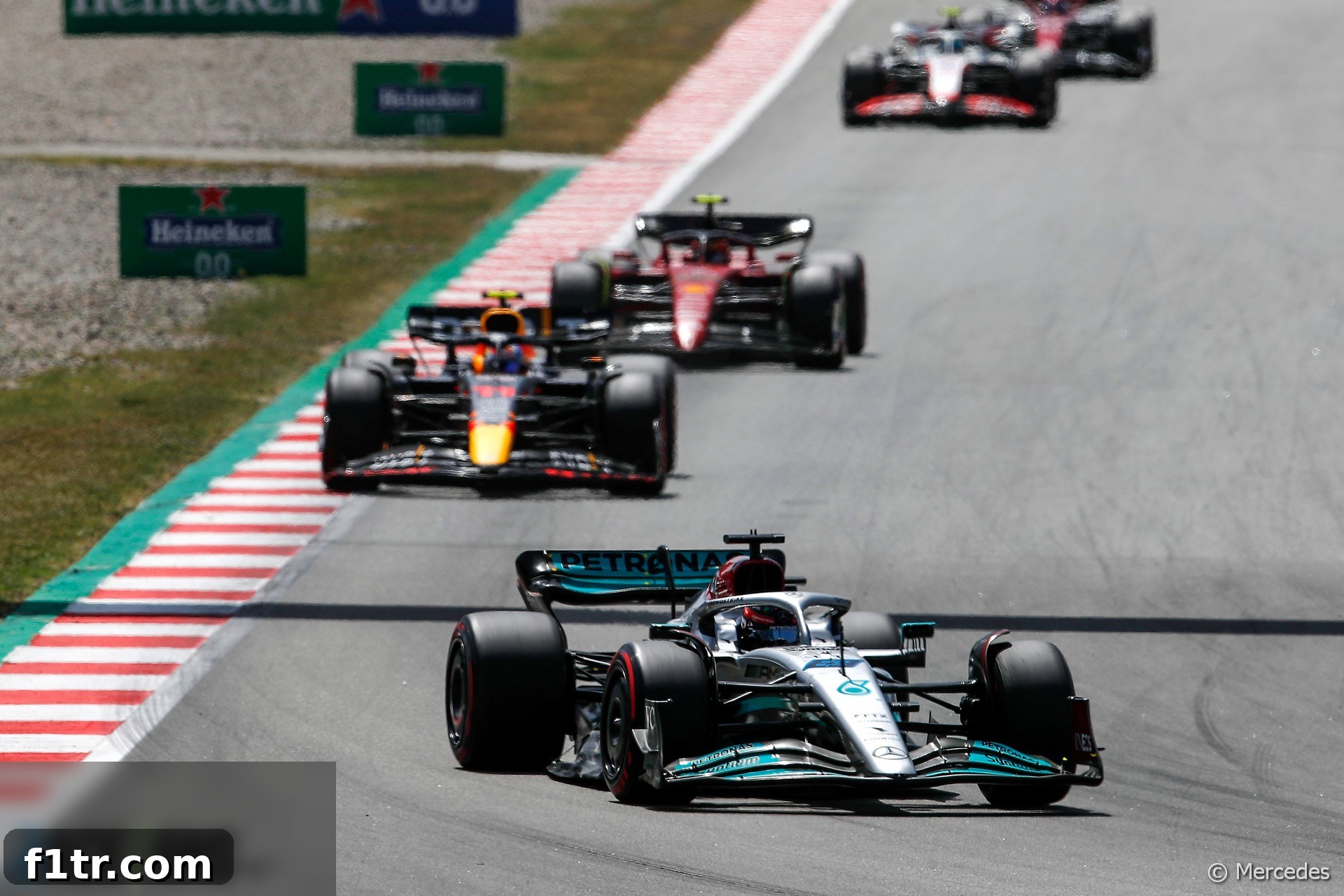
The Spanish Grand Prix undoubtedly marked Mercedes’ most formidable performance of the 2022 season to date. At the challenging Circuit de Catalunya, George Russell delivered a stellar drive to secure third place, while seven-time world champion Lewis Hamilton remarkably fought back to fifth after an opening lap incident relegated him to 19th. This impressive showing has injected a much-needed boost of confidence into the Brackley-based team. The critical question now looms: can Mercedes truly immerse themselves in the intense battle between Red Bull and Ferrari on the notoriously difficult-to-pass streets of Monaco?
Is Mercedes Ready to Challenge for Victory in Monaco?
When George Russell joined Lewis Hamilton at Mercedes for the 2022 season, few would have predicted that Russell would consistently outperform his decorated teammate in the initial races. Yet, with his impressive third-place finish in Barcelona, Russell has now finished ahead of Hamilton in five out of their first six starts together – a remarkable feat, even accounting for some fortuitous Safety Car interventions. Russell’s ability to battle with the Red Bulls and convincingly out-qualify and out-race Carlos Sainz Jnr’s Ferrari was a highly promising sign for Mercedes’ heavily upgraded W13.
However, it was Hamilton’s extraordinary race pace during his recovery drive from 19th place at the end of the opening lap that truly ignited morale within the team. Demonstrating blistering speed and exceptional car management, Hamilton was on track to finish just one place behind Russell in fourth, only to be hindered by a late-race water leak. This performance underscored the W13’s newfound potential and highlighted Hamilton’s enduring capabilities even when facing adversity.
While Mercedes’ recent gains might not immediately catapult them into contention for outright race victories at every circuit, they undeniably represent a crucial first step towards becoming much more significant players at the sharp end of the grid. The upgrades introduced in Barcelona seem to have significantly tamed the porpoising issues that plagued the W13, allowing the team to unlock more of its inherent aerodynamic potential. If Russell and Hamilton can genuinely be in the mix with the Ferraris and Red Bulls this weekend in Monaco – a track that often rewards mechanical grip and driver confidence over pure straight-line speed – then Mercedes could genuinely be considered to have turned a critical corner with their development package. Monaco’s unique demands, particularly its low-speed corners and bumps, will provide a different litmus test for the W13’s improved handling characteristics.
Sergio Perez: A Clear Number Two at Red Bull?
The victory of Max Verstappen at the Spanish Grand Prix was hardly a shock, given his strong form and three prior wins earlier in the season. However, the manner in which he achieved it sparked considerable discussion and revealed much about Red Bull Racing’s internal dynamics. Despite Verstappen demonstrating winning pace, Red Bull’s decision to instruct his teammate Sergio Perez to cede the lead to him – not once, but twice – only six rounds into the championship, seemed a clear and early indication of Perez’s perceived status within the team.
When Perez first joined Red Bull last year, he openly accepted a support role to Verstappen, especially as he struggled to fully adapt to the RB17 and match his teammate’s championship-contending pace. He entered the 2022 season with the belief that the new technical regulations would allow him to compete far closer to Verstappen. Indeed, this year, Perez has proven to be a much stronger match for Verstappen in the RB18, securing a pole position in Saudi Arabia and three second-place finishes. His 85 points compared to Verstappen’s 110 after six rounds demonstrate a considerably tighter contest than last year.
However, the explicit team orders issued during the Spanish Grand Prix – coupled with Red Bull’s unfulfilled promise to return the favour later in the race – strongly suggested that Perez does not enjoy equal favour or strategic priority within the Red Bull garage. While it’s understandable that a reigning world champion like Verstappen, who has claimed four victories from six races in 2022, would be prioritised, it inevitably raises a significant question for Perez: will he ever truly be allowed to fight against his teammate for a race win, even if both drivers are in genuine contention?
This dynamic has historical precedents in Formula 1, where teams often back a primary championship contender. For Perez, the Monaco Grand Prix could be a critical juncture. A strong performance, perhaps even a victory, could help re-assert his claim for equal treatment, especially on a circuit where driver skill can often outweigh car performance differences. Conversely, another strategic call that puts Verstappen ahead could cement his “number two” status for the remainder of the season, regardless of his individual performance.
Can Charles Leclerc Break His Home Race Curse in Monaco?
For the initial five rounds of the 2022 season, Charles Leclerc appeared to be blessed with an abundance of good fortune. While his two victories and multiple pole positions were hard-earned on track through sheer talent, he also benefited from impeccable reliability from his Ferrari F1-75. In contrast, championship rival Max Verstappen suffered two significant retirements due to fuel system issues, allowing Leclerc to build a comfortable points lead.
However, this streak of good luck dramatically reversed itself last weekend. Leclerc’s power unit suddenly failed him midway through what was shaping up to be a dominant and comfortable drive to victory in the Spanish Grand Prix. This abrupt retirement not only ended his race on the spot but also cost him the lead in the drivers’ championship, which he had held since the opening race in Bahrain.
As he heads to his home race, Leclerc will be fervently hoping that this recent stroke of bad luck means he can finally enjoy his Monaco Grand Prix weekend without something disastrous going wrong. His history in Formula 1 at his native Monte Carlo is notoriously unfortunate: in three previous attempts, Leclerc has failed to finish on every occasion. Last season, he even secured a sensational pole position only to be unable to start the race due to an issue stemming from his qualifying crash.
What should provide Ferrari with considerable confidence is the F1-75’s exceptional performance through the tight, twisty final sector in Barcelona. This section of the circuit, with its slower corners and changes of direction, bears the closest resemblance to the unique characteristics of Monaco on the entire calendar. Given that there are no other tracks quite as tight and technical as Monaco, this characteristic strength could very well make the Principality the ideal venue for Ferrari to break Verstappen’s current winning streak and for Leclerc to finally conquer his home race demons, delighting his local fans and reclaiming momentum in the championship fight.
Monaco’s Unique Challenges for the New Ground Effect Cars
As the most famous street circuit in motorsport, Monaco presents a formidable test for any Formula 1 car and driver. It embodies everything that makes a street circuit so challenging: exceptionally tight corners, notoriously low grip surfaces, unforgivingly close barriers, and a bumpy, uneven track surface that offers no respite. These elements combine to demand absolute precision, unwavering concentration, and immense bravery from every competitor.
With the introduction of new ground-effect cars for the 2022 season, teams are striving to run their ride heights as low as possible to maximize the downforce generated by the underfloor tunnels. This pursuit of aerodynamic efficiency, however, comes with a significant trade-off, particularly on a circuit like Monaco. Many drivers, including McLaren’s Daniel Ricciardo, have voiced their expectations for an exceptionally uncomfortable 78 laps around the streets of Monte Carlo.
Ricciardo articulated these concerns, stating, “I think Monaco is going to really test this era of cars and it might expose some things with them. It’s not like they’re going to be undriveable or anything – I don’t predict anything like that. But whether it’s visibility or just kind of the low ride heights, the stiffness over kerbing, bumps, just maybe simply like a more uncomfortable lap. I think it’ll be a challenge.”
The inherent stiffness of these new cars, designed to optimize aerodynamic performance at low ride heights, will be severely challenged by Monaco’s numerous bumps and aggressive kerbs. Drivers will experience intensified vibrations and impacts, potentially leading to physical discomfort, increased fatigue, and even a higher risk of car damage. The close proximity of the barriers means any lapse in concentration or an unexpected reaction from the car over a bump could have immediate and costly consequences. Monaco will be the ultimate proving ground for how well teams have adapted their ground-effect designs to real-world street circuit conditions.
Navigating the Infamous Traffic Troubles of Monte Carlo
The issue of drivers impeding one another during crucial practice and qualifying sessions has become increasingly problematic in recent Formula 1 seasons. The recent Spanish Grand Prix offered a stark example: abnormally high track temperatures caused the soft compound tyres to overheat rapidly, leading drivers to complain about a significant loss of grip mid-qualifying lap. Such circumstances make it even more advantageous for drivers to tiptoe slowly on their out-laps, meticulously managing tyre temperatures and seeking clear air before their crucial push laps. This strategy, while beneficial for individual performance, inevitably leads to significant traffic headaches and potential pile-ups for teams to somehow manage.
In an effort to alleviate this growing problem, the FIA has implemented maximum out-lap time limits. The intention is to compel drivers to maintain a reasonable pace before their push laps, thereby preventing the kind of debilitating final sector traffic jams that famously caught out Fernando Alonso in Q1 last weekend in Barcelona. However, even with these regulations in place, the stewards at the Spanish Grand Prix recorded an astonishing 55 instances of the maximum lap time being breached by 18 of the 20 drivers on the grid. While no penalties were issued on that occasion, the stewards did issue a stern warning to teams, stating that “further violations may incur increased penalties – not only for these drivers but for any competitor committing a similar breach in the future.”
The challenge, however, lies in the consistent application of these rules, especially given that the panel of stewards rotates with every Grand Prix. Monaco, with its naturally claustrophobic layout and minimal space for drivers to clear a path, represents the biggest blackspot on the calendar for traffic infringements. There is a very real risk that multiple drivers could fall foul of this renewed emphasis on punishing those deemed to be driving “unnecessarily slowly” during what is arguably the most important qualifying hour of the entire season. A grid penalty in Monaco is exceptionally punitive, as overtaking is virtually impossible. This makes the qualifying session, and the avoidance of traffic-related penalties, paramount for any driver hoping for a strong result.
Monaco Grand Prix 2022: The Ultimate Test Awaits
The Monaco Grand Prix is more than just a race; it’s a spectacle, a tradition, and a monumental challenge that pushes Formula 1 teams and drivers to their absolute limits. From the strategic dilemmas facing Red Bull and the potential redemption for Charles Leclerc, to Mercedes’ hopeful resurgence and the new cars grappling with the historic street circuit, every element points towards a captivating weekend.
Will the bumps and tight corners expose new weaknesses or highlight unexpected strengths in the 2022 machinery? Can a driver’s sheer skill overcome the strategic advantages of the leading teams? Monaco rarely disappoints, and this year, with the championship battles heating up, it promises to be as thrilling as ever.
If you’re heading to Monaco for this weekend’s race, we want to hear from you:
- Forum: Going to the Monaco Grand Prix at Monaco
Who do you think will be the team to beat in the Monaco Grand Prix? Share your insights and predictions below.
And don’t forget to enter your predictions for this weekend’s race. You can edit your predictions until the start of qualifying:
- RaceFans Predictions Championship
2022 Monaco Grand Prix Related Articles
- Whatever triggered it, Verstappen’s defiance of his own team makes little sense
- Transcript: How Red Bull seized a win that ‘Ferrari looked like they had in the bag’
- Verstappen now has as many poles as Leclerc – but six times as many wins
- Schumacher’s chassis-splitting crash shows effects of rising car weight – Alonso
- Norris still can’t drive McLaren the way he wants to, despite strong results
Browse all 2022 Monaco Grand Prix articles