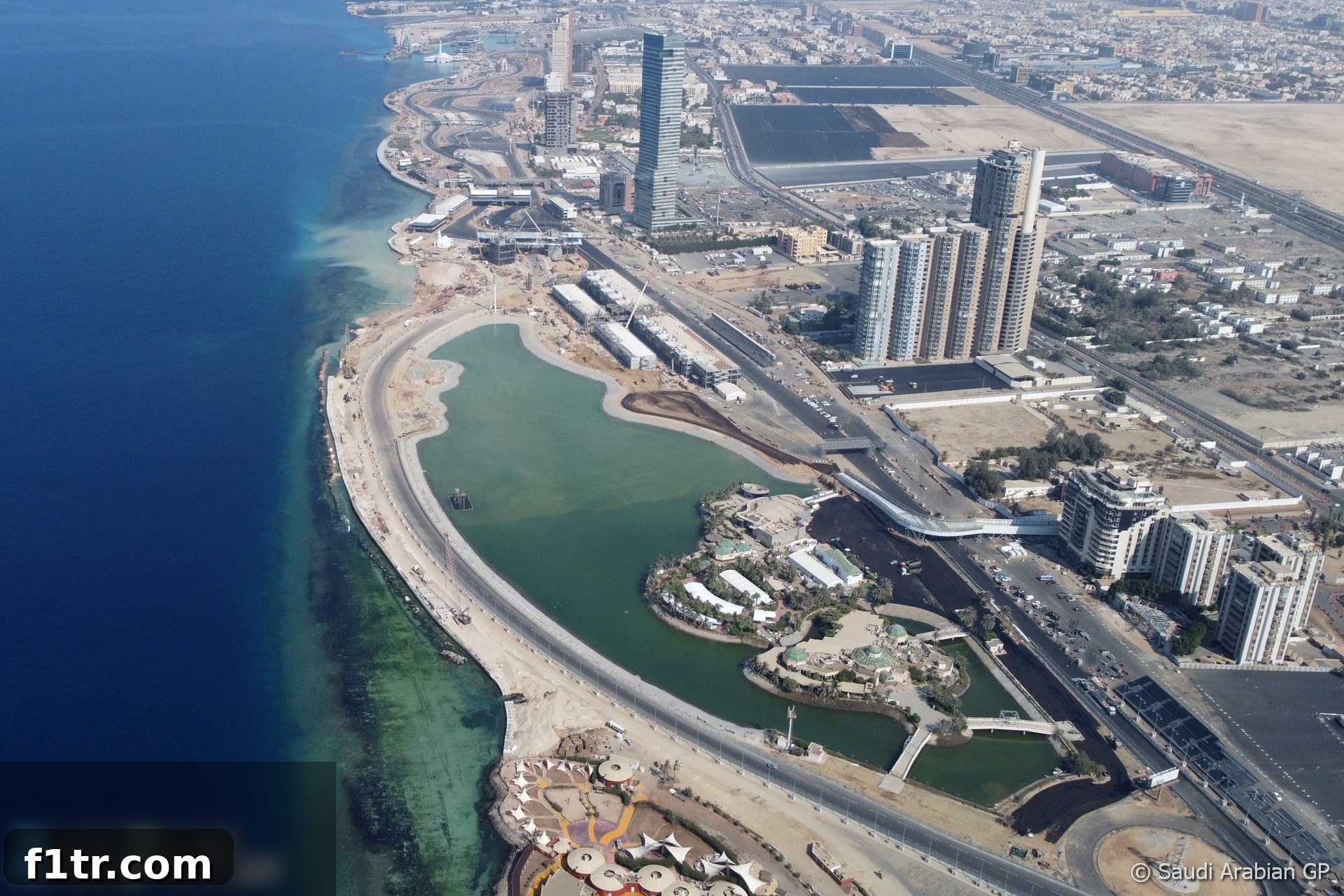
Jeddah Corniche Circuit: On Track for Formula 1 Debut Amidst High Anticipation
As the highly anticipated inaugural Saudi Arabian Grand Prix rapidly approaches, Formula 1 fans and teams alike are eagerly watching the progress of the new Jeddah Corniche Circuit. Amidst a remarkably tight construction schedule, FIA Formula 1 Race Director Michael Masi has expressed unwavering confidence that the state-of-the-art circuit will be fully completed and ready to host the penultimate round of the world championship next month. This critical event is poised to play a pivotal role in the thrilling title battle between racing titans Lewis Hamilton and Max Verstappen, adding an extra layer of drama to the track’s debut.
The Race Against Time: Building a World-Class F1 Venue
Constructing a Formula 1-grade circuit, especially one of the scale and complexity of the 6.1-kilometre Jeddah Corniche Circuit, is an undertaking of colossal proportions. The team on the ground in Jeddah has been working around the clock, facing an intense race against time to deliver a venue that meets the stringent requirements of Formula 1. This includes not just the track surface itself, but also extensive pit lane facilities, team garages, spectator stands, media centers, medical facilities, and crucial safety infrastructure that must all be meticulously planned and executed.
Michael Masi, whose role as F1 Race Director involves overseeing all operational aspects of Grand Prix weekends, has been making regular visits to the site whenever his demanding schedule between F1 races permits. His personal inspections provide first-hand insight into the progress. “I was there a couple of weeks ago and obviously there is a lot going on there,” Masi confirmed, underscoring the immense scale of activity. “There’s a huge amount of work happening concurrently, involving hundreds of personnel and heavy machinery operating in a coordinated effort to meet the tight deadline.”
To ensure all deadlines are met and standards are maintained, a robust communication channel has been established. “The FIA and F1 are getting daily updates of where things are at and it’s progressing very, very quickly,” Masi added. This constant flow of information allows for proactive problem-solving and ensures that any potential roadblocks are addressed immediately, keeping the project on its ambitious timeline. While acknowledging the significant task ahead – “There’s a lot to do. There’s nothing to deny there. I think everyone will acknowledge there’s a lot to do” – Masi’s conviction remains absolute: “But I’m still confident of the race going ahead, no problems. The commitment from all involved parties is truly exceptional.”
Michael Masi’s Unwavering Assurance and Proven Track Record
Masi’s confidence is not simply an optimistic outlook; it is deeply rooted in extensive experience with similar high-pressure projects. Before assuming the challenging role of F1 Race Director in 2019, Masi played a key part in the development and approval of other new track projects that faced equally tight construction schedules and successfully delivered their first events. These included the construction of the Korea International Circuit in Yeongam, South Korea, for example, which famously received its final FIA homologation – the official approval to host a Grand Prix – a mere nine days before Formula 1 practice sessions commenced in 2010. This was a testament to the dedication and efficiency of the teams involved.
Drawing on these past experiences, Masi stated, “I think there’s always an element of worrying with everything but I’m quite confident. Particularly having been involved in Korea in 2010 which was the last one that was talked about for being completed on such a tight schedule. And I think India was talked about as well, and both of those went off, no problems at all, and I’m quite confident that Saudi will be exactly the same.” His personal involvement in overcoming such logistical hurdles provides a solid foundation for his current reassurances regarding the Jeddah Corniche Circuit. The successful delivery of the Korean and Indian circuits under similar pressures serves as a powerful precedent, reinforcing the belief that the Saudi Arabian venue will also meet its deadline without compromising quality or, crucially, safety.
Prioritizing Safety: Non-Negotiable Standards for Formula 1
One aspect where absolutely no concessions can be made is safety. Formula 1 operates at the absolute pinnacle of motorsport, where speeds are immense and the risks are inherently high. The FIA (Fédération Internationale de l’Automobile) has established extremely rigorous safety standards for all circuits hosting Grand Prix events. These standards encompass every detail, from the precise dimensions of track runoff areas and the type of crash barriers used, to the sophisticated medical response capabilities, the placement of marshal posts, and the resilience of circuit infrastructure. For any new circuit seeking to join the prestigious F1 calendar, these standards are non-negotiable and are subject to meticulous inspection and approval by the FIA’s safety delegates.
Masi was particularly adamant on this point, leaving no room for doubt: “They will comply with every safety requirement, I’m very confident of that. Very confident.” This emphasis on safety is paramount, ensuring that while the construction timeline is tight, the well-being of drivers, teams, and spectators remains the absolute top priority. The FIA’s final inspection will be comprehensive, involving a thorough walkthrough and verification that every safety protocol and infrastructure element is not only in place but also fully functional. This rigorous process guarantees a secure environment for the high-octane spectacle that Formula 1 promises, upholding the sport’s unwavering commitment to safety.
The Jeddah Corniche Circuit: A Glimpse into its Unique Design
Designed by renowned circuit architect Hermann Tilke’s company, Tilke GmbH & Co. KG, in collaboration with Formula 1’s motorsport managing director Ross Brawn, the Jeddah Corniche Circuit is set to be a truly unique addition to the F1 calendar. Stretching over 6.1 kilometers, it is poised to be the second-longest circuit on the calendar (after Spa-Francorchamps) and holds the distinction of having the most corners of any track at 27. Crucially, it has been touted as the “fastest street circuit” in Formula 1, with average speeds projected to be around 250 km/h, combining the thrill of blistering high-speed sections with the challenging, unforgiving proximity of street circuit walls.
Its picturesque location along the Red Sea coast, weaving through the Corniche waterfront area, promises breathtaking visuals, especially as a spectacular night race under powerful floodlights. The design emphasizes high-speed sequences, sweeping curves, and minimal slow-speed corners, all crafted to encourage exhilarating racing, multiple overtaking opportunities, and a constant test of driver skill and bravery. The combination of a vibrant urban setting, intrinsically high-speed characteristics, and a brand-new, unrubbered surface means teams will face an intriguing and complex challenge in optimizing their car setups and race strategies. This blend of technical demands and spectacular scenery ensures that the Jeddah Corniche Circuit will not only be a test of skill for the drivers but also an unforgettable visual feast for fans worldwide.
A Pivotal Moment for the 2021 Championship Battle
The timing of the Saudi Arabian Grand Prix in the 2021 Formula 1 calendar adds immense weight to its debut. As the penultimate round, situated just before the season finale, it could very well be the venue where the intense, season-long championship battle between Mercedes’ Lewis Hamilton and Red Bull’s Max Verstappen reaches its dramatic climax. Both drivers have pushed the limits throughout the season, delivering some of the most memorable and nail-biting racing in recent F1 history, trading blows and points at every turn. A new, uncharted circuit like Jeddah introduces an unpredictable element into this high-stakes contest. Without historical data or extensive simulation experience, teams and drivers will need to adapt rapidly to its unique characteristics, adding another layer of complexity to their championship strategies. The high-speed nature of the track, combined with the immense pressure of a potential title decider, guarantees an electrifying and potentially championship-defining race weekend.
Saudi Arabia’s Grand Entry into the Global Motorsport Stage
The inclusion of the Saudi Arabian Grand Prix marks a significant strategic expansion for Formula 1 into the Middle East, complementing existing races in Bahrain and Abu Dhabi. This move underscores F1’s commitment to growing its global footprint and engaging new audiences in key regions. For Saudi Arabia, hosting such a prestigious international event is part of a broader vision to diversify its economy and project a modern, dynamic image on the global stage, aligning with its Vision 2030 goals. The Grand Prix is expected to draw significant international attention, boosting tourism, creating substantial economic opportunities, and inspiring a new generation of motorsport enthusiasts within the region. As a spectacular night race, it joins an elite club of floodlit events that have become iconic fixtures on the F1 calendar, promising a visual spectacle that transcends mere sport and captivates millions around the globe.
Related Articles: 2021 F1 Season Insights
- Masi ‘basically gifted the championship’ to Verstappen says 2021 FIA steward Sullivan
- Las Vegas race backers looking to extend F1 deal beyond 2025
- Why Mercedes put ‘a reminder of joy and pain’ on display in their factory lobby
- Verdict on error in GT race suggests Mercedes would have lost 2021 Abu Dhabi GP appeal
- Title ‘stolen’ from Mercedes made us ‘underdogs people cheer for’ – Wolff
Browse all 2021 F1 season articles