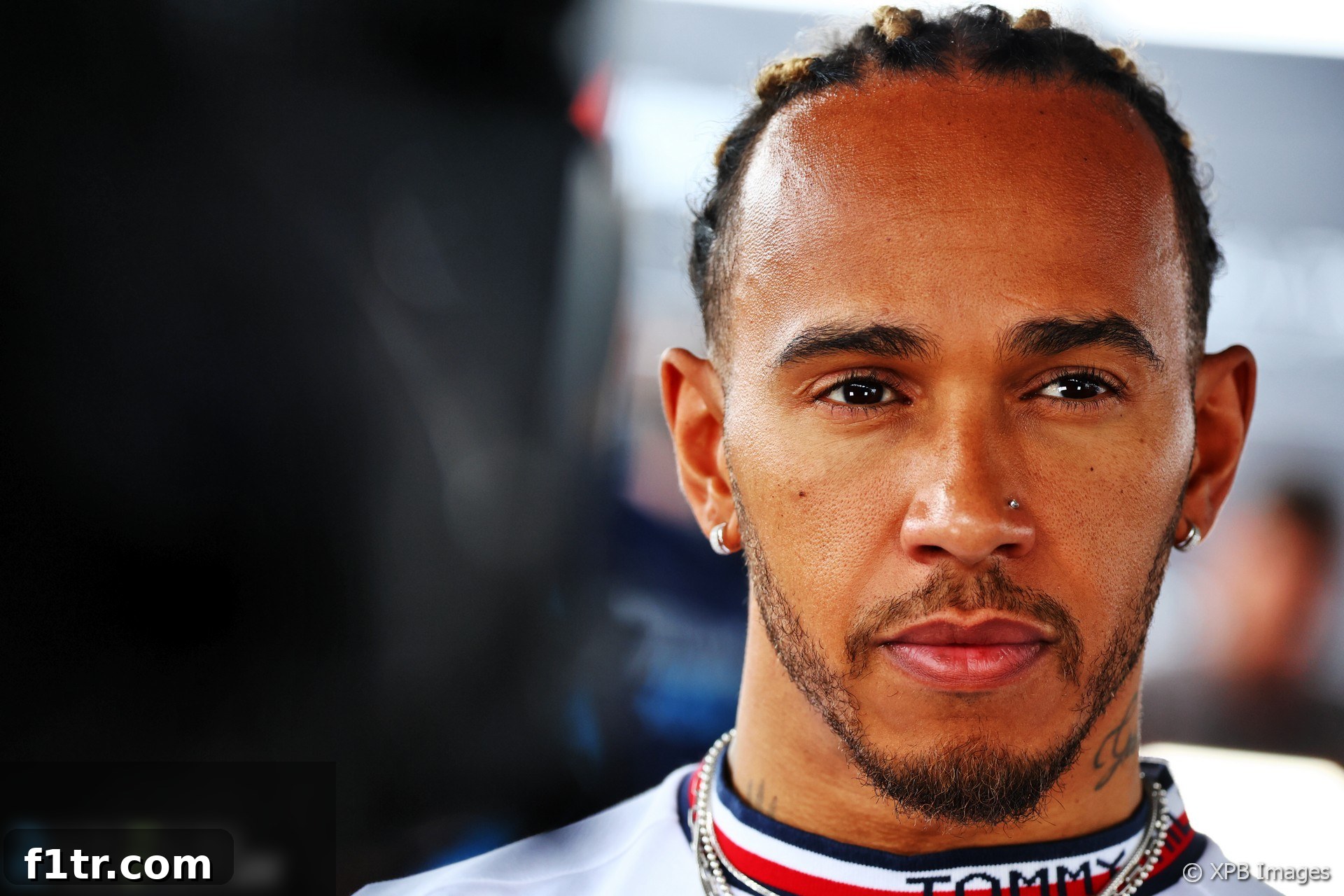
In a decisive move underlining Formula 1’s unwavering commitment to diversity and inclusion, three-time world champion Nelson Piquet has been indefinitely barred from the series’ paddock. This significant sanction follows deeply controversial comments he made about seven-time world champion Lewis Hamilton, which sparked widespread condemnation across the motorsport world and beyond.
Advert | Become a Supporter & go ad-free
The 1981, 1983, and 1987 world champion issued an apology to Lewis Hamilton for the remarks, which were originally made in an interview late last year but gained significant traction and condemnation after circulating widely on social media in recent days. However, Piquet’s apology was met with skepticism and was deemed insufficient by many, including Formula 1’s governing bodies. Piquet claimed his comments were mistranslated in some media coverage and denied any racial intent behind his words, a defense that failed to mitigate the severe backlash.
In a statement attempting to clarify his position, the 69-year-old former driver explained: “I would like to clear up the stories circulating in the media about a comment I made in an interview last year. What I said was ill-thought-out, and I make no defense for it, but I will clarify that the term used is one that has widely and historically been used colloquially in Brazilian Portuguese as a synonym for ‘guy’ or ‘person’ and was never intended to offend. I would never use the word I have been accused of in some translations. I strongly condemn any suggestion that the word was used by me with the aim of belittling a driver because of his skin colour.”
Piquet continued his apology, stating: “I apologise wholeheartedly to anyone that was affected, including Lewis, who is an incredible driver, but the translation in some media that is now circulating on social media is not correct. Discrimination has no place in F1 or society, and I am happy to clarify my thoughts in that respect.” Despite this clarification, the damage was already done, and the motorsport community largely interpreted his original comments as overtly racist, leading to immediate and forceful criticism from key stakeholders within Formula 1, the FIA, several leading teams, and numerous drivers, most notably Lewis Hamilton himself.
F1 and FIA Stand Firm Against Discrimination
The swift and unified condemnation from the highest levels of motorsport underscored the sport’s evolving stance on social issues. Formula 1, in response to the controversy, issued a powerful statement reiterating its core values. “Discriminatory or racist language is unacceptable in any form and has no part in society,” stated F1 yesterday. “Lewis is an incredible ambassador for our sport and deserves respect. [Hamilton’s] tireless efforts to increase diversity and inclusion are a lesson to many and something we are committed to at F1.” This statement highlighted not only the unacceptability of Piquet’s remarks but also celebrated Hamilton’s significant contributions to promoting a more inclusive environment within the sport and beyond.
The FIA, the sport’s governing body, also condemned the comments, reinforcing its own commitment to diversity. The unified front from both commercial rights holder and governing body sent a clear message that such language would not be tolerated. The incident served as a stark reminder that while Formula 1 has made strides in its “We Race As One” initiative, the fight against discrimination remains ongoing, and vigilance is paramount to maintaining a respectful and equitable environment for all.
The Paddock Ban: A Powerful Message
RaceFans understands that Piquet’s apology, despite its attempt to clarify and retract, was ultimately deemed insufficient by Formula 1’s hierarchy. This perceived inadequacy directly led to the decision to ban him from the F1 paddock indefinitely. The paddock is the inner sanctum of Formula 1, a privileged area accessible only to teams, officials, media, and select guests. For a figure of Piquet’s stature – a three-time world champion – to be excluded from this space is an unprecedented and highly symbolic sanction. It sends an unambiguous message: there is zero tolerance for discriminatory language or behavior within the sport, regardless of one’s past achievements or standing.
This ban signifies Formula 1’s determination to protect its image and uphold the values it champions, especially as it strives to attract a broader, more diverse global audience. The sport has increasingly focused on social responsibility, with Lewis Hamilton himself being a vocal advocate for human rights, diversity, and equality. Piquet’s comments directly contradicted these efforts, necessitating a strong and visible response to maintain the integrity of Formula 1’s commitment to these vital principles.
British Racing Drivers’ Club Takes Decisive Action
The repercussions for Nelson Piquet extended beyond the F1 paddock. The British Racing Drivers’ Club (BRDC), the exclusive club that owns and operates the Silverstone Circuit and counts many of Britain’s most successful racing drivers among its honorary members, subsequently announced its own severe disciplinary action. The BRDC Board of Directors confirmed that it had suspended Piquet’s honorary membership of the esteemed organization.
In a statement, the BRDC detailed its reasoning: “The BRDC Board of Directors has noted that, in a Brazilian podcast last November, Nelson Piquet Senior, an Honorary Member of the BRDC, described Lewis Hamilton using a racially offensive expression in Portuguese. The apology issued yesterday by Mr Piquet Snr has also been noted. In view of the BRDC’s zero-tolerance policy towards any act involving or suggesting racism, the BRDC Board has concluded that Mr Piquet Snr’s use of racially offensive language to describe a fellow BRDC member (and seven-times world champion) is unacceptable and represents conduct that is wholly inappropriate for an Honorary Member of the BRDC, notwithstanding his subsequent apology.”
The BRDC’s decision highlights the gravity of the situation, especially given that Lewis Hamilton is also a highly respected member of the club. The statement concluded: “Accordingly, we have advised Mr Piquet Snr that his membership has been suspended with immediate effect. Following the Club’s due process, it is anticipated that the Board will terminate Mr Piquet Snr’s membership at a board meeting to be held after the required seven-day notice period.” This move by the BRDC underscores a collective refusal across the motorsport landscape to condone or tolerate such remarks, demonstrating that Piquet’s words carried significant consequences for his standing and reputation within the racing community.
The Broader Impact: Hamilton’s Advocacy and F1’s Future
This incident is not an isolated event but rather a stark reminder of the persistent challenges faced in the ongoing pursuit of diversity and inclusion within sports, and society at large. Lewis Hamilton has been a trailblazer, using his platform to advocate for social justice, racial equality, and greater representation in Formula 1, a sport historically lacking diversity. His experiences with racism, both on and off track, have fueled his commitment to creating a more welcoming and equitable environment for future generations.
Piquet’s comments, regardless of his stated intent, served to underscore the very prejudices Hamilton has actively fought against. The strong reactions from F1, the FIA, and the BRDC signal a collective will to stand with Hamilton and reinforce the message that the sport is evolving. It demonstrates that figures, no matter how legendary, are held accountable for their words and actions. This accountability is crucial for maintaining the credibility of F1’s diversity initiatives and ensuring that the sport truly reflects the inclusive values it aims to project globally. The incident also reignited important conversations about the nuances of language, cultural context, and the universal impact of racially charged terms, even when presented with claims of mistranslation or colloquial usage.
The indefinite paddock ban for Nelson Piquet, a celebrated figure in Formula 1 history, serves as a powerful deterrent and a clear affirmation of the sport’s commitment to fostering a respectful, inclusive, and anti-discriminatory culture. It solidifies the understanding that while racing legends are revered for their achievements, respect and ethical conduct are paramount, and any deviation from these standards will have severe and lasting consequences.
Don’t miss anything new from RaceFans
Follow RaceFans on social media:
- Join RaceFans on Facebook
- Follow RaceFans on Twitter
- Get daily email updates from RaceFans
Advert | Become a RaceFans supporter andgo ad-free
2022 F1 Season: Related Developments and Context
The year 2022 was significant for Formula 1, marked by intense on-track competition and ongoing efforts to address various off-track challenges, including discussions around team performance, regulatory compliance, and driver experiences. The controversies surrounding Nelson Piquet’s comments added a critical dimension to the narrative of the season, highlighting the persistent need for vigilance against discrimination in sport. The broader context of the 2022 F1 season includes:
- Mercedes told me “you’re wrong” about 2022 car’s problems – Hamilton
- FIA confirms all 10 F1 teams complied with 2022 cost cap
- Steiner “not ashamed” of panning “slow” Schumacher in Drive to Survive
- Albon believes year out of F1 improved him as a driver
- Hamilton sees diversity gains in F1 years on from his ‘traumatising’ experience of racism
Browse all 2022 F1 season articles