Haas F1 Navigates Geopolitical Storm: Uralkali Sponsorship and Mazepin’s Future Hang in Balance
The intricate world of Formula 1, often seen as a thrilling spectacle of speed and technology, is not immune to the harsh realities of global geopolitics. In a dramatic turn of events, the Haas F1 Team found itself at the forefront of the international response to the Russia-Ukraine conflict, leading to critical decisions regarding its title sponsor, Uralkali, and the precarious future of its Russian driver, Nikita Mazepin.
Advert | Become a Supporter & go ad-free
The Immediate Fallout: Haas Drops Uralkali Branding and Russian Colors
The first public indication of Haas’s stance came swiftly during pre-season testing in Barcelona. Overnight, following Russia’s large-scale invasion of Ukraine, the team’s car underwent a significant visual transformation. The distinctive blue, white, and red livery, which echoed the Russian national flag, was removed, replaced by a plain white scheme. Crucially, all Uralkali logos, which adorned the car as the team’s prominent title sponsor, were conspicuously absent. This symbolic yet powerful move sent a clear message about Haas’s immediate dissociation from its Russian partners and the escalating crisis.
Team Principal Guenther Steiner described the rapid sequence of events that unfolded. Upon waking to the grave news of the invasion, Steiner immediately recognized the need for a decisive response. He wasted no time in initiating urgent discussions with team owner Gene Haas, understanding the gravity and sensitivity of the situation. This swift communication highlighted the direct lines of decision-making within the relatively smaller Haas organization, allowing for an immediate reaction to a rapidly evolving international crisis.
Guenther Steiner on Rapid Decision-Making and Team Resilience
A Morning of Urgent Calls and Swift Action
Steiner recounted the intense morning, acknowledging the unspeakable nature of the news that greeted him. “Obviously in the morning when I got up and looked at the news there were a few words there which I better not say here,” Steiner candidly stated in response to a query from RaceFans. His immediate priority was to consult with Gene Haas, the driving force behind the team. Given that Haas Automation, the team’s largest partner, is headquartered in California, Steiner also had to factor in the nine-hour time difference to ensure key board members and the CEO were brought into the conversation.
The speed with which the team acted was remarkable. “As you saw we reacted very quick to it so you can imagine it was very straight talks,” Steiner explained. He emphasized that the decision-making process, while urgent, involved careful consideration and direct communication with all relevant stakeholders, including other partners. The team’s smaller structure, often perceived as a disadvantage against F1’s giants, proved beneficial in this instance, enabling swift and decisive action. “We are a small team, which is sometimes good, we have direct lines of communication and we just executed them,” he noted, detailing how the team ensured the car was ready for the test day while simultaneously preparing for the broader implications of their decision.
Assessing the Financial Landscape: Haas’s Preparedness
Beyond the immediate visual changes, the potential loss of Uralkali posed a substantial financial challenge for the Haas F1 Team. Uralkali served as the title sponsor, contributing a significant portion of the team’s budget. However, Steiner projected a confident outlook on the team’s ability to weather the storm, assuring that Haas was financially prepared for such an eventuality. “Financially we are okay,” he affirmed. “It has no [implication] on the team, how we are running it or how we’re doing, how we planned this season. There is more ways to get the funding so that there’s no issue with that one.”
This assurance suggests that the team has diversified its funding strategies or possesses contingency plans, possibly through increased investment from Gene Haas himself, securing alternative sponsorships, or reliance on Formula 1’s prize money and cost cap regulations. The financial stability of an F1 team is always a delicate balance, and losing a title sponsor of Uralkali’s magnitude would typically send ripples of concern throughout the paddock. Steiner’s confidence, however, aimed to quell such anxieties, projecting an image of resilience and strategic foresight within the Haas organization. The focus now shifts to exploring these “more ways to get the funding” to secure the team’s long-term future in Formula 1.
The Legal Labyrinth: Untangling the Uralkali Partnership
While the immediate branding changes were clear, the long-term association with Uralkali, particularly from a contractual and legal standpoint, remained a complex matter. Steiner indicated that the team would spend the following week addressing these intricate legal issues. “We have to sort out all the legal stuff, which I cannot speak, about next week,” he stated, highlighting the confidential and sensitive nature of such discussions. “We will work through it next week.”
Terminating a title sponsorship agreement of this scale involves navigating a labyrinth of contractual clauses, potential penalties, and international legal frameworks. The imposition of international sanctions against Russia further complicates matters, potentially providing grounds for force majeure or altering the legal landscape for business dealings with Russian entities. The outcome of these legal deliberations would determine the final, definitive status of the Uralkali sponsorship and its financial implications for Haas. The team’s ability to cleanly sever ties without significant financial or legal repercussions would be a testament to the thoroughness of their original agreements and their legal counsel’s expertise in times of global uncertainty.
Nikita Mazepin’s Uncertain Fate: Driver or Geopolitical Casualty?
The Direct Link to Uralkali and Dmitry Mazepin
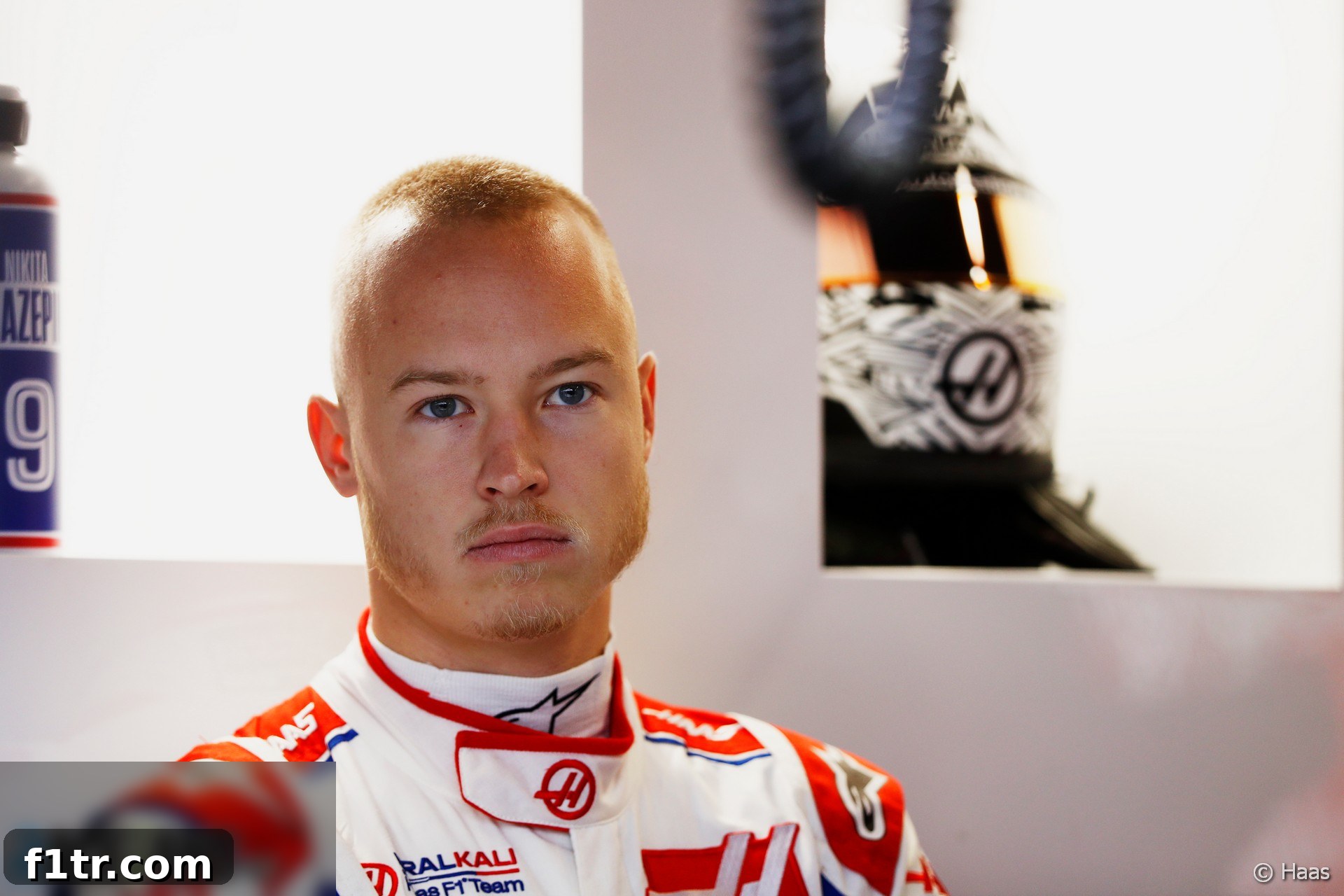
Inseparable from the Uralkali sponsorship is the future of driver Nikita Mazepin. As the son of Dmitry Mazepin, the chief of Uralkali, Nikita’s presence in Formula 1 has been directly tied to the significant financial backing provided by his father’s company. This direct link instantly placed him in an extremely precarious position amidst the escalating geopolitical crisis and the international community’s response to Russia’s actions. Steiner confirmed that Mazepin’s future was among the critical matters that “needs to be resolved,” underscoring the interconnectedness of the driver’s role with the team’s sponsorship situation.
Broader Implications for Russian Athletes and Government Involvement
The challenge for Haas extended beyond internal contractual matters. The Russia-Ukraine conflict rapidly led to widespread bans and sanctions against Russian athletes and entities across numerous international sports. Formula 1, despite its global nature, was not exempt from these pressures. Steiner acknowledged the broader forces at play, noting, “Not everything depends on us here what is happening. There is governments involved and I have no power over them and I think we need to see also the situation, how it develops in Ukraine.” This highlights the immense pressure F1 teams face when geopolitical events intersect with sports, often forcing decisions that transcend purely sporting or commercial considerations.
While Steiner confirmed that, at the time, official sanctions from governments had not directly influenced Haas’s business operations, the rapidly evolving situation meant that could change at any moment. The moral and ethical considerations, coupled with potential future governmental directives or sanctions, left Mazepin’s position highly vulnerable. The FIA, Formula 1’s governing body, also faced immense pressure to formulate a clear stance on Russian and Belarusian drivers, further adding to the uncertainty surrounding Mazepin’s ability to compete under any flag or banner.
Steiner’s Empathy Amidst Uncertainty
Amidst the professional discussions, Steiner also offered a glimpse into Mazepin’s personal struggle. “Mazepin is putting a tough face on it,” he observed. “I mean, for sure it bothers him because it’s his home country. There is no guarantees anywhere.” Steiner’s comments reflected an understanding of the immense personal pressure on the young driver, caught in a conflict far beyond his control. The Haas team principal reiterated the unpredictable nature of the situation, emphasizing that the unfolding geopolitical landscape would ultimately dictate the path forward for Mazepin and the team. “As I said before, we just need to see how this all develops, where it goes. There is more than F1 team involved here there are governments involved in this one so I have no idea what is coming from that side.”
Mazepin’s Public Statement: Focusing on the Controllables
In the wake of the mounting uncertainty, Nikita Mazepin himself issued a statement on social media, reflecting his difficult position. “It’s a difficult time and I am not in control over a lot of what is being said and done,” he wrote. His message conveyed a sense of helplessness regarding the external political forces but also expressed a determination to focus on what he could control: his performance and commitment to racing. “I’m choosing to focus on what I can control by working hard and doing my best for my Haas F1 team. My deepest thanks for your understanding and support.” This statement, while brief, encapsulated the dilemma of many athletes caught in the crosshairs of international politics – a desire to continue their profession while acknowledging the profound and uncontrollable events unfolding around them.
Advert | Become a RaceFans supporter andgo ad-free
The Larger Picture for Formula 1 and Global Sports
The Haas F1 Team’s predicament with Uralkali and Nikita Mazepin serves as a potent reminder of the intricate and often uncomfortable intersection between global sports and geopolitics. The decision-making process at Haas, and the broader response from Formula 1 and other international sports federations, set significant precedents for how major sporting organizations navigate conflicts, human rights issues, and governmental sanctions. The events underscored the fact that even highly commercialized and ostensibly apolitical sports like F1 cannot remain isolated from major global crises.
The rapid withdrawal of sponsorship and the questioning of a driver’s future based on nationality illustrate the pressures exerted by public opinion, media scrutiny, and the directives of national governments. This situation forces F1 to confront its values, its responsibilities, and the ethical implications of its partnerships. As the 2022 F1 season progresses, the sport, its teams, and its athletes will continue to grapple with the unpredictable nature of world events and their direct impact on the grid and beyond.
Conclusion: Awaiting Clarity in a Volatile World
In conclusion, the Haas F1 Team finds itself at a critical juncture, navigating the complex fallout from the Russia-Ukraine conflict. The swift removal of Uralkali branding and the candid statements from Guenther Steiner highlight the team’s agility and determination to maintain stability amidst unprecedented challenges. While assurances of financial resilience have been made, the team still faces the intricate task of resolving legal ties with its former title sponsor and, most significantly, determining the fate of Nikita Mazepin. Mazepin’s future remains deeply intertwined with the broader geopolitical landscape and the decisions made by governments and sporting bodies. As Formula 1 moves forward, the Haas F1 story will undoubtedly be a closely watched saga, reflecting the broader tensions of a volatile world impacting even the pinnacle of motorsport.
2022 F1 Season Insights and Related Articles
Stay informed on the latest developments from the 2022 Formula 1 season and explore related discussions that shape the racing world. Below is a selection of articles providing deeper insights into the season’s narratives, team challenges, and driver perspectives.
- Mercedes told me “you’re wrong” about 2022 car’s problems – Hamilton
- FIA confirms all 10 F1 teams complied with 2022 cost cap
- Steiner “not ashamed” of panning “slow” Schumacher in Drive to Survive
- Albon believes year out of F1 improved him as a driver
- Hamilton sees diversity gains in F1 years on from his ‘traumatising’ experience of racism
Browse all 2022 F1 season articles