Unveiling the Verdict: Inside F1’s Penalty System and the Art of Stewarding
The world of Formula 1 is one of blistering speed, fierce competition, and, inevitably, contentious decisions. At the heart of maintaining order and fairness amidst the high-octane drama are the FIA stewards, whose verdicts can dramatically alter championship outcomes and shape the narratives of entire seasons. In a rare and illuminating feature for the FIA’s new magazine, Auto, these often-anonymous arbiters have offered an unprecedented glimpse into the complex process by which penalties are decided, shedding light on the nuanced considerations that underpin their critical roles.
Understanding the intricacies of F1 stewarding is crucial for fans and participants alike. Each Grand Prix presents a myriad of challenges, from wheel-to-wheel combat to strategic maneuvers, all subject to a detailed but often interpreted rulebook. This exclusive insight from the FIA provides a vital understanding of the philosophy and methodology employed by those tasked with upholding sporting integrity, safety, and fair play in the pinnacle of motorsport.
The Controversial Grosjean Ban: A Precedent-Setting Decision
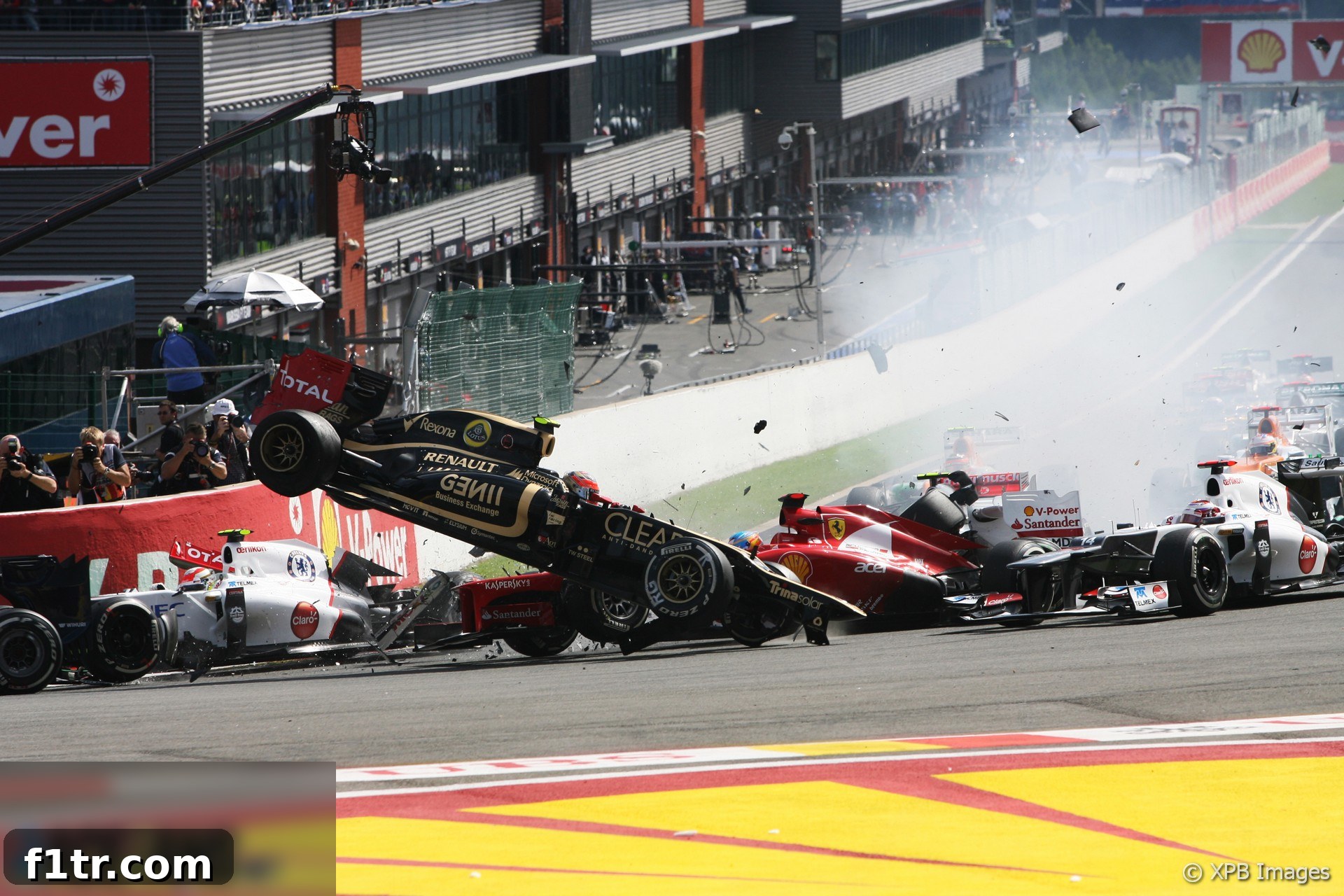
Among the most fiercely debated decisions of recent memory was the one-race ban handed to Romain Grosjean following a major collision at the start of the 2012 Belgian Grand Prix. The incident, which unfolded dramatically at Spa-Francorchamps, saw Grosjean’s Lotus make contact with Lewis Hamilton’s McLaren, triggering a chain reaction that took out not only himself and Hamilton, but also championship contenders Fernando Alonso and Sergio Perez. The scale of the pile-up, particularly its impact on the title fight, immediately elevated the incident’s significance.
Grosjean’s ban marked a watershed moment, being the first for an F1 driver in 18 years. This rarity alone sparked extensive discussion throughout the paddock and among fans. What amplified the debate further was the stewards’ explicit admission that the severity of the penalty was, in part, influenced by the fact that the crash “eliminated leading championship contenders from the race.” This particular justification ignited a passionate discourse regarding the principle of punishment – should it solely reflect the nature of the transgression, or should its consequences also play a significant role?
Behind the Verdict: Garry Connelly’s Perspective
Garry Connelly, FIA Institute deputy president and a veteran steward who presided over several races in 2012, including the fateful Belgian Grand Prix, provided crucial context to the reasoning behind Grosjean’s unprecedented ban. He acknowledged the potential championship-altering ramifications of the crash, stating, “That incident could have completely changed the outcome of the FIA’s premier championship.” However, Connelly was keen to clarify that the additional severity of the penalty was not *solely* for this reason, or at least, not wholly for it.
Connelly elaborated on a critical, often overlooked, aspect of stewarding: the responsibility that comes with experience and position on the grid. He emphasized the elevated duty of care expected from drivers, especially those relatively new to Formula 1, who find themselves competing at the very sharp end of the field. “When you’re a relatively new driver to Formula One and you have the privilege of driving in a potentially winning or podium finish car, you’re mixing it with a group of drivers who have many years more experience than you do at the sharp end of the field,” Connelly explained.
This perspective underscores the expectation that less experienced drivers, particularly those in competitive machinery, must exercise a heightened degree of caution. Connelly’s candid assessment suggested a perceived gap in experience and judgment at that critical moment: “It therefore behoves you, in our view, to exercise greater care and attention because you are, in our view, with all due respect, the new kid on the block and maybe a little out of your league compared with the guys around you at that end of the grid.” This statement, while perhaps blunt, highlights the stewards’ holistic assessment of the incident, considering not just the immediate action but also the driver’s context within the competitive landscape.
The decision to ban Grosjean was not taken lightly, a point Connelly passionately reiterated. Every penalty weighs heavily on the stewards’ minds, reflecting the immense responsibility they bear in a sport where split-second decisions have monumental consequences. “It was a very serious decision and one that was taken only after lengthy weighting of the facts, the evidence, history, everything. However, every decision weighs heavily on the stewards’ minds. No decision to penalise a driver is ever taken lightly,” he assured, reinforcing the meticulous and comprehensive nature of their deliberation process.
The Revolutionary Impact of Driver Stewards
Beyond specific incidents, the FIA’s approach to stewarding has undergone significant evolution. A pivotal change introduced in 2010 was the inclusion of former racing drivers as stewards, a practice that has been widely lauded. Garry Connelly himself praised this initiative as “one of the most revolutionary and outstanding initiatives taken in the sport for years.” The rationale behind this move was to inject invaluable real-world racing experience directly into the decision-making process.
The presence of ex-drivers brings a unique and irreplaceable dimension to the stewards’ room. These individuals possess an innate understanding of car dynamics, racing lines, the pressures of competition, and the split-second judgments drivers must make under extreme conditions. “It brings a depth of experience and knowledge to the stewards’ room that is irreplaceable,” Connelly affirmed. This specialized insight allows for a more empathetic yet equally rigorous evaluation of incidents, enabling stewards to better discern intent, assess the feasibility of evasive action, and understand the nuances of on-track battles that might elude those without direct racing backgrounds.
Furthermore, Connelly observed that these driver-stewards approach their role with profound seriousness and professionalism. “The drivers take it seriously too. They are constructive and they are, in some cases, tougher than the toughest stewards I’ve worked with.” This suggests that far from being lenient towards their peers, former drivers often apply a highly critical lens, understanding precisely what is expected at the elite level of motorsport. Their presence not only enhances the quality of decisions but also bolsters the perceived legitimacy and fairness of the stewarding process among active drivers and teams.
Discretion vs. Fixed Penalties: An Ongoing Debate
Despite these advancements, the fundamental question of how stewards should apply penalties – whether through broad discretion or adherence to fixed punishments for specific transgressions – remains a persistent point of debate within Formula 1. This dilemma pits the desire for consistent, predictable outcomes against the necessity to address the unique complexities of each racing incident. The paddock is often divided on this issue, with drivers and teams frequently expressing differing preferences.
During the drivers’ briefing ahead of the Korean Grand Prix, for instance, several competitors voiced a collective desire for greater consistency, specifically suggesting that all incidents involving one driver impeding another should automatically result in a five-place grid penalty. Their argument stems from the belief that a standardized penalty would act as a stronger deterrent and eliminate the subjective interpretations that can lead to perceived unfairness.
The practical implications of this debate were vividly illustrated at the previous event in Suzuka. Jean-Eric Vergne received a three-place grid penalty for holding up Bruno Senna during qualifying. In contrast, Sebastian Vettel, a championship front-runner, was given a mere reprimand for impeding Fernando Alonso in a similar scenario. This disparity in punishment for what appeared to be comparable infractions immediately drew criticism, most notably from Alonso himself.
Fernando Alonso, who was locked in a tight championship battle with Vettel, openly voiced his displeasure, later attributing part of his championship loss to the perceived leniency of Vettel’s reprimand. He described the awarding of a reprimand as “surprising,” highlighting the frustration that arises when similar incidents yield vastly different outcomes. Such inconsistencies can fuel accusations of favoritism or undue influence, undermining trust in the impartiality of the stewarding system. This perpetual tension between the need for nuanced judgment and the demand for clear, uniform application of rules continues to be a central challenge for the FIA.
Towards a Points-Based System: Future of F1 Penalties
In a further effort to enhance fairness and consistency, the FIA is actively exploring the introduction of a points-based penalty system, analogous to conventional road driving licenses. Under this proposed framework, drivers would accrue penalty points on their super license for various infractions, with an automatic race ban imposed once they reach a predetermined cumulative figure. This system aims to create a more comprehensive and cumulative deterrent, particularly for drivers who are repeat offenders of minor or moderate infringements.
The concept has garnered significant support, notably receiving the backing of FIA President Jean Todt, who views it as a progressive step towards modernizing and rationalizing the penalty structure. Proponents argue that such a system would introduce greater transparency and predictability, allowing drivers a clearer understanding of the consequences of their actions over a season. It would also address the issue of drivers accumulating multiple minor penalties without facing a significant consequence until a major incident occurs, providing a mechanism for long-term accountability.
However, the implementation of such a system is not without its complexities, as acknowledged by Formula 1 Race Director Charlie Whiting. While the principle is sound, Whiting believes that more extensive discussion is required to develop a truly satisfactory solution. Key challenges include defining the precise number of points to be assigned for each type of infraction, determining the duration for which points remain on a driver’s license, and ensuring that the system is fair to all competitors, regardless of their team’s performance or competitive standing. The debate must consider whether the system would inadvertently penalize drivers who are more frequently in the heat of battle due to their car’s competitive position, or how to distinguish between a genuine racing incident and a deliberate, reckless maneuver within the points framework.
These ongoing discussions reflect the FIA’s commitment to continually refining its regulatory framework, aiming to strike a delicate balance between swift justice, long-term deterrence, and the inherent unpredictability of motorsport. The goal is to evolve a penalty system that is robust, equitable, and capable of maintaining the highest standards of safety and sporting conduct in Formula 1.
Conclusion: The Evolving Landscape of F1 Justice
The insights shared by FIA stewards underscore the profound complexity and gravity of their role in Formula 1. From the meticulous analysis of incidents like Romain Grosjean’s Belgian Grand Prix crash, which demanded careful consideration of both immediate actions and broader championship implications, to the strategic integration of former drivers into the stewarding panel, the FIA is continuously striving to enhance the fairness, transparency, and integrity of its adjudicative processes.
The perpetual dialogue between discretionary judgment and the desire for fixed penalties, as well as the active exploration of a points-based system, exemplifies the dynamic nature of F1 justice. These debates are not merely academic; they directly impact the competitive landscape, the careers of drivers, and the very perception of fairness that underpins the sport’s appeal. As Formula 1 continues to push the boundaries of technology and competition, the evolution of its regulatory and penal systems will remain paramount, ensuring that decisions are not only correct but also consistently understood and accepted by all stakeholders. The journey towards perfect stewarding is ongoing, a testament to the FIA’s dedication to upholding the highest standards in the thrilling world of Grand Prix racing.
2012 F1 season
- Hulkenberg’s missed win should have been “high point” for Force India
- Kubica reveals he almost withdrew from fateful 2011 rally – and had 2012 Ferrari F1 deal
- 2012 F1 season Blu-Ray “Victorious Vettel” reviewed
- 2012 F1 season DVD “Victorious Vettel” reviewed
- New team radio reveals Vettel’s penalty protests
Browse all 2012 F1 season articles