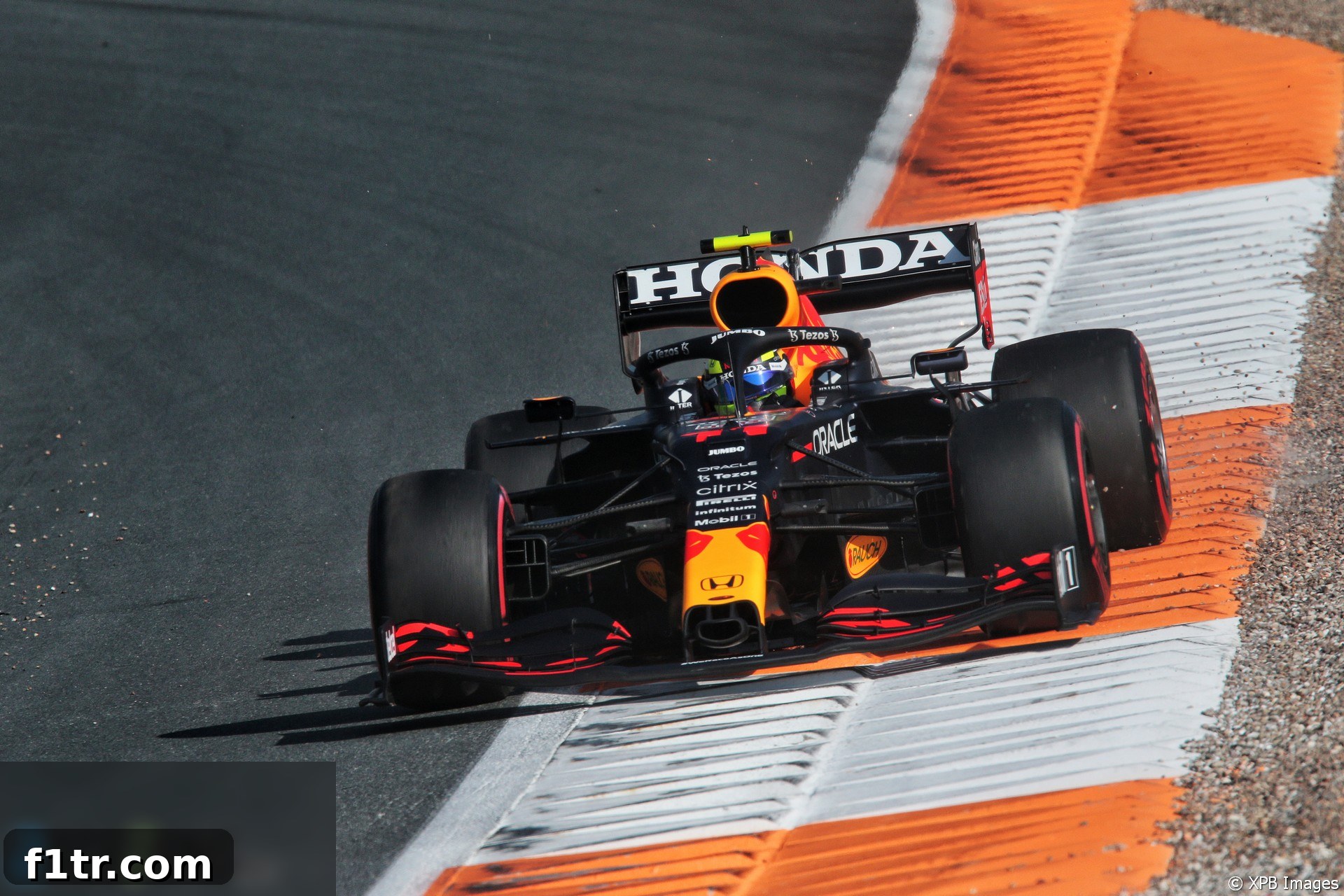
The grid for the highly anticipated Belgian Grand Prix at the iconic Spa-Francorchamps circuit has undergone a significant shake-up even before the formation lap, with two drivers – Red Bull’s Sergio Perez and Williams’ Nicholas Latifi – confirmed to start the race from the pit lane. This unusual situation stems from critical car alterations made by their respective teams since yesterday’s challenging qualifying session, each driven by vastly different circumstances but culminating in the same starting penalty. These strategic decisions and urgent repairs are set to add an intriguing layer to what is already one of Formula 1’s most unpredictable races, promising an even greater spectacle for fans as drivers navigate the legendary 7.004-kilometre circuit from altered starting positions.
Perez’s Strategic Power Unit Change: A Calculated Risk for Red Bull
For Sergio Perez, his pit lane start is the result of a deliberate, calculated strategic move by Red Bull Racing. Following a disappointing qualifying performance where the Mexican driver could only manage a lowly 16th position on the grid, the team seized the opportunity to implement a planned power unit change. Formula 1 regulations strictly limit the number of power unit components a driver can use throughout the season – typically three of each major component (Internal Combustion Engine, Turbocharger, MGU-H, MGU-K, Energy Store, and Control Electronics). Exceeding these allocations incurs grid penalties, which can be severe.
Red Bull’s decision to fit a complete new Honda power unit to Perez’s car at Spa-Francorchamps, including a new specification of battery, is a testament to the high-stakes championship battle they are currently engaged in. With teammate Max Verstappen fighting fiercely for the Drivers’ Championship and the team locked in a Constructors’ Championship duel, reliability and peak performance are paramount. It was widely anticipated that Perez would require an additional power unit before the season’s conclusion. By introducing it at a race where he was already set to start near the back, the team effectively minimises the impact of the grid penalty on his overall race prospects. Starting 16th or starting from the pit lane does not represent a massive loss of positions relative to his expected performance, particularly on a circuit like Spa, which historically offers multiple overtaking opportunities.
The FIA officially confirmed Red Bull’s installation of the new Honda power unit, triggering the mandatory pit lane start. This move, while sacrificing track position initially, grants Perez access to fresh, potentially more powerful, and crucially, more reliable components for the crucial latter stages of the championship. For Perez, the task at hand will be to navigate the unpredictable Belgian weather and the often-chaotic opening laps, then methodically work his way through the field. His ability to manage tyre degradation and exploit any safety car periods will be critical to salvaging points from this strategically penalised start. The long straights of Spa, such as the run up to Eau Rouge and Raidillon, and the Kemmel Straight, will be his allies in making overtakes, but every position gained will be hard-fought against a competitive midfield.
Latifi’s Recovery from Q2 Crash: An Extensive Repair Job for Williams
Nicholas Latifi’s pit lane start, in stark contrast to Perez’s strategic manoeuvre, is a direct consequence of a dramatic incident during yesterday’s qualifying session. The Williams driver suffered a heavy crash during Q2, leaving his FW43B extensively damaged and requiring an extensive overnight repair job by the dedicated Williams technical crew. Such incidents place immense pressure on the team, not only to repair the car but to do so within the stringent regulations that govern car components after qualifying.
Formula 1 operates under a “Parc Ferme” rule, meaning that once cars exit the garage for qualifying, significant changes to their specification are prohibited without incurring a penalty. In Latifi’s case, Williams faced the challenge of repairing severe damage, which necessitated fitting parts that were of a different specification to those used in qualifying. Specifically, his FW43B will feature a new front wing and nose assembly for the race. While these repairs are crucial for the car’s safety and performance, the fact that they are of a different specification – even if only minor revisions or simply new components replacing damaged older ones that were originally a different specification – falls foul of the Parc Ferme rules. Consequently, the FIA mandated that Latifi must also start the race from the pit lane.
This situation highlights the immense pressure and rapid decision-making required in Formula 1. For a team like Williams, which operates with more limited resources compared to the front-runners, a heavy crash like Latifi’s presents a significant logistical and financial challenge. The mechanics worked tirelessly to ensure the car was ready for race day, demonstrating their resilience and commitment. For Latifi, starting from the pit lane in a less competitive car will present an even greater challenge. His focus will likely shift from challenging for points to gaining valuable race experience, collecting data for the team, and potentially capitalising on any unexpected events such as retirements or safety cars that could close up the field. The unique characteristics of Spa, including its varied corners and elevation changes, will test the rebuilt car to its limits, providing a robust proving ground for the repaired components.
The Reshaped Grid and Race Dynamics at Spa
With both Sergio Perez and Nicholas Latifi starting from the pit lane, the effective number of cars on the traditional starting grid for today’s Belgian Grand Prix will be reduced to 18. This reshuffling naturally promotes other drivers up the order, offering them improved starting positions and potentially better opportunities to score points or gain track position early in the race.
The most immediate beneficiary of Perez’s penalty is Yuki Tsunoda, who moves up one place to 14th position. Behind him, a cluster of drivers will each gain two places due to both Perez and Latifi vacating their original grid spots and moving to the pit lane. This includes four drivers: Aston Martin’s Sebastian Vettel, Alfa Romeo’s Robert Kubica (standing in for Kimi Räikkönen), Haas’s Mick Schumacher, and his teammate Nikita Mazepin. These gains, while seemingly minor, can be significant in the intense midfield battle, providing a slight advantage in terms of clear air at the start and reduced exposure to first-lap incidents.
An 18-car grid also subtly alters the dynamics of the race. While two fewer cars might not drastically change strategies, it can slightly reduce congestion, particularly in the run down to La Source and through Eau Rouge/Raidillon on the opening lap. For the drivers starting from the pit lane, Spa-Francorchamps presents both formidable challenges and unique opportunities. Its long straights are ideal for making up ground, but the complex medium and high-speed corners demand a perfectly balanced car. The notoriously unpredictable weather at Spa, often bringing sudden rain showers, could also play a crucial role, potentially creating chaotic conditions that a pit lane starter could exploit if they make the right tyre calls and manage the conditions expertly. The stage is now set for a thrilling Belgian Grand Prix, with an altered grid adding another layer of intrigue to what promises to be an unforgettable race.
Don’t miss anything new from RaceFans
Follow RaceFans on social media:
- Join RaceFans on Facebook
- Follow RaceFans on Twitter
- Get daily email updates from RaceFans
Support RaceFans and go ad-free
More from the 2021 Dutch Grand Prix
- “So many people love him”: Raikkonen’s rivals pay tribute to retiring champion
- Alonso studied junior series, not IndyCar, for Zandvoort banking clues
- 2021 Dutch Grand Prix Star Performers
- Paddock Diary: Dutch Grand Prix part two
- Verstappen makes the Netherlands 12th country to produce a home F1 winner
Browse all 2021 Dutch Grand Prix articles