Nelson Piquet Jnr Breaks Silence: The Full Story of F1’s Infamous Singapore Crashgate
The world of Formula 1 was rocked to its core by the “Crashgate” scandal, one of the most audacious and controversial incidents in the sport’s modern history. At its heart was former Renault driver Nelson Piquet Jnr, who courageously broke his silence, exposing a shocking conspiracy to deliberately cause a crash during the 2008 Singapore Grand Prix. His revelations unveiled a scheme designed to manipulate the race outcome, ultimately benefiting his teammate, Fernando Alonso, and forever tarnishing the reputations of key figures within the sport.
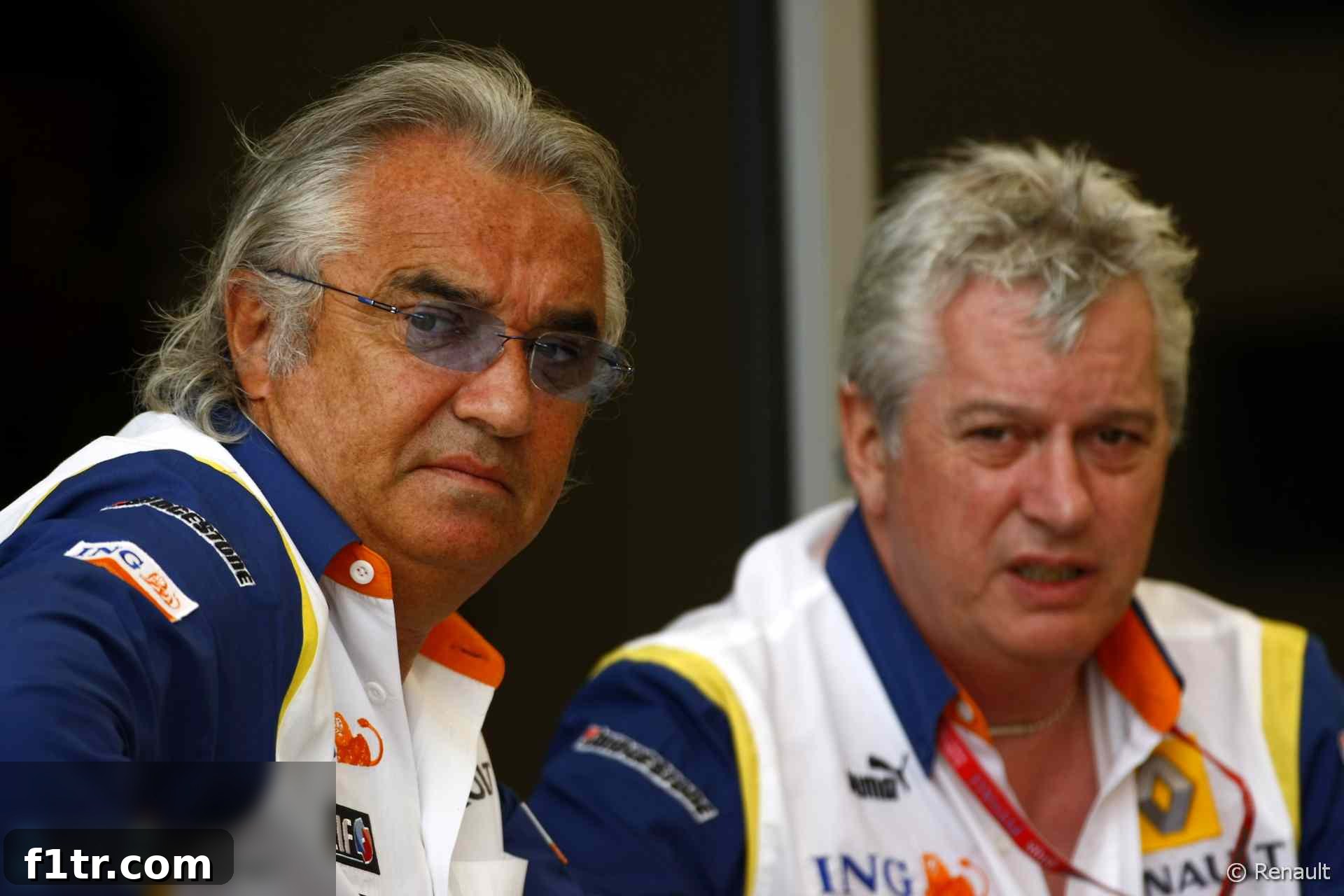
In a candid and revealing interview with The Times, Piquet Jnr laid bare the chilling details of how Renault F1 team boss Flavio Briatore and engineering director Pat Symonds masterminded the illicit plan. The objective was simple yet sinister: orchestrate a strategically timed crash that would trigger a safety car, thereby creating an unfair advantage for Fernando Alonso, who had started the race from the back of the grid and pitted early. This explosive confession not only brought down a team’s leadership but also ignited a fierce debate about ethics, integrity, and fair play at the pinnacle of motorsport.
The Tense Pre-Race Meeting: A Plan Conceived in Desperation
Piquet Jnr’s account vividly painted a picture of the immense pressure and desperation permeating the Renault garage during the inaugural Singapore Grand Prix weekend. The team’s performance throughout the 2008 season had been underwhelming, and both cars found themselves starting from challenging grid positions. It was against this backdrop of underperformance that the unspeakable plot was hatched.
Piquet recounted the highly charged meeting where the idea was first presented:
I could sense a palpable tension in the air. Flavio, usually so composed and self-assured, seemed visibly nervous, which was highly uncharacteristic of him. The room felt incredibly hot, almost stifling, amplifying the already tense atmosphere. I was genuinely taken aback by his demeanor.
It was Symonds who broke the silence, his voice laced with a sense of urgency. “Look, both cars are starting at the very back of the grid,” he stated, his gaze fixed on me. “We are in a dire situation here; we have no realistic chance of achieving anything significant in this race unless something truly extraordinary occurs.”
Flavio quickly echoed his sentiments, nodding in agreement. “Indeed, it would be an absolute disaster for the team if we don’t engineer something extraordinary to turn our fortunes around,” he added, his tone reinforcing Symonds’ gravity.
I remained silent, absorbing their words, struggling to comprehend where this conversation was heading. Their fidgety gestures and the sheer intensity of the moment were unsettling. I don’t believe I uttered a single word, completely engrossed in their unfolding narrative.
After what felt like an eternity, perhaps five minutes of uncomfortable silence, Flavio finally made his proposition, cutting straight to the core of their twisted strategy. “Listen, the only viable way we can extract any benefit from this race, the only way we can make a difference, is by ensuring a safety car is deployed at precisely the right moment,” he articulated with a chilling clarity.
I just sat there, my eyes scanning between them, a grim realization dawning. Their words immediately brought to mind the incident in Germany earlier that season, where Timo Glock had crashed shortly after I had pitted, leading to me securing a surprising second place. It was a stark reminder of the unpredictable nature of F1 and how a safety car could dramatically alter a race. Flavio then leaned in, his voice dropping slightly, “Do you want to help the team, Nelson? If you crash at the opportune moment, it could genuinely change everything for us.”
Nelson Piquet Jnr
Piquet Jnr’s testimony revealed the insidious nature of the coercion. He candidly admitted, “I did not even consider the morality of it.” This stark admission highlights the immense pressure young drivers can face within the hierarchical structures of Formula 1 teams, especially when their careers hang in the balance. The allure of securing one’s future in the highly competitive world of F1 proved to be a powerful, albeit ethically compromising, motivator.
The Contractual Coercion: Adding Pressure to an Already Difficult Decision
Adding another layer to the manipulative scheme, Piquet also claimed that just days before the Singapore Grand Prix, Briatore had aggressively pushed him to sign a contract for the 2009 season. This contract, however, was heavily skewed in Renault’s favor, granting the team the unilateral right to terminate the deal at any point while simultaneously preventing Piquet from negotiating with other teams. This contractual trap effectively put Piquet in a precarious position, making him even more susceptible to the team’s demands and making refusal of the crash request an even greater risk to his fledgling F1 career.
The 2008 Singapore Grand Prix: A Race Engineered for Deception
The inaugural Singapore Grand Prix on September 28, 2008, was a momentous occasion, being Formula 1’s first-ever night race. The street circuit under artificial lights provided a spectacular backdrop, but beneath the glamour, a dark plot was unfolding. As planned, Fernando Alonso, starting 15th, made an unusually early pit stop on lap 12 for fuel and fresh tires. This strategy was highly unconventional for a driver starting so far back but was a crucial component of the conspiracy.
Just one lap later, on lap 13, Nelson Piquet Jnr crashed his Renault R28 heavily into the wall at turn 17. The location of the crash was also critical: it was a section of the track where recovery vehicles could not easily access, necessitating the deployment of the safety car. The timing was impeccable from Renault’s perspective; with the safety car on track, the pit lane was initially closed, and then, once opened, all other cars lost significant time and track position relative to Alonso, who had already completed his pit stop. As the race unfolded, many front-runners had their strategies compromised, allowing Alonso, who had been at the back, to leapfrog competitors and ultimately secure a highly improbable victory.
At the time, Piquet’s crash was widely considered a typical driver error on a challenging new circuit. However, with the benefit of hindsight and Piquet’s later confession, the sequence of events appeared glaringly suspicious, painting a clear picture of a race outcome that was not simply won, but meticulously manufactured.
The Unraveling: Silence Broken, Justice Pursued
Nelson Piquet Jnr maintained his silence about the conspiracy for nearly a year, only breaking his silence in August 2009. The timing was significant: he had been dropped by the Renault F1 team mid-season due to his perceived underperformance. Feeling betrayed and no longer bound by team loyalty or the implicit threats to his career, Piquet decided to reveal the truth to the FIA (Fédération Internationale de l’Automobile), Formula 1’s governing body.
His dramatic revelations triggered a comprehensive FIA investigation. The evidence presented, including telemetry data and witness statements, corroborated Piquet’s story, leading to one of the most significant scandals in F1 history. The integrity of the sport was called into question, and the phrase “Crashgate” became synonymous with the incident.
Earlier in the week of his interview, Piquet had also settled a libel claim with the Renault F1 team. This legal resolution further underscored the veracity of his claims and the significant personal and professional toll the scandal had taken on him.
The Aftermath: Penalties, Reputations, and a Lingering Shadow
The consequences of Crashgate were swift and severe. Flavio Briatore and Pat Symonds faced immediate and lengthy bans from Formula 1. Briatore, in particular, received a lifetime ban from any FIA-sanctioned events, though this was later reduced on appeal. Symonds received a five-year ban. Renault F1, as a constructor, was handed a suspended disqualification from the sport, meaning any further similar breaches would result in their expulsion. While Fernando Alonso’s victory in Singapore was allowed to stand, the circumstances surrounding it cast a long shadow over his achievement, despite there being no evidence that he was aware of the conspiracy.
The scandal irreparably damaged the careers of Briatore and Symonds in Formula 1’s top echelons. For Nelson Piquet Jnr, while his courage in coming forward was acknowledged, his F1 career never recovered, and he eventually moved to other racing series. The incident served as a stark reminder of the cutthroat nature of professional sports and the extreme lengths some are willing to go to achieve success.
The Enduring Legacy of Crashgate on Formula 1
The Crashgate scandal left an indelible mark on Formula 1. It prompted a deeper examination of ethical conduct, team orders, and the power dynamics within the sport. The FIA implemented stricter regulations and oversight mechanisms to prevent similar manipulations in the future, emphasizing fair play and sporting integrity above all else. It forced teams to re-evaluate their internal practices and highlighted the importance of a transparent and ethical leadership culture.
While the immediate shock has faded, Crashgate remains a cautionary tale, a stark reminder that the pursuit of victory, however intense, must always adhere to the principles of sportsmanship and honesty. The incident continues to be a point of reference in discussions about F1’s history, a dark chapter that ultimately strengthened the sport’s resolve to uphold its values.
Related Articles and Further Reading on the Renault Singapore Crash Controversy
- Nelson Piquet Jnr claims ‘Crashgate’ libel damages – Details on Piquet’s legal actions following the scandal.
- Briatore and Symonds accept three-year F1 ban in Singapore crash settlement – Information regarding the penalties handed to the key figures.
- Fernando Alonso should renounce his Singapore Grand Prix ‘win’ – A perspective on the implications for Alonso’s victory.
- Briatore and Symonds step down as Renault accepts Singapore crash charge – The immediate aftermath of Renault’s acceptance of the charges.
- Piquet-Renault scandal: more new evidence and complaints about leaks – Coverage surrounding the ongoing investigation and emerging details.
- Statement by Nelson Piquet Jnr on his Singapore crash leaked online – The initial public revelation of Piquet’s statement.
- Did Piquet crash on purpose? – Early speculation and public opinion on the incident.
- Renault face Singapore crash hearing – The announcement of the official investigation into Renault.
- Nelson Piquet Jnr and Fernando Alonso in Renault Singapore claim – Initial reports linking the drivers to the unfolding controversy.
- Piquet’s scathing attack on Briatore – Piquet’s public criticisms of Briatore prior to the full scandal breaking.
- Nelson Piquet Jnr dropped by Renault – The event that ultimately led to Piquet’s decision to expose the truth.