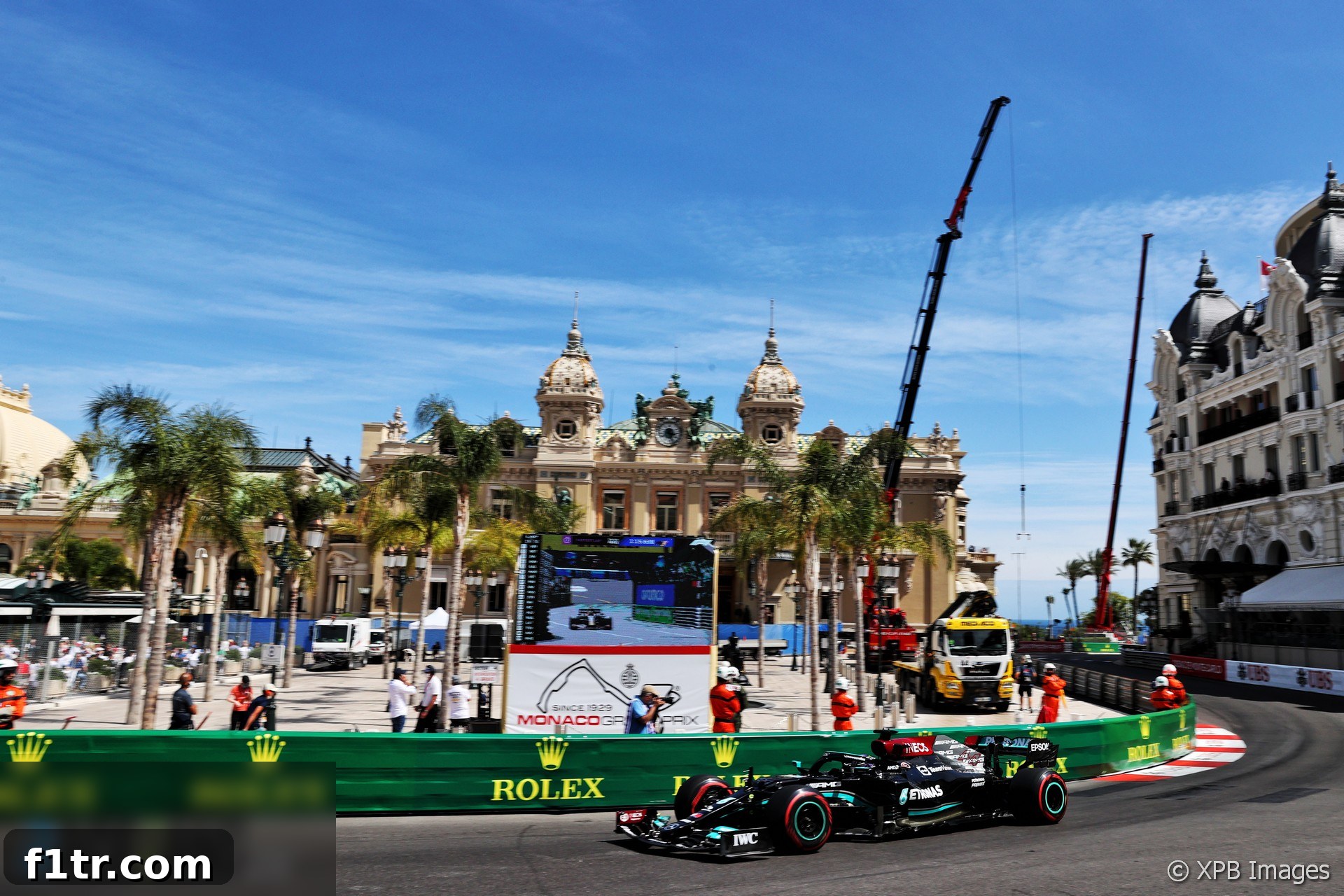
Lewis Hamilton’s Monaco Malaise: Why Even a Win Can’t Make the Grand Prix Exciting
The glitz, the glamour, the historic street circuit – the Monaco Grand Prix is undeniably one of Formula 1’s most iconic races. Yet, for seven-time world champion Lewis Hamilton, the allure has long faded, replaced by a profound sense of disillusionment. Following a challenging 2021 Monaco Grand Prix where he finished a disappointing seventh, Hamilton candidly expressed his disdain for the event, asserting he wouldn’t have enjoyed the “boring” race even if he had achieved a higher position. His remarks ignited a familiar debate within the F1 community: does Monaco’s rich heritage still justify its place on the modern Formula 1 calendar, especially when viewed through the lens of pure racing spectacle?
A Frustrating Afternoon: Monaco’s Impact on the 2021 Championship
The 2021 Monaco Grand Prix proved to be a pivotal moment in what would become a fiercely contested championship battle. Heading into the prestigious event, Lewis Hamilton held the championship lead, but a series of unfortunate events on the streets of Monte Carlo saw him relinquish that advantage to his rival, Max Verstappen. Hamilton’s weekend was marred by a difficult qualifying session and a race strategy that ultimately cost him valuable track positions. Starting from seventh, a position he would ultimately finish in, the Mercedes driver found himself battling not for victory, but for mere points, marking his worst result of the season up to that point.
Reflecting on the afternoon, Hamilton didn’t mince words about his experience. “I probably won’t re-watch this race,” he stated, a sentiment that underscored his frustration. The race was a strategic nightmare for Hamilton, particularly during his first pit stop sequence. He pointed to critical moments where he lost ground, specifically to Sergio Perez and Sebastian Vettel, who both capitalized on better timing and strategy calls. “I’ll probably watch a highlight just to kind of [get] a bit of an understanding of where I lost three places, for example, or potentially three places, two at least,” he added, highlighting his desire to understand the tactical missteps that plagued his race.
The outcome was more than just a poor individual result; it carried significant championship implications. The loss of the championship lead was a psychological blow for Hamilton and Mercedes, setting a challenging tone for the remainder of the season. This particular race served as a stark reminder of how quickly fortunes can turn in Formula 1, especially on a circuit as unforgiving and strategically demanding as Monaco.
Hamilton’s Enduring Criticism: Why Monaco Fails to Deliver Excitement
Lewis Hamilton’s recent comments are far from new. His critical stance on the Monaco Grand Prix as a racing spectacle has been consistent throughout his illustrious career. While he boasts an impressive record at the circuit, including victories in Formula 3, GP2 (now Formula 2), and three Formula 1 wins, these successes haven’t swayed his opinion on the track’s fundamental flaws for modern F1 racing. He has frequently articulated that the very nature of the circuit, particularly when combined with contemporary Formula 1 cars, inherently limits the potential for engaging competition.
“I’m glad the race is over because it was the longest race,” Hamilton lamented after the 2021 event. “It was so long. I’ve been saying it time and time again, it doesn’t matter what position you’re in, this track is just not fun to race on. Because you don’t see any overtaking, you can’t follow.” This sentiment gets to the core of his critique: the track’s narrowness and twisting layout, coupled with the ever-increasing size and aerodynamic complexity of modern F1 cars, make genuine wheel-to-wheel racing a rarity. Drivers spend most of the race managing tires and trying to maintain a gap, rather than actively battling for position.
The challenge of overtaking on the streets of Monaco is legendary. Even with DRS zones, the opportunities are so minimal that a significant portion of the race’s outcome is often decided in qualifying and during pit stops. This leads to what many, including Hamilton, perceive as a procession rather than a dynamic race. The lack of overtaking opportunities diminishes the excitement for drivers and spectators alike, transforming what should be a thrilling high-speed ballet into a strategic game of chess played at high velocity, often without the dramatic moves fans crave.
The Monaco Paradox: Glamour vs. Grand Prix Racing
Monaco presents Formula 1 with a unique paradox. On one hand, it is the epitome of glamour, prestige, and tradition. Its rich history dates back to 1929, making it one of the oldest and most revered events in motorsport. The images of cars weaving through the opulent streets, past luxury yachts and historic casinos, are synonymous with Formula 1 itself. It is a spectacle that attracts celebrities, royalty, and high-profile individuals, cementing its status as the jewel in F1’s crown. The sheer challenge of driving an F1 car at the limit around such a demanding, unforgiving circuit is also a feat in itself, celebrated by many drivers and fans.
However, on the other hand, the racing itself often falls short of expectations, particularly in the modern era of Formula 1. The inherent limitations of a street circuit designed for much smaller, less aerodynamically sensitive cars become glaringly obvious. The wide, bulky F1 machines struggle to navigate the tight confines, making it nearly impossible to follow another car closely without losing significant downforce, thereby negating any realistic chance of an overtake. This creates a reliance on strategy, luck, and qualifying performance, rather than outright racing skill during the grand prix itself.
Hamilton’s assertion that even leading the race at Monaco can be “boring” speaks volumes. “It’s great, of course, when you win the race,” he admitted. “But even when you’re leading the race and you’re far ahead, it’s also boring. I’m sure for Max it was a pretty chilled afternoon for him.” This highlights a driver’s perspective: while the concentration required to avoid a mistake is immense, the lack of direct competition diminishes the thrill of the chase. For a driver like Hamilton, who thrives on battling wheel-to-wheel and pushing the limits of his car against a rival, Monaco often fails to provide that quintessential racing experience. It becomes less about overtakes and more about survival and managing a gap, which, from a driver’s competitive viewpoint, can feel less engaging.
Monaco’s Future and the Championship Narrative
The perennial debate about Monaco’s place on the F1 calendar raises questions about the balance between tradition and the evolving demands of modern motorsport. While F1 continues to embrace new, purpose-built circuits designed for thrilling racing, Monaco remains a historical anchor. Yet, if the sport prioritizes fan engagement and on-track action, the Grand Prix faces increasing scrutiny. While it is unlikely to be removed from the calendar anytime soon due to its unique commercial and historical value, the conversation about how to improve the racing spectacle will undoubtedly continue.
For Lewis Hamilton, the 2021 Monaco Grand Prix was a race to forget, not just for its result, but for reinforcing his long-held belief that the circuit simply doesn’t deliver the kind of racing he, and many fans, crave. The shift in the championship lead to Max Verstappen after Monaco added another layer of intensity to the season, demonstrating how crucial every point and every strategic decision would be. Despite living in the principality, Hamilton’s professional assessment of the race circuit remains unwavering: a beautiful, iconic location that struggles to provide truly exhilarating Formula 1 racing in the modern era.
The aftermath of Monaco 2021 underscored the dynamic nature of Formula 1, where every race can dramatically alter the championship landscape. While the Monaco Grand Prix will always hold a special place in F1 lore, Hamilton’s candid remarks serve as a powerful reminder that history and glamour alone are not always enough to satisfy the competitive spirit of a true racer or the hunger of fans for captivating on-track battles.
Become a RaceFans supporter and go ad-free
2021 F1 Season Insights
- Masi ‘basically gifted the championship’ to Verstappen says 2021 FIA steward Sullivan
- Las Vegas race backers looking to extend F1 deal beyond 2025
- Why Mercedes put ‘a reminder of joy and pain’ on display in their factory lobby
- Verdict on error in GT race suggests Mercedes would have lost 2021 Abu Dhabi GP appeal
- Title ‘stolen’ from Mercedes made us ‘underdogs people cheer for’ – Wolff
Browse all 2021 F1 season articles