George Russell, a rising star in the world of Formula 1, has offered a compelling perspective on the contrasting approaches of top-tier teams like Mercedes and Red Bull when it comes to nurturing their junior drivers. Russell believes that Mercedes adopts a significantly more patient and supportive stance with its young talents compared to the often-described “cutthroat” philosophy of the Red Bull junior program.
Advert | Become a Supporter & go ad-free
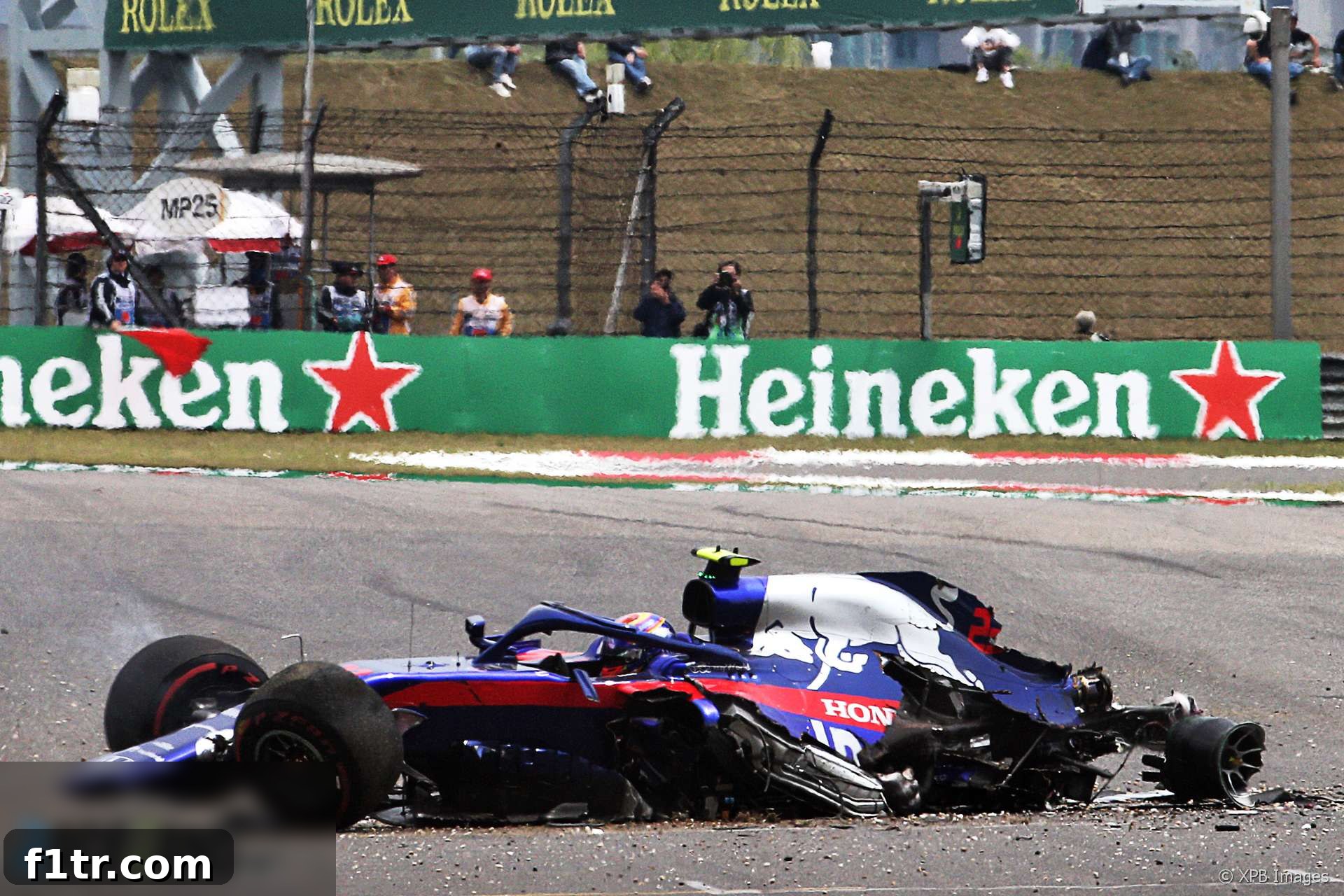
Speaking during the 2019 Chinese Grand Prix, following a significant incident involving Red Bull junior driver Alexander Albon during a practice session, Russell candidly shared his understanding of the immense pressure faced by his fellow rookie. Albon’s heavy crash underscored the fine line young drivers walk, pushing limits to prove their worth in a fiercely competitive environment.
George Russell’s Insights: Mercedes’ Nurturing Approach to Junior Drivers
“Alex is doing a really great job at the moment,” Russell remarked in an interview, acknowledging Albon’s talent amidst the challenges. “Everybody is aware of the pressure seen upon Red Bull juniors, so you understand why they’re all at 120% every single time they set foot in the car.” This statement highlights a core difference in how drivers under each program might perceive their roles and the expectations placed upon them.
Russell characterized Red Bull’s young driver program as “a bit more cutthroat compared to usual,” drawing a clear distinction with his own experience at Mercedes. He recounted personal anecdotes illustrating Mercedes’ supportive culture, particularly under the guidance of team principal Toto Wolff. These insights provide a rare glimpse into the internal dynamics of two of Formula 1’s most successful teams and their philosophies on driver development.
A Culture of Support: Learning from Setbacks
Russell openly admitted, “It’s not that I don’t feel pressure. At the end of the day, if I’m not performing, Mercedes aren’t just going to keep me there.” This pragmatic view indicates that while Mercedes might offer more patience, the ultimate demand for performance remains. However, the manner in which that demand is communicated and managed appears to be vastly different.
Russell recalled two specific instances early in his F2 and GP3 careers where he struggled. “When I opened the season in Bahrain last year in F2 and it was a poor weekend, and when I opened the season in GP3 in Barcelona, it was a poor weekend, the response from Toto was ‘don’t worry about it, it’s your first race, it’s a long season and make sure you do better next time’.” This level of reassurance, rather than immediate condemnation, is crucial for a young driver’s confidence and long-term development.
The contrast was stark for Russell, who confessed, “I was expecting a bollocking when I walked into his office.” This expectation, common among junior drivers facing performance shortfalls, underscores the traditional high-pressure environment often associated with motorsports. Wolff’s calm and encouraging reaction, however, exemplifies Mercedes’ distinct approach – one that prioritizes learning and growth over instant results or harsh criticism. Russell, while unable to speak for other teams directly, noted, “the perception, just looking at the history of how they do things,” strongly suggests a different standard elsewhere.
The Red Bull Philosophy: High Stakes, High Pressure
The Red Bull junior driver program is renowned for its intensity and high turnover rate. It operates on a principle of “sink or swim,” where drivers are expected to perform at an exceptionally high level from the outset. This philosophy, while undeniably successful in identifying raw talent and fast-tracking some to Formula 1, also creates an environment of immense pressure. Drivers within the Red Bull system often face the prospect of swift demotion or outright dismissal if they fail to meet demanding targets, leading to the “120%” effort Russell mentioned.
Alexander Albon’s Journey: Thriving Under Scrutiny
Alexander Albon’s career path perfectly illustrates the challenging nature of the Red Bull program. Despite being dropped from Red Bull’s youth scheme in 2012, Albon demonstrated remarkable resilience, fighting his way back into contention and eventually earning a spot with Toro Rosso (Red Bull’s sister team) in 2019. His re-entry and subsequent promotion to Red Bull Racing showcased the program’s ability to pick up talent that might have initially been overlooked, but also the relentless pressure that permeates every stage.
Albon’s heavy crash at the 2019 Chinese Grand Prix, while an unfortunate incident, served as a stark reminder of the immense stakes involved. For drivers in the Red Bull system, every session, every lap, and every corner carries the weight of potential career progression or regression. The expectation to deliver maximum performance consistently, even under challenging conditions, is a hallmark of their development strategy.
The Psychology of Performance: Navigating F1’s Junior Ranks
The psychological aspect of racing is often underestimated, especially for young drivers striving to reach Formula 1. The pressure to perform, to secure sponsorship, and to impress team bosses can be overwhelming. Russell’s comments shed light on how different team philosophies can impact a driver’s mental state and approach to their craft.
“I feel the same amount of pressure entering a qualifying session as I did in F2 or GP3,” Russell affirmed. This consistent internal pressure is inherent to racing at any elite level. However, he differentiates between this innate drive and external, unnecessary pressure. “You want to do your best, you want to get the most out of it. I know I’ve just got to do the job.”
Balancing Ambition and Reality: The Driver’s Mindset
Russell’s strategy for managing pressure is to focus on his own performance rather than trying to overly impress others. “There’s no need to add additional pressure to try and impress anybody more than you’re doing. My goal is to get the most out of it and if I do it then they’ll be happy.” This mindset, potentially fostered by Mercedes’ patient environment, allows a driver to concentrate on their craft, refine their skills, and develop without the constant fear of immediate repercussions for every minor mistake.
This contrasts sharply with a system where drivers might feel compelled to take excessive risks or push beyond their current capabilities simply to satisfy external pressures. While aggressive driving is part of F1, a consistent, methodical development path can yield more sustainable long-term success. Mercedes’ approach seems to bet on this long-term view, trusting their talent to mature and reach their full potential, even if it means weathering a few storms early on.
Developing Future Stars: Two Distinct Paths to Formula 1
Both Mercedes and Red Bull have undeniably successful junior programs, but their methods present two distinct blueprints for driver development. Mercedes, exemplified by Toto Wolff’s interactions with Russell, appears to favor a more nurturing, educational approach. This fosters resilience, allows for mistakes as learning opportunities, and builds a strong foundational relationship between the team and the driver. The emphasis is on steady growth and understanding the complexities of high-level motorsport over time.
The Stakes of Investing in Young Talent
Red Bull, on the other hand, prioritizes rapid assessment and immediate impact. Their “cutthroat” nature ensures that only the most adaptable and fiercely competitive drivers advance. This system is designed to quickly identify those who can withstand extreme pressure and deliver under intense scrutiny, often leading to younger drivers making their F1 debuts. While it has produced multiple world champions, it also leaves a trail of talented drivers who didn’t quite make the cut.
The success of both programs highlights that there isn’t a single, universally “correct” way to bring a driver to Formula 1. Each approach has its merits and drawbacks, reflecting the overarching philosophy and risk appetite of the parent team. Mercedes’ patience with George Russell appears to be a calculated investment, allowing him the space to develop into a future team leader, while Red Bull’s rapid progression model continuously feeds fresh talent into the top echelons of racing.
Conclusion: A Diverging Blueprint for Success
George Russell’s candid comparison of the Mercedes and Red Bull junior driver programs offers invaluable insight into the varied pathways young talents navigate on their journey to Formula 1. His personal experience underscores Mercedes’ commitment to a patient and supportive development environment, where setbacks are viewed as learning opportunities rather than immediate career threats. This contrasts sharply with the widely perceived high-pressure, “cutthroat” nature of Red Bull’s program, which demands instantaneous, peak performance.
Ultimately, both philosophies have proven effective in cultivating future F1 stars. However, Russell’s reflections suggest that a nurturing approach, focused on long-term growth and mental well-being, may empower drivers to perform more consistently and unlock their full potential without the debilitating fear of failure. As the careers of drivers like Russell and Albon continue to unfold, the success of these divergent development models will provide ongoing lessons for the future of motorsport.
Advert | Become a RaceFans supporter andgo ad-free
2019 F1 Season: Related Articles
- Crying in the Melbourne car park at 2019 grand prix was my career low – Ocon
- McLaren Racing reports reduced £71 million loss in 2019
- Kvyat: Hockenheim podium last year was “my biggest achievement” so far
- How the FIA’s new encrypted fuel flow meter targets Ferrari’s suspected ‘aliasing’ trick
- “He smashed my office door”: 23 must-see moments from ‘Drive to Survive’ season two
Browse all 2019 F1 season articles