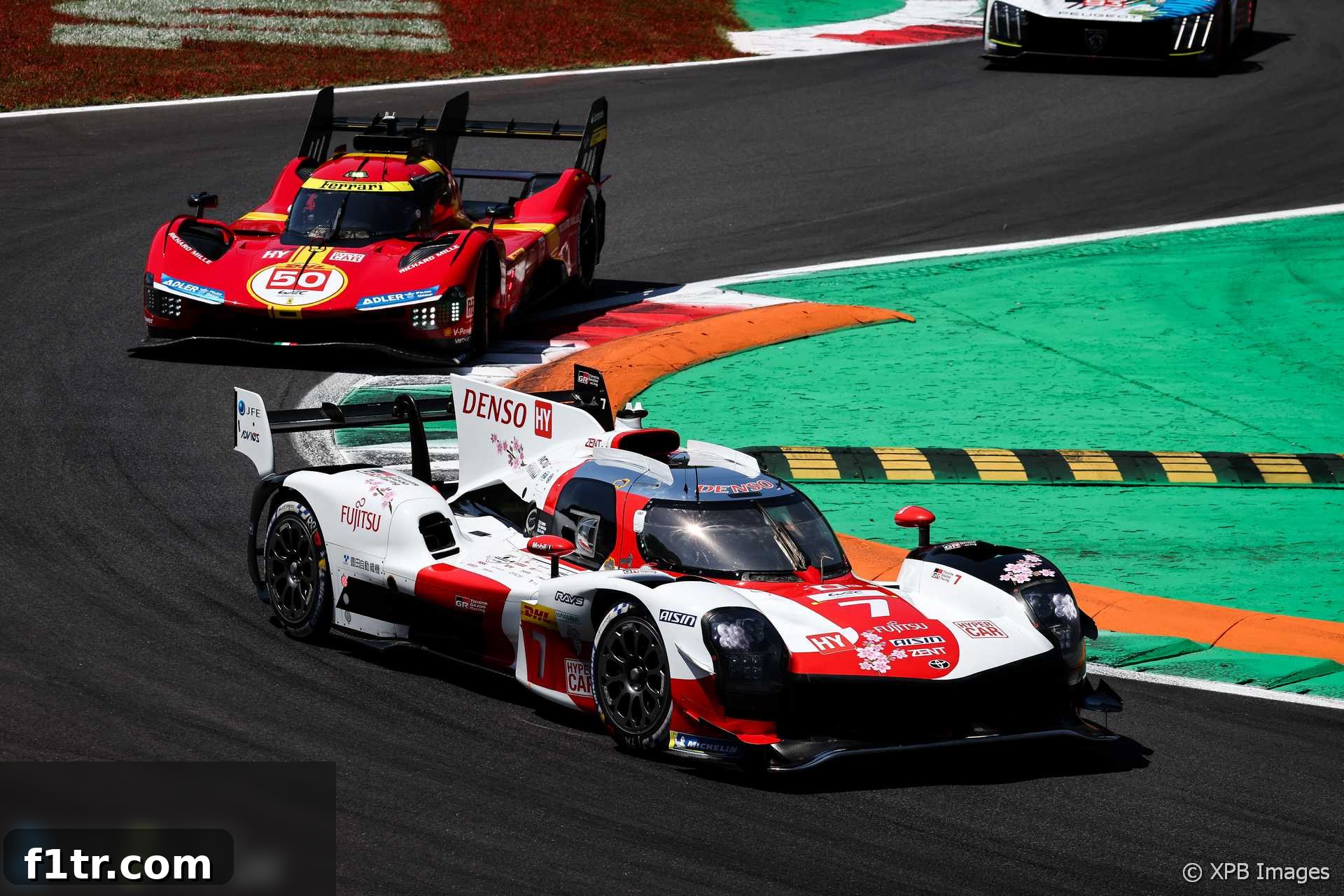
The World Endurance Championship (WEC) is rarely short of drama, both on and off the track. Following the highly anticipated Six Hours of Monza, Ferrari has openly voiced its discontent regarding the latest Balance of Performance (BoP) adjustments, which they believe unfairly hindered their performance at their home race. This controversy reignites the ongoing debate surrounding fairness and competitive balance within top-tier endurance racing, particularly in the cutthroat Hypercar category.
Ferrari’s BoP Outcry Following Monza Defeat
After a thrilling victory at the iconic Le Mans 24 Hours, Ferrari entered the Monza round with high expectations, especially given the fervent support from their home crowd. However, their hopes for another dominant display were dashed as rivals Toyota secured a decisive win. The Italian marque subsequently issued a thinly veiled criticism of the WEC’s performance-balancing measures, asserting that the new BoP regulations placed them at a significant disadvantage.
The WEC’s Balance of Performance system is designed to level the playing field, preventing any single manufacturer from dominating and ensuring close competition. However, striking this balance is a delicate act, often leading to disagreements among teams, particularly when adjustments follow a major success like Le Mans. Ferrari’s statement highlighted their belief that the conditions imposed for Monza strayed from the ideal of fair competition, directly impacting their ability to contend for victory.
Understanding the Balance of Performance (BoP) Adjustments
The Balance of Performance system is a critical, albeit frequently contentious, element of modern endurance racing. Its primary goal is to ensure that different car concepts—whether they are naturally aspirated, turbocharged, hybrid, or non-hybrid—can compete on relatively equal terms, thereby enhancing spectacle and unpredictability. Parameters such as minimum weight, engine power output, and energy usage per stint are meticulously adjusted by the series organizers based on data gathered from previous races and testing.
For the Monza event, significant alterations were made to the Hypercar class BoP, specifically targeting the Ferrari 499P prototypes and the Toyota GR010 Hybrids. These changes were a direct consequence of Ferrari’s stunning triumph at the Le Mans 24 Hours, an event where the Italian team showcased impressive pace and reliability. The post-Le Mans adjustment sought to recalibrate the competitive landscape, but its execution drew strong reactions from the involved parties.
Ferrari’s Penalties: A Heavier Burden for the 499P
The adjustments for Ferrari were substantial and multi-faceted. Their 499P prototypes, which had captivated audiences at Le Mans, were subjected to a 5kg increase in their minimum weight. While seemingly minor, even small weight additions can significantly impact a car’s handling, tire degradation, and overall lap time, especially on a high-speed circuit like Autodromo Nazionale Monza, where every fraction of a second counts.
Beyond the weight penalty, Ferrari’s power output was cut by 10kW compared to the previous race. This reduction in raw power directly affected their acceleration and top speed, crucial attributes for defending or attacking positions. To compound these changes, the permitted energy usage for the 499P during a single stint was reduced by 8MJ. This energy restriction forced drivers and strategists to manage fuel consumption even more meticulously, potentially limiting outright pace or dictating shorter, less flexible stints. Ferrari’s official statement underscored their belief that these “conditions imposed at Monza put the team at a disadvantage compared to its rivals,” reflecting a sentiment that their Le Mans success had been unduly penalized.
Toyota’s Changes: A Lighter Touch for the GR010 Hybrid
In contrast to Ferrari’s comprehensive penalties, rivals Toyota faced a comparatively lighter BoP adjustment. The Japanese manufacturer’s GR010 Hybrids had no changes to their minimum weight or energy usage limits for Monza. Their sole adjustment was a 5kW reduction in power output, half of what Ferrari experienced. This disparity in the magnitude of adjustments immediately raised eyebrows and fueled Ferrari’s perception of an uneven playing field.
Toyota, having dominated the initial rounds of the WEC season, had themselves been subject to BoP adjustments prior to Le Mans, where they ultimately finished behind Ferrari. Therefore, the latest changes seemed to partially restore some of their competitive edge while applying more stringent limitations to the previous victor. This continuous ebb and flow of BoP adjustments highlights the inherent difficulty in maintaining perfect parity across diverse Hypercar entries throughout a season.
The Season So Far: Shifting Fortunes and Intense Rivalry
The 2023 WEC season has been a thrilling spectacle, characterized by intense competition and dramatic shifts in momentum. Toyota Gazoo Racing started the year in dominant fashion, sweeping the opening three rounds of the championship. Their GR010 Hybrids showcased formidable speed and reliability, establishing themselves as the benchmark in the Hypercar class.
However, the narrative took a dramatic turn leading up to the blue-riband event, the Le Mans 24 Hours. Prior to the French endurance classic, a BoP adjustment aimed at reining in Toyota’s advantage was implemented. This set the stage for Ferrari’s triumphant return to the top prototype category, as their 499P secured a historic victory at Le Mans, marking their first overall win at the event in 58 years. This monumental achievement not only electrified the motorsport world but also significantly intensified the championship battle.
Heading into Monza, the latest BoP changes once again stirred the pot. At the Six Hours of Monza, it was Toyota’s turn to reclaim the top spot, with their number seven GR010 Hybrid crossing the finish line a commanding 16 seconds ahead of the number 50 Ferrari. This result served as a clear indicator of how impactful the BoP adjustments had been, directly influencing the outcome and keeping the championship standings incredibly tight.
Ferrari’s Resilience and Unwavering Fan Engagement at Monza
Despite the imposed limitations and the challenging circumstances, Ferrari emphasized the exceptional effort and dedication demonstrated by their team at Monza. In a testament to their unwavering spirit, the Italian outfit highlighted “a perfect strategy, impeccable work by the mechanics during pit stops and a flawless performance by the drivers” that allowed them to deliver a memorable performance for their loyal fanbase. Over 65,000 passionate spectators, predominantly clad in red, flocked to the Autodromo Nazionale di Monza throughout the weekend, creating an electric atmosphere and underscoring the enduring appeal of Ferrari in motorsport.
Even without a victory, the team’s ability to fight for podium positions and maintain a strong presence at the front of the field, especially against a seemingly revitalized Toyota, resonated deeply with the Tifosi. This display of resilience and strategic prowess further solidified Ferrari’s position as a formidable contender in the WEC Hypercar class, irrespective of the fluctuating BoP landscape. Their strong showing under pressure speaks volumes about the talent and determination embedded within the Ferrari AF Corse team.
Toyota’s Quest for “True Performance” and Home Race Ambitions
On the other side of the garage, Toyota Gazoo Racing’s President Koji Sato expressed a renewed sense of purpose following their Monza victory. Sato articulated the team’s desire to “show our true performance,” revealing the underlying “frustration in our hearts, since Le Mans.” This candid admission shed light on the immense pressure and high expectations within the Toyota camp, particularly after their Le Mans streak was broken by Ferrari.
Sato further elaborated on the team’s intense preparation leading up to Monza, stating, “We have all worked together as one to move forward towards the next race. It was a very important four weeks. Because of that process, we were able to compete as a true team at Monza.” This collective effort and refined strategy undeniably paid dividends, allowing Toyota to demonstrate their capabilities and reaffirm their status as a dominant force in the WEC. Their performance at Monza was a clear statement of intent, signaling their determination to fight for the championship title.
Looking ahead, the WEC calendar moves to Fuji Speedway, Toyota’s home race, where another BoP change is anticipated. Sato conveyed the team’s ambitious outlook for this crucial round: “In the next round at Fuji, we will do our best under the leadership of Kamui [Kobayashi]. We would like to show the stronger Toyota WEC team in front of many Japanese fans.” The prospect of performing well on home soil, coupled with potentially favorable BoP adjustments, undoubtedly fuels Toyota’s motivation to deliver a stellar performance for their local supporters.
Sportsmanship Amidst Competition: Toyota’s Apology for Collision
Beyond the competitive aspects of the race, Koji Sato also took the opportunity to address an unfortunate incident involving Toyota’s number eight car. During the race, Sébastien Buemi, driving the number eight GR010 Hybrid, was involved in a collision with a rival D’station Racing car. Sato, demonstrating exemplary sportsmanship, offered a sincere apology on behalf of the team.
“I would like to express my sincerest gratitude to D’station Racing’s Mr Hoshino, Mr Fujii, Mr Stevenson and everyone involved in the team following the dangerous situation caused by the contact from car number eight, which took away their opportunity to challenge at Monza,” Sato stated. He added, “I sincerely apologise for that. The entire team will reflect and be thoroughly aware so that everyone can race safely.” This public apology underscores the strong ethos of safety and respect within the WEC paddock, emphasizing that competitive ambition must always be balanced with responsible driving and fair play. It also highlights the recognition of the significant impact such incidents can have on competitor teams.
The Road Ahead: WEC Championship Intensifies
The Six Hours of Monza has set the stage for a captivating remainder of the World Endurance Championship season. The ongoing debate surrounding the Balance of Performance system will undoubtedly continue, reflecting the fine line between promoting competitive racing and potentially penalizing success. As Ferrari and Toyota vie for supremacy, with other manufacturers also pushing hard, the WEC Hypercar class promises more exhilarating battles and strategic masterclasses.
The next round at Fuji Speedway will be crucial, not only for Toyota’s home race aspirations but also for the overall championship trajectory. With every race carrying significant weight, and the BoP adjustments continuing to influence the competitive landscape, fans can expect an unpredictable and thrilling conclusion to what has already been an unforgettable season of endurance racing. The quest for ultimate glory in the WEC is far from over, ensuring that every upcoming event will be watched with bated breath by motorsport enthusiasts worldwide.
Explore More World Endurance Championship News
- WEC cancels its Qatar season-opener due to US-Iran war
- Porsche to end WEC Hypercar programme after just three seasons
- Mercedes won’t return to Le Mans because “we don’t like Balance of Performance” – Wolff
- “Luck” needed to win Le Mans because of Balance of Performance – Verstappen
- McLaren finally confirms it will enter the World Endurance Championship in 2027
Browse all World Endurance Championship articles