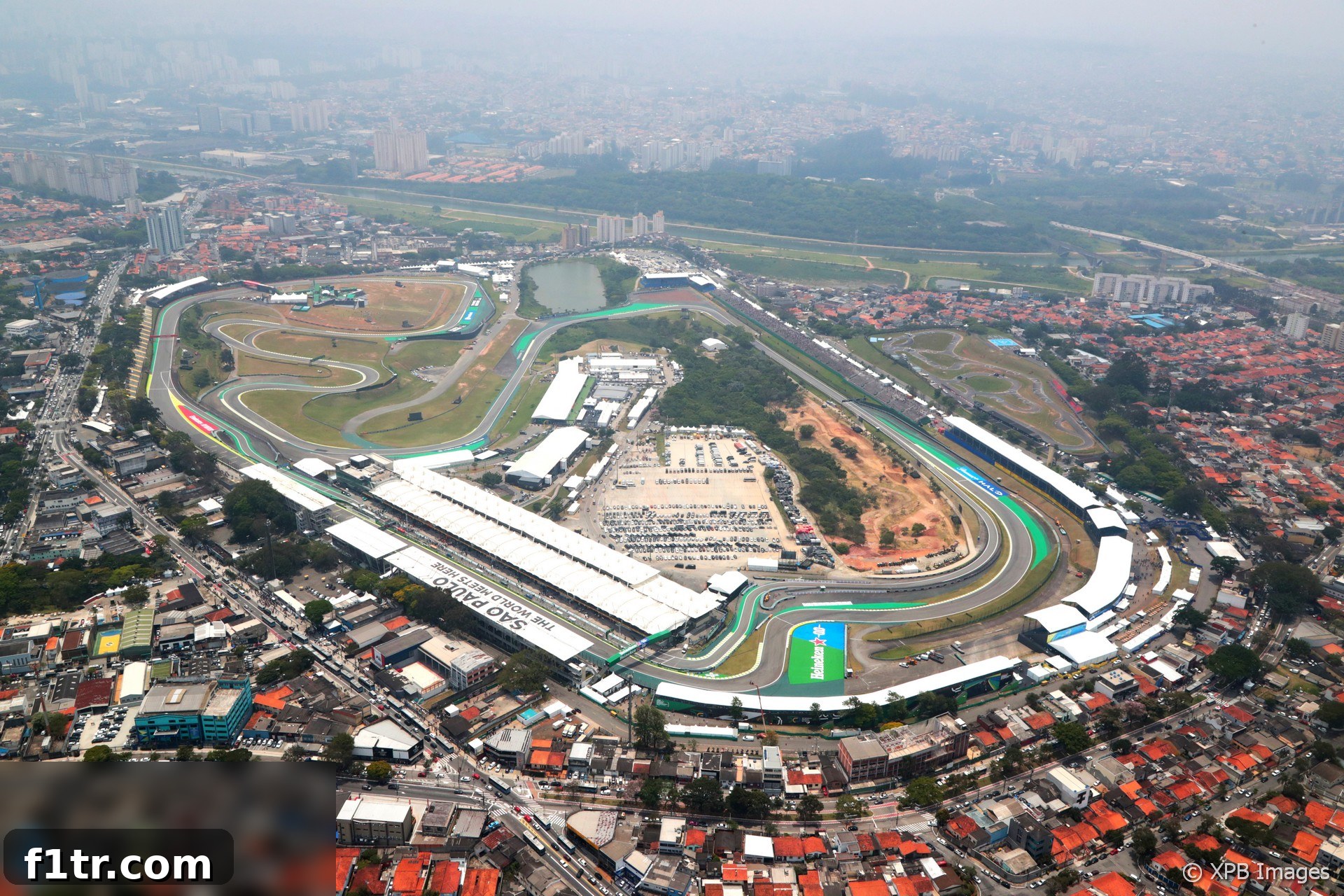
The anticipation for the 2025 Brazilian Grand Prix Sprint Race reached a fever pitch as teams and drivers prepared for a thrilling, high-stakes dash around the legendary Autódromo José Carlos Pace at Interlagos. With unpredictable conditions and strategic gambles, this sprint promised to deliver action from start to finish, setting the stage for the main event.
Before the green light, the atmosphere was thick with uncertainty. Race control had indicated a 30% risk of rain, a factor that always injects an additional layer of drama into any Formula 1 event at this iconic circuit. Drivers took their positions on a damp grid, their engineers meticulously monitoring every data point. Adding to the pre-race complications, Yuki Tsunoda and Carlos Sainz Jnr were forced to start from the pit lane following crucial set-up changes to their cars, a significant setback for both.
Tyre strategy emerged as a primary talking point. Most of the field opted for the more durable medium compound, anticipating a longer run or stable conditions. However, a select group of front-runners and ambitious challengers, including Andrea Kimi Antonelli, George Russell, Max Verstappen, Charles Leclerc, Isack Hadjar, and Alex Albon, boldly chose the soft compound. This aggressive choice was particularly noteworthy for those starting off the main racing line, where grip was expected to be compromised. The softer compound offered a critical advantage in terms of immediate traction and outright pace during the initial laps, a gamble that could either pay off handsomely or quickly unravel.
Further intensifying the pre-race scrutiny, Franco Colapinto and the Sauber drivers were placed under investigation. Stewards announced they would be looking into potential failures to obey the maximum delta time during their reconnaissance laps – a regulation designed to ensure fair play and safety, especially when the track is damp or conditions are variable. This early cloud of potential penalties added an extra layer of pressure on several teams.
The Sprint Race: A Chaotic Beginning
As the lights went out, the 2025 Brazilian Grand Prix Sprint Race exploded into action. Lando Norris, starting from pole position, executed a flawless getaway, firmly holding onto his lead through the daunting Senna S. Behind him, chaos erupted as drivers jostled for position. Max Verstappen demonstrated his renowned race craft, making a decisive move to snatch fifth place from Fernando Alonso, an early statement of intent from the reigning champion.
The opening laps were a whirlwind of incidents and intense battles. On Lap 2, Verstappen momentarily lost control, catching a snap of oversteer at Turn 1, a rare glimpse of vulnerability from the Dutchman on the damp asphalt. The incident highlighted the treacherous conditions and the fine line drivers were walking.
Further back, the fight intensified between Ollie Bearman and Zane Maloney Lawson. Approaching Descida do Lago, Bearman defended hard, perhaps too aggressively, resulting in contact between the two young talents. Bearman spun but miraculously managed to keep his car running, though he tumbled down the order to 18th place. The stewards immediately noted the incident, signaling a likely investigation after the race, adding to the growing list of post-sprint inquiries.
By Lap 3, the immediate pressure on Norris seemed to ease slightly as Andrea Kimi Antonelli dropped just out of DRS range. However, the McLaren driver couldn’t relax, as Oscar Piastri was now firmly within DRS activation distance behind Antonelli, ready to pounce. The strategic choices were beginning to unfold. On Lap 4, Antonelli continued to drop further back from Norris, indicating the soft tyres might be degrading faster than anticipated or Norris was simply managing his pace expertly. Meanwhile, Fernando Alonso found himself under immense pressure from Charles Leclerc, who was on the quicker soft compound and looking for an opening. Lewis Hamilton, on mediums, had made an impressive charge, gaining three places at the start to climb into ninth position, showcasing the long-game potential of his tyre choice. It was also noted that Pierre Gasly, who had displayed great pace in qualifying but was unfortunately knocked out in SQ2 after Leclerc’s spin, was looking to make amends in the sprint.
Catastrophe at Curva do Sol and the Red Flag
The race was abruptly halted by a series of dramatic incidents. Oscar Piastri, pushing hard, lost control of his car on the exit kerb at Turn 3, the notoriously challenging Curva do Sol. His car violently speared into the barrier, bringing out the Safety Car. The treacherous nature of the corner was immediately underscored as, almost simultaneously, Franco Colapinto and Nico Hulkenberg also fell victim to the same turn, crashing at the very same spot. The cascade of accidents painted a clear picture of the perilous track conditions, likely exacerbated by lingering damp patches.
The Safety Car quickly gave way to a full red flag as marshals worked to clear the debris and repair the barriers. This crucial decision allowed drivers to return to the pit lane and, significantly, gave them the option to change their tyres, effectively resetting the strategic landscape of the sprint race. In the midst of the chaos, Andrea Kimi Antonelli provided a critical piece of insight, stating, “Norris hit the kerb and a lot of water went on the line.” This suggested that Norris, despite leading, had inadvertently laid down a trail of water from the kerb, contributing to the treacherous conditions for the following drivers and possibly explaining the series of crashes at Curva do Sol.
Restart Protocols and Shifting Strategies
During the red flag period, team radios buzzed with strategy discussions. Drivers were initially reminded by their teams that a standing restart was likely when the race resumed – a high-tension scenario favoring quick reactions and raw power. This expectation was particularly significant for McLaren, as Norris had started on soft tyres. The implication was that McLaren might have anticipated or preferred a standing start, potentially maximizing the softs’ grip advantage off the line. However, race control soon confirmed a rolling start would be used, a decision that somewhat negated the initial advantage of the soft tyres for the lead car and complicated strategy for many. The race was slated to restart at 11:35 am local time, a tense ten-minute countdown.
As the field reformed behind the Safety Car for the rolling restart, Norris employed a classic tactic, backing up the field significantly. This created a concertina effect, compressing the cars behind him and often leading to aggressive overtaking maneuvers as soon as the Safety Car pulled in. Despite the numerous daring moves behind him, the top eight positions remained unchanged during the initial chaos of the restart, a testament to the drivers’ focus and skill in navigating the close quarters.
The stewards confirmed their investigation into the Lawson-Bearman incident would continue post-race. Interestingly, there was no immediate indication that they were investigating any of the drivers involved in the multi-car pile-up at Curva do Sol, leading to some debate and discussion among pundits and fans about the responsibility for incidents in challenging conditions.
Mid-Race Battles and Antonelli’s Charge
Following the restart, the race settled into a rhythm, though the intensity remained. By Lap 11, the top five drivers had managed to spread out somewhat, creating small breathing spaces in what had been a suffocatingly tight pack. However, the pressure cooker atmosphere continued for Fernando Alonso, who found himself with both Ferraris, Charles Leclerc and Carlos Sainz (who had made significant progress from the pitlane), glued to his tail, relentlessly pushing for a way past. Leclerc, in particular, had been sitting less than half a second off the rear of Alonso’s car for many laps, demonstrating incredible persistence but struggling to find a clear opportunity to attempt a pass on the wily Spaniard.
A new threat began to emerge for the race leader, Lando Norris. By Lap 18, Andrea Kimi Antonelli, running on the more durable medium tyres, was visibly closing the gap to Norris, who was still on his soft compounds. The difference in tyre strategy was now playing out in real-time, with Antonelli’s mediums offering better longevity and consistent pace. The gap dwindled to just over a second, signaling a crucial phase of the race. Just two laps later, on Lap 20, Antonelli had successfully brought himself within DRS range of Norris, setting the stage for a dramatic climax to the sprint race. The chase was on, with the young Mercedes junior driver showcasing incredible potential and tire management.
Norris Seals Victory Amidst Late Drama
As the sprint race entered its closing stages, another major incident unfolded. Gabriel Bortoleto suffered a huge crash at the first corner, a violent impact that sent shockwaves through the paddock. Thankfully, FOM displayed a reassuring message on screen, confirming that Bortoleto was alright, a massive relief to everyone watching. This late-race incident, while significant, did not trigger another Safety Car or red flag, allowing the leaders to continue their battle unhindered.
Despite the relentless pressure from Antonelli and the earlier chaos, Lando Norris held his nerve and maintained his lead to the checkered flag. He expertly managed his degrading soft tyres, fending off the charging Mercedes to claim a crucial victory in the sprint race. His win at the 2025 Brazilian Grand Prix Sprint Race ensured he took maximum advantage from pole position, a testament to his skill and strategic awareness in a truly challenging event. The victory was not only a personal triumph but also provided McLaren with valuable points and momentum heading into the main Grand Prix.
With Norris crossing the finish line, the session concluded, bringing to an end a thrilling and unpredictable sprint race that offered plenty of talking points and set the stage for an even more exciting Grand Prix. No further updates will be posted for this session, but the implications of Norris’s victory and the various incidents will undoubtedly ripple through the paddock.
You can find our full report on Norris’s commanding sprint race victory and Piastri’s unfortunate crash here.
2025 Brazilian Grand Prix: Further Insights and Analysis
- 2026 rules will stop F1 teams making “strategic” engine changes for performance
- Tsunoda admits he could have “easily” scored points in Brazil
- Top 10: Most controversial penalty calls during a Formula 1 title fight
- Verstappen is eighth F1 driver to race from pits to podium: Brazilian GP stats
- Verstappen’s latest setback makes this season look even more like a 2007 repeat
Browse all 2025 Brazilian Grand Prix articles