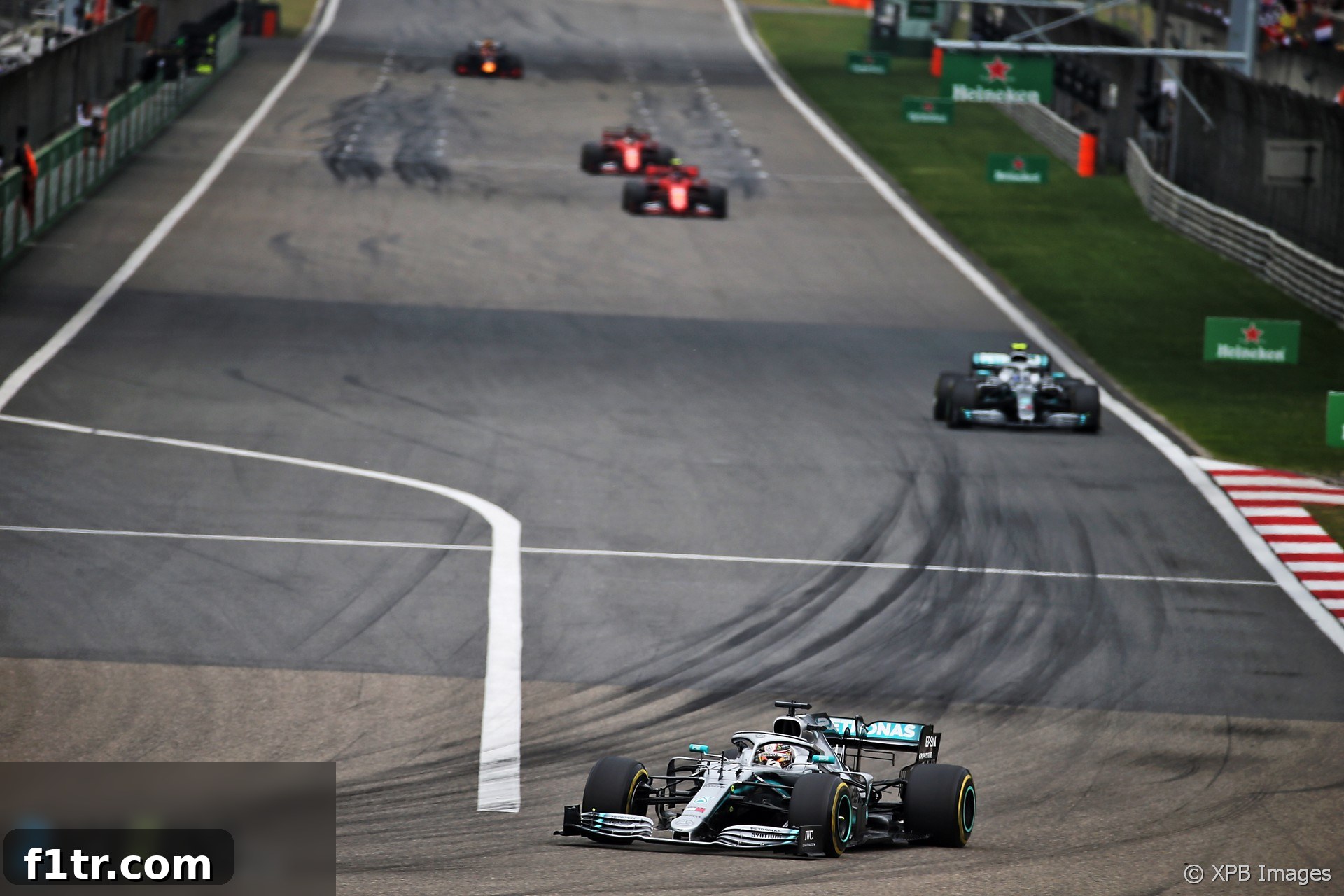
2019 Chinese Grand Prix: Mercedes Dominance Marks F1’s 1000th Race
The 2019 Chinese Grand Prix, the landmark 1000th Formula 1 World Championship race, delivered a resounding statement from Mercedes as Lewis Hamilton secured a dominant victory. Held at the Shanghai International Circuit, this pivotal event saw the Silver Arrows clinch their third consecutive one-two finish of the season, solidifying their early championship lead and showcasing their formidable pace and strategic prowess. The race, which unfolded on April 14, 2019, provided a mix of strategic battles, intense midfield action, and crucial insights into the evolving pecking order of the Formula 1 grid.
Race Overview: A Masterclass in Control
From the outset, the 2019 Chinese Grand Prix was set to be a spectacle, commemorating a millennium of F1 races. Despite Valtteri Bottas starting from pole position, it was his teammate Lewis Hamilton who executed a superb start, snatching the lead into Turn 1 and never looking back. Hamilton controlled the race with precision, managing his tires and pace flawlessly to secure his second victory of the season and his record-extending sixth win in China. The strategic decisions played a significant role, particularly for Ferrari, whose internal team dynamics and tire management came under scrutiny.
Mercedes’ performance was a testament to their engineering excellence and operational efficiency. The team’s ability to maximize their car’s potential on different tire compounds and their flawless pit stops ensured that they remained unchallenged at the front. The race, while not filled with dramatic overtakes at the very front, was a tactical masterclass by Mercedes and provided plenty of action further down the field, particularly in the ever-competitive midfield.
The Podium Finishers: Mercedes Reigns Supreme
Lewis Hamilton: A Flawless Victory
Starting from second on the grid, Lewis Hamilton demonstrated why he is a multiple world champion. His lightning-fast reaction off the line saw him surge past pole-sitter Valtteri Bottas before the first corner, seizing a lead he would maintain for the entirety of the 56-lap race. Hamilton meticulously managed his pace, protecting his tires and responding to any perceived threat from behind. His drive was a clinical display of control and speed, showcasing his profound understanding of the W10 chassis and Pirelli tires. This victory not only extended his championship lead but also underscored Mercedes’ early-season superiority, putting them in an enviable position for the Constructors’ title.
Valtteri Bottas: Pole Position to P2
Valtteri Bottas had secured pole position in a closely contested qualifying session, edging out his teammate. However, his start in the race was not as incisive as Hamilton’s, allowing the Briton to take the lead. Despite losing the initial advantage, Bottas settled into second place, keeping a safe distance from the pursuing Ferraris. His race was characterized by consistent lap times and solid defense, ensuring that Mercedes achieved their third consecutive one-two finish. While undoubtedly disappointed to lose the win from pole, Bottas’s performance was crucial for the team’s championship aspirations, collecting valuable points and demonstrating the overall strength of the Mercedes package.
Sebastian Vettel: Ferrari’s Strategic Challenges
Sebastian Vettel, starting from third, found himself embroiled in a challenging race. Ferrari’s strategy came under intense scrutiny when the team instructed Charles Leclerc, who was running ahead of Vettel, to let his teammate pass. This decision sparked considerable debate and arguably cost Leclerc a better finish. Vettel, while benefiting from the team order, struggled to match the pace of the Mercedes cars ahead. He ultimately secured the final podium spot, a result that, while decent, highlighted Ferrari’s ongoing struggles to convert raw speed into race-winning performances and their difficulties with strategic execution early in the 2019 season. The podium was a small consolation for the Scuderia, but it did little to quell the growing concerns about their championship challenge.
Key Contenders and Their Races: Battles and Controversies
Max Verstappen: Aggression and Strong Pace
Max Verstappen, driving for Red Bull Racing Honda, delivered another characteristic performance. Starting fifth, Verstappen aggressively pursued the Ferraris and, through a combination of bold driving and shrewd strategy, managed to finish a strong fourth. He engaged in fierce battles, particularly with Charles Leclerc, demonstrating his tenacious race craft. His performance underlined Red Bull’s steady progress with the Honda power unit and Verstappen’s ability to extract every ounce of performance from his car. While not quite on the podium, P4 was a significant result for the team, indicating their potential to challenge for victories as the season progressed.
Charles Leclerc: Unlucky with Team Orders
Charles Leclerc’s race was perhaps the most talked-about. After a good start, he found himself ahead of teammate Sebastian Vettel. However, Ferrari’s controversial decision to impose team orders and ask Leclerc to yield his position to Vettel early in the race significantly impacted his outcome. Leclerc dutifully complied but subsequently lost time and ultimately finished fifth, behind Verstappen. His frustration was palpable, and the incident raised questions about Ferrari’s management of its drivers and its overall race strategy. Despite the setback, Leclerc’s pace throughout the weekend affirmed his immense talent and his potential as a future champion.
Pierre Gasly: A Challenging Debut Season
Pierre Gasly, in the second Red Bull, finished a distant sixth. His struggles to adapt to the Red Bull car were evident in the early part of the 2019 season, and China was no exception. While P6 yielded valuable points for the team, Gasly was significantly off the pace of his teammate Max Verstappen, highlighting the steep learning curve he faced. His performance indicated that he needed more time to unlock the full potential of the Red Bull-Honda package, and the pressure was mounting for the young Frenchman.
Midfield Battles and Standout Performances
The midfield in the 2019 Chinese Grand Prix was as competitive as ever, with several drivers delivering impressive performances.
- Daniel Ricciardo (Renault): The Australian secured his first points finish for Renault since joining the team, crossing the line in seventh place. This result was a much-needed boost for Renault, demonstrating progress in their quest to establish themselves as a top-tier midfield contender.
- Sergio Perez (Racing Point-Mercedes): The Mexican driver put in a strong drive to finish eighth, showcasing Racing Point’s capability to fight for points consistently. His ability to manage tires and defend his position effectively was key to his success.
- Kimi Raikkonen (Alfa Romeo-Ferrari): The veteran “Iceman” continued to impress with Alfa Romeo, finishing ninth and securing valuable points. His experience and consistent pace were crucial for the newly branded team.
- Alexander Albon (Toro Rosso-Honda): Albon’s performance was remarkable. After a massive crash in FP3 forced him to miss qualifying and start from the pit lane, he staged an incredible comeback drive, climbing through the field to finish tenth. This spectacular recovery earned him the Driver of the Day award and underscored his immense talent and resilience.
Further down the order, Romain Grosjean and Kevin Magnussen (Haas-Ferrari) struggled with tire performance, finishing 11th and 13th respectively. Lance Stroll (Racing Point-Mercedes) was 12th. Carlos Sainz Jnr (McLaren-Renault) and Lando Norris (McLaren-Renault) had a more challenging weekend, finishing 14th and 18th. George Russell and Robert Kubica (Williams-Mercedes) continued to grapple with the underperforming FW42, finishing 16th and 17th, respectively. Antonio Giovinazzi (Alfa Romeo-Ferrari) completed the classified finishers in 15th position.
Challenges and Retirements
The 2019 Chinese Grand Prix saw two retirements: Nico Hulkenberg (Renault) and Daniil Kvyat (Toro Rosso-Honda). Hulkenberg retired early in the race due to a mechanical issue, specifically an engine problem, which was a blow for Renault after Ricciardo’s points finish. Kvyat’s race ended prematurely after an incident involving both McLaren drivers and his teammate Alexander Albon at the start, for which he received a drive-through penalty, eventually leading to his retirement due to damage.
Full Race Results: 2019 Chinese Grand Prix
| Position | No. | Driver | Car |
|---|---|---|---|
| 1 | 44 | Lewis Hamilton | Mercedes |
| 2 | 77 | Valtteri Bottas | Mercedes |
| 3 | 5 | Sebastian Vettel | Ferrari |
| 4 | 33 | Max Verstappen | Red Bull-Honda |
| 5 | 16 | Charles Leclerc | Ferrari |
| 6 | 10 | Pierre Gasly | Red Bull-Honda |
| 7 | 3 | Daniel Ricciardo | Renault |
| 8 | 11 | Sergio Perez | Racing Point-Mercedes |
| 9 | 7 | Kimi Raikkonen | Alfa Romeo-Ferrari |
| 10 | 23 | Alexander Albon | Toro Rosso-Honda |
| 11 | 8 | Romain Grosjean | Haas-Ferrari |
| 12 | 18 | Lance Stroll | Racing Point-Mercedes |
| 13 | 20 | Kevin Magnussen | Haas-Ferrari |
| 14 | 55 | Carlos Sainz Jnr | McLaren-Renault |
| 15 | 99 | Antonio Giovinazzi | Alfa Romeo-Ferrari |
| 16 | 63 | George Russell | Williams-Mercedes |
| 17 | 88 | Robert Kubica | Williams-Mercedes |
| 18 | 4 | Lando Norris | McLaren-Renault |
Not classified: Nico Hulkenberg (Renault) and Daniil Kvyat (Toro Rosso-Honda) retired from the race.
Team Dynamics and Season Implications
The 2019 Chinese Grand Prix was a pivotal moment in the early 2019 Formula 1 season. Mercedes’ unprecedented third consecutive one-two finish sent a clear message to their rivals: they were the team to beat. Their W10 chassis proved to be exceptionally well-balanced and efficient across different tracks, while their strategic execution was consistently flawless.
Ferrari, on the other hand, faced increasing pressure. Despite having what many believed to be a fast car, their inability to convert pole positions and strong qualifying pace into race victories was a growing concern. The strategic missteps and the controversial team orders involving Vettel and Leclerc highlighted internal challenges that needed addressing if they were to mount a serious championship challenge. Red Bull, with Max Verstappen leading the charge, continued to show promise, demonstrating that the Honda power unit was making significant strides. Their consistent top-four finishes indicated they were becoming a more credible threat to the top two teams.
The midfield battles remained fierce, with teams like Renault, Racing Point, and Alfa Romeo consistently vying for points. McLaren, despite a challenging Chinese Grand Prix, showed flashes of potential throughout the season that would eventually see them rise in the Constructors’ standings.
Beyond the Race: The Road Ahead
The outcome of the 2019 Chinese Grand Prix significantly shaped the narrative of the early season. Lewis Hamilton’s victory placed him firmly at the top of the Drivers’ Championship, while Mercedes’ dominant performance gave them a commanding lead in the Constructors’ standings. This race served as a crucial barometer, exposing strengths and weaknesses that teams would address in the subsequent rounds. The milestone 1000th Grand Prix was celebrated with a classic display of Formula 1 racing, showcasing the peak of motorsport engineering, driver talent, and strategic warfare.
Further Reading and Analysis of the 2019 Chinese Grand Prix:
- Top Ten Pictures from the 2019 Chinese Grand Prix
- 2019 Chinese Grand Prix Star Performers
- Hamilton Cruises to Sixth China Win as Ferrari Tactics Backfire
- Third Consecutive One-Two Gives Mercedes Chance to Break Record
- Paddock Diary: Chinese Grand Prix Day Four
- Browse all 2019 Chinese Grand Prix articles