Mercedes Boss Toto Wolff Addresses “Wingman” Controversy After Hungarian Grand Prix
Following the intense Hungarian Grand Prix, Mercedes-AMG Petronas F1 Team Principal Toto Wolff found himself in the eye of a media storm after referring to Valtteri Bottas as a “wingman.” The comment, made in the immediate aftermath of a challenging race for Bottas, sparked considerable debate and, according to Bottas himself, “hurt.” Wolff subsequently moved to clarify his remarks, vehemently denying that Bottas was serving as a designated number two driver within the championship context, despite his tactical role in Budapest.
The Controversial “Wingman” Comment and Bottas’s Reaction
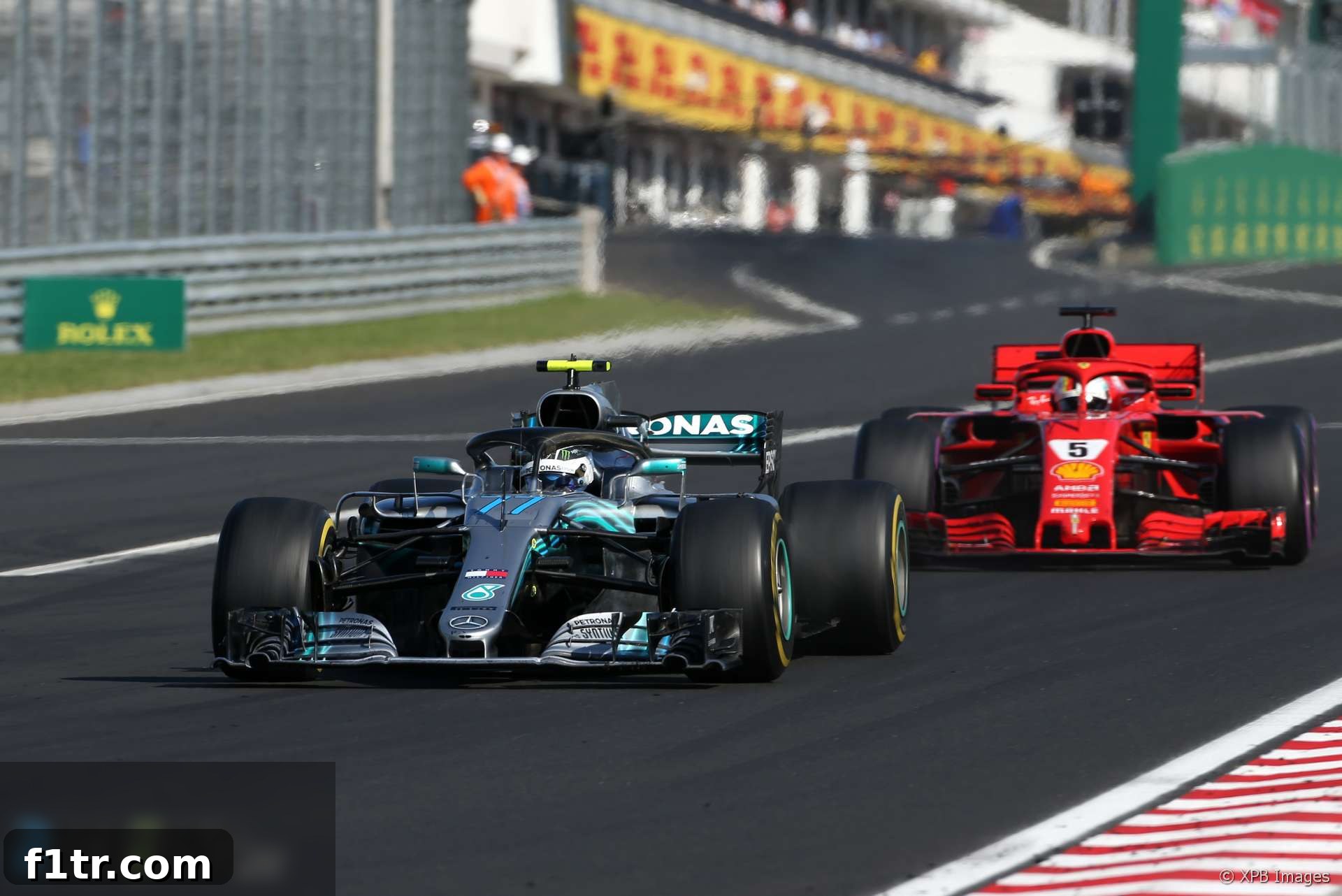
The Hungarian Grand Prix proved to be a pivotal race for Mercedes, with Lewis Hamilton securing a crucial victory. However, much of the post-race discussion centered not just on Hamilton’s triumph, but on the taxing afternoon endured by his teammate, Valtteri Bottas. Bottas, starting from P2, spent a significant portion of the race fending off aggressive challenges from rival drivers, most notably Sebastian Vettel and Kimi Raikkonen, after an early pit stop. In the closing laps, his deteriorating tyres eventually gave way, causing him to drop from a potential podium finish to fifth place following collisions with both Vettel and Daniel Ricciardo.
It was in this context that Toto Wolff, reflecting on Bottas’s defensive performance, used the term “wingman.” While intended to praise Bottas’s role in aiding Hamilton’s victory, the phrase carried strong implications of a hierarchical structure within the team, immediately drawing criticism and leading to Bottas expressing his genuine disappointment. “Being called a wingman hurts,” Bottas stated, highlighting the ambition inherent in every Formula 1 driver to compete for victories and championships, rather than play a supporting role. This sentiment resonated deeply within the motorsport community, reigniting the long-standing debate about team orders and the sensitive position of a “number two” driver in a championship-contending team.
Wolff’s Emphatic Denial of a Number Two Status
Perceiving the widespread misinterpretation and the emotional impact on his driver, Toto Wolff quickly moved to clarify his post-race comments. He firmly denied any notion that Mercedes employs a strict number two driver policy for the championship fight, emphasizing that his “wingman” remark was specific to the tactical situation of that particular race, not Bottas’s overall standing or potential. Wolff expressed regret over how his words had been “spun out of control,” leading to an unintended narrative.
Wolff reiterated Mercedes’ philosophy, stating, “We have no number two.” He elaborated, explaining that in specific race scenarios, drivers might be asked to perform roles that benefit the team’s overall strategic objectives, particularly when one driver is in a stronger championship position. However, this, he insisted, does not diminish the status or ambition of the other driver in the broader context of the season. His defense aimed to separate a single race’s tactical execution from the fundamental respect and equal opportunity offered to both drivers within the team.
Valtteri Bottas’s “Sensational” Hungarian GP Performance
Despite the unfortunate connotations of his initial comment, Wolff was unequivocal in his praise for Bottas’s performance at the Hungarian Grand Prix, describing it as the Finn’s best drive since joining Mercedes at the start of the previous season. “How he was racing was from my standpoint the best race so far with Valtteri at Mercedes,” Wolff asserted. This high praise underscores the exceptional effort Bottas put in, particularly during the middle and later stages of the race.
Starting P2 and maintaining that position after the first lap, Bottas found himself in a crucial defensive role. After an early pit stop, he was tasked with managing his tyres over an extended stint while simultaneously holding off faster cars on fresher rubber. His ability to keep Sebastian Vettel, and later Kimi Raikkonen, behind him for approximately 25 laps was a testament to his skill and car control, even as his tyres degraded rapidly. Wolff acknowledged this formidable effort, expressing a “bittersweet feeling” that Bottas truly deserved to finish in the P2 position he had held for so long. The Mercedes boss highlighted that Bottas’s staunch defense played a vital role in allowing Lewis Hamilton to build a comfortable lead, thereby contributing significantly to the team’s ultimate victory. “He drove a sensational race and helped Lewis in a way to build the lead,” Wolff concluded, underscoring the tactical brilliance Bottas displayed under immense pressure.
Analyzing the Late-Race Collisions: Racing Incidents or Driver Error?
The final laps of the Hungarian Grand Prix saw Bottas embroiled in two separate incidents, first with Sebastian Vettel and then with Daniel Ricciardo, leading to penalties and a significant drop in positions. Wolff, however, staunchly defended his driver, categorizing both events as “racing incidents” stemming from extremely challenging circumstances rather than deliberate actions or clear driver errors.
Regarding the collision with Vettel, Wolff provided context: “I don’t know how many laps [his] tyres had on but I think it was around 54. The tyre was completely shot.” He explained that Bottas had been running on severely degraded tyres for an exceptionally long period, making his car incredibly difficult to handle. When Vettel made a decisive move into Turn 1, Bottas was on the dirty line, his car lacking traction, forcing him to brake late with nowhere to go. “A complete normal racing incident,” Wolff concluded, attributing the contact to the extreme conditions and the natural aggression of a wheel-to-wheel battle.
The subsequent tangle with Daniel Ricciardo drew a 10-second penalty for Bottas from the stewards, but Wolff’s defense remained consistent. Speaking before the penalty was officially handed down, he reiterated that the circumstances were critical. “The second one looked a bit harsh when you look at the pictures but considering he was on the dirty line and the tyre was shot and the car was damaged on the front wing there was nowhere to go,” Wolff explained. He suggested that Ricciardo, attempting an overtake on the outside, might not have been fully aware of Bottas’s compromised car state, with a damaged front wing further affecting its performance. “Daniel tried on the outside, didn’t know that Valtteri’s car was not in perfect state any more and this is how they collided. Nothing on purpose,” Wolff stressed, emphasizing the lack of malicious intent from Bottas and highlighting the confluence of unfortunate factors.
Implications for Bottas and Mercedes’ Season
The “wingman” controversy and Bottas’s resilient yet ultimately unrewarded performance in Hungary brought to light the intricate dynamics within a championship-contending Formula 1 team. For Valtteri Bottas, who had demonstrated unwavering commitment and impressive pace throughout the season, being labeled, even temporarily, as a supporting driver was a blow to his aspirations and public image. It underscored the immense pressure on him to perform at an elite level while simultaneously supporting the team’s broader objectives, particularly in a season where Lewis Hamilton was engaged in a fierce championship battle.
For Mercedes, the incident highlighted the delicate balance required in managing two highly ambitious drivers. While maximizing points for the Constructors’ Championship and aiding their lead driver’s title bid is paramount, maintaining team morale and ensuring both drivers feel valued and equally supported is crucial for long-term success. Wolff’s rapid and firm clarification was an attempt to mitigate any psychological damage to Bottas and reinforce the team’s commitment to both its drivers. The events of the Hungarian Grand Prix served as a stark reminder of the fine line between strategic team play and the perception of a driver being relegated to a secondary role, a narrative that can significantly impact a driver’s confidence, marketability, and future within the sport. Ultimately, while the “wingman” comment was clarified, it left an indelible mark on the 2018 season, prompting widespread discussion about driver hierarchy and the very essence of team sport in individual competition.
Further Reading on the 2018 F1 Season
- F1 feared “death knell” for Drive to Survive after Ferrari and Mercedes snub
- McLaren staff told us we were “totally crazy” to take Honda engines in 2018 – Tost
- ‘It doesn’t matter if we start last’: How Red Bull’s junior team aided Honda’s leap forward
- Honda’s jet division helped F1 engineers solve power unit problem
- McLaren Racing losses rise after Honda split
Browse all 2018 F1 season articles