Lewis Hamilton Dives Deep into Ferrari’s Dominance: A Scrutiny of DRS, Power Unit Prowess, and Mercedes’ Resurgence
Following a tightly contested qualifying session that saw Lewis Hamilton narrowly miss out on pole position to Sebastian Vettel, the reigning world champion offered candid insights into Ferrari’s formidable performance. Hamilton expressed a strong suspicion that the Scuderia had unlocked a significant performance advantage, attributing it not only to an improved power unit but also to a highly efficient Drag Reduction System (DRS) operation.
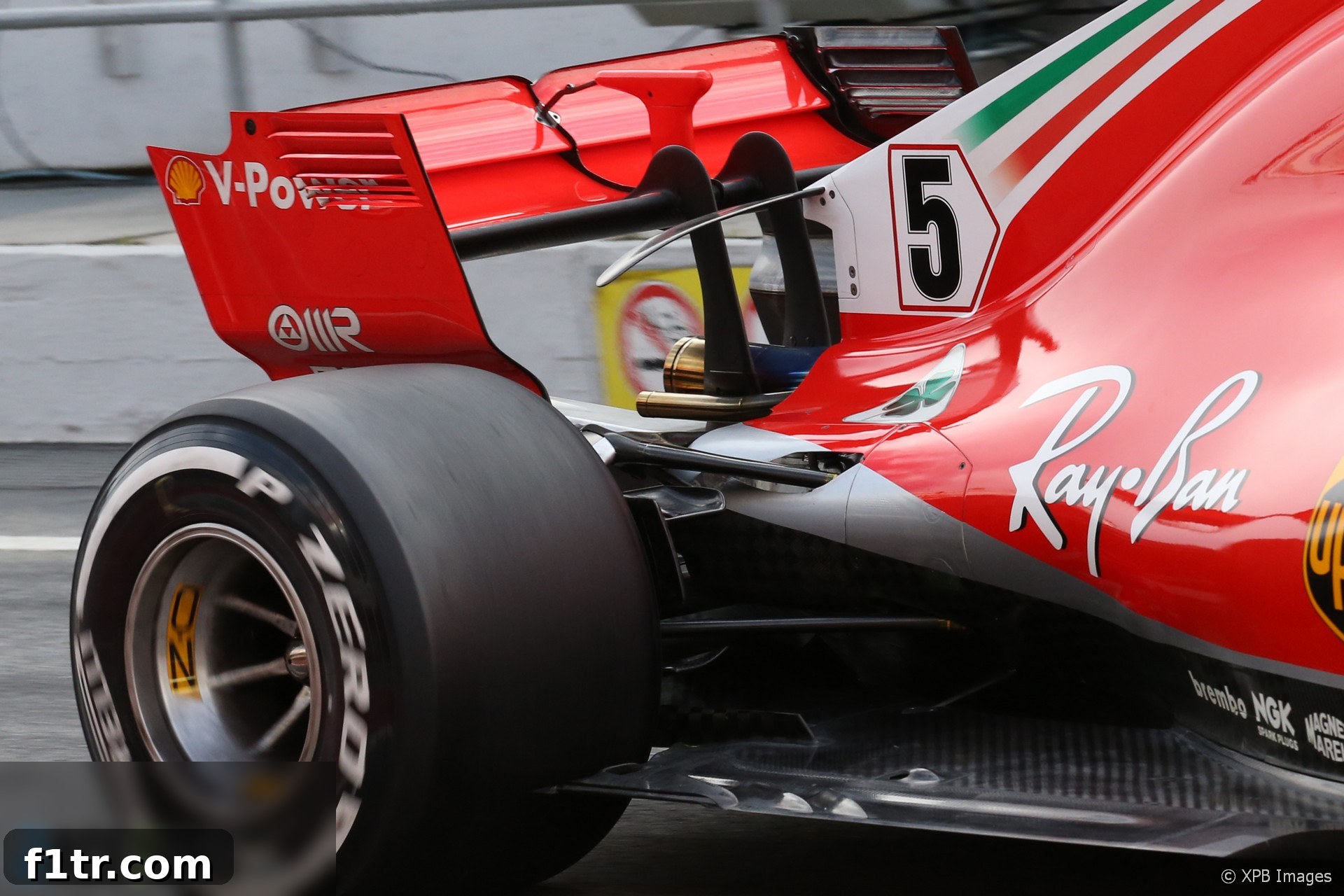
The F1 paddock often buzzes with speculation about rival teams’ innovations, and Hamilton’s comments highlighted a common point of focus: straight-line speed. “They’ve shown they’ve been very quick on the straights,” Hamilton observed, detailing the Italian team’s undeniable pace. His analysis went further, pinpointing a specific technical area: “They’ve got a very strong DRS in particular, quite efficient DRS as far as I’m aware.” This observation underscores a crucial aspect of modern Formula 1 car design and strategy, where optimizing the DRS for maximum effect can shave critical tenths off lap times, especially on circuits with long straights.
Advert | Become a Supporter & go ad-free
Unpacking Ferrari’s Technical Edge: DRS and Power Unit Synergy
To understand the weight of Hamilton’s remarks, it’s essential to briefly explain the mechanics and impact of DRS. The Drag Reduction System is a driver-activated movable flap on the rear wing, designed to reduce aerodynamic drag on specific sections of the track. When activated, the flap opens, allowing air to flow through with less resistance, significantly boosting straight-line speed. An “efficient” DRS implies that Ferrari’s system might be yielding a greater speed differential or that their car’s overall aerodynamic package is allowing them to maximize its benefit more effectively than competitors.
Coupled with a suspected power unit advantage, Ferrari’s straight-line prowess becomes even more potent. In Formula 1, the power unit (comprising the internal combustion engine, turbocharger, MGU-H, MGU-K, energy store, and control electronics) is the heart of the car, directly dictating acceleration and top speed. A superior power unit, especially when combined with an optimized DRS, creates an almost unbeatable combination on high-speed sections of a track. This dual advantage would allow Ferrari to gain crucial time on straights, making it difficult for rivals to keep up or overtake, even with strong performance in the corners.
Despite not having delved into the comprehensive data at the time of his comments, Hamilton’s instinct as a seven-time world champion is remarkably sharp. “I’ve not looked at the data so I don’t know where they are faster than us and where we’re faster than them,” he admitted, showcasing the depth of post-session analysis. However, he quickly acknowledged the undeniable truth: “But obviously they’ve made a big step forward this year and they are the number one team to beat at the moment.” This statement highlights the cyclical nature of F1, where competitive hierarchies can shift rapidly, pushing every team to relentlessly innovate.
The Downforce Enigma: Mercedes’ Challenges and Ferrari’s Grip
The competitive landscape was further illuminated by a notable difference in sector times during qualifying. Hamilton’s best time through the middle sector of the lap was a significant four-tenths of a second slower than Ferrari’s best. Such a gap in a single sector, particularly the middle sector which often features a mix of high-speed and technical corners, points to a fundamental difference in car performance beyond just straight-line speed.
When pressed to explain this deficit, Hamilton offered another crucial insight: “I can’t really explain it. I think they have a little bit more downforce than us.” Downforce is the aerodynamic force that pushes the car downwards, increasing its grip with the track surface. More downforce generally translates to higher cornering speeds and better stability, but it often comes at the expense of increased drag, which can hinder straight-line speed. If Ferrari indeed possessed both a superior power unit/DRS package AND more downforce, it would suggest a remarkably well-rounded and balanced car, capable of excelling in both high-speed and cornering sections – a coveted achievement in F1 car design.
The delicate balance between generating downforce and minimizing drag is a constant engineering challenge. For Mercedes to be four-tenths down in a crucial sector, it could imply that their setup was a compromise, perhaps optimizing for straight-line speed at the expense of cornering grip, or simply that Ferrari had found a more aerodynamically efficient way to generate downforce.
Mercedes’ Resurgence: A Testament to Overnight Engineering
Despite the formidable challenge posed by Ferrari, Hamilton found encouragement in the rapid improvements made by his Mercedes team. “Ferrari have been so dominant in the last couple of races and pace-wise we knew that they would be very quick here,” he recounted, setting the context of their initial struggles. “Which they have been all weekend. I think Red Bull also looked really promising, not sure what happened to them.” This paints a picture of a weekend where Mercedes was initially on the back foot, grappling with pace compared to their main rivals.
However, the true strength of an F1 team often lies in its ability to react and adapt. Hamilton lavished praise on his engineering crew for their tireless efforts. “We were struggling yesterday, but we came into today and the engineers did some really great work last night to understand where we were and how we could progress forwards, so a big thank you to them for all their hard work.” This statement pulls back the curtain on the intense, data-driven world of Formula 1, where hundreds of engineers work round the clock, analyzing telemetry, simulating changes, and making crucial adjustments to the car setup. An “overnight gain” in F1 can mean the difference between fighting for podiums and struggling for points.
The result of this dedicated effort was a significantly improved car on Saturday. “Today was much more reasonable car,” Hamilton affirmed. “There were still areas where we were lacking but it’s a work in progress I would say and to be that close to the Ferraris is definitely a positive and to have me and Valtteri up there is a good booster for the team, to be right there in up in the mix.” Coming from a challenging Friday, being able to put both cars at the sharp end of the grid, right alongside a dominant Ferrari, is a testament to the team’s resilience, problem-solving capabilities, and strategic adjustments.
The Unfolding Season: A Battle of Giants
The close qualifying battle and Hamilton’s detailed observations set the stage for an exhilarating race, highlighting the intense championship fight. Ferrari’s clear step forward, particularly in power unit and DRS efficiency, signals a significant challenge for Mercedes. Yet, Mercedes’ ability to bounce back from a difficult start to the weekend demonstrates their unwavering commitment and engineering depth.
The inclusion of Red Bull in Hamilton’s assessment further emphasizes the multi-faceted nature of the F1 championship. While their qualifying performance might not have met expectations on this particular occasion, their inherent strengths, particularly in chassis and aerodynamic design, always make them a formidable contender. The unpredictability of their performance on a given weekend adds another layer of excitement to the championship narrative.
Ultimately, Hamilton’s comments underline the continuous cat-and-mouse game played out by the top teams in Formula 1. Every tenth of a second is scrutinized, every technical advantage analyzed, and every team pushes the boundaries of engineering and strategy. The pursuit of perfection, whether through a more potent power unit, a more efficient DRS, or a finely tuned aerodynamic package, defines the pinnacle of motorsport. For Mercedes, closing the gap in qualifying was a morale booster, turning what could have been a dispiriting weekend into a hopeful one, ready to fight for victory on race day.
Don’t miss anything new from RaceFans
Follow RaceFans on social media:
- Join RaceFans on Facebook
- Follow RaceFans on Twitter
- Get daily email updates from RaceFans
Advert | Become a RaceFans supporter andgo ad-free
2018 F1 season
- F1 feared “death knell” for Drive to Survive after Ferrari and Mercedes snub
- McLaren staff told us we were “totally crazy” to take Honda engines in 2018 – Tost
- ‘It doesn’t matter if we start last’: How Red Bull’s junior team aided Honda’s leap forward
- Honda’s jet division helped F1 engineers solve power unit problem
- McLaren Racing losses rise after Honda split
Browse all 2018 F1 season articles