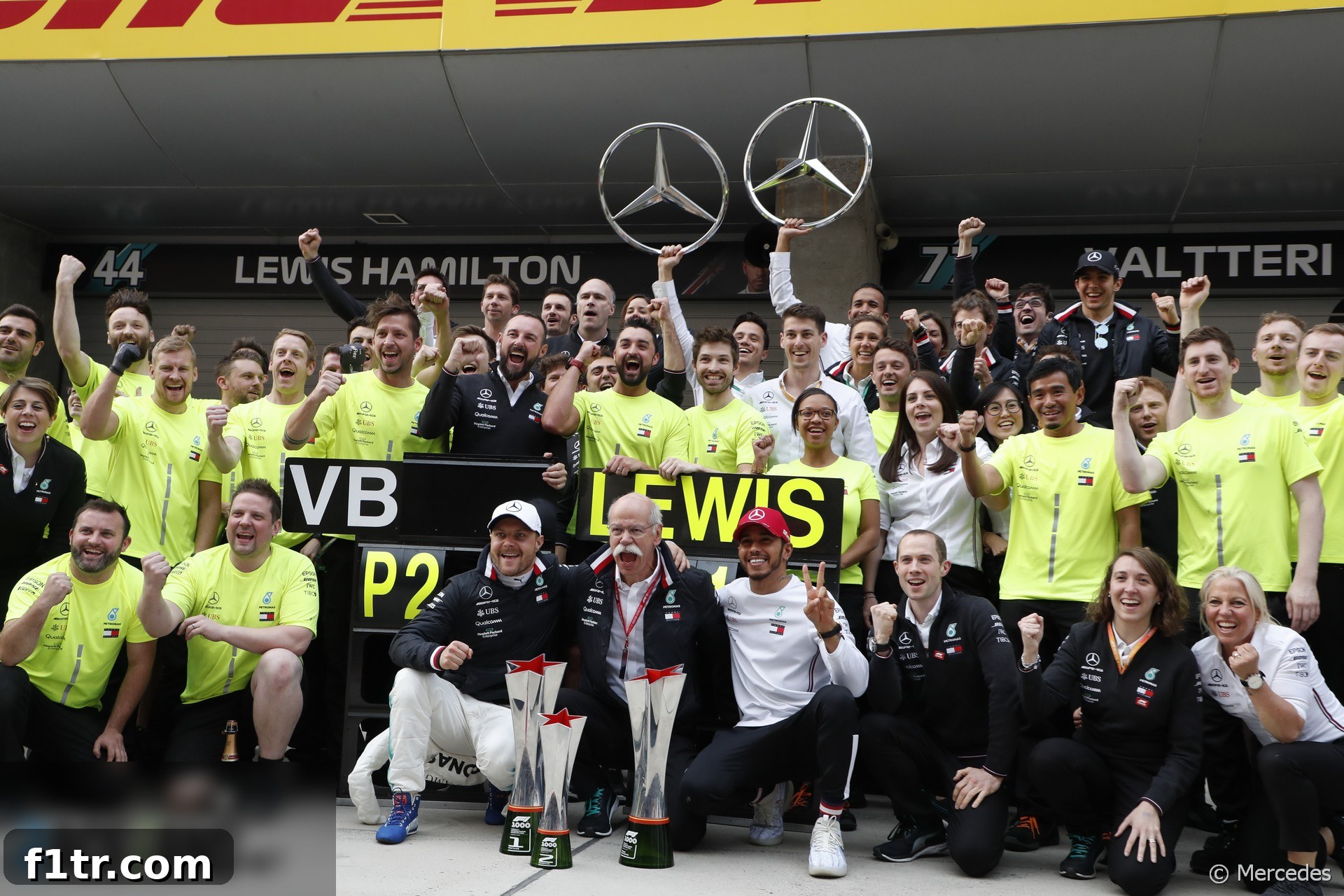
Mercedes F1 Dominance Under Scrutiny: Toto Wolff’s Surprising Claims Amidst Early Season Success
The 2019 Formula 1 season kicked off with Mercedes-AMG Petronas F1 Team making an emphatic statement, securing an unprecedented three consecutive one-two finishes in the opening races. This incredible run, typically indicative of absolute dominance, has been met with a surprising perspective from Mercedes Team Principal Toto Wolff. Wolff has openly stated that this early success was achieved despite the team not always possessing the quickest car on track, a contention he admits might not be a “very popular” point of view among observers and perhaps even some within his own ranks.
Wolff’s candid assessment suggests a deep understanding of the competitive landscape, refusing to bask uncritically in the glow of early victories. His comments consistently spotlight rival Ferrari, whom he views as a formidable and often faster competitor. This seemingly paradoxical claim from the head of a winning team raises questions about the true pecking order and the multifaceted nature of Formula 1 success, where raw pace is only one ingredient in a complex recipe.
The Ferrari Threat: A Consistent Rivalry and Underestimated Challenge
Throughout the initial stages of the 2019 F1 campaign, Toto Wolff has been remarkably consistent in talking up the performance of Scuderia Ferrari, portraying them as a serious contender for both pole positions and race victories. This narrative serves multiple purposes: it keeps his team grounded, acknowledges the strength of their rivals, and potentially plays psychological games with the competition. Wolff’s insistence that Mercedes isn’t always the fastest car, despite the results, underscores his belief in Ferrari’s inherent speed, particularly on certain circuits.
The Austrian team principal’s perspective is rooted in empirical data and detailed analysis of car performance across different conditions. He believes that Ferrari has, at times, demonstrated a superior package, particularly in specific performance windows. This keen awareness of the rival’s strengths is crucial for Mercedes to maintain its edge, driving continuous development and strategic refinement. The perceived “unpopularity” of his viewpoint among fans, who often focus solely on the final standings, highlights the nuance required to understand Formula 1 at the highest level, where operational excellence, strategy, and driver performance can often bridge a raw pace deficit.
Pre-Season Setbacks and the Hunt for Optimal Performance
Mercedes’ early season triumphs came after what Wolff described as a challenging and unpromising pre-season testing period. Far from appearing dominant, the team struggled to find its footing in the initial sessions. “It didn’t look good,” Wolff recalled following Lewis Hamilton’s victory in China, reflecting on the team’s initial testing woes. The first testing sessions saw Mercedes not where they expected to be, grappling with an uncooperative car.
The introduction of their “race one aero package” for the second test was hoped to provide a significant boost to the car’s performance. However, according to Wolff, even this update didn’t immediately deliver the desired impact on the first two days. It wasn’t until the third day of the second pre-season test that the team finally began to uncover the right setup direction. This breakthrough allowed them to post an “encouraging but no more” lap time on the fourth day, hinting at potential but certainly not signaling the outright dominance that would follow in the races. This period of struggle and eventual discovery highlights the intense development curve and the critical role of engineering perseverance in modern Formula 1.
Melbourne’s Unexpected Triumph: A Testament to Race Day Execution
The Australian Grand Prix, the opening race of the 2019 season, arrived as a “great surprise” for Mercedes. Despite their somewhat subdued pre-season testing performance, the team delivered a stunning one-two finish. Wolff’s comment about “everyone let their pants down” can be interpreted as rivals revealing their true performance levels, which in Mercedes’ case, proved to be more than “good enough” for victory. This result demonstrated that while their raw pace might not have been consistently superior in testing, the team possessed the ability to maximize their package under race conditions.
The specific characteristics of the Albert Park circuit, combined with Mercedes’ meticulous preparation and strategic acumen, likely played a significant role in their unexpected success. The team’s ability to extract peak performance when it mattered most, coupled with strong driver execution from Lewis Hamilton and Valtteri Bottas, allowed them to capitalize fully. This victory was not just about the car’s speed but also about the team’s operational excellence, tyre management, and strategic calls on race day, turning a potentially competitive but not dominant car into a race-winning machine.
Bahrain’s Stark Reality: Ferrari’s Untapped Potential
The narrative shifted dramatically at the Bahrain Grand Prix, where Mercedes faced a stern challenge that reinforced Wolff’s cautious outlook. Despite securing another one-two finish, Wolff unequivocally stated that Ferrari was the team that “should have won the race in terms of pure car performance.” Bahrain’s Sakhir International Circuit is known for being a “rear-limited track” with “the most aggressive asphalt in the calendar,” conditions that reportedly played perfectly into Ferrari’s car characteristics.
Ferrari showcased superior pace for much of the Bahrain weekend, leading to a thrilling battle. However, it was reliability issues and strategic brilliance from Mercedes that ultimately handed them the victory. This race served as a stark reminder of Ferrari’s underlying speed and potential threat. Wolff’s analysis underscored that while Mercedes’ execution and reliability were flawless, the raw performance advantage on that specific track belonged to their Italian rivals. This understanding is critical for long-term championship aspirations, ensuring the team does not become complacent despite its growing points tally.
Navigating the Chinese Grand Prix: Adapting to Different Demands
The Chinese Grand Prix presented a different set of challenges and confirmed Mercedes’ adaptability. On Friday, the team demonstrated “good race pace,” but it wasn’t a “completely dominant picture.” Wolff noted that Mercedes had a “tiny edge over Ferrari” during the practice sessions, a margin far smaller than what was ultimately seen in the race. This initial assessment highlighted the fine margins separating the top teams and the importance of continuous refinement throughout the race weekend.
The subsequent work done by the team for the race proved to be exceptional. Wolff praised the car’s stability on the tyres, emphasizing that Shanghai, being a “different track to Bahrain,” required a specific approach. Mercedes’ ability to adapt and optimize their “package” for the unique demands of the Chinese circuit was a critical factor in their eventual dominant performance. This agility in setup and strategy, coupled with effective tyre management, allowed them to unlock the full potential of their car when it mattered most, translating a narrow Friday advantage into a commanding race-day victory.
Implications for the Championship Battle: A Relentless Pursuit
Toto Wolff’s consistent message about Ferrari’s strength and Mercedes’ non-absolute dominance carries significant implications for the ongoing Formula 1 championship battle. It indicates that Mercedes views the season as a relentless pursuit of performance and not a guaranteed walkover. Wolff’s expectation is clear: “this fight for pole position and consequent race wins to continue.” This forward-looking perspective keeps the team sharply focused on development, optimization, and avoiding complacency.
Such statements also serve as a strategic psychological play. By consistently praising Ferrari, Wolff manages expectations within his own team, preventing any sense of overconfidence that could lead to stagnation. Simultaneously, it keeps pressure on Ferrari, acknowledging their speed but subtly reminding them that even with a strong car, they have yet to convert it into consistent victories against a highly efficient Mercedes outfit. The narrative reinforces the idea that the championship will be a marathon, decided not just by raw speed but by operational excellence, strategic prowess, and unwavering reliability.
Mercedes’ Recipe for Success: Beyond Raw Pace
The undeniable success of Mercedes in the early 2019 F1 season, characterized by three consecutive one-two finishes, stands as a testament to a multifaceted approach to racing that transcends mere car speed. As Toto Wolff articulated, their victories were often secured without necessarily having the outright fastest car on every given Sunday. This remarkable achievement highlights several key pillars of Mercedes’ operational philosophy and execution.
Firstly, reliability has been paramount. In a sport where mechanical failures can swiftly dash championship hopes, Mercedes has consistently delivered a robust and dependable package. This foundation allows their drivers to push to the limits without fear of premature retirement. Secondly, strategic acumen has played a pivotal role. The team’s strategists have demonstrated an exceptional ability to make the right calls under pressure, optimizing pit stops, tyre choices, and race management to capitalize on every opportunity and mitigate threats. Thirdly, driver consistency and performance from Lewis Hamilton and Valtteri Bottas have been instrumental. Their ability to extract the maximum from the car, manage tyres effectively, and execute race plans flawlessly has often been the deciding factor in close contests. Lastly, the team’s relentless pursuit of operational excellence, from pit lane efficiency to data analysis and setup optimization, has allowed them to maximize the potential of their car, turning what might be a marginal advantage in performance into decisive race wins. This holistic approach is the true engine behind Mercedes’ early season dominance.
Conclusion: A Season of Intense Rivalry Ahead
As the 2019 Formula 1 season progresses, Toto Wolff’s insightful commentary provides a crucial lens through which to view Mercedes’ astonishing start. While the scoreboard paints a picture of outright supremacy, Wolff’s nuanced perspective reveals a team acutely aware of its challenges and the formidable opposition posed by Ferrari. The early triple one-two victories are not merely a result of superior raw pace but a culmination of relentless engineering, strategic brilliance, operational flawless execution, and exceptional driver performance.
The championship battle is shaping up to be an intense and captivating contest, where every race, every strategic decision, and every development step will be critical. Mercedes’ ability to adapt to diverse track conditions, manage tyre degradation, and maintain unwavering reliability will be continuously tested. Wolff’s statements serve as a powerful reminder that in Formula 1, success is a complex interplay of many factors, and complacency is the ultimate enemy. The expectation remains for a hard-fought season, promising thrilling battles for pole position and race wins right to the very end, keeping fans on the edge of their seats.
2019 F1 Season Articles
- Crying in the Melbourne car park at 2019 grand prix was my career low – Ocon
- McLaren Racing reports reduced £71 million loss in 2019
- Kvyat: Hockenheim podium last year was “my biggest achievement” so far
- How the FIA’s new encrypted fuel flow meter targets Ferrari’s suspected ‘aliasing’ trick
- “He smashed my office door”: 23 must-see moments from ‘Drive to Survive’ season two
Browse all 2019 F1 season articles