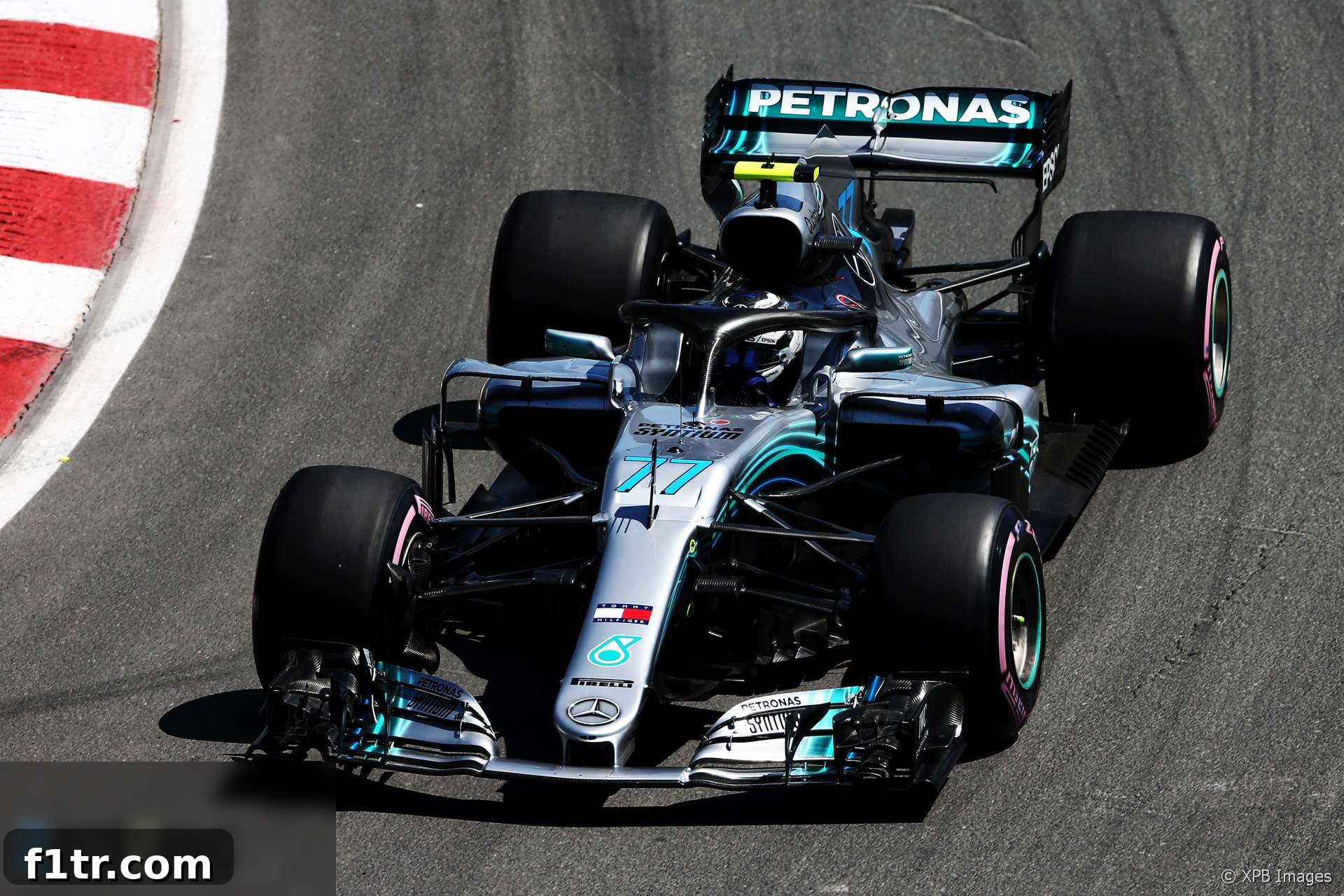
In the high-stakes world of Formula 1, every decision, no matter how small, carries immense weight. The 2018 Canadian Grand Prix weekend saw Mercedes-AMG Petronas Motorsport at a crucial juncture, making a surprising last-minute call to delay the introduction of their eagerly anticipated power unit upgrade. This strategic retreat, explained by team executive director Toto Wolff, underscored the intricate balance between performance and reliability that dictates success at the pinnacle of motorsport.
Mercedes’ Strategic Retreat: Prioritizing Reliability in the Pursuit of F1 Dominance
Originally, Mercedes had confirmed that a new specification of their power unit would be deployed across all six Mercedes-powered cars competing in Montreal. However, just days before the Grand Prix, the team announced an unexpected postponement, pushing the upgrade to the subsequent French Grand Prix. This decision immediately sparked questions and speculation within the paddock, given the critical nature of engine performance on the power-sensitive Circuit Gilles Villeneuve.
Wolff’s Uncompromising Stance: Why Reliability Trumps Raw Pace
Toto Wolff wasted no time in clarifying the rationale behind the eleventh-hour alteration to their plans. “We decided to not bring the engine last minute because our last dyno run was not reliable enough,” Wolff stated emphatically. His subsequent explanation cut directly to the core of Mercedes’ long-term championship philosophy: “And I think DNFs [did not finish] are much more painful and hurtful for the championship than maybe a tenth in performance.” This statement encapsulates the pragmatic and often conservative approach that has defined Mercedes’ successful era in Formula 1.
In a sport where engine penalties for exceeding allocation limits are severe, and a single retirement can cost a driver or team crucial points in a tight championship battle, reliability is paramount. The risk of introducing an unproven component, even one promising a marginal performance advantage, far outweighs the potential reward if it compromises a car’s ability to finish a race. A DNF not only means zero points but can also lead to further grid penalties if engine components need to be replaced prematurely. This considered stance reflects a team that understands the marathon nature of an F1 season, rather than focusing solely on a single sprint weekend.
The High Cost of Unreliability in Formula 1
The consequences of an unreliable power unit extend far beyond the immediate loss of points. For a manufacturer like Mercedes, reputational damage from repeated engine failures can be significant. Furthermore, the ripple effect of a single failure can impact multiple cars if a design flaw is inherent across the power unit batch. This places immense pressure on engineering teams to ensure components are not just fast, but robust under extreme racing conditions. Wolff’s decision to delay, therefore, was not merely a tactical move for Canada but a protective measure for the entire season, safeguarding against future liabilities and maintaining the team’s sterling reliability record.
Immediate Repercussions: The Canadian Grand Prix’s “What Ifs”
The impact of the delayed upgrade was immediately evident during qualifying in Canada. Valtteri Bottas narrowly missed out on pole position, beaten by less than a tenth of a second by Sebastian Vettel. Wolff conceded that the new engines “would definitely have made a difference today.” While acknowledging the uncertainty, he added, “Whether it would have been enough to qualify on pole, for Lewis [Hamilton] to qualify on the front row, we don’t know. But again it’s one of the things that would probably have changed the overall outcome.”
Such fine margins highlight the agonizing decisions teams face. On a circuit like Montreal, characterized by long straights and heavy braking zones, additional horsepower can translate directly into lap time gains, particularly in critical qualifying sessions. The ‘what ifs’ lingered, reminding everyone that while reliability is a long-term play, immediate performance is crucial for securing front-row starts and gaining track position – often the difference between victory and defeat in modern F1.
Navigating the Pirelli Maze: Mercedes’ Tyre Strategy Insights
Beyond the power unit decision, Mercedes also faced scrutiny over their tyre choices for the Canadian Grand Prix. The team opted for fewer sets of the softest compound available, the hyper-soft, compared to their closest rivals. This meant less track time for both Mercedes drivers on the ultra-grippy but potentially less durable tyre during Friday practice sessions. Wolff openly acknowledged this strategic trade-off: “Certainly not having given the drivers enough track time on the hyper is something that, if we could have changed it now on the weekend, we would have.”
This decision underscores another facet of F1 strategy: optimizing tyre usage across a race weekend. While the hyper-soft offers raw qualifying pace, teams must consider its degradation over a race distance and the potential for graining or blistering. Mercedes’ choice suggested a preference for the ultra-soft, perhaps believing it offered a more consistent and predictable performance window for both qualifying and race day. Wolff hinted at this reasoning, stating, “We just started to drive on the hyper today. Was that the decisive factor? Probably not. [If] we had brought the engine upgrade it would have been an advantage.”
The Strategic Trade-Offs of Tyre Allocation
Formula 1 tyre strategy is a complex chess match. Each compound has its advantages and disadvantages regarding grip, durability, and operating window. By prioritizing the ultra-soft, Mercedes aimed to build a deeper understanding of its performance characteristics, potentially hoping to unlock a sweet spot for both single-lap pace and long-run consistency. Wolff’s belief, “I personally am of the opinion that if we can optimise on one set of tyre that is eventually going to be the tyre on which you qualify, it will give you an advantage, whatever that is,” reveals a focus on mastering a chosen compound rather than spreading resources too thinly across multiple options. This targeted approach seeks to maximize data acquisition and setup optimization for the race-critical compounds, a subtle yet potent strategic play.
The Philosophy of Marginal Gains: F1’s Winning Edge
Wolff’s overarching message from Canada resonated with the very essence of modern Formula 1: the relentless pursuit of marginal gains. “The fact is this is a championship which is going to be won and lost in the tiniest of margins,” he declared. This philosophy dictates that every minute detail, every component, every strategic call, and every driver input contributes to the overall performance envelope. “We just can’t miss out on the tiniest of upgrades. The smallest of mistakes will be penalised. And the same applies for our competitors. This is going to make the difference between winning and losing the weekend.”
This concept, famously championed in other elite sports, is deeply embedded in F1 culture. From the aerodynamic sculpting of a wing endplate to the fraction of a second gained in a pit stop, or the nuanced adjustments to engine mapping, every element is scrutinized for incremental improvements. Mercedes’ decision regarding their power unit and their tyre strategy are prime examples of this philosophy in action. They weighed a known reliability risk against a marginal performance benefit, choosing the path that minimized error and protected their championship aspirations. Similarly, their tyre choice, while potentially sacrificing immediate hyper-soft pace, aimed for optimized performance on a compound they believed offered a more robust race strategy. In a sport where rivals are equally relentless, these seemingly small decisions compound to define championship outcomes.
Every Detail Matters: From Aerodynamics to Pit Stops
The pursuit of marginal gains in F1 is a never-ending cycle of innovation and refinement. It means that teams invest heavily in R&D, not just for groundbreaking technologies, but for iterative improvements across the board. Driver performance is optimized through rigorous training and simulation. Pit stop crews practice relentlessly to shave milliseconds off tire changes. Strategists meticulously analyze data to make real-time decisions that can alter the race’s trajectory. This holistic approach ensures that a team is not just fast in one area, but consistently excellent across all operational facets, creating a formidable and difficult-to-beat package. The pressure to execute flawlessly is immense, as the smallest misstep can indeed be the difference between standing on the top step of the podium or watching a rival celebrate.
Looking Ahead: The French Grand Prix and Beyond
The postponement of the power unit upgrade to the French Grand Prix provided Mercedes with additional time to refine the new components and ensure their reliability. Paul Ricard, with its smooth surface and varied track characteristics, presented a different challenge to Montreal but still placed demands on engine performance. The extra development window allowed Mercedes to address any lingering issues identified in the dyno runs, ensuring that when the upgrade was finally introduced, it would deliver both the promised performance increase and the bulletproof reliability essential for a championship contender. This patient, methodical approach underscored Mercedes’ long-term vision, focusing on maximizing their competitive advantage over the entire season rather than chasing immediate, potentially risky, gains. Their strategy in Canada, though raising eyebrows initially, reaffirmed their commitment to a winning formula built on robust engineering and shrewd strategic foresight.
Related Formula 1 Insights from the 2018 Season
- F1 feared “death knell” for Drive to Survive after Ferrari and Mercedes snub
- McLaren staff told us we were “totally crazy” to take Honda engines in 2018 – Tost
- ‘It doesn’t matter if we start last’: How Red Bull’s junior team aided Honda’s leap forward
- Honda’s jet division helped F1 engineers solve power unit problem
- McLaren Racing losses rise after Honda split
Browse all 2018 F1 season articles