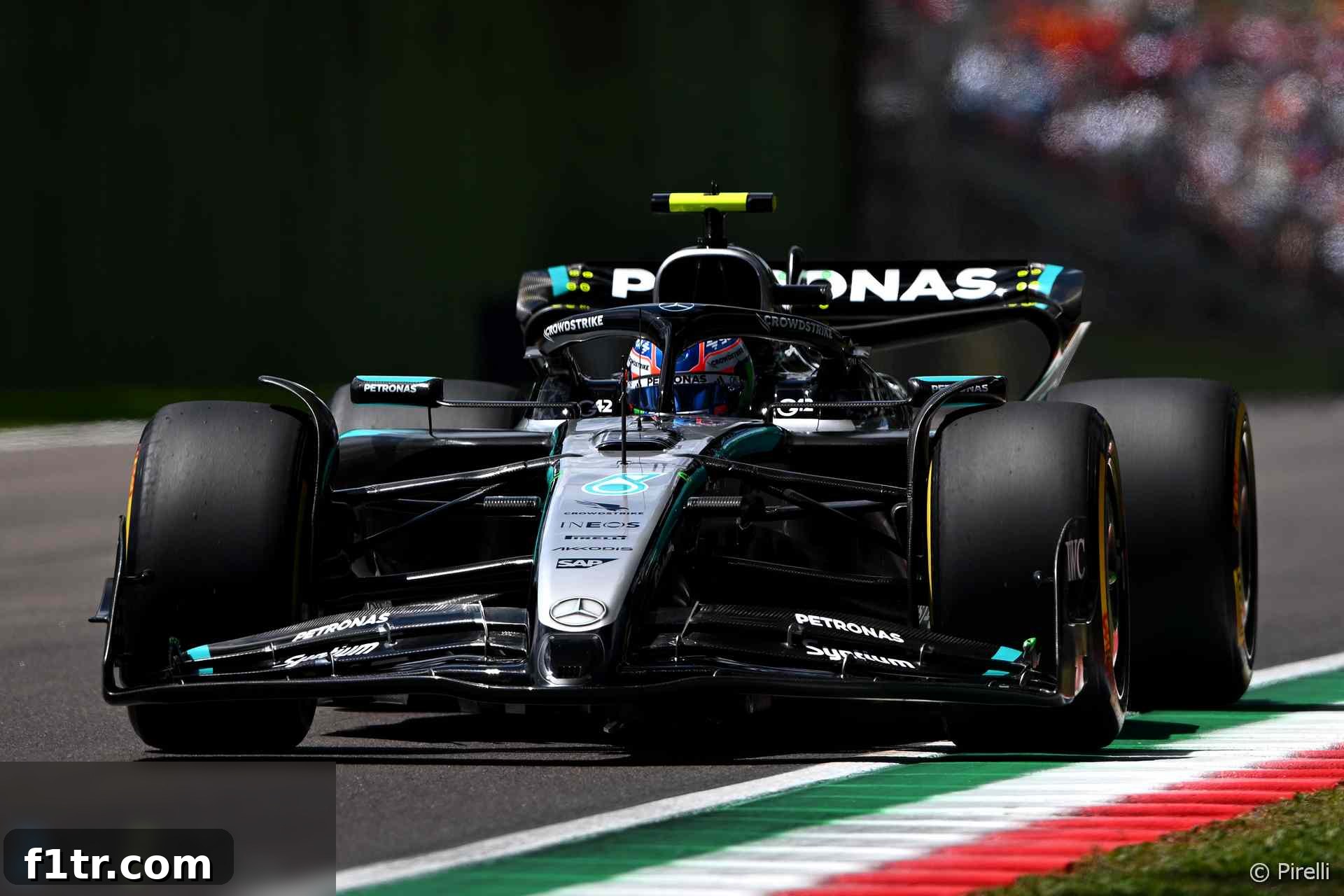
Mercedes Acknowledges Overwhelming Pressure on Rookie Andrea Kimi Antonelli at Imola
Mercedes team principal Toto Wolff has candidly admitted that the team should have taken more proactive measures to mitigate the intense strain placed upon their highly-touted junior driver, Andrea Kimi Antonelli, during his recent home Grand Prix. The incident at Imola serves as a crucial learning experience for the Silver Arrows in their meticulous approach to nurturing budding Formula 1 talent, underscoring the delicate balance between opportunity and overload for young prodigies.
The Emotional Toll of a Home Race Debut
The Emilia Romagna Grand Prix at Imola marked a significant milestone for Andrea Kimi Antonelli, as it was his inaugural home event as an active Formula 1 driver. Racing mere kilometres from his hometown of Bologna, the race naturally drew an unprecedented level of personal attention. Antonelli, a young man navigating the initial stages of a high-pressure career, extended invitations to a large contingent of friends and family, eager to share this momentous occasion. However, as Toto Wolff reflected, the sheer volume of demands on the rookie’s time and energy proved to be an overwhelming burden.
Wolff conveyed that the team might have inadvertently repeated a similar misstep from the previous year. Antonelli’s very first appearance in an F1 practice session, held at Monza in Italy, also saw him exposed to significant local interest. On that occasion, the young driver uncharacteristically crashed early in the first practice session, a moment that in hindsight, now appears to be a precursor to the challenges faced at Imola. These instances highlight the unique psychological pressures that accompany a rookie’s debut on home soil, a factor that F1 teams must meticulously manage.
Imola: “A Perfect Storm” for the Young Prodigy
Describing the circumstances at Imola, Wolff poignantly labelled it a “perfect storm.” This metaphor encapsulates the confluence of factors that contributed to Antonelli’s predicament. Imola isn’t just any circuit for him; it’s the track closest to where he resides, steeped in personal history and familiarity. It represents his home, his school, his family roots, and the local football club – all the threads that have woven together the fabric of his life and career thus far. In Wolff’s words, “Everybody wanted to have a little bit of Kimi.”
This widespread desire for interaction, while born of goodwill and pride, translated into an incessant demand on Antonelli’s time and mental resources. For a young athlete who is still acclimatizing to the rigorous environment of Formula 1, managing these external pressures can be as challenging as mastering the car itself. The emotional energy expended in attempting to acknowledge and thank every well-wisher, to maintain decorum with friends and family, and to appease local fans, left the young driver utterly drained.
The Impact of Relentless Demands: Antonelli “Toast” by Friday
The intensity of the weekend began to take its toll alarmingly early. According to Wolff, by Friday, the very first day of competitive running, Antonelli was already “toast.” This evocative term paints a vivid picture of extreme exhaustion, both mental and physical. The constant interaction, the emotional investment, and the internal desire to perform exceptionally well for his home crowd had sapped his energy reserves before the most critical parts of the race weekend even began.
By Saturday, the situation had only worsened. Wolff recounted a conversation with Antonelli, where the driver admitted, “I’m out of energy [from] all of this.” This raw admission underscores the profound impact of the non-racing demands. It’s a natural human inclination for a young, polite individual to want to reciprocate the warmth and support shown to him. Antonelli’s innate desire to thank everyone who had played a part in his journey, and his reluctance to appear unfriendly to his vast network of friends, family, and fans, made it incredibly difficult for him to establish the necessary boundaries for his own well-being and performance.
The incident provides a crucial insight into the mental fortitude required not just to drive an F1 car at its limit, but also to manage the relentless public scrutiny and personal obligations that come with being a Formula 1 driver, especially a highly anticipated rookie. It serves as a reminder that the development of a top-tier racing driver extends far beyond lap times and technical understanding; it encompasses the cultivation of robust psychological resilience and effective self-management strategies.
Wolff’s Guidance and Mercedes’ Commitment to Driver Welfare
Recognizing the severity of the situation, Toto Wolff stepped in to offer direct guidance. His advice to Antonelli was unequivocal: “You need to protect yourself, hide yourself in your room, in the engineering room on the Sunday, and everything else just comes second.” This counsel emphasizes the paramount importance of self-preservation and focus in the high-stakes world of Formula 1. It signifies a critical moment where the team acknowledged their responsibility to shield their young talent from external pressures, prioritizing his immediate well-being and long-term development over superficial courtesies.
This experience has served as a pivotal learning moment for the entire Mercedes organization, as well as Antonelli’s family. Wolff stated, “I think all of us together, the family, we realised that that was too much, and that is a mistake we will not repeat.” This commitment to learning and adaptation is a hallmark of successful F1 teams. It signifies a pledge to implement more robust strategies for managing rookie appearances at high-profile events, ensuring that the driver’s mental and physical state remains optimized for performance, rather than compromised by extraneous demands. This proactive approach to driver welfare is essential for fostering sustained success and longevity in the careers of emerging talents like Antonelli.
Beyond Imola: Facing the Ultimate Test at Monaco
The Imola weekend, unfortunately, culminated in Antonelli’s retirement from the race due to a throttle problem on his car, a mechanical issue unrelated to the pressures he faced. With the Imola experience fresh in mind, the focus quickly shifted to the next formidable challenge: the Monaco Grand Prix. Racing for the first time on the iconic streets of Monaco in an F1 car presents a completely different, yet equally intense, set of demands. Wolff made it clear that the team would manage their expectations of Antonelli in Monaco, understanding the unique nature of the circuit and the rookie’s learning curve.
Monaco is renowned for being the most technically challenging track on the Formula 1 calendar, a circuit where experience truly counts. Its tight confines, unforgiving barriers, and constant requirement for absolute precision make it a baptism of fire for even seasoned drivers, let alone a rookie. The margin for error is virtually non-existent, and a single misjudgment can swiftly end a session or a race.
Navigating Monaco: A Cautious Approach to Learning
Wolff commented on Antonelli’s initial approach to the Monaco weekend, noting that he “started the weekend very well in building up in the right way, not making too many mistakes.” This measured strategy is crucial at Monaco. Instead of immediately pushing to the absolute limit, Antonelli focused on incrementally finding his rhythm and understanding the nuances of the circuit. While he did “clip the inside of the barrier” during practice, Wolff quickly reassured that it “wasn’t hugely damaging for the car,” highlighting the fine line drivers must tread between exploring limits and avoiding costly incidents.
The emphasis for Antonelli in Monaco was firmly on accumulating “laps” and continuous learning. Each lap provides invaluable data and builds critical muscle memory and confidence. Wolff expressed confidence that Antonelli would be “dialled in” by qualifying, a testament to the young driver’s innate talent and adaptability. However, he realistically added that Antonelli would “obviously, never on the level of the really more senior drivers that know their way around here blind.” This acknowledgement underlines the irreplaceable value of years of experience at a circuit like Monaco, a wisdom that only time and repeated exposure can provide. Antonelli’s journey through these iconic tracks is not just about raw speed but about mastering the art of F1’s complex mental and physical challenges.
The Broader Context of F1 Rookie Development
Andrea Kimi Antonelli’s experiences at Imola and Monaco encapsulate the broader challenges faced by any rookie entering the elite world of Formula 1. The transition from junior categories to F1 is not merely about adapting to faster cars; it involves navigating an entirely new ecosystem of media scrutiny, corporate responsibilities, fan expectations, and the relentless pressure to perform under a global spotlight. For exceptionally talented young drivers like Antonelli, who carry the weight of future expectations, these pressures are magnified.
The role of the team in such a developmental phase becomes paramount. Beyond providing a competitive car and skilled engineers, a Formula 1 team must also act as a shield, a mentor, and a strategist for its young drivers, helping them to manage their external engagements and protect their mental space. The lessons learned from Imola will undoubtedly inform Mercedes’ approach to Antonelli’s future race weekends, particularly those with significant personal resonance. It’s a testament to the team’s commitment to his long-term success that they are willing to openly acknowledge and rectify such missteps.
Antonelli’s journey through his debut F1 season will be a narrative defined by learning, adaptation, and resilience. Every race, every practice session, and every interaction contributes to his development as a complete Formula 1 driver. The ability to learn from challenging experiences, both on and off the track, will ultimately shape his trajectory in the sport. The early lessons from Imola and Monaco, though difficult, are crucial building blocks for what Mercedes hopes will be a long and successful career for their next-generation star.
Related Articles: 2025 Emilia Romagna Grand Prix
- Antonelli was tiring from home race at Imola attention by Friday – Wolff
- Ferrari struggling to recreate set-up which “worked well” in Shanghai – Hamilton
- Verstappen told Red Bull to use Tsunoda before “hold him up” call
- ‘Saturdays have been mine for years but for some reason it’s drifted away’ – Norris
- “Plan C?”: Why McLaren only got their strategy right for one driver at Imola
Browse all 2025 Emilia Romagna Grand Prix articles
Stay Updated with Our Latest Stories
Receive a daily email with all our newest content – no marketing, no ads, just the news you care about. Sign up today to ensure you don’t miss a thing!
(Please check your junk email folder to ensure you receive our emails.)
By subscribing, you agree to our site’s privacy rules.
Subscribe Now