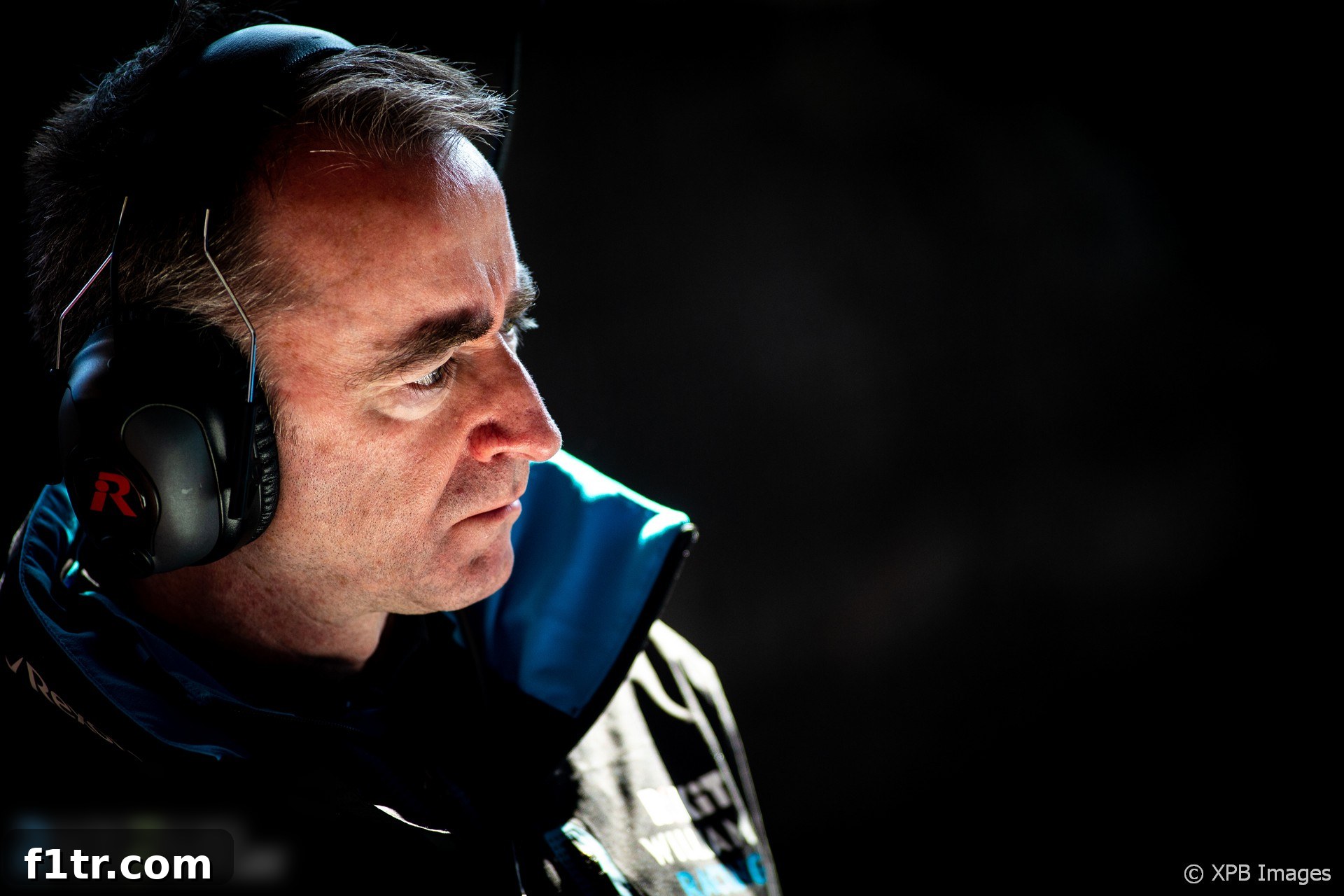
Paddy Lowe Departs Williams Amidst Pre-Season Turmoil
In a significant development just nine days before the crucial first practice session of the 2019 Formula 1 season, Williams Racing’s Chief Technical Officer, Paddy Lowe, has stepped down from his role. The team officially confirmed that Lowe “has taken a leave of absence from the business for personal reasons,” with the decision effective immediately. This unexpected departure sends ripples through the F1 paddock, casting a shadow over the venerable British team as it grapples with profound challenges.
Advert | Become a Supporter & go ad-free
Lowe’s exit comes at a critical juncture for Williams, following a tumultuous pre-season period marked by the team’s highly publicized failure to complete its new FW42 chassis in time for the commencement of winter testing. The car, vital for their 2019 campaign, eventually made its track debut on the third day of the eight-day pre-season test in Barcelona, significantly compromising the team’s preparation and development schedule. This delay, an unprecedented setback for a team of Williams’ stature, ignited widespread speculation and concern within the F1 community.
Paddy Lowe’s Illustrious Career and High Hopes at Williams
Paddy Lowe arrived at Williams in March 2017 with an impressive pedigree and immense expectations. Known for his technical prowess and strategic insight, Lowe had previously enjoyed highly successful stints with McLaren and Mercedes, playing a pivotal role in multiple championship-winning campaigns. His tenure at Mercedes, in particular, saw the team dominate the hybrid era, securing numerous constructors’ and drivers’ titles. His move to Williams was seen as a potential turning point for the Grove-based outfit, a team steeped in F1 history but struggling to compete with the sport’s financial powerhouses.
When Lowe joined Williams as Chief Technical Officer, the hope was that his experience, leadership, and innovative approach would rejuvenate the team’s technical department and reverse its gradual decline. He was tasked with overseeing the design and development of future cars, improving operational efficiency, and restoring Williams to its competitive glory. However, the complexities of an independent team operating on a tighter budget, coupled with the evolving technical landscape of Formula 1, presented formidable hurdles.
The Challenging 2018 Season: A Dire Precedent
The 2018 Formula 1 season proved to be an exceptionally difficult year for Williams, setting a troubling precedent for Lowe’s second full car design. The FW41, the first car to be developed entirely under Lowe’s technical directorship, struggled significantly. The team plummeted from a respectable fifth place in the constructors’ championship in 2017 to a disappointing tenth and last position in 2018, scoring a mere seven points. This dramatic slide highlighted fundamental design flaws and a lack of competitive pace that left both drivers, Lance Stroll and Sergey Sirotkin, battling at the rear of the grid.
The FW41 was plagued by aerodynamic instability and a general lack of performance, which hindered its ability to generate sufficient downforce and maintain consistent grip. Drivers frequently reported difficulties with the car’s balance and predictability, making it challenging to extract maximum performance. This poor showing signaled deep-seated issues within the team’s technical philosophy and design processes, raising questions about the direction Williams was taking under Lowe’s guidance. The struggles of 2018 put immense pressure on the team to deliver a vastly improved car for the 2019 season.
The FW42 Saga: A Pre-Season Crisis Unfolds
The failure to complete the FW42 chassis in time for the start of pre-season testing was arguably the most public and embarrassing setback for Williams in recent memory. Pre-season testing is an indispensable period for teams to shakedown new cars, gather crucial data, validate simulations, and allow drivers to acclimatize to their new machinery. Missing the initial days meant a significant loss of invaluable track time, placing Williams at an immediate disadvantage even before the first race of the season.
Deputy team principal Claire Williams, last week, vehemently denied claims that the car’s delay was due to issues with external suppliers or financial constraints. Instead, she suggested that the complexities of late technical rule tweaks contributed to the team’s predicament. While this explanation offered some insight, it did little to quell concerns about the team’s internal operational efficiency and its ability to manage development timelines under pressure. The sight of the FW42 finally rolling out on day three, after rivals had already accumulated hundreds of laps, underscored the monumental task facing the team.
The impact of this delay is multifaceted. Firstly, fewer laps mean less data for engineers to analyze and less opportunity to identify and rectify potential issues with the car. Secondly, the rookie driver George Russell and returning driver Robert Kubica had fewer opportunities to adapt to the new car, fine-tune their driving styles, and provide critical feedback for development. This lack of preparation could have profound implications for their performance during the initial races of the season, potentially jeopardizing their chances of scoring points in a fiercely competitive midfield.
A Trend of Technical Departures at Grove
Paddy Lowe’s departure is not an isolated incident but rather the latest in a series of high-profile exits from Williams’ technical team over the preceding twelve months. During its troubled 2018 campaign, the team also saw long-serving chief designer Ed Wood leave after twelve years at Williams. Shortly thereafter, head of aerodynamics Dirk de Beer departed the Grove-based team in May of the same year. These successive departures of key technical personnel point to a broader pattern of instability and perhaps a struggle to retain top talent amidst ongoing performance woes.
The loss of experienced engineers and designers can severely impact a Formula 1 team’s ability to innovate, develop, and maintain a competitive edge. It can lead to a loss of institutional knowledge, disrupt ongoing projects, and create a vacuum in critical leadership roles. While team principals often reiterate the strength of their remaining teams, a constant churn of senior technical staff typically indicates deeper systemic issues, whether related to resources, internal processes, or simply a lack of progress and results.
Implications for Williams’ 2019 Season and Beyond
Lowe’s departure leaves a significant void in Williams’ technical leadership at a time when the team desperately needs stability and clear direction. The immediate challenge will be to reorganize the technical department and identify who will take charge of the FW42’s development throughout the 2019 season. Without a clear technical head, the team risks further fragmentation and a potentially slower response to performance challenges.
For a team that once dominated Formula 1, winning nine constructors’ championships and seven drivers’ titles, Williams’ current predicament is a stark reminder of the sport’s relentless demands. The financial disparity between independent teams and manufacturer-backed giants continues to widen, making it increasingly difficult for outfits like Williams to invest at the same level in cutting-edge technology, personnel, and infrastructure. This structural challenge, combined with internal operational issues, has contributed significantly to their current struggles.
The 2019 season now represents an even steeper uphill battle for Williams. With reduced testing time, a car whose initial performance is unknown, and a leadership vacuum, the team faces the daunting task of not just moving off the bottom of the grid, but also rebuilding confidence and morale within its ranks. The focus will undoubtedly shift towards maximizing the potential of the FW42, no matter how limited, and laying the groundwork for a more stable and competitive future.
Conclusion: A Crossroads for a Legendary Team
Paddy Lowe’s departure from Williams marks a significant moment for the team, symbolizing the profound challenges it faces both on and off the track. While the official reason cited “personal reasons,” the timing and context of his exit strongly suggest a culmination of the immense pressure and performance issues that have plagued the team over the past two years. Williams stands at a crossroads, needing to make decisive strategic and operational changes to halt its decline and begin the long journey back towards competitiveness.
The road ahead for Williams will be arduous. It will require not only technical brilliance but also shrewd management, effective resource allocation, and a renewed sense of purpose. Only time will tell if the team can navigate these turbulent waters and honor its legendary heritage by returning to a position of strength in the highly demanding world of Formula 1. The 2019 season promises to be a defining chapter in the long and storied history of Williams Racing, and the departure of its Chief Technical Officer adds another layer of complexity to an already challenging narrative.
Don’t miss anything new from RaceFans
Follow RaceFans on social media:
- Join RaceFans on Facebook
- Follow RaceFans on Twitter
- Get daily email updates from RaceFans
Advert | Become a RaceFans supporter andgo ad-free
2019 F1 season
- Crying in the Melbourne car park at 2019 grand prix was my career low – Ocon
- McLaren Racing reports reduced £71 million loss in 2019
- Kvyat: Hockenheim podium last year was “my biggest achievement” so far
- How the FIA’s new encrypted fuel flow meter targets Ferrari’s suspected ‘aliasing’ trick
- “He smashed my office door”: 23 must-see moments from ‘Drive to Survive’ season two
Browse all 2019 F1 season articles