Ferrari SF21 Unleashed: First Track Run Ignites Hopes for the 2021 F1 Season
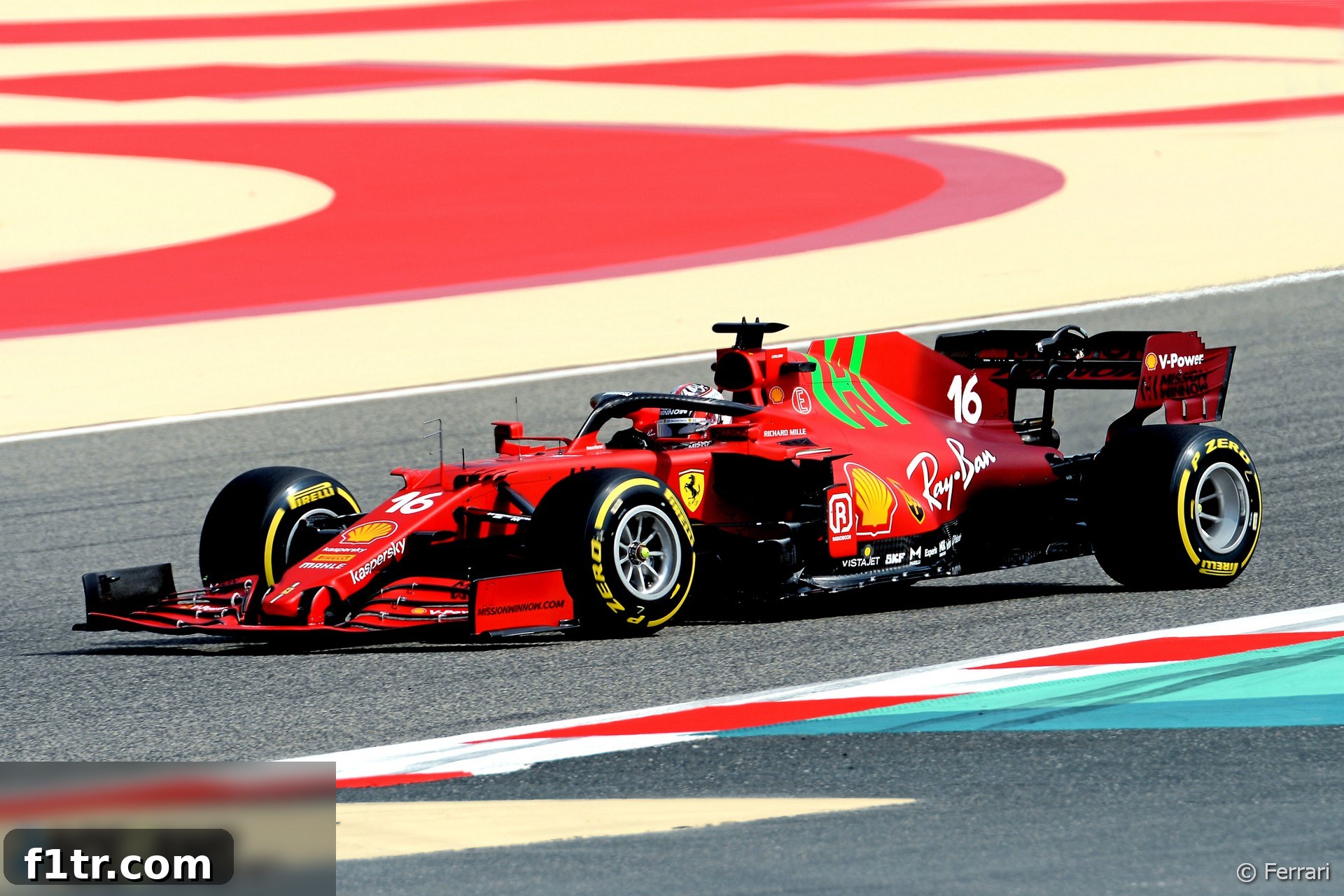
The roar of a new engine echoed through the Bahrain International Circuit as Scuderia Ferrari’s challenger for the 2021 F1 season, the SF21, took to the track for its inaugural run during a crucial filming day. This momentous occasion marks the official commencement of Ferrari’s fight to reclaim its competitive edge in Formula 1, following a challenging 2020 season.
At the helm for these initial laps was Ferrari’s prodigious talent, Charles Leclerc. Powering the new machine was Ferrari’s heavily scrutinized and significantly upgraded power unit, designated 065/6, which is expected to be a cornerstone of the team’s recovery. Leclerc’s shakedown run occurred at the very circuit where the official pre-season testing is scheduled to begin tomorrow, providing an invaluable early assessment.
Joining Leclerc at the track for this pivotal filming day was his new teammate, Carlos Sainz Jnr. This fresh driver pairing brings a renewed sense of ambition and dynamism to Maranello, with both drivers eager to contribute to Ferrari’s resurgence. While filming days are primarily for promotional content, they offer an indispensable opportunity for teams to conduct initial system checks, ensure basic functionality, and gather preliminary data on the car’s behavior.
Engineering Revival: The Power Unit’s Crucial Overhaul
Ferrari officially unveiled the SF21 just yesterday, captivating fans with its striking two-tone livery – a deep red at the rear transitioning to a more traditional Ferrari red at the front – and a prominent bright green sponsor logo adorning its engine cover. Beyond the aesthetics, the team has dedicated intensive efforts to improving two critical areas: its power unit and its seamless integration within the SF21 chassis. Last year, Ferrari’s power unit was widely considered the weakest in the field, making this upgrade paramount to their 2021 aspirations. The SF21 chassis itself largely carries over elements from last year’s SF1000, a consequence of the stringent regulatory restrictions imposed for the 2021 season.
Enrico Gualtieri, Ferrari’s head of power unit, shed light on the meticulous development process. He emphasized a “systematic approach,” highlighting cross-departmental collaboration where “all departments – design, simulation, development, track – worked together to find every opportunity for improvement.” This integrated strategy underscores Ferrari’s commitment to leaving no stone unturned in their quest for enhanced performance. Gualtieri further explained, “Along with our colleagues on the chassis side, we worked a lot on the layout of the power unit, to make the overall design of the car as efficient as possible,” indicating a holistic design philosophy aimed at optimizing the entire package rather than isolated components.
A key area of focus for the internal combustion engine (ICE) has been “increasing its level of thermal efficiency.” Collaborating closely with their long-standing partner Shell, this pursuit of greater efficiency has already yielded promising results. Gualtieri estimated that these improvements alone have produced “an improvement in lap time that we estimate at over one tenth of a second.” In the cutthroat world of Formula 1, where milliseconds define success, a tenth of a second represents a significant gain, offering a tangible boost to the SF21’s competitive potential.
Beyond the ICE, Ferrari is also “carrying out further development on the hybrid system and the electronics, in order to revise and optimise all components.” Modern F1 power units are incredibly complex, integrating sophisticated hybrid systems and intricate electronic controls. Optimizing these elements is crucial for extracting maximum performance and ensuring reliability. This extensive development effort is particularly challenging given the prevailing regulations, which have “reduced power unit test bench time still further,” demanding greater efficiency and precision in their R&D processes.
Aerodynamic Adaptations and Chassis Evolution
While the 2021 regulations mandated significant carry-over components from 2020, limiting wholesale redesigns, Ferrari strategically allocated its development “tokens” to critical areas. The rear of the SF21, in particular, showcases substantial changes, featuring much tighter packaging in a concerted bid to improve its aerodynamic performance. This tighter design aims to enhance the flow of air around the rear of the car, generating more downforce and reducing drag. Complementing these aerodynamic refinements, both the car’s gearbox and rear suspension are entirely new, crucial elements for improving traction, tire management, and overall stability.
Enrico Cardile, head of chassis, elaborated on these aerodynamic and mechanical innovations. He explained, “We also looked at the cooling system, increasing the effectiveness of the central radiator and designed the body with more ‘downwashing’.” Effective cooling is vital for maintaining optimal engine performance and reliability, especially in high-temperature environments like Bahrain. The “downwashing” bodywork concept is designed to direct airflow downwards towards the diffuser, maximizing the car’s ability to generate vertical load, or downforce, which presses the car onto the track for increased grip and cornering speed.
Cardile further highlighted the impact of the 2021 regulatory changes on aerodynamics. These regulations were specifically “aimed at reducing the ability to generate vertical load, in order not to put too great a strain on the tyres.” This meant teams faced the challenge of recovering significant levels of lost downforce. Ferrari, in response, set itself two ambitious goals during the SF21’s aerodynamic development: “recovering more aerodynamic downforce than was lost through the regulations and reducing drag.” Achieving both is a delicate balancing act, as increasing downforce often comes at the cost of increased drag, which hinders straight-line speed.
Due to the aforementioned regulations restricting the extent to which teams could modify their new cars for 2021, the front of the SF21 retains much of the architecture from last year’s design. However, even with these constraints, Ferrari introduced significant updates in key areas. Cardile confirmed that the car sports a “new front wing” and notably, “a new concept nose.” While subtle in appearance, changes to the front wing and nose can profoundly influence the airflow over the entire car, dictating how cleanly air reaches critical aerodynamic surfaces further back and ultimately impacting overall downforce and efficiency.
A Striking New Identity: The SF21 Livery
The SF21’s livery is more than just paint; it’s a visual statement. The striking two-tone design, transitioning from the more traditional, slightly darker red at the front to a vibrant, almost modern racing red at the rear, symbolizes a bridge between Ferrari’s storied past and its ambitious future. This visual evolution is further enhanced by the bright green sponsor logo on the engine cover, providing a stark, contemporary contrast to the classic Maranello colors. Livery choices are often made not just for aesthetic appeal, but also to reflect a team’s brand identity, sponsor relationships, and aspirational goals for the season ahead.
The Ultimate Test: Pre-Season in Bahrain
The real test of Ferrari’s off-season work will commence tomorrow, as the SF21 joins the other nine F1 teams for the first of three intensive days of pre-season testing in Bahrain. Pre-season testing is an absolutely critical period for any Formula 1 team. It’s not just about setting fast lap times, but about rigorous data collection, ensuring reliability over race distances, understanding how the car interacts with different tire compounds, and optimizing the car’s setup for varying track conditions.
For the drivers, it’s an opportunity to re-familiarize themselves with the demands of an F1 car, fine-tune their driving style to the new machine, and provide invaluable feedback to the engineering team. For Carlos Sainz Jnr, specifically, these three days will be his primary opportunity to truly integrate into the Ferrari system and get comfortable with the SF21 before the lights go out for the first Grand Prix. Bahrain provides an excellent testing ground due to its warm, consistent weather and a track layout that features a mix of high-speed straights, challenging braking zones, and technical corners, allowing teams to evaluate various aspects of their car’s performance.
With a significantly reduced testing window of just three days (compared to previous years), the pressure on every team, and especially Ferrari, to maximize track time and gather precise, actionable data is immense. Every lap, every setup change, and every sensor reading will be meticulously analyzed to prepare the SF21 for the demanding 2021 championship.
Ferrari’s Hopes and the Road Ahead
The unveiling and first run of the SF21 mark a significant moment for Scuderia Ferrari. After a disappointing 2020, the team is under immense pressure to demonstrate progress and return to competitive form. The meticulous attention paid to the power unit, coupled with strategic aerodynamic and chassis developments, reflects a determined effort to rectify past weaknesses. The collective efforts of Charles Leclerc and Carlos Sainz Jnr will be vital in translating these technical advancements into on-track performance. While a championship challenge might still be a distant goal, showing consistent improvement, fighting for podiums, and reducing the gap to the front-runners would be considered a successful step forward for the storied Italian marque.
As the F1 world eagerly awaits the start of official testing, all eyes will be on the SF21. Its initial performance in Bahrain will provide the first real indication of whether Ferrari has indeed turned the corner and is ready to write a new, more successful chapter in its illustrious Formula 1 history.
2021 F1 Season Insights
- Masi ‘basically gifted the championship’ to Verstappen says 2021 FIA steward Sullivan
- Las Vegas race backers looking to extend F1 deal beyond 2025
- Why Mercedes put ‘a reminder of joy and pain’ on display in their factory lobby
- Verdict on error in GT race suggests Mercedes would have lost 2021 Abu Dhabi GP appeal
- Title ‘stolen’ from Mercedes made us ‘underdogs people cheer for’ – Wolff
Browse all 2021 F1 season articles