In the high-stakes world of Formula 1, strategic decisions can make or break a race, often becoming subjects of intense debate and analysis long after the chequered flag falls. The 2023 Australian Grand Prix was no exception, providing a compelling case study in the fine line between tactical brilliance and unforeseen misfortune. At the heart of this narrative lay Mercedes’ controversial early pit stop for George Russell, a decision they firmly believe was correct, despite its immediate reversal by an unexpected red flag and Russell’s eventual retirement.
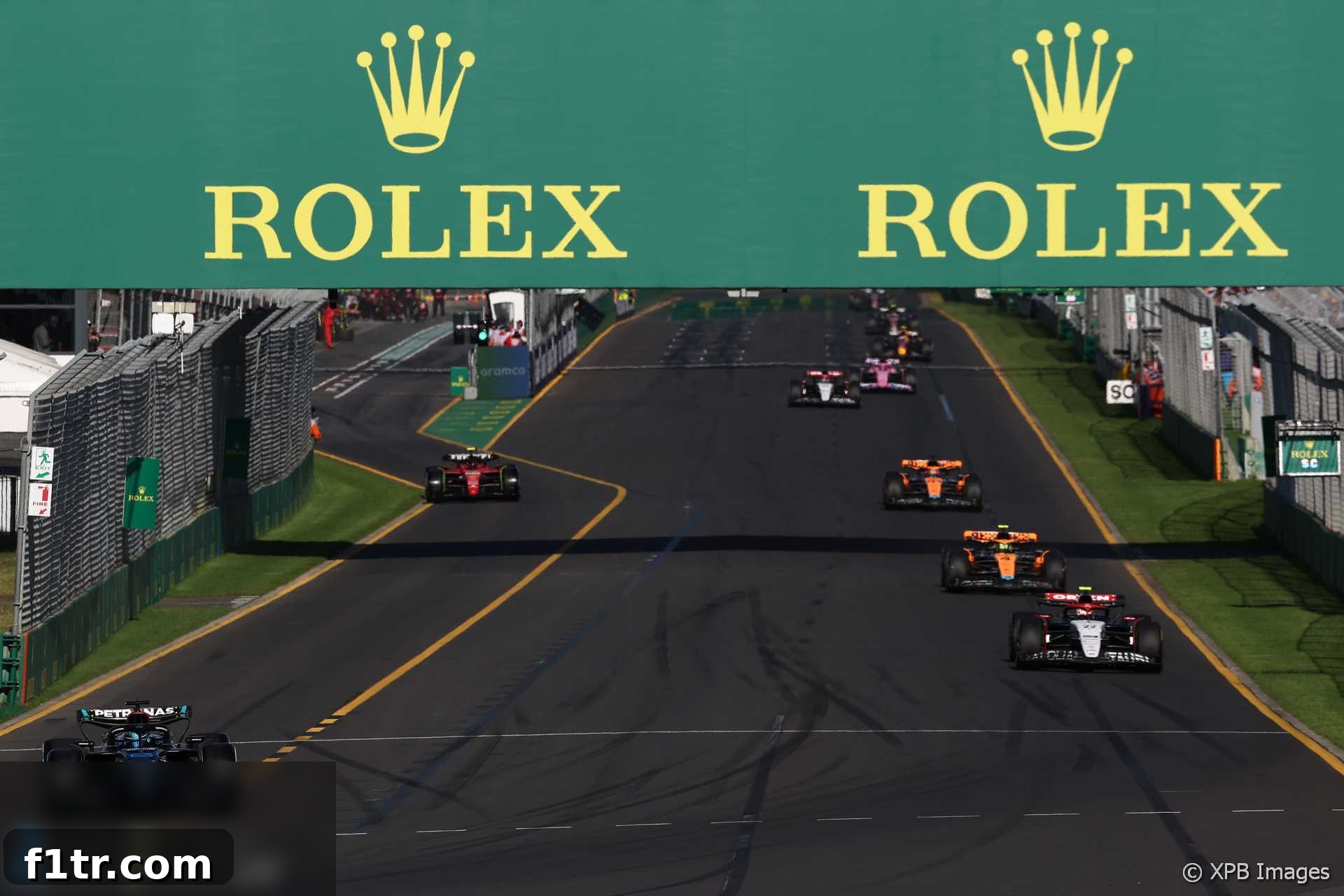
The incident unfolded on lap seven of the Albert Park circuit. Race leader George Russell was enjoying a strong start, holding off the likes of Lewis Hamilton and Max Verstappen. However, the race was dramatically altered when Alexander Albon crashed his Williams at Turn 6, scattering gravel across the track and necessitating the deployment of the Safety Car. This moment presented every team with a critical strategic quandary: pit for fresh tyres under the Safety Car, gaining a ‘cheap’ stop without losing significant time, or stay out and maintain track position.
Mercedes’ Chief Technical Officer, James Allison, later elucidated the team’s thought process in a video released by the team, highlighting the razor-thin margins involved. He described the situation as “right on the cusp of whether a Safety Car stop is going to help you out or leave you a little bit worse off.” With Russell leading the race, the team made the bold call to bring him into the pits. The aim was clear: equip his W14 with a set of hard compound tyres, enabling him to run to the end of the race without requiring another stop. This aggressive strategy, while sacrificing immediate track position, was designed to yield a significant advantage in the latter stages of the Grand Prix.
In a fascinating display of risk diversification, Mercedes opted for a split strategy between their two drivers. While Russell entered the pit lane, his teammate Lewis Hamilton, who had been running second, remained on track and inherited the lead. Allison explained this decision as “splitting your risk. It’s like an each-way bet.” By pitting one car and leaving the other out, Mercedes sought to cover both eventualities, ensuring that regardless of how the Safety Car period played out, one of their cars would likely be in a strong position. Russell rejoined the race in seventh place, a temporary setback accepted in exchange for what was anticipated to be a considerable strategic gain over his rivals.
The meticulously planned strategy, however, was about to be undone by an unforeseen development. Just moments after Russell completed his pit stop and rejoined the field, the race director made the decision to deploy a red flag. This unexpected halt to proceedings completely negated the advantage Russell and Mercedes had worked to build. Under red flag conditions, all cars are permitted to change tyres without any time penalty, effectively granting a “free” pit stop to every competitor. This meant that those who had stayed out, including Lewis Hamilton, could now switch to fresh tyres without losing track position, completely nullifying the benefit of Russell’s earlier ‘cheap’ stop.
James Allison openly admitted the team’s surprise at the red flag decision. “Now, we were very surprised by that red flag because to us, that looked like the sort of incident that could have been cleared up under a yellow,” he stated. Indeed, the decision to red-flag the race for a single-car incident, particularly one that appeared manageable under a Safety Car, was widely questioned across the paddock and by fans alike. For Mercedes and Russell, it was a cruel twist of fate, transforming a calculated risk into an immediate disadvantage. “All that was rendered completely null and void when the red flag was then pulled out just a few seconds later,” Allison lamented, emphasizing the dramatic shift in circumstances.
Despite the adverse outcome, Allison firmly maintained that the initial decision to pit Russell was sound based on the information available at the time. “I think the decision stands on the merits that we were considering when we made it. But obviously, once the red flag came out, then it clearly meant that George lost out a little bit,” he clarified. This underscores the inherent unpredictability of Formula 1 strategy, where external factors like race control decisions can instantaneously redefine the competitive landscape, making even the most meticulously planned tactics vulnerable to sudden shifts in fortune. Carlos Sainz Jnr of Ferrari found himself in a similar predicament, having also pitted under the Safety Car only to see his strategic move similarly compromised by the red flag.
Following the red flag and subsequent restart, George Russell demonstrated remarkable resilience and pace. Despite the strategic setback, he began to carve his way back through the field, showcasing the strong performance capabilities of his Mercedes W14. By the time of his unfortunate retirement, he had already recovered to an impressive fourth position, signalling his potential for a strong points finish, or perhaps even a podium. Allison’s assessment of Russell’s performance throughout the weekend reinforced this belief: “He showed good pace all the way through the weekend, good in qualifying, strong start, good race pace and was set fair for a good result, even if he had been ill-served by the fortune of the red flag.”
Tragically, Russell’s promising recovery was cut short by a power unit failure, adding insult to injury on what had already been a challenging day. This mechanical issue forced him to retire from the race, denying him any opportunity to salvage points from an event fraught with strategic challenges and unexpected turns. The combined effect of the ill-timed red flag and the DNF meant a significant missed opportunity for Russell and Mercedes, particularly given their strong performance leading up to these incidents.
Russell’s Race Radio: Insights into a Tumultuous Afternoon
The unfolding drama of Russell’s race was captured vividly through his team radio communications. When Albon’s crash triggered the Safety Car, Mercedes’ pit wall reacted instantly, summoning Russell for his critical pit stop. His engineer, Dudley, quickly relayed the instructions, outlining the “strat one” call, indicating the aggressive pit strategy:
| Lap: 7/58 | |||||||||||||||||||||||||||||||||||||||||||||||||||
| Dudley | Gap 0.5. Safety Car, Safety Car. Keep the delta positive. We’ll go strat one. | ||||||||||||||||||||||||||||||||||||||||||||||||||
| Dudley | So box, box. Box, box. | ||||||||||||||||||||||||||||||||||||||||||||||||||
| Dudley | Just look out for traffic with Ferrari. Look out for traffic with Ferrari. We’re close on exit. So push to the line. That’s it you’re ahead of Tsunoda. | ||||||||||||||||||||||||||||||||||||||||||||||||||
| Lap: 8/58 | |||||||||||||||||||||||||||||||||||||||||||||||||||
| Dudley | The incident is turn six on the exit. Albon’s parked on the exit. Looks like there’s gravel across the track as well. | ||||||||||||||||||||||||||||||||||||||||||||||||||
| Russell | What position are we? | ||||||||||||||||||||||||||||||||||||||||||||||||||
| Dudley | So just be careful with the rears over this gravel. Avoid wheelspin. Currently P7. | ||||||||||||||||||||||||||||||||||||||||||||||||||
| Russell | All right. Bold call, I like it. | ||||||||||||||||||||||||||||||||||||||||||||||||||
Russell’s immediate positive response, “Bold call, I like it,” underscored his confidence in the team’s aggressive approach, showcasing the symbiotic relationship and trust between driver and pit wall. However, this optimism was short-lived. The announcement of the red flag, delivered by Dudley, quickly transformed the mood:
| Dudley | So, yeah, we just need to work on this hard tyre warm-up. You are the highest-placed car on the hard. You’re the first one to have stopped. If we can have green three position two, green three position two. So you’ve got a red flag. |
| Russell | Get me tyre run data |
| Dudley | Affirm. So just keep an eye on those brake temps. Box box box, staying in the fast lane. |
| Russell | What does this mean now then for us? |
| Dudley | Yeah, I’ll come down and talk to you about it. |
| Russell | Let’s get these tyres rewrapped ASAP |
| Dudley | Yeah affirm. Down to [unclear] tyre blankets. |
Russell’s immediate query, “What does this mean now then for us?” perfectly encapsulated the confusion and frustration felt by those who had strategically pitted. The red flag effectively reset the race, eliminating the strategic advantage gained through the Safety Car pit stop. His subsequent comparison to the previous race in Jeddah, where a Safety Car deployment for Lance Stroll’s retirement was also met with some surprise, highlighted a pattern of race control decisions impacting strategic outcomes:
| Russell | Safety Car last week when it was totally unnecessary and now again this week. |
| Wolff | Yeah sorry, George, that screwed us. But let’s do the most out of it. We can still go to the front on the podium, or better. |
| Russell | Yeah it’s not your fault, guys. That was a good call. |
Team Principal Toto Wolff’s empathetic yet resolute message to Russell (“Yeah sorry, George, that screwed us. But let’s do the most out of it. We can still go to the front on the podium, or better.”) showcased the leadership and motivational aspects crucial in Formula 1. Russell’s gracious reply, “Yeah it’s not your fault, guys. That was a good call,” further cemented the unity within the Mercedes team, even in the face of significant adversity.
The Broader Debate: Race Control and Strategic Impact
The events of the 2023 Australian Grand Prix reignited the perennial debate surrounding race control decisions and their profound impact on strategic outcomes. The perceived inconsistency in deploying Safety Cars versus red flags, particularly for seemingly minor incidents, adds another layer of complexity to an already intricate sport. While safety remains paramount, the fine line between necessary intervention and race-altering mandates is constantly scrutinized. For teams like Mercedes, whose meticulous planning can be undone in an instant by such decisions, it presents a unique challenge in strategizing for races that are inherently dynamic and often unpredictable.
Ultimately, while the 2023 Australian Grand Prix proved to be a weekend of missed opportunities and frustrating twists for George Russell and Mercedes, it also served as a testament to their resilience and strategic acumen. Despite the cruel hand of fate, the team’s belief in their initial decision remains steadfast, highlighting their commitment to aggressive, forward-thinking strategy in the pursuit of Formula 1 success. The race will long be remembered not just for its dramatic conclusion, but for the intricate strategic dance that unfolded, heavily influenced by external decisions that underscore the unpredictable nature of top-tier motorsport.
2023 Australian Grand Prix: Further Insights
- Australian GP to forbid fans from entering track at end of this year’s race
- I only missed one chance to score points this year – Albon
- Formula 1’s stewards should listen to drivers less, not more
- Mercedes unsure whether gains seen in Melbourne were ‘track-specific’
- Why Ferrari saw a ‘real step forward in pure performance’ in point-less Australian GP
Browse all 2023 Australian Grand Prix articles