Williams F1’s Unexpected Surge: Alexander Albon’s Stellar Performance at the Mexican Grand Prix
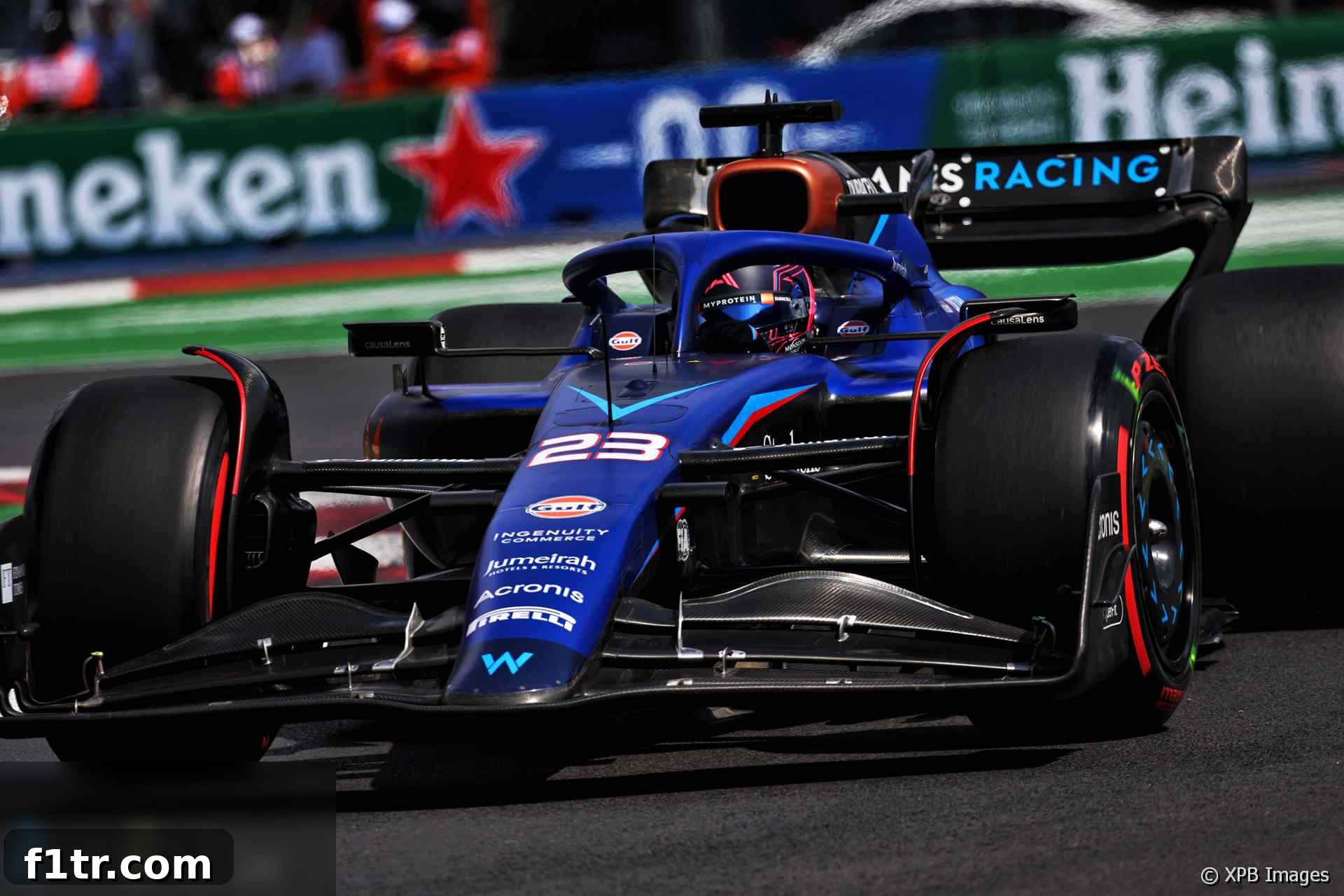
The Formula 1 world was gripped by a sense of surprise and excitement as Williams Racing, a team that has steadily been clawing its way back up the grid, showcased an unexpectedly competitive start to the Mexican Grand Prix weekend. Against the backdrop of the challenging Autódromo Hermanos Rodríguez, the iconic British outfit defied expectations, demonstrating a remarkable turn of speed that propelled them into the upper echelons of the practice sessions. This sudden surge in performance, particularly spearheaded by their star driver Alexander Albon, quickly became one of the most compelling storylines, sparking widespread discussion about Williams’ progress and potential.
Alexander Albon, whose consistent ability to extract maximum performance from his machinery has been a hallmark of his tenure at Williams, was the undeniable catalyst behind this impressive display. In the crucial opening practice session, Albon stunned observers by not only challenging but outperforming many of the sport’s established frontrunners, securing the second-quickest time, trailing only the formidable Max Verstappen. This wasn’t a fleeting moment; Albon replicated this stellar form in the final practice hour before Saturday’s qualifying, once again cementing his position as the second-fastest driver on a circuit known for its unique and demanding characteristics. Such sustained top-tier pace from a team like Williams, particularly under these challenging conditions, was genuinely unforeseen and underscored a significant step forward in their ongoing development.
The Architects of Success: Driver-Team Synergy and Strategic Car Development
The reaction from within the Williams camp itself spoke volumes about the unexpected nature of their competitiveness. Dave Robson, the team’s Head of Vehicle Performance, candidly expressed his astonishment after the initial practice session. “It’s quite clear that Alex was very confident and happy in the car, right from the first lap, which makes a big difference,” Robson explained. His comments highlighted the critical synergy between driver and machine, indicating that Albon felt immediately comfortable and capable of pushing the car to its limits from the outset – a testament to both his innate talent and the team’s meticulous preparation and understanding of their package.
Albon’s instrumental role in Williams’ recent resurgence cannot be overstated. In his second full season with the team, he has emerged as a pivotal figure, almost single-handedly accumulating the vast majority of Williams’ points and thereby elevating them to a highly respectable seventh place in the Constructors’ Championship standings. Robson readily acknowledges the profound benefits of having a car meticulously developed and refined in alignment with Albon’s precise feedback and distinctive driving style. “This car obviously has had a reasonable amount of input from Alex over the last couple of years,” Robson confirmed, emphasizing the crucial, iterative process of Formula 1 car development where nuanced driver insights are paramount. This collaborative and driver-centric approach has demonstrably borne fruit, shaping a car that, while still presenting its inherent challenges, is unequivocally performing better than its predecessors in recent memory.
The consistent progress made on the FW45 chassis is a direct consequence of this sustained and focused collaboration. While no Formula 1 car is ever truly perfect, Robson noted, “It still has issues, for sure.” However, he quickly added a crucial observation: “I think the car for whatever reason was just good straight out of the box, so the set-up work that Alex had done on the simulator clearly helped.” This emphasizes the critical role of pre-event simulator preparation, where Albon’s dedicated efforts in fine-tuning the car’s setup before ever hitting the track paid immediate and significant dividends. His exceptional ability to translate virtual adjustments into tangible, real-world performance demonstrates a profound understanding of the car’s dynamic characteristics and the subtle, yet crucial, demands of each unique circuit.
Albon’s exceptional aptitude extends far beyond mere setup adjustments; it encompasses a deep and intuitive understanding of the car’s performance envelope under varying conditions. “He has a good understanding when the car is working well, or when it’s not working in some corners but well in others,” Robson elaborated. This inherent sensitivity allows Albon to adapt his driving style seamlessly and effectively, maximizing the car’s strengths and skillfully mitigating its weaknesses without succumbing to frustration. “He’s quite capable of adapting to that without getting too frustrated,” Robson added, underscoring a maturity and composure rarely seen. This adaptability, coupled with his persistent and precise feedback, actively drives the team’s ongoing development efforts. As Williams introduces improved parts and modifications based on his invaluable input, Albon is consistently able to exploit these advancements, inevitably finding additional lap time and pushing the team further up the competitive grid. This virtuous cycle of detailed feedback, strategic development, and masterful performance extraction has become a cornerstone of Williams’ impressive climb in the Constructors’ standings.
Navigating Mexico’s Unique Terrain: The High-Altitude Conundrum
While Williams’ single-lap pace proved undeniably strong and promising, the distinctive nature of the Autódromo Hermanos Rodríguez circuit presents a unique and formidable set of challenges that can drastically alter race-day dynamics and overall performance. The track, famously situated at an astonishing altitude of over 2,200 meters (approximately 7,200 feet) above sea level, is notorious for its significantly thinner air. This unique atmospheric condition profoundly impacts various critical aspects of Formula 1 car performance, effectively transforming the Grand Prix into a demanding strategic and engineering puzzle. The primary concerns for all teams revolve around aerodynamics, engine performance, and, most critically, efficient cooling.
The Aerodynamic Paradox and Downforce Management
At such extreme altitudes, the reduced air density means that cars generate significantly less aerodynamic downforce compared to sea-level circuits. To compensate for this inherent loss of grip, teams typically run maximum downforce configurations on their wings and bodywork, attempting to claw back as much stability and cornering speed as possible. However, even with these aggressive setups, the overall downforce levels experienced by the cars are often comparable to those found at a traditionally low-downforce track like Monza. This aerodynamic paradox means cars tend to slide more through corners, demanding greater precision and finesse from the drivers, and placing increased stress and wear on the Pirelli tyres.
Engine Performance and Critical Cooling Challenges
The thin air also significantly starves the highly sophisticated turbocharged hybrid power units of oxygen, leading to a noticeable reduction in engine power output. While the turbochargers work exceptionally harder to compensate for this lack of air, this puts immense additional strain on all power unit components, and crucially, on the cooling systems. The less dense air is inherently less efficient at dissipating the substantial heat generated by the engine, brakes, and other critical systems, making effective thermal management a truly formidable task. Teams must meticulously manage temperatures to prevent overheating, which can lead to severe reliability issues, significant performance degradation, or even catastrophic component failures during the race. “Here of all places, the race pace between the different cars can vary a lot, depending on how everyone is on top of the cooling,” Robson articulated, underscoring the absolute criticality of this factor. The Mexican Grand Prix is not merely about raw speed; it’s profoundly about endurance and successfully managing thermal limits throughout the entire race distance.
The Race Pace Enigma: Bridging the Gap Between Qualifying and Sunday
Robson’s cautionary remarks regarding race pace highlight a crucial and often overlooked distinction in Formula 1: the vast difference between a single, all-out qualifying lap and the relentless, strategic demands of a full Grand Prix. A car perfectly optimized for one-lap glory might struggle significantly over a race distance, especially under extreme conditions like those prevalent in Mexico City. “So, I don’t think it’s necessarily just about having the most downforce or the best balance,” he stressed, pointing towards a broader and more complex set of variables that come into play on Sunday. Factors such as effective cooling, managing tyre degradation over long stints, and optimizing fuel management become paramount, often overshadowing outright aerodynamic efficiency or raw engine power output when it comes to sustained race performance.
The ability to maintain optimal operating temperatures for the engine, brakes, and other critical components throughout the race becomes an overarching strategic imperative. Teams often make compromises, opting to open up additional cooling apertures on their cars’ bodywork, which inevitably compromises aerodynamic efficiency in favor of robust reliability. This delicate balance means that some teams might intentionally sacrifice a fraction of their top-end speed or overall aerodynamic performance to ensure their car can comfortably complete the demanding 71-lap race without encountering critical overheating issues. This fundamental design and setup decision can profoundly impact a car’s ability to follow other cars closely, as clean, undisturbed airflow is absolutely essential for efficient cooling.
“Potentially on Sunday, if people don’t have the right levels of cooling, and struggle to follow, the race could be a bit different. So we’re going to have to figure that out,” Robson concluded, emphasizing the significant uncertainty and strategic complexity facing all teams, including Williams. The Mexican Grand Prix could very well transform into a high-stakes game of thermal management, where teams that best navigate the cooling labyrinth gain a significant and potentially decisive advantage, allowing cars that were not necessarily the fastest in qualifying to truly shine on Sunday. Williams’ challenge, therefore, was not just about maintaining their impressive single-lap speed, but crucially about transforming it into a robust, reliable, and strategically sound race performance that could withstand the unique rigors of the Autódromo Hermanos Rodríguez.
Williams’ Resurgence: Season Trajectory and Future Prospects
The strong showing in Mexico wasn’t an isolated stroke of luck but rather a clear continuation of Williams’ quietly impressive 2023 season. Under the renewed leadership of Team Principal James Vowles, the team has shown consistent and tangible signs of improvement, steadily moving away from their perennial back-marker status. Alexander Albon’s exceptional driving has been instrumental in this resurgence, as he consistently converts any competitive advantage the FW45 offers into crucial championship points. The team’s focused development strategy, centered around clear objectives, robust data analysis, and invaluable driver feedback, has created a solid and sustainable foundation for future growth and continued competitiveness.
The Mexican Grand Prix weekend, despite its unique and unforgiving challenges, served as another compelling proof point for Williams’ significant progress. It demonstrated their evolving capability to extract meaningful performance under pressure and their growing, nuanced understanding of the FW45. While the ultimate race result would inevitably depend on a multitude of dynamic factors, including astute strategic calls, flawless pit stop execution, and the driver’s masterful management of the delicate cooling balance, the initial practice sessions provided a tantalizing glimpse of Williams’ exciting potential. Their renewed ability to challenge the established order, even if temporarily, instills both confidence and immense excitement for the remainder of the 2023 season and beyond. The journey from a struggling backmarker to a consistent points-scorer, and at times, a genuine challenger for top positions, is a testament to the dedication, strategic vision, and revitalized spirit now embedded within the Williams Racing team, with Alexander Albon leading the charge as their undisputed star and driving force.