Max Verstappen’s Public Service: A Deep Dive into the FIA’s Unconventional Penalty
Max Verstappen, the formidable Red Bull Racing driver, found himself at the center of an unexpected disciplinary action following a contentious incident with Esteban Ocon at the 2018 Brazilian Grand Prix. The aftermath of their on-track collision spilled over into the pit lane, resulting in a physical confrontation that led to a unique penalty: two days of “public service” at the direction of the FIA. This sanction ignited widespread debate among fans and pundits alike, prompting FIA president Jean Todt to elaborate on the nature and intent behind such an unusual ruling, hinting at a potential role for Verstappen working closely with race stewards.
The Infamous Interlagos Incident: A Catalyst for Controversy
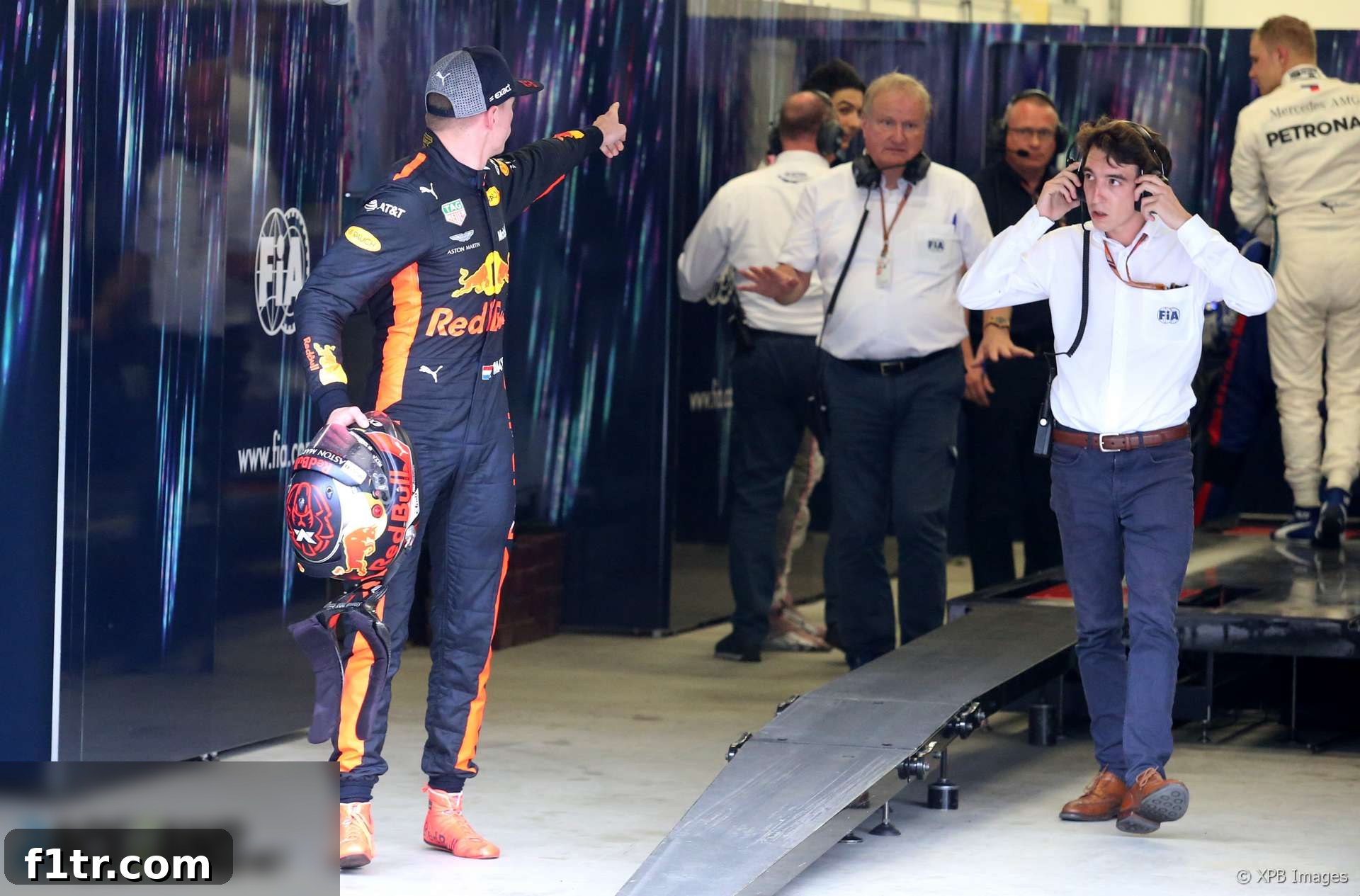
The 2018 Brazilian Grand Prix was a race charged with drama, culminating in a pivotal moment involving then-race leader Max Verstappen and backmarker Esteban Ocon. While Verstappen was on course for a dominant victory, Ocon, attempting to unlap himself on fresh tyres, collided with the Dutchman’s Red Bull. The incident spun Verstappen around, costing him the lead and ultimately the race win. The immediate aftermath was marked by palpable frustration, with Verstappen confronting Ocon in the weigh-bridge area. Fuelled by adrenaline and disappointment, Verstappen was seen shoving Ocon, an act that swiftly attracted the attention of the race stewards.
This off-track altercation, though brief, was deemed a breach of sporting conduct. The FIA, the governing body of motorsport, swiftly issued a ruling that diverged from typical monetary fines or grid penalties. Instead, Verstappen was handed a sentence requiring him to perform “two days of public service at the direction of the FIA.” This decision underscored the FIA’s commitment to upholding standards of respect and professionalism, even in the highly charged environment of Formula 1. The ambiguity surrounding what “public service” would entail immediately became a focal point of discussion, prompting the FIA’s highest authority to weigh in.
FIA’s Stance on Driver Responsibility: Jean Todt Speaks Out
In the wake of the incident, FIA President Jean Todt offered crucial insights into the philosophy underpinning the penalty. Speaking to Sky, Todt emphasized the inherent responsibilities that come with the global platform and fame afforded to Formula 1 drivers. “When you have these kinds of exposures, this kind of fame, it gives you also responsibilities,” Todt stated, highlighting the importance of drivers serving as role models.
Todt articulated that regardless of the intense emotions experienced during competition, drivers are expected to maintain control and respect for all stakeholders – their supporters, fellow competitors, and the integrity of the sport itself. He stressed that failure to adhere to these principles would inevitably lead to consequences. While acknowledging that the severity of the incident might lead some to perceive the penalty as relatively minor, Todt underlined its constructive nature. The intent, he explained, was not merely punitive but aimed at fostering a deeper understanding and appreciation for the various facets of the racing world. This focus on education and experiential learning suggested a forward-thinking approach to driver discipline, moving beyond conventional sanctions.
Unpacking the “Public Service” Sentence: Beyond Conventional Penalties
The concept of “public service” in the context of Formula 1 is, by its very nature, unconventional. Unlike financial penalties or sporting sanctions that directly impact a driver’s competitive standing, this ruling aimed at a different form of accountability. It sought to immerse Verstappen in aspects of motorsport that might offer new perspectives, promoting personal growth and a broader appreciation for the complexities involved in running a global racing series. Jean Todt’s remarks illuminated the potential avenues for this unique form of service.
Todt suggested that Verstappen’s public service would be something “supportive to the Formula 1 world, supportive to the racing world.” This broad directive allowed for various interpretations, moving beyond traditional community service into areas directly relevant to the sport. The underlying goal was to leverage Verstappen’s experience and profile in a manner that would be beneficial not only to him but also to the wider motorsport community. The flexibility in the penalty’s execution indicated a desire for a meaningful and impactful experience, rather than a token gesture. The focus shifted from mere punishment to an opportunity for constructive engagement and learning.
Working Alongside Stewards: A Unique Educational Opportunity
One of the most intriguing suggestions put forth by Jean Todt was the possibility of Verstappen working “closer with some stewards or some officials during some training, during some education groups.” This idea sparked considerable interest, envisioning a scenario where a top-tier driver gains firsthand experience of the often-unseen work behind race management and regulation enforcement. Such an initiative could offer invaluable insights for Verstappen, allowing him to step into the shoes of those who make critical decisions that directly impact his sport.
Imagine Verstappen attending steward training sessions, observing the meticulous review of incidents, or even participating in a panel of stewards in a lower category of motorsport. This direct exposure to the deliberative process, the application of complex regulations, and the pressure of making swift, fair judgments could be profoundly enlightening. It would allow him “to put yourself in the other side and understand that it’s not always easy,” as Todt articulated. This understanding could foster greater empathy and respect for the roles of officials, potentially leading to more tempered reactions in high-pressure situations on track.
Furthermore, such a program could serve as a powerful educational tool for the wider driver community. By witnessing a prominent figure like Verstappen engaging in this form of service, other drivers might gain a clearer appreciation for the FIA’s commitment to fairness and the challenges faced by officials. It could bridge the often-perceived gap between competitors and adjudicators, fostering a more collaborative environment within the sport. While the specific details remained to be finalized, the vision of Verstappen gaining a deeper understanding of regulatory processes and the human element in stewarding represented a truly constructive and forward-thinking approach to disciplinary action.
Max Verstappen’s Perspective: “A Bit Harsh”
Despite the constructive nature of the FIA’s proposed public service, Max Verstappen himself expressed reservations about the penalty. Speaking in Abu Dhabi, he openly stated his belief that the sentence was “harsh.” This reaction is understandable given the intense competitive drive and the high stakes involved in Formula 1. For a driver of Verstappen’s caliber, who thrives on raw aggression and pushing boundaries, any perceived impediment or non-racing obligation could feel unwarranted, especially when the initial incident stemmed from a racing collision.
Verstappen acknowledged the necessity of complying with the ruling, stating, “We’ll discuss, between the team and the FIA, what we’re going to do. If I agree with it, it doesn’t really matter, does it? What can you do about it? I find it a bit harsh but we’ll find a solution.” His pragmatism, even amidst his personal disagreement, highlighted his professionalism. Drivers operate under immense pressure, and their emotions are often on full display, making the line between passion and misconduct a delicate one. Verstappen’s reaction underscores the challenge for the FIA in balancing strict enforcement with an understanding of the human element in elite sports.
Broader Implications and The Future of Driver Discipline
The Max Verstappen-Esteban Ocon incident and the subsequent public service penalty serve as a significant moment in Formula 1’s approach to driver conduct. It signaled a move towards more creative and potentially educational sanctions, rather than solely relying on fines or sporting penalties. This approach aims to not only discipline but also to educate and foster a greater sense of responsibility among drivers who are global sporting icons.
This incident also highlighted the constant challenge for the FIA in maintaining decorum and sportsmanship while allowing for the inherent passion and competitive fire that defines Formula 1. The public service mandate set a precedent, suggesting that future infringements of sporting conduct might also be met with penalties designed to broaden a driver’s understanding of the sport’s intricate ecosystem. Ultimately, the successful execution of Verstappen’s public service could pave the way for a more holistic approach to driver development and discipline, contributing to a more respectful and professional environment within the pinnacle of motorsport.
2018 F1 season
- F1 feared “death knell” for Drive to Survive after Ferrari and Mercedes snub
- McLaren staff told us we were “totally crazy” to take Honda engines in 2018 – Tost
- ‘It doesn’t matter if we start last’: How Red Bull’s junior team aided Honda’s leap forward
- Honda’s jet division helped F1 engineers solve power unit problem
- McLaren Racing losses rise after Honda split
Browse all 2018 F1 season articles