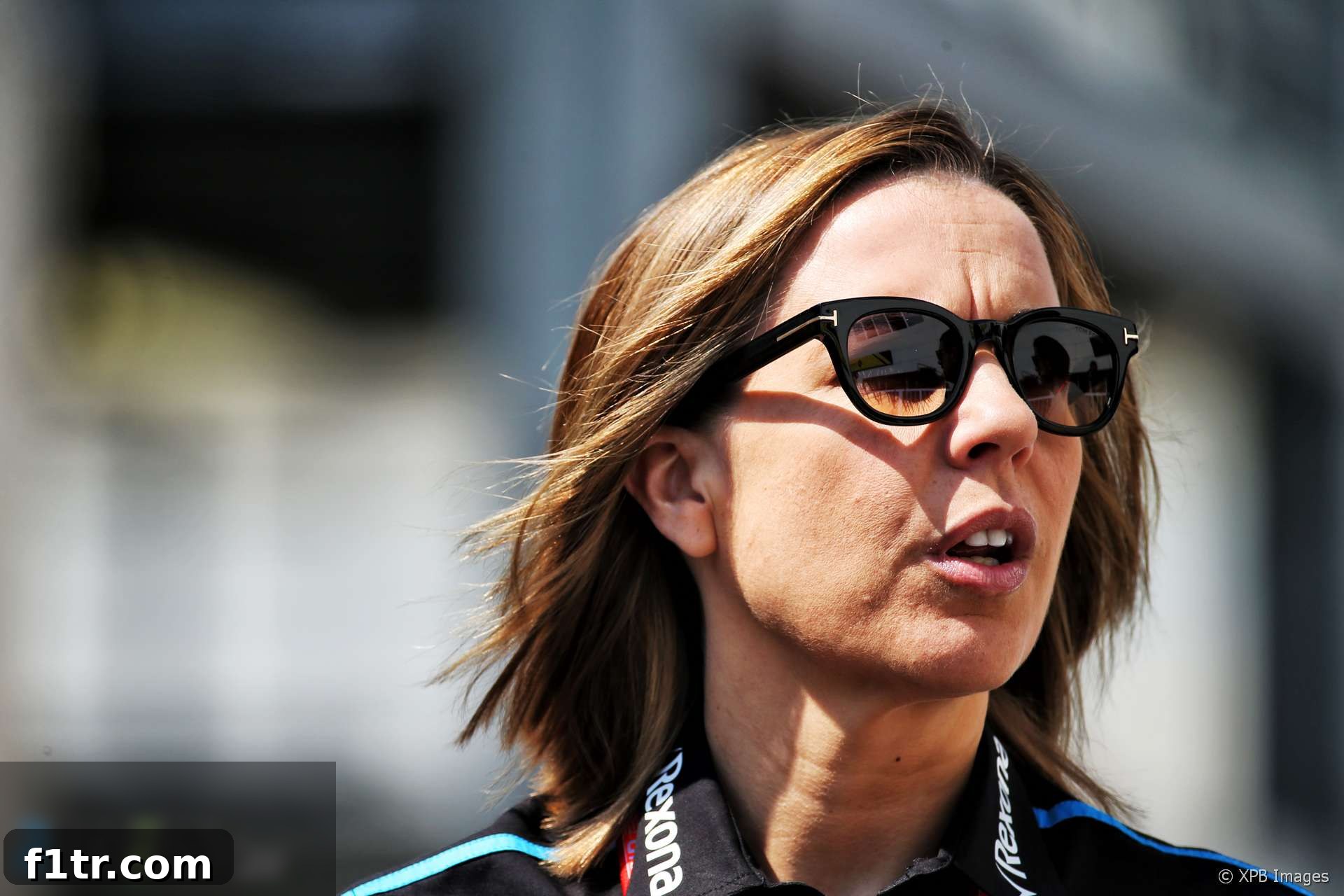
Claire Williams Revisits Stance on W Series: A Pivotal Moment for Women in Motorsport
In a significant shift of perspective, Claire Williams, the esteemed team principal of Williams Racing, has openly admitted to revising her initial views on the all-women junior single-seater championship, W Series. This change of heart came after her firsthand experience at the championship’s inaugural round held at Hockenheim, an event that she now describes as a profound “education.”
Williams, a prominent figure in the Formula 1 paddock and a strong advocate for diversity within motorsport, had previously expressed reservations about the W Series concept. Her primary concern revolved around the potential for segregation, fearing that an exclusive championship for women might inadvertently hinder progress rather than accelerate it.
“I suppose I was somewhat reserved but also critical of it initially,” Williams confessed, reflecting on her earlier stance. “My worry was that it might represent a regressive step for women in motorsport, purely from a segregation perspective. Our sport uniquely allows women to compete directly against men on a Sunday afternoon, unlike many other athletic disciplines. The question lingered: was creating a championship exclusively for women truly a step forward, or a backward one?” Her candid admission highlighted a widely debated point within the motorsport community at the time of W Series’ inception.
A Transformative Experience at Hockenheim
However, her visit to the season-opening race at the historic Hockenheim circuit earlier this month proved to be a turning point. Williams described the experience as a “good education,” a phrase that underscores the profound impact the event had on her perspective. The sheer professionalism and meticulous organization of the W Series championship left a lasting impression.
“I thought it was absolutely fantastic,” Williams enthused. “The very fact that they managed to get an entirely new championship, irrespective of whether it was for men or women, off the ground in such a short space of time, was incredibly impressive. Organisationally, everything appeared to run exceptionally smoothly, a testament to the dedication behind the scenes.” This acknowledgment from a seasoned F1 team principal speaks volumes about the quality and ambition driving the W Series.
The visual spectacle of the grid itself was a powerful moment for Williams. “To witness a whole line of cars on the grid, knowing unequivocally that they were piloted by women, was, I believe, a historic moment,” she stated. “It was truly fantastic to behold.” This observation gets to the heart of W Series’ unique appeal: offering visibility and dedicated opportunity that had long been elusive for female drivers in a male-dominated sport.
The Invaluable Platform W Series Provides
Williams emphasized that the core strength of the W Series lies in its ability to provide a critical platform for female talent that was previously non-existent. “It gives a platform for women that they simply don’t have at the moment,” she stressed. “And if anything can accelerate the process of promoting women in motorsport, then I believe that can only be considered a unequivocally good thing.” This shift in perspective from potential regression to undeniable acceleration highlights the championship’s true value in the broader ecosystem of motorsport development.
The W Series aims to identify and nurture female talent, providing them with the necessary competitive environment, training, and exposure to climb the motorsport ladder. By removing the financial barriers through a fully funded series and offering high-level competition, it addresses some of the most significant hurdles women drivers face in advancing their careers. This dedicated pathway is designed to bridge the gap between karting and higher echelons of racing, ultimately with the ambition of seeing more women compete and succeed in Formula 1 and other top-tier series.
Jamie Chadwick: A Champion Forged in W Series
The immediate impact of the W Series was strikingly evident in the performance of its inaugural round winner, Jamie Chadwick. Williams observed Chadwick’s dominant display at Hockenheim, describing her performance as utterly commanding. This impressive showing caught the attention of the Williams Racing team, leading to a significant development in Chadwick’s career.
Following her triumph, Claire Williams subsequently hired Jamie Chadwick to join Williams Racing’s prestigious driver development programme. This move is a powerful endorsement of both Chadwick’s talent and the W Series itself. It demonstrates a direct pathway from the all-women championship into the infrastructure of a Formula 1 team, offering invaluable resources, simulator time, and mentoring crucial for aspiring F1 drivers. Chadwick’s success story serves as a tangible example of the W Series fulfilling its mission to uncover and propel female talent towards motorsport’s highest levels.
The Broader Impact on Women in Motorsport
The W Series represents more than just a race championship; it’s a statement and a catalyst for change within motorsport. For years, the journey for aspiring female racers has been fraught with challenges, often facing limited opportunities, lack of sponsorship, and an underrepresentation that can be discouraging. The W Series addresses these issues head-on, creating a competitive, visible, and supportive environment.
By showcasing elite female driving talent on a global stage, the W Series inspires a new generation of girls to consider motorsport as a viable and exciting career path. Young girls watching these races can now see themselves reflected on the track, driving powerful single-seaters, breaking barriers, and competing at a high level. This visibility is crucial for fostering participation at grassroots levels, ensuring a richer and more diverse talent pool for the future of the sport.
Moreover, the existence of W Series stimulates wider conversations about diversity and inclusion in motorsport. It encourages teams, sponsors, and governing bodies to re-evaluate their approaches to driver development and support for female athletes. The ultimate goal remains to see women compete on equal terms at every level, and the W Series is a vital stepping stone in that grand vision, proving that the talent exists and merely requires the right platform to flourish.
Looking Ahead: The Future of Women in Racing
Claire Williams’s transformation from skeptic to supporter underscores the profound potential of the W Series. Her initial concerns, though valid in the context of broader gender equality debates, have been assuaged by the tangible positive impact she witnessed. The championship is not about segregating women but about elevating them, providing a much-needed launchpad in a highly competitive sport where opportunities are scarce for everyone, especially those from underrepresented groups.
The continued success and evolution of the W Series will be critical in shaping the future landscape for women in motorsport. As the series continues to grow, it will undoubtedly produce more talented drivers like Jamie Chadwick, who can then transition into other feeder series and eventually challenge for spots in Formula 1 and other premier racing championships. The journey is long, but with dedicated initiatives like the W Series gaining the support of influential figures like Claire Williams, the path for women in racing looks brighter than ever before.