Red Bull’s Dominant French GP Victory Silences Critics Amidst Lingering Controversies
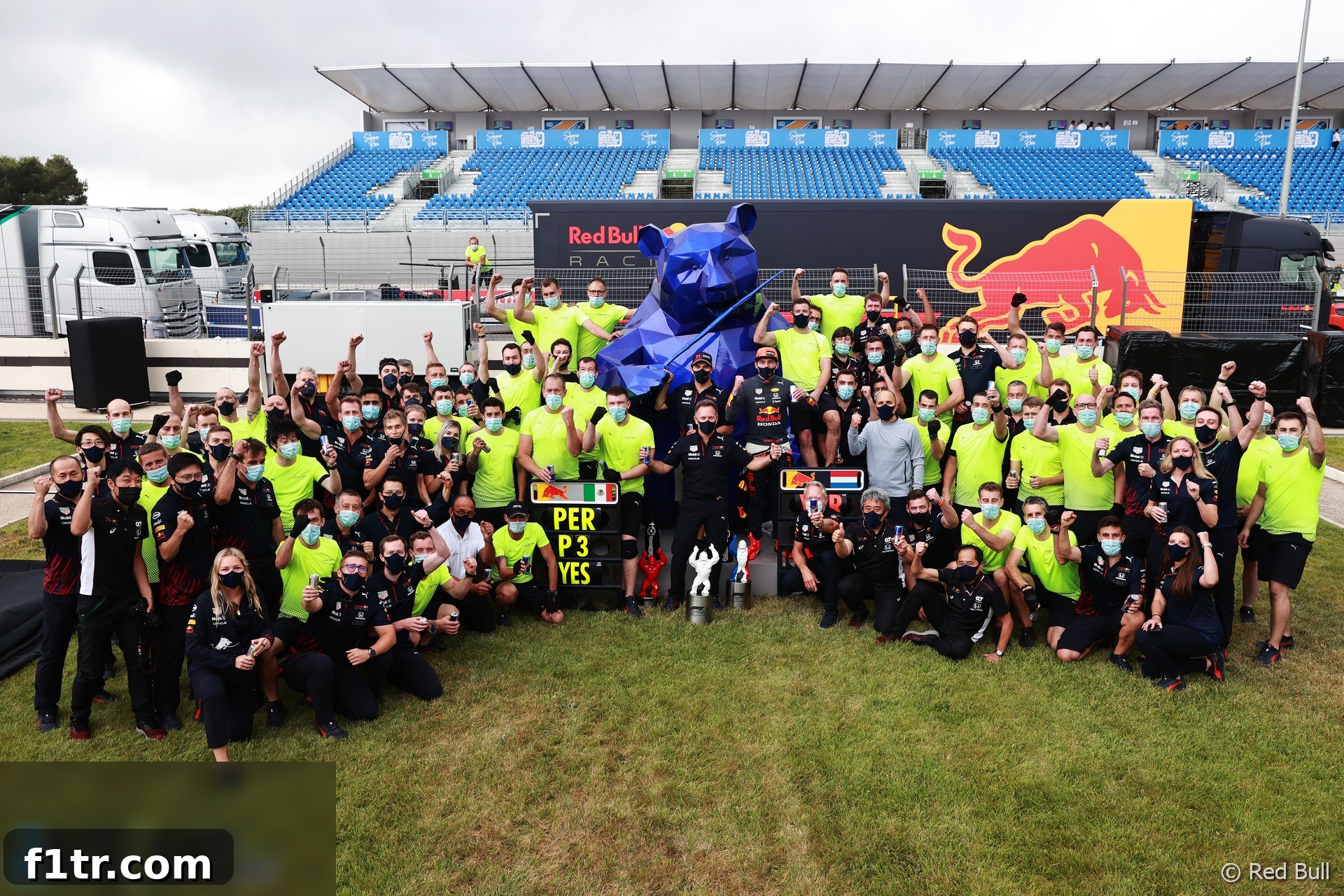
Red Bull Racing team principal Christian Horner unequivocally stated that the team’s commanding victory at the French Grand Prix served as a definitive rebuttal to any insinuations or accusations surrounding their performance. The win, achieved under intense scrutiny, proved to be a powerful statement, affirming the team’s fundamental strength and engineering excellence.
The build-up to the French Grand Prix at Circuit Paul Ricard was fraught with regulatory changes and controversies that had cast a shadow over several teams, most notably Red Bull. This pivotal race marked the introduction of more stringent tests for rear wing flexibility, alongside new restrictions on tyre usage. These measures were direct responses to recent incidents and widespread discussions within the Formula 1 paddock.
F1 Flexi-Wing Controversy: Red Bull’s Adaptation and Vindication
Red Bull Racing found itself at the heart of the “flexi-wing” debate after footage from the Spanish Grand Prix showed their rear wing appearing to deflect significantly at high speeds. This phenomenon, if proven to offer an aerodynamic advantage beyond what regulations permit, could provide a considerable straight-line speed boost. While Red Bull consistently maintained that their designs complied with existing rules, the FIA, Formula 1’s governing body, deemed it necessary to introduce tougher deflection tests to eliminate any ambiguity and ensure fair competition across the grid.
Many teams, including Red Bull, acknowledged that they would need to make modifications to their rear wing designs to pass these revised tests. The impending changes led to speculation about whether these adjustments would diminish Red Bull’s competitive edge, particularly their impressive pace on straights. However, Horner’s comments post-French GP firmly dismissed these concerns. He emphasized that the team’s triumph, achieved with a modified rear wing compliant with the new regulations, demonstrated that their performance was not reliant on any perceived flexibility advantage.
“A lot of comments have been made in the last few weeks, accusations made,” Horner reflected after the race. “But we comply with the rules, and the way that we reacted, I think, again, it shows the strength and depth, that our performance isn’t based on rear wing flexibility. Our engineering team worked tirelessly to ensure full compliance while maintaining our competitive edge, and the result in France is a testament to their dedication and ingenuity.” This clear statement aimed to put an end to the ongoing speculation and redirect focus to the team’s legitimate on-track capabilities.
Navigating New Tyre Pressure Restrictions
The French Grand Prix was also the first event following the implementation of new restrictions on tyre use, a direct consequence of high-speed tyre failures experienced by Max Verstappen’s Red Bull and Lance Stroll’s Aston Martin at the preceding Azerbaijan Grand Prix. Formula 1’s sole tyre supplier, Pirelli, conducted a thorough investigation into these incidents. Their findings attributed the failures to lower-than-expected tyre pressures on the cars involved, rather than any inherent defect in the tyres themselves. While teams are responsible for managing their tyre pressures, the FIA, in collaboration with Pirelli, decided to enforce higher minimum starting pressures to enhance safety and prevent a recurrence of such dangerous failures.
The increased tyre pressures presented a new challenge for all teams. Optimizing car setup and performance around these new parameters required significant engineering effort and a deep understanding of tyre behavior. Higher pressures can lead to reduced grip, increased wear, and a different balance, demanding a nuanced approach to suspension and aerodynamic tuning. Yet, Red Bull’s success in France, with Verstappen securing a dominant win, again served to silence critics. Horner highlighted the team’s ability to adapt swiftly and effectively to these new conditions.
“At all times, we’ve always followed the prescriptions from Pirelli,” Horner affirmed. “Obviously, the increase in tyre pressure this weekend was challenging for all the teams. But again, the engineering team have done a great job in optimising the car around it.” This demonstrated Red Bull’s methodical approach to problem-solving and their capacity to extract maximum performance within the given regulatory framework, proving that their speed was not a result of operating outside the recommended tyre parameters.
Engine Upgrade Allegations: Mercedes’ Suspicions vs. Red Bull’s Denial
Adding another layer to the intense rivalry, Mercedes, Red Bull’s principal championship competitor, raised questions about a potential engine upgrade from Red Bull’s power unit supplier, Honda. Following Sunday’s race, both Lewis Hamilton and Mercedes team principal Toto Wolff suggested that Red Bull had introduced an upgraded power unit when they fitted new engines to both their cars for the French Grand Prix. This suspicion arose from the perceived straight-line speed advantage Red Bull displayed, particularly evident when Max Verstappen easily overtook Hamilton.
Formula 1 regulations are explicit regarding engine development: teams are strictly prohibited from introducing upgraded power units during the season until the start of the following year, which, in this context, would be the 2022 F1 season. This rule is designed to manage costs and prevent an escalating development war that could disadvantage smaller teams.
Lewis Hamilton, speaking after the race, acknowledged these regulations but expressed his concern over Red Bull’s pace. “We’re losing three and a half tenths just in a straight line,” Hamilton stated, illustrating the significant deficit Mercedes felt. “So you saw him fly past me down the straight. There was nothing I could do to keep him behind.” When pressed on whether this was a worry given the tight championship battle, Hamilton added, “It’s difficult because the engines are homologated. They’ve obviously brought an upgrade here. So we’ve got to dig deep and try and see if we can figure out how to get quicker.” This sentiment was echoed by Toto Wolff, who remarked that Red Bull “have made a huge step forward with their power unit, the introduction of the second power unit” in France, implying a breach of the spirit, if not the letter, of the regulations.
Red Bull’s Firm Rebuttal and Aerodynamic Explanations
In response to these pointed remarks from Mercedes, Christian Horner strongly denied that Red Bull had utilized an upgraded engine in France. He reiterated the regulatory constraints on power unit development and expressed confusion regarding Mercedes’ claims. “We’re not allowed to make improvements, so I’m not quite sure what he’s referencing there,” Horner countered, directly challenging Wolff’s insinuation. “It’s the same specification as the first unit.”
Horner provided an alternative explanation for Red Bull’s impressive straight-line speed at Paul Ricard, attributing it to aerodynamic choices. He revealed that the team had opted to run a much smaller rear wing for the French Grand Prix. A smaller rear wing reduces drag, thereby increasing top speed, albeit at the potential cost of downforce in corners. However, with the car’s overall balance and mechanical grip, Red Bull could afford this aerodynamic compromise, especially on a track with several long straights. “We’ve run a much smaller rear wing here so that’s why the straight-line performance was strong,” he explained. “Honda are doing a great job. But we don’t see a sudden significant increase in power.”
This explanation underscores the intricate relationship between various performance factors in Formula 1. While engine power is crucial, aerodynamic efficiency plays an equally vital role, and strategic setup choices can significantly impact a car’s characteristics on different circuits. Red Bull’s ability to optimize their aerodynamic package for Paul Ricard, coupled with the proven reliability and consistent performance of the Honda power unit, provided a credible account for their speed without invoking unauthorized engine upgrades.
Impact on the Championship Battle and Future Implications
The French Grand Prix and the surrounding controversies highlight the intense psychological warfare and technical battles that define a Formula 1 championship fight, especially between two titans like Red Bull and Mercedes. Every perceived advantage, every regulatory change, and every public statement becomes a chess piece in a high-stakes game. Red Bull’s victory, coming on the heels of such scrutiny, not only solidified their position at the top of the constructors’ and drivers’ championships but also provided a significant psychological boost. It demonstrated their resilience and ability to perform under pressure, adapting to new rules without losing their competitive edge.
The ongoing dialogue between the team principals, Christian Horner and Toto Wolff, often extends beyond mere technical explanations, delving into strategic positioning and attempts to influence narratives. Red Bull’s clean sweep of the French Grand Prix, with Max Verstappen converting pole position into a hard-fought victory, served as the ultimate proof of concept. It affirmed that their performance was rooted in exceptional engineering, strategic brilliance, and drivers operating at the peak of their abilities, rather than any questionable interpretations of regulations.
As the Formula 1 season progresses, the scrutiny on both teams will undoubtedly continue. However, Red Bull’s performance in France sent a clear message: they are a formidable force, fully compliant with regulations, and capable of winning fair and square. The controversies surrounding rear wings, tyre pressures, and engine upgrades ultimately served to underline the comprehensive nature of Red Bull’s challenge, as they successfully navigated these external pressures to deliver a performance that silenced their critics and strengthened their championship aspirations.
2021 French Grand Prix Related Articles
- The Potentially Crucial Differences in How Bottas and Perez Help Their Team Mates
- How Much-Maligned Paul Ricard Produced “One of the Most Exciting Races for Five Years”
- Todt Would “Prefer Less Controversy” in Formula 1
- Wolff Encouraged by ‘Real Progress’ from Bottas in French GP
- Red Bull’s French GP Win Disproves Accusations Over Tyres and Wings – Horner
Browse all 2021 French Grand Prix articles