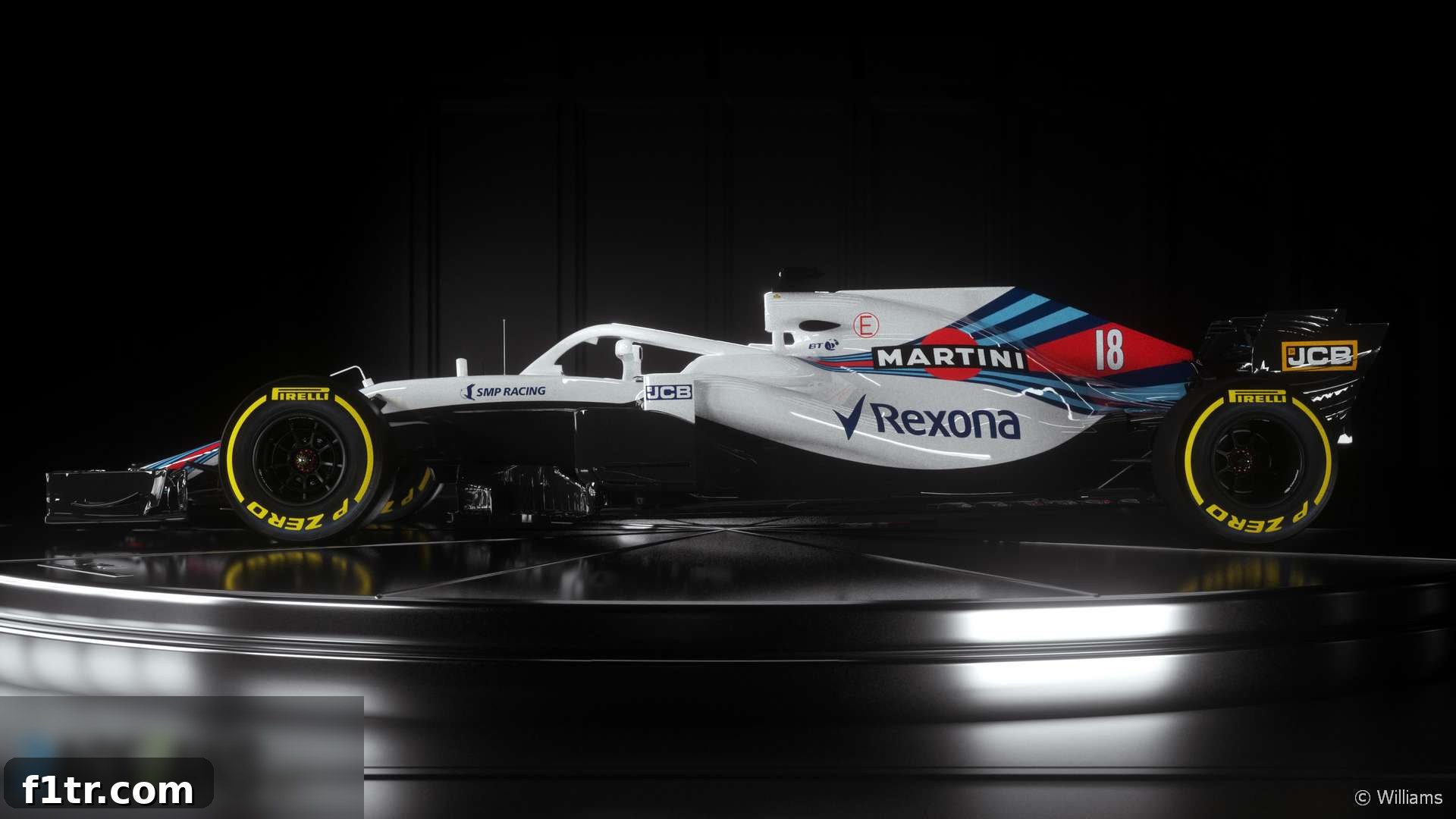
Williams FW41 Unveiled: A Bold New Direction for the 2018 F1 Season
Williams Racing, a storied name in Formula 1, has officially lifted the covers off its challenger for the 2018 F1 season, the FW41. The initial images reveal a car that the team itself describes as “significantly different” from its predecessor, the FW40, which secured a respectable fifth place in the constructors’ championship in 2017. This new vehicle represents a pivotal moment for the Grove-based outfit, signalling a determined effort to reclaim its competitive edge and push further up the grid.
The FW41 is the brainchild of a formidable technical leadership duo: Chief Technical Officer Paddy Lowe and Head of Aerodynamics Dirk de Beer. Their combined expertise has been focused on delivering a car that not only adheres to the stringent F1 regulations but also pioneers new design philosophies to unlock enhanced performance. The unveiling marks the culmination of months of intense development, research, and collaborative effort aimed at setting Williams on a path to greater success.
A Fresh Aerodynamic Philosophy Underpinning the FW41
Paddy Lowe, a highly respected figure in the world of Formula 1 engineering, articulated the fundamental shifts incorporated into the FW41. He noted that while all F1 cars are, to some extent, an evolution of previous designs, the FW41 takes a significant departure from directions pursued by the team in the past. “The FW41 has many new features, most of which are not all that obvious,” Lowe explained, hinting at the intricate details hidden beneath the car’s sleek exterior. He further elaborated that “externally, the team has pursued a very different aerodynamic concept which has allowed us some significant progress in aerodynamic performance.” This statement underscores the ambitious nature of the FW41 project, suggesting a radical rethink in how the car interacts with the air.
The pursuit of a “very different aerodynamic concept” is critical in modern Formula 1, where marginal gains in airflow management can translate into substantial lap time improvements. This new approach likely involves a complete re-evaluation of how various aerodynamic surfaces – from the front wing to the rear diffuser, including bargeboards, sidepods, and floor – work in harmony to generate downforce and reduce drag. The collaboration between aerodynamics and design, as highlighted by Lowe, is not just about making individual components more efficient but about fostering a holistic approach where every element is integrated seamlessly to achieve optimal working results. This signifies a more integrated and less compartmentalized design process, aiming to extract maximum performance from every surface and contour.
The philosophy emerging from this collaborative effort points towards a renewed focus on fundamental aerodynamic principles, potentially exploring areas that were previously less emphasized by Williams. Such a shift often involves significant computational fluid dynamics (CFD) analysis and extensive wind tunnel testing, iterating through countless designs to find the most efficient and performant solutions. The hope is that this fresh perspective will allow the FW41 to generate cleaner airflow, produce more stable downforce across various speed ranges, and ultimately provide drivers with a more balanced and predictable car to push to its limits.
Optimized Packaging for the Mercedes Power Unit
Another area of substantial focus for the FW41 has been the internal layout and integration of its components, commonly referred to as “packaging” in Formula 1 jargon. Lowe highlighted “radical changes to the car’s packaging” undertaken to optimally accommodate its new Mercedes power unit. While Williams has been a Mercedes customer team for several years, each new power unit iteration or a desire to push the design envelope can necessitate significant alterations to the car’s internal architecture.
Radical packaging changes typically involve redesigning the gearbox casing, cooling systems, exhaust routing, and even the fuel cell area to make the car as compact and aerodynamically efficient as possible. A tighter, more refined package allows for a slimmer rear end, which in turn frees up more space for the crucial aerodynamic surfaces around the diffuser and rear wing, maximizing their effectiveness. The Mercedes power unit, known for its performance and reliability, demands meticulous integration to fully exploit its potential. By making these “radical changes,” Williams aims to create a more efficient and powerful overall package, seamlessly blending the engine’s capabilities with the chassis’s aerodynamic prowess.
This intricate work is paramount because even the most powerful engine can be hampered by poor chassis integration or excessive drag caused by bulky bodywork. By optimizing the car’s packaging, Williams hopes to not only improve aerodynamic flow but also enhance the car’s balance and weight distribution, both critical factors for driver confidence and outright lap time. Lowe expressed the team’s optimism, stating, “We hope that this car will make progress in the performance rankings relative to 2017.” This aspiration underscores the high expectations placed on the FW41’s technical innovations to translate into tangible gains on the track.
An Exciting Blend of Youth and Experience in the Driver Lineup
Beyond the technical marvel of the FW41, Williams also presented an intriguing driver lineup for the 2018 season, featuring a compelling blend of youthful talent and veteran experience. Deputy team principal Claire Williams expressed her enthusiasm for the team’s new roster, describing it as “exciting.” Heading into his second year in Formula 1 with Williams is Lance Stroll, who showed flashes of brilliance in his rookie season, including a memorable podium finish. His continued development will be crucial for the team’s points accumulation.
Joining Stroll is rookie Sergey Sirotkin, who has stepped up into a full-time race seat after impressing the technical team with his speed and consistent feedback during testing and development roles. Claire Williams specifically welcomed him, noting, “Sergey has impressed the technical team and it is great for us to be able to give him the opportunity to step up into a race seat.” His fresh perspective and hunger to prove himself will undoubtedly inject new energy into the team.
Adding a layer of invaluable experience and expertise to the team is Robert Kubica, who has joined Williams as a reserve and development driver. Kubica’s story of resilience and determination is well-known, and his return to an active F1 role is highly anticipated. Claire Williams acknowledged his importance: “It’s also my pleasure to welcome Sergey and Robert to Williams, who have both displayed exceptional speed and qualities that I know will only strengthen the team.” She added, “Robert will also be working closely with the team, utilising his experience to help develop the car throughout the season.” Kubica’s profound technical understanding and extensive F1 experience will be instrumental in guiding the development path of the FW41, offering crucial insights from a driver’s perspective that can often be the differentiator in a highly competitive field.
Aspirations for the 2018 F1 Season
The 2018 F1 season presented a fresh canvas for Williams, an opportunity to build upon its legacy and strive for greater achievements. With a significantly redesigned car and a balanced driver lineup, the team aimed to not only maintain its position but to challenge closer to the front of the midfield. The technical insights from Paddy Lowe and Dirk de Beer, combined with the strategic vision of Claire Williams, painted a picture of a team fully committed to innovation and progress.
The competitive landscape of Formula 1 is relentlessly challenging, with established giants and aggressive midfield contenders all vying for supremacy. For Williams, an independent team with a rich history, leveraging every available resource and talent is paramount. The FW41, with its “significantly different” aerodynamic concept and “radical changes to the car’s packaging,” represented a tangible commitment to pushing boundaries. The ultimate success of these efforts would be measured not just in technical elegance but in points scored and positions gained on the track. The entire team, from the engineers in Grove to the drivers in the cockpit, would be working in unison to translate these ambitions into reality throughout the demanding 2018 calendar.
Related Articles: 2018 F1 Season Insights
- F1 feared “death knell” for Drive to Survive after Ferrari and Mercedes snub
- McLaren staff told us we were “totally crazy” to take Honda engines in 2018 – Tost
- ‘It doesn’t matter if we start last’: How Red Bull’s junior team aided Honda’s leap forward
- Honda’s jet division helped F1 engineers solve power unit problem
- McLaren Racing losses rise after Honda split
Browse all 2018 F1 season articles