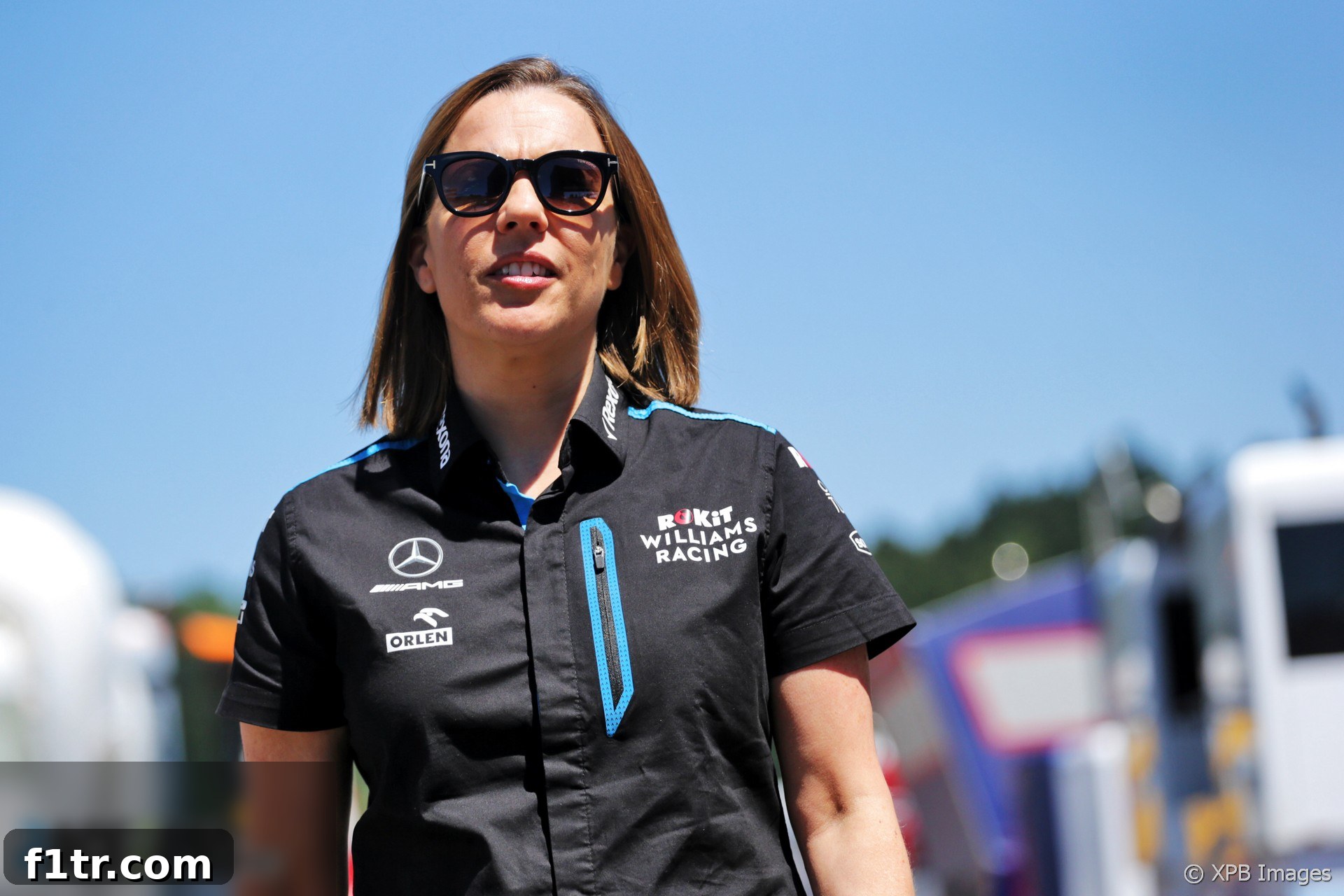
In a promising development for the beleaguered Williams Racing team, CEO and Team Principal Claire Williams has confirmed significant progress in addressing the mechanical shortcomings that plagued their season. Furthermore, she highlighted a steady upward trajectory in the team’s aerodynamic performance, signaling a potential turning point in their fight for competitiveness in Formula 1.
Williams’ Path to Recovery: A Deep Dive into Performance Gains
Advert | Become a Supporter & go ad-free
Williams has been candid about the challenges faced, particularly concerning the FW42 chassis at the season’s outset. When pressed on whether the team now possesses a clearer understanding of what transpired, Claire Williams offered a detailed and encouraging assessment:
We knew pretty quickly where the performance deltas were and where we were weak. I think we’ve talked about those and we wouldn’t talk about them in huge detail anyway.
But it’s obviously to anybody that, with Formula 1 being such an aero-dominated sport anyway, we’re down on downforce and we need to do more work to achieve that. We went through a huge change in aero last year, bringing in a new chief aerodynamicist in Doug McKiernan who brought in a new philosophy to how we go about bringing aero performance to the car.
When you do that inevitably it’s going to take some time to bed in. You almost go back to basic principles which is what, in effect, the whole of aero did last year and they needed some more time. We are now seeing our aero performance curve go on an upward trajectory which is really good to see. That will come out over the next few races.
Then there have been some mechanical issues again which I think people are fully aware of that we are working hard to resolve. The majority of which we have resolved.
Everyone is working hard at Williams and I finally feel that we are starting to see some green shoots of progress. And we really are seeing that.
Claire Williams’ comments paint a picture of a team that, despite its struggles, maintained a clear internal vision of its shortcomings. Identifying “performance deltas” and “weaknesses” quickly was crucial, even if the specifics remain guarded, as is customary in the highly competitive world of Formula 1. The implication is that the team pinpointed areas where the FW42 was underperforming compared to rivals, whether in specific corners, straight-line speed, or overall balance.
The Aerodynamic Overhaul: A New Philosophy Taking Root
Perhaps the most significant revelation from Williams’ statement concerns the team’s aerodynamic performance. Formula 1 is unequivocally an aero-dominated sport, where downforce reigns supreme. A deficiency in this area can severely compromise a car’s grip, stability, and ultimately, its lap time. The admission that Williams was “down on downforce” explains much of their struggle. However, the context is vital: the team underwent a profound change in its aerodynamic department last year with the arrival of chief aerodynamicist Doug McKiernan. McKiernan introduced a “new philosophy” – a fresh approach to designing and integrating aerodynamic components.
Such a fundamental shift is never instantaneous. It requires time to “bed in,” meaning the new design principles need to be fully understood, developed, tested, and implemented across the entire car concept. This isn’t merely about bolting on new wings; it’s about re-evaluating everything from airflow management to the interaction between different aero surfaces. It involves a complete paradigm shift for the design team, potentially resetting development back to “basic principles.” The good news, as Williams highlights, is that this period of adjustment is now yielding results. The “upward trajectory” of their aero performance curve suggests that the team is successfully translating McKiernan’s vision into tangible gains on track, which fans can expect to see manifest in improved lap times and greater competitiveness in upcoming races.
Tackling Mechanical Hurdles: Engineering Solutions for On-Track Reliability
Beyond aerodynamics, Williams also acknowledged persistent “mechanical issues” that have plagued the FW42. These can range from complex suspension geometry problems affecting handling and tyre wear, to reliability concerns within the gearbox, cooling systems, or even braking components. In a sport where fractional differences dictate success, even minor mechanical flaws can be catastrophic, leading to costly pit stops, poor performance, or even race retirements.
The team’s relentless effort to resolve these issues underscores the immense engineering challenge in modern F1. It requires painstaking analysis, iterative design, rigorous testing, and a highly skilled workforce. Williams’ confident assertion that “the majority of which we have resolved” is a testament to the dedication of the Grove-based outfit. This resolution of mechanical problems will not only contribute to enhanced performance but also build crucial reliability, allowing drivers to push the car harder with greater confidence and ensuring consistent data collection for further development.
“Green Shoots of Progress”: A Beacon of Hope for Williams’ Future
The cumulative effect of these improvements – the rising aero performance and the resolution of mechanical issues – is what Claire Williams describes as “green shoots of progress.” This metaphor speaks volumes about the team’s renewed optimism and belief in their long-term recovery plan. For a team steeped in F1 history like Williams, weathering such a difficult period requires immense resilience, strong leadership, and unwavering dedication from every member of the workforce.
These signs of progress are vital not just for on-track performance, but also for team morale, attracting talent, and securing crucial partnerships. While the road ahead remains undoubtedly challenging in the fiercely competitive Formula 1 landscape, Claire Williams’ statements offer a compelling narrative of a team actively fighting its way back. The focus on fundamental improvements rather than quick fixes suggests a sustainable approach to rebuilding, aiming for consistent performance rather than fleeting glimpses of pace. The F1 community will be watching closely as Williams continues its journey towards reclaiming its competitive edge, eager to see these “green shoots” blossom into a flourishing recovery.
Quotes: Dieter Rencken
Advert | Become a RaceFans supporter andgo ad-free
Social Media Spotlight: Engaging with the F1 World
Social media has become an indispensable platform for Formula 1 teams, drivers, and fans to connect, share updates, and celebrate the sport’s thrilling moments. Here’s a notable post that captured attention recently:
Short clip of the Friday fun 🏁#VB77 @RautiainenTimo pic.twitter.com/vIDqzp52zt
— Valtteri Bottas (@ValtteriBottas) July 21, 2019
This snippet from Valtteri Bottas offers a glimpse into the lighter side of a race weekend, showcasing the human element behind the intense competition. Such posts help fans feel closer to their heroes and the sport.
- For more official F1 accounts and insights, explore our comprehensive F1 Twitter Directory.
Motorsport Content Hub: Exploring More Racing Action
Beyond the pinnacle of Formula 1, the world of motor racing offers a diverse array of categories and thrilling events. We curate a selection of interesting links to keep you abreast of action from various championships, providing exciting highlights and full race replays for enthusiasts:
iRacing 24 Hours of Spa (iRacing via YouTube)
W Series Reverse-Grid Non-Championship Race (W Series via YouTube)
Spa race two highlights (BRDC F3 via YouTube)
Assen race two highlights (DTM via YouTube)
These links provide a snapshot of the excitement across different racing disciplines, from endurance sim racing to the rising prominence of the W Series and the intense wheel-to-wheel action in BRDC F3 and DTM. We always endeavour to credit original sources. If you have a tip for a link to feature in the next RaceFans round-up, please send it in via the contact form.
Advert | Become a RaceFans supporter andgo ad-free
Fan Engagement: Comment of the Day
Our vibrant community often produces witty and insightful commentary, and our Caption Competition is a fantastic example of the creativity within our readership. This weekend, it was particularly challenging to surpass the excellent first caption from @Tom-L:
I’m very sorry, Max, my head’s just not in the right place today…
@Tom-L
A huge thank you to everyone who participated and tried to beat it – including Nulla Pax, Roth Man and RP, who also contributed with incredibly clever captions.
Community Discussions: From the Forum
Our forum is a lively hub for discussions on various motorsport topics, allowing fans to share their opinions, ask questions, and connect with fellow enthusiasts. Here’s a recent hot topic that sparked considerable debate:
- Are you planning to attend this year’s German Grand Prix? And are you concerned about its potential absence from the calendar next year?
The future of classic races like the German Grand Prix is a constant point of discussion among fans, highlighting the passion and concern for the sport’s traditions and future venues.
Happy Birthday Shout-Outs!
We love celebrating our community members! A very happy birthday goes out to Phillip C’De Baca and Matthew!
If you’d like to receive a birthday shout-out in a future round-up, please let us know your special day via the contact form, or feel free to add your birthday to our growing list here.
On This Day in F1 History
Revisiting iconic moments from Formula 1’s rich past adds depth to our appreciation of the sport. Today, we look back at a memorable race from decades ago:
- Exactly 35 years ago today, the legendary Niki Lauda secured a remarkable victory at the British Grand Prix. His triumph came after a significant gearbox fault unfortunately forced his then-teammate, Alain Prost, out of the race.
This historical note serves as a reminder of the sport’s unpredictability and the incredible talent that has graced its circuits over the years.