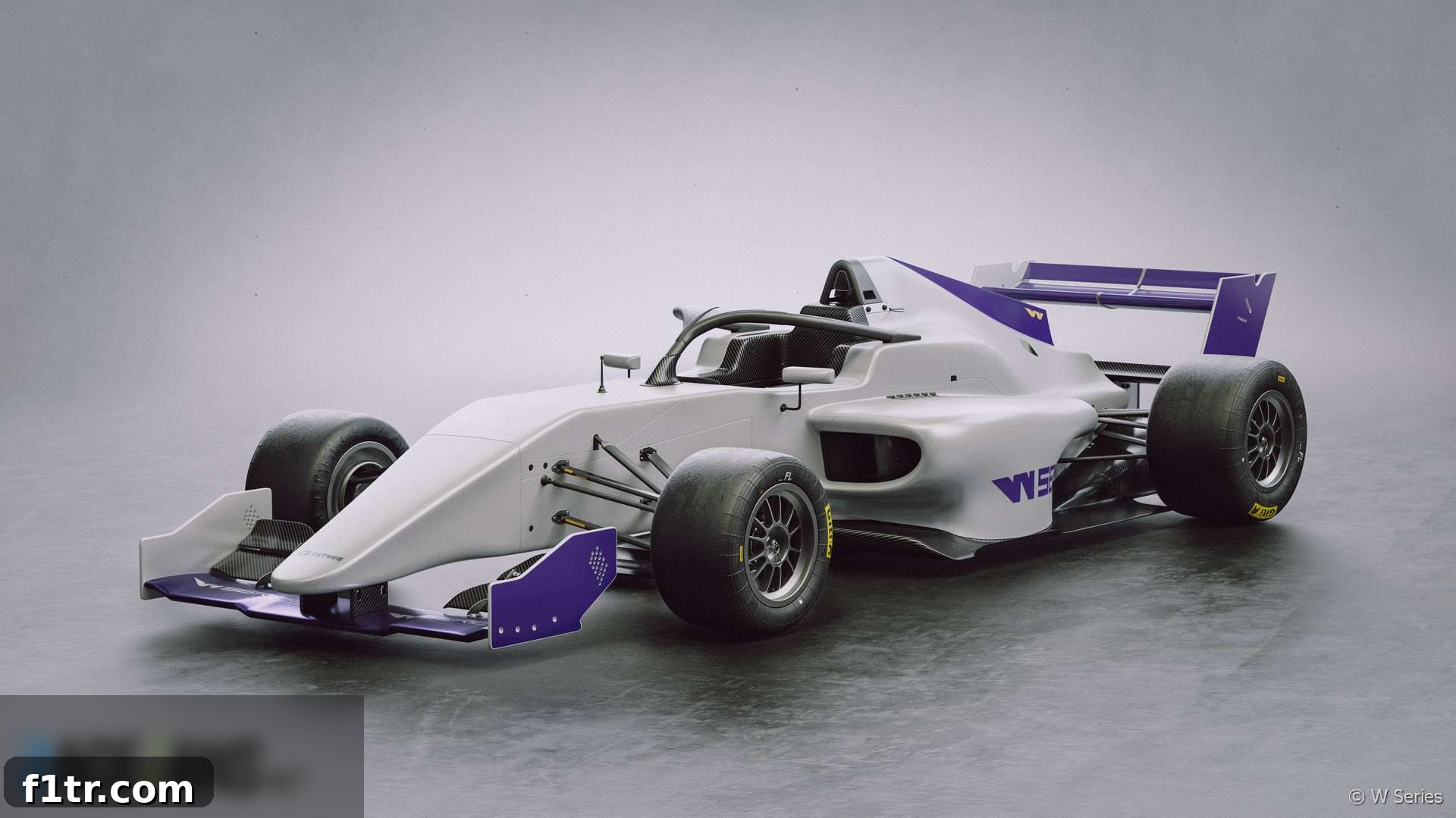
Bridging the Gender Gap: The Evolving Role of Women in Motorsport and the Rise of W Series
The underrepresentation of women in the pinnacle of motorsport is not merely an observation but a profound challenge that simultaneously presents an unprecedented opportunity for growth and transformation within the sport. For decades, the upper echelons of racing, particularly Formula 1, have been almost exclusively male-dominated, creating a skewed perception of what it means to be a top-tier racing driver. This demographic imbalance has denied a significant portion of the global population the chance to see themselves reflected on the competitive stage, limiting both inspiration and potential commercial avenues.
Consider the frequently discussed need for an American driver in Formula 1 to invigorate the vast US market of over 325 million potential viewers. While this pursuit holds strategic value, imagine the truly transformative impact of a female driver capturing the hearts and minds of the world’s 3.7 billion-plus women. This isn’t just about viewership numbers; it’s about fostering a sense of belonging, breaking down long-standing barriers, and unlocking a talent pool that has largely remained untapped. The economic and cultural benefits of greater female participation could redefine motorsport’s global appeal and financial health.
This stark imbalance has, for far too long, been overlooked or inadequately addressed by the sport’s key stakeholders. The obvious entities responsible for addressing this disparity are the FIA, as the sport’s governing body with a stated mission to “promote the development of motor sport,” and Formula One Management (FOM), which holds the responsibility for promoting the sport commercially. Both organizations possess significant power and influence to enact meaningful change, yet their approaches and commitment have varied over time.
The FIA has taken steps with its Women in Motorsport initiative, a comprehensive global campaign launched to promote women’s participation across all levels and roles within motorsport. While commendable, this broad initiative encompasses more than just developing female racing drivers, also focusing on engineering, officiating, and administrative roles. Its multifaceted nature means that while it lays crucial groundwork, it isn’t solely geared towards pushing women directly into elite driving careers.
FOM’s historical commitment to promoting the role of women was notoriously minimal, particularly under the previous leadership of Bernie Ecclestone, whose dismissive comments on women in the sport are well-documented. However, the acquisition of Formula 1 by Liberty Media marked a significant shift. This new era brought an end to several overtly sexist policies, such as the widely criticized practice of using ‘grid girls,’ which were rightfully phased out in favor of a more inclusive and modern image for the sport. This change, while symbolic, signaled a growing awareness and a more progressive direction for Formula 1’s public image.
Despite the vital roles the FIA and FOM play in encouraging more women to pursue racing careers, direct intervention to promote a specific driver into Formula 1 would present inherent challenges. Such a move could be perceived as a conflict of interest, potentially undermining the meritocratic principles that motorsport strives to uphold. While their foundational efforts are crucial, the direct nurturing and financial backing of individual talents often fall outside their primary regulatory and promotional remits. This void presented an opportunity for new initiatives to emerge, focusing specifically on driver development.
The W Series: A Bold Initiative for Female Racers
In a pioneering move, the W Series was launched as a dedicated single-seater championship for women, commencing in 2019. This groundbreaking series utilizes the same Tatuus chassis found in regional F3 championships, ensuring competitive and relevant machinery for its participants. The core principle behind W Series is to provide a fully funded platform for female drivers, eliminating the significant financial barriers that often hinder progression in motorsport. By covering all racing expenses, W Series aims to create a true meritocracy where talent, rather than financial backing, dictates success.
The introduction of a women-only championship, however, sparked considerable debate and controversy. Many, including several prominent female racers, criticized the concept as a betrayal of the ideal it ostensibly seeks to promote: that men and women should compete on a level playing field. Critics argued that segregation, even if well-intentioned, could further marginalize female drivers rather than integrate them into mainstream competition.
The championship promoters were acutely aware of these criticisms and addressed them directly on their platform. They consistently affirmed their belief that “women and men can race one another on equal terms provided they are given the same opportunity.” The fundamental goal of W Series, they explained, is to “give 20 women the opportunity to race relevant cars on relevant tracks, giving them the relevant experience and qualifications to put them in contention for potential Formula 1 drives in the future.” The series positions itself not as an alternative to mixed-gender racing, but as a critical stepping stone designed to accelerate female talent through the highly competitive junior categories.
Navigating the Motorsport Development Ladder
A key aspect of W Series’ design is its integration within an already congested single-seater pyramid, which includes series like F3, F4, and Formula Renault 2.0. Significantly, W Series was conceived to complement, rather than replace, existing championships. With a relatively compact schedule of just six to eight race weekends per year, competitors aspiring to climb the traditional motorsport ladder are encouraged to combine W Series participation with another championship. This dual approach allows drivers to maximize their track time, gain diverse experience, and accumulate crucial racing mileage.
One challenge for W Series graduates lies in the acquisition of FIA superlicence points, which are essential for any driver aiming to reach Formula 1. At its inception, W Series did not award these points, a factor that required successful competitors to continue proving themselves in series that do. This highlights W Series’ role as a foundational platform, designed to elevate drivers to a level where they can then compete effectively in superlicence-awarding championships like European F3 or F2.
Crucially, W Series eliminated the financial burden of racing. Drivers selected to compete do not pay entry fees, operational costs, or for car damage. This policy is fundamental to the series’ promise of increasing opportunities for female racers, ensuring that raw talent and dedication are the sole determinants for participation, rather than personal wealth or sponsorship deals. The champion of W Series also receives a substantial prize of $500,000, a significant sum that can be directly invested into funding the next crucial step up the motorsport ladder, helping to bridge the notorious funding gap that often stifles promising careers.
Beyond W Series: The Broader Debate and Societal Roots
While W Series represents a significant stride, it also opens a broader debate: is this the most effective way to invest capital in promoting female racers? Alternative models, such as comprehensive scholarship programs, have proven successful in the past. The now-defunct Racing Steps Foundation, for example, provided crucial financial and logistical support to talented young British racers, helping many reach the pinnacle of the sport. Similarly, the SMP Racing scheme nurtured drivers like Sergey Sirotkin into Formula 1. These scholarship models aim to integrate female drivers directly into mainstream junior categories, potentially offering a more direct route to the top.
However, as an addition to existing championships rather than a direct competitor, W Series offers a distinct advantage. Its organizers may have accurately identified a critical “dropout point” in the young driver system where many talented female racers, facing a lack of funding, opportunities, or role models, abandon their motorsport dreams. For any young driver, the journey from karting to Formula 1 is incredibly daunting. For a girl, without recent examples of women in F1 to draw inspiration from, the improbable can often seem utterly impossible. W Series aims to provide that missing inspiration and tangible pathway.
The ultimate test of W Series’ success will be its ability to consistently attract and nurture talent, ensuring its 20 grid spots are filled by genuinely competitive drivers. This leads to a fundamental question: are there dozens of talented female karters who, for various reasons, are not making the transition to racing cars? Or is the more profound issue a shortage of female participation at the grassroots level of karting itself? Addressing this initial pipeline problem is paramount for any long-term solution.
W Series positions itself as a vital part of the solution to the pervasive lack of female participation in motor racing. Yet, many of the greatest obstacles to achieving true gender equality in the sport extend far beyond the racetrack itself, deeply rooted in wider societal attitudes and norms.
Consider the realm of esports, specifically F1’s official Esports championship. This digital domain is free from the traditional physical and financial barriers of real-world motor racing. Despite this, it still exhibits comparatively few female competitors. This phenomenon suggests that the issue isn’t solely about access to equipment or funding, but also about cultural perceptions and early exposure.
The answer, to a significant extent, must lie in broader societal conditioning. Many women passionately follow and enjoy motor racing, debunking the myth that most women simply don’t like the sport. This suggests that preferences are often a matter of nurture rather than nature. From a young age, societal expectations and gender stereotypes subtly, or overtly, guide children towards certain interests and activities. There are countless parents who, consciously or unconsciously, perpetuate the idea that toy cars are exclusively for boys, or that technical and competitive fields are primarily male domains.
To expect W Series, or any single initiative, to unilaterally dismantle these deeply ingrained societal attitudes and biases is asking a lot. Achieving genuine gender equality in motorsport requires a multi-faceted approach, encompassing not only dedicated racing series but also widespread educational campaigns, early childhood initiatives to challenge stereotypes, visible role models across all levels of the sport, and a continuous commitment from governing bodies and promoters to foster an inclusive environment. W Series is a crucial step, but it is one piece of a much larger, ongoing puzzle towards a truly diverse and equitable future for motorsport.