Formula 1, often hailed as the pinnacle of motorsport, is a sport governed by intricate rules and regulations. Ensuring fair play and maintaining driver safety is paramount, leading to a system of penalties enforced by race stewards. The 2018 Formula 1 season presented a fascinating anomaly in this regard, recording a significant decrease in the overall number of penalties issued to drivers compared to any of the preceding five seasons. This shift in the regulatory landscape offers valuable insights into the evolution of the sport’s officiating and the technological advancements within the teams.
The total number of penalties handed down by the diligent stewards saw a marked reduction, plummeting from 104 in the 2017 season to just 80 in 2018. This decline is particularly noteworthy given that the 2018 calendar featured an additional race compared to the previous year, suggesting a more lenient or perhaps a more nuanced approach to rule enforcement. This trend hints at a broader philosophical adjustment in how racing incidents and technical infractions were perceived and adjudicated, impacting every team and driver on the grid.
Several key factors contributed to this notable reduction in penalties during the 2018 Formula 1 championship. Foremost among these was a distinct change in the stewards’ approach to incident review. There was a more frequent inclination to take ‘no action’ following investigations, a policy shift that significantly altered the final penalty tally. While a total of 80 penalties were ultimately issued, a staggering 79 investigations concluded with no further action being taken against the drivers or teams. This represents a substantial increase in ‘no action’ outcomes compared to previous seasons, indicating a move towards allowing racing incidents to unfold without intervention unless absolutely necessary, or a more rigorous threshold for what constitutes a punishable offense.
Advert | Become a Supporter & go ad-free
Beyond the human element of stewarding decisions, technological advancements played an equally crucial role in shaping the penalty landscape of 2018. The other significant factor contributing to the fall in penalties was the greatly improved reliability of the power units across the grid. Entering the 2018 season, there were widespread pre-season concerns and predictions that a reduction in the permissible number of power units per driver – from four to just three for the entire season – would inevitably lead to a surge in grid penalties. Teams and fans alike braced for a championship potentially decided by engine component failures and subsequent penalties. However, these fears were largely unfounded, as manufacturers demonstrated remarkable progress in durability and performance management.
The trajectory of power unit penalties has always been a fluctuating one since the introduction of the current V6 hybrid turbo regulations. These complex propulsion systems brought with them unprecedented levels of technology and, consequently, unique challenges in terms of reliability and longevity. Honda’s journey, in particular, has been a major contributing factor to the overall number of power unit penalties observed in recent years. Their early struggles with the V6 hybrid turbo architecture heavily impacted the penalty statistics, painting a clear picture of the immense engineering hurdles involved.
Despite exclusively supplying power units to only one team per season since its much-anticipated return to Formula 1 in 2015, Honda has historically accumulated almost as many penalties each season as its three established rivals – Mercedes, Ferrari, and Renault – combined. This statistic underscores the significant reliability deficit Honda faced in the initial years of its re-entry into the sport. The pressure to compete at the highest level while grappling with fundamental design and manufacturing issues often forced them into frequent component changes, resulting in a disproportionate number of grid penalties for their partnered teams.
The data below vividly illustrates Honda’s challenging path through the hybrid era. While they managed to make significant reliability gains in 2016, offering a glimmer of hope, these improvements proved difficult to sustain. The subsequent year saw the introduction of a significantly different engine architecture, a bold move aimed at unlocking greater performance. Unfortunately, this ambitious redesign led to renewed reliability struggles, once again increasing their penalty count and highlighting the fine line between innovation and dependability in Formula 1’s fiercely competitive environment. This constant push-and-pull between performance development and component longevity is a defining characteristic of modern F1 engineering, and Honda’s experience serves as a stark reminder of its complexities.
F1 Driver Penalties in 2018: A Closer Examination
While drivers benefited from fewer penalties stemming from technical problems, a closer analysis reveals a slight uptick in penalties incurred due to errors of their own making. Incidents such as collisions, impeding other drivers during qualifying or race sessions, and other sporting infringements saw a marginal increase compared to the 2017 season. This suggests that while cars were more reliable, the intensity of on-track battles and the pressure on drivers remained as high as ever, leading to a consistent level of driver-induced incidents that required steward intervention.
Advert | Become a RaceFans supporter andgo ad-free
Brendon Hartley, the Toro Rosso driver, unfortunately, received the highest number of penalties among all drivers in 2018. However, it’s crucial to note that the vast majority of these penalties were attributable to his team, primarily due to persistent technical problems with his car’s power unit and chassis components. This situation highlights the inherent disadvantage some drivers face when their machinery consistently underperforms or suffers from reliability issues, placing them in positions where penalties become almost unavoidable.
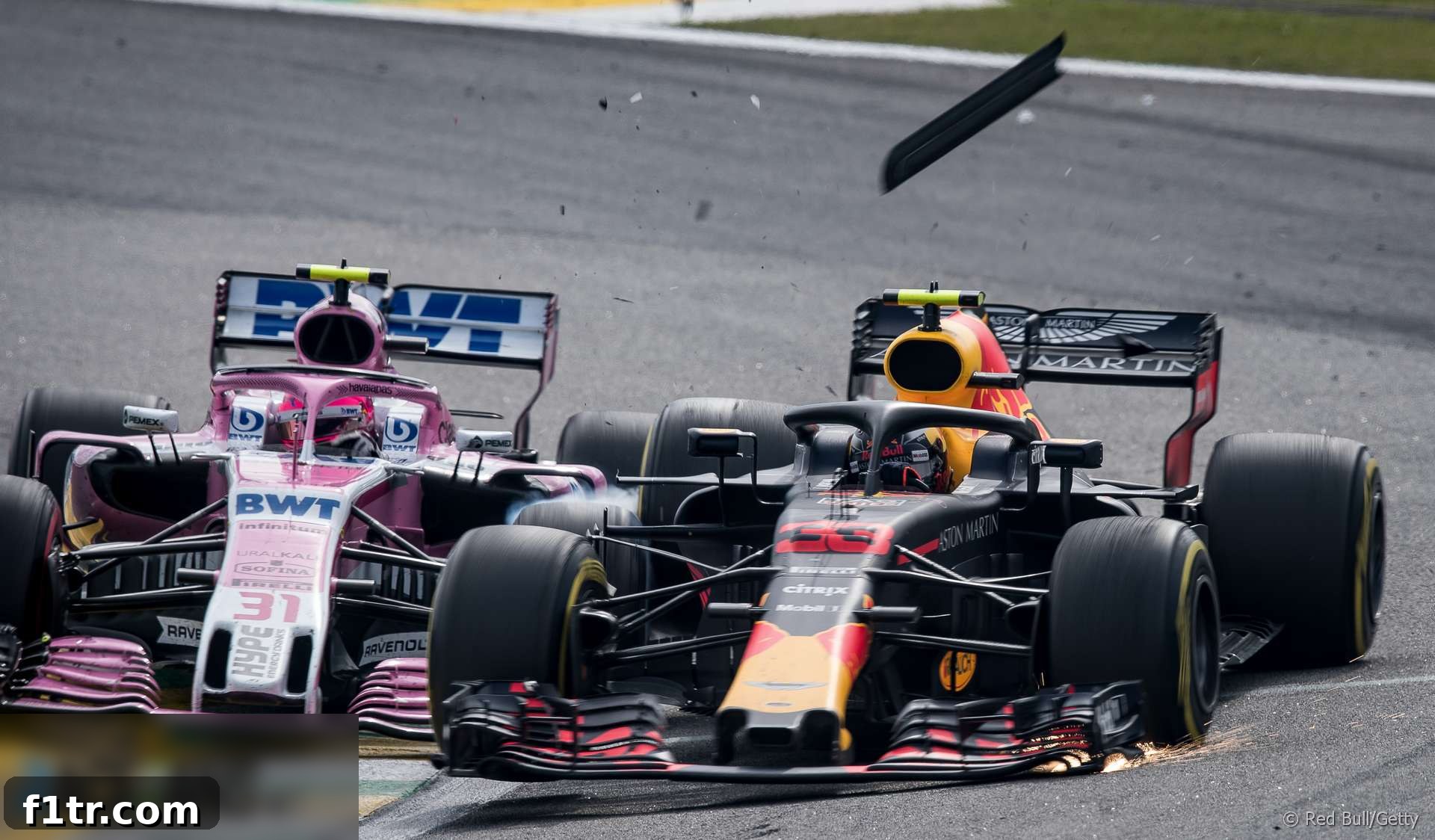
In contrast, when focusing purely on driving infringements – those penalties directly attributed to a driver’s actions on track – Max Verstappen emerged as the driver who picked up the most such penalties. Known for his aggressive and uncompromising driving style, Verstappen’s frequent brushes with the stewards are often a byproduct of his relentless pursuit of overtakes and his willingness to push the limits. He was closely followed in this category by his new Red Bull Racing teammate for 2019, Pierre Gasly, indicating a trend among some of the sport’s most exciting, yet occasionally controversial, young talents.
At the other end of the spectrum, demonstrating exemplary clean driving throughout the season, was Charles Leclerc. The highly talented Monegasque driver, then with Sauber, managed to navigate the entire 2018 season without incurring a single penalty for a driving infringement. This remarkable clean sheet underscores his precision, discipline, and maturity, especially impressive for a rookie season. Leclerc’s record stood in stark contrast to some of his more experienced peers, earning him widespread praise and signaling his potential for future success without falling foul of the regulations.
| Driver | Penalties due to driver | Penalties due to team | No action |
|---|---|---|---|
| Brendon Hartley | 3 | 8 | 0 |
| Max Verstappen | 6 | 4 | 2 |
| Pierre Gasly | 5 | 4 | 0 |
| Daniel Ricciardo | 2 | 5 | 1 |
| Nico Hulkenberg | 1 | 5 | 0 |
| Romain Grosjean | 3 | 3 | 2 |
| Marcus Ericsson | 2 | 4 | 0 |
| Valtteri Bottas | 3 | 2 | 1 |
| Sergio Perez | 3 | 2 | 1 |
| Sergey Sirotkin | 3 | 2 | 3 |
| Carlos Sainz Jnr | 3 | 2 | 1 |
| Lance Stroll | 2 | 2 | 1 |
| Kevin Magnussen | 2 | 2 | 3 |
| Stoffel Vandoorne | 1 | 3 | 0 |
| Sebastian Vettel | 3 | 0 | 2 |
| Kimi Raikkonen | 1 | 2 | 3 |
| Esteban Ocon | 2 | 1 | 1 |
| Fernando Alonso | 1 | 2 | 1 |
| Lewis Hamilton | 1 | 1 | 1 |
| Charles Leclerc | 0 | 2 | 2 |
Advert | Become a RaceFans supporter andgo ad-free
F1 Driver Penalty Points in 2018: A System on the Edge
Formula 1 employs a penalty points system, where accumulated points for various infringements can lead to a race ban if a driver reaches 12 points within a 12-month period. While no driver has ever accumulated the dreaded 12 penalty points necessary to trigger a one-race suspension, the 2018 season, much like the year before, saw a driver come precariously close to this threshold. This time, it was Romain Grosjean, who garnered 10 penalty points, putting him just two points away from missing a Grand Prix. Grosjean’s season was marked by a series of incidents, often at crucial moments, highlighting the fine line between aggressive driving and falling foul of the rules.
Daniil Kvyat, the only other driver in recent history to rack up 10 penalty points, returns to Formula 1 with Toro Rosso in the upcoming season after a year away from the grid. Crucially, Kvyat will start the new season with a clean slate, having zero penalty points due to his sabbatical. In contrast, Grosjean will still carry seven penalty points into the opening race at Melbourne, serving as a constant reminder to drive cautiously. Max Verstappen, known for being one of 2018’s most persistent offenders in terms of driving infringements, also starts the season with a significant number of points on his super license, placing him under immediate scrutiny from the stewards. The carry-over of penalty points adds an extra layer of pressure for these drivers, influencing their decision-making on track and potentially forcing a more conservative approach to avoid future penalties.
Advert | Become a RaceFans supporter andgo ad-free
Full Penalty Data: A Historical Perspective
For those interested in a comprehensive review of all penalties and major investigations spanning the past eight Formula 1 seasons, detailed data is available for each driver and each year. This archive provides invaluable insights into the evolving nature of F1 officiating, driver conduct, and technological reliability over nearly a decade of high-octane racing. Analyzing these trends can help shed light on the impact of rule changes, the performance of different manufacturers, and the overall discipline displayed by drivers under the immense pressure of Formula 1 competition. Exploring this historical data allows enthusiasts and analysts to track the ebb and flow of penalties and understand the complex interplay of factors that shape the sport’s regulatory environment.
- 2011 penalties index
- 2012 penalties index
- 2013 penalties index
- 2014 penalties index
- 2015 penalties index
- 2016 penalties index
- 2017 penalties index
- 2018 penalties index
Go ad-free for just £1 per month>> Find out more and sign up
2018 F1 Season Review: Dive Deeper
For a more comprehensive look at the thrilling 2018 Formula 1 season, explore our extensive collection of review articles. These pieces offer in-depth analysis of key moments, driver performances, team strategies, and the underlying financial and technical narratives that shaped a memorable championship. From epic recovery drives to title-deciding errors, and a breakdown of the monumental expenditures involved, our season review delves into every aspect of F1’s premier year, providing context and insight beyond the penalty statistics. Discover who truly mastered the art of overtaking, how championship battles unfolded, and the triumphs and tribulations of drivers and teams alike.
- Pass masters: Who made F1’s biggest recovery drives of 2018?
- The complete RaceFans 2018 F1 season review
- Hamilton and Mercedes succeed in their toughest challenge yet
- Vettel’s errors thwart Ferrari title hopes
- Analysis: How F1 teams spent $2.2 billion in 2018
Browse all 2018 F1 season review articles