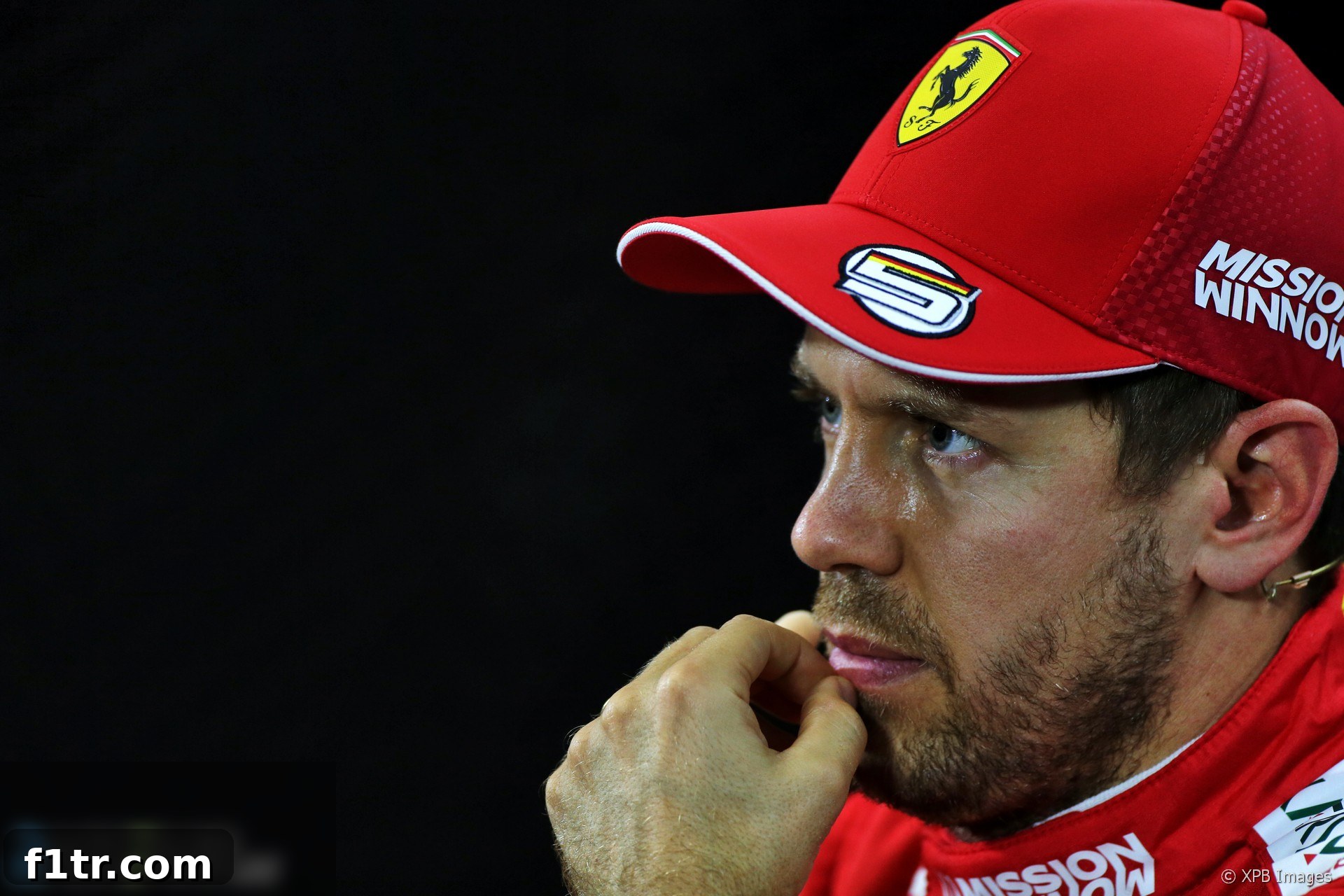
As Sebastian Vettel, a name synonymous with blistering speed and meticulous precision, burst onto the Formula 1 scene, he rapidly collected a series of ‘youngest-ever’ records. From becoming the youngest points scorer to the youngest pole starter, grand prix winner, and ultimately, the youngest quadruple world champion, Vettel’s meteoric rise was unprecedented. His early career trajectory led many experts and fans alike to confidently predict he would surpass his hero, Michael Schumacher, to become the sport’s first eight-time world champion. He was, by all accounts, destined for an unparalleled legacy, poised to redefine greatness in Formula 1 with his aggressive yet smooth driving style and sharp tactical mind.
The Zenith of Dominance: Vettel’s Unstoppable Red Bull Era
Vettel’s four consecutive world titles, clinched with Red Bull Racing between 2010 and 2013, painted a vivid picture of absolute dominance. Under the visionary guidance of engineering maestro Adrian Newey, Red Bull consistently crafted cars that perfectly suited Vettel’s driving style, allowing him to push the boundaries of performance and extract every ounce of speed. The 2013 season, in particular, stood out as a masterclass in relentless execution and sheer superiority, with Vettel securing an astonishing 13 victories, including a record-breaking nine consecutive wins. This period solidified his status as one of Formula 1’s true greats, a formidable competitor with an insatiable hunger for victory. His ability to perform under immense pressure, coupled with intelligent race craft and strategic prowess, made him virtually unstoppable, leaving rivals often scrambling to merely keep pace with his relentless charge.
However, the narrative began to shift dramatically after this golden era. His record-setting runs, once seemingly limitless, suddenly ceased. The winning streak that defined his early career slowed to a crawl. While he achieved his most recent championship with Red Bull in 2013, his total victory tally over the subsequent six seasons – encompassing one more challenging year with Red Bull and five often tumultuous seasons with Ferrari – amounted to just 14 wins. This stark contrast between his earlier and later career highlighted a significant turning point, sparking critical questions about the future trajectory of a once-invincible champion and the factors contributing to this unexpected deceleration.
Advert | Become a Supporter & go ad-free
The Ferrari Dream: A Rollercoaster of Hope and Disappointment
Vettel’s eagerly anticipated move to Scuderia Ferrari in 2015 was more than just a change of teams; it was heralded as a spiritual journey, a profound opportunity to emulate his idol Michael Schumacher by bringing championship glory back to Maranello. The dream of recreating Schumacher’s legendary success story, to lead the iconic red team to a world title after years of longing, was a powerful motivator for both Vettel and the passionate Tifosi. For a time, it seemed tantalizingly within reach. He secured three victories in his debut Ferrari season, a promising start that ignited fervent hope among the team and its global fanbase. In both 2017 and 2018, Vettel mounted credible and intense championship challenges against the formidable Lewis Hamilton and the dominant Mercedes team, pushing the fight deep into the respective seasons with memorable performances.
However, despite these strong efforts, a combination of strategic missteps, costly driver errors under immense pressure, and car performance inconsistencies that often emerged at critical junctures ultimately saw those championship dreams slip away. The pursuit of Ferrari’s elusive world title became an increasingly heavy burden, marked by flashes of brilliance interspersed with periods of frustration. Arguably, a truly consistent, top-drawer car – one consistently capable of sustaining championship challenges throughout an entire season – largely eluded Vettel after his Red Bull tenure in 2013. Yet, the challenges he faced extended beyond raw machinery performance.
Intra-Team Battles and a Shifting Landscape
Twice within that post-2013 period, less experienced teammates managed to outperform Vettel in terms of race victories, signaling a significant shift in team dynamics and perceptions. In 2014, Daniel Ricciardo, then a junior driver stepping into the senior Red Bull seat alongside Vettel, unexpectedly outscored the reigning world champion, securing three wins to Vettel’s zero. Five years later, in 2019, a similar and even more impactful scenario unfolded at Ferrari with the prodigious Charles Leclerc. Leclerc, in only his second season in Formula 1 and first with Ferrari, not only matched Vettel’s win tally but also dramatically eclipsed him in the championship standings, taking more pole positions and race wins with a burgeoning confidence that captivated the team and the sport. By the end of 2019, it became increasingly apparent that Leclerc had emerged as the Scuderia’s new favourite son, the driver around whom Ferrari sought to build its future. This development undoubtedly took a significant toll on Vettel, both professionally and personally, as his standing within the team eroded.
A Reduced Offer and a Dignified Refusal
Against this challenging backdrop, it was perhaps unsurprising when Ferrari reportedly offered Vettel only a one-year extension for the 2021 season, accompanied by vastly reduced financial terms. Speculation suggested the offer was for under $10 million, a mere fraction – less than a third – of his then-current earnings. Such an offer spoke volumes about Ferrari’s evolving perception of their four-time world champion and their strategic future direction. It signaled a move towards a younger, less expensive driver lineup, with Leclerc firmly at the helm.
Similarly, it came as little surprise when Vettel, a driver of his caliber and track record, respectfully rejected the deal. He found himself in a position where he needed to explore other avenues, either to leverage a better offer from Ferrari – which ultimately didn’t materialize – or to secure an alternative seat with a team that could offer a more competitive package and accurately reflect his perceived worth and ambition. When his departure from Ferrari was officially announced, Vettel stated, “Financial matters have played no part in this joint decision.” While this statement may hold a degree of personal truth regarding his core motivations, it is an undeniable reality in the high-stakes world of Formula 1 that a driver’s income serves as a powerful indicator of their perceived worth, talent, and market value. When a driver’s stock appears significantly diminished, it often signals a critical juncture, prompting a decision to either seek new horizons or consider an exit from the sport altogether. This pivotal moment for Vettel had a dramatic ripple effect across the dynamic 2021 F1 driver market, triggering a chain reaction of significant moves. The immediate beneficiaries were Carlos Sainz Jnr, who secured a dream Ferrari seat, and Daniel Ricciardo, who found his ticket out of Renault and into McLaren.
Searching for a New Home: Limited and Unappealing Options for a Champion
Following the confirmation of his Ferrari exit, Sebastian Vettel actively explored his options, knocking on the doors of potential teams that could still offer him a competitive platform. According to well-placed sources within the paddock, he approached both his former championship-winning team, Red Bull Racing, and the McLaren F1 Team. Red Bull, the outfit where he forged his indelible championship legacy, listened intently to his overtures for a potential return. However, their commitment to nurturing and promoting younger, more cost-effective talent, particularly with Max Verstappen already absorbing a significant portion of their budget and being the clear team leader, became unequivocally clear. Drivers like Alexander Albon offered a financially viable alternative, costing a mere fifth of Vettel’s expected minimum price. This strategic focus on youth development and stringent budget efficiency effectively closed the door on a romantic Red Bull return, despite their shared history of success.
McLaren, undergoing a promising resurgence and demonstrating significant progress, also proved to be an unlikely destination. Having already initiated advanced discussions and ultimately decided on Daniel Ricciardo as a highly experienced and commercially attractive replacement for Carlos Sainz – a move prompted by Sainz’s release request for Ferrari – McLaren reportedly did not even entertain serious negotiations with Vettel. The team had a clear vision for its future driver lineup and felt Ricciardo was a better fit for their evolving project alongside Lando Norris. This left the four-time world champion in an increasingly precarious position, finding himself effectively out in the cold with precious few, if any, truly tempting or viable options left on the Formula 1 grid that could satisfy his championship aspirations.
Advert | Become a RaceFans supporter andgo ad-free
The Mercedes Enigma: A Long Shot for the Silver Arrows
For a driver of Sebastian Vettel’s ambition and legendary status, any new berth must offer a credible shot at regular race victories and, ideally, at least an outside chance of a fifth world title. Recent history unequivocally points to only three teams possessing the suitable machinery and comprehensive infrastructure under the current Formula 1 regulations capable of fulfilling such objectives: Mercedes, Ferrari, and Red Bull. With Ferrari and Red Bull having already shut their doors, the only remaining top-tier possibility, albeit a very distant and complex one, appeared to be the dominant Mercedes-AMG Petronas F1 Team.
However, the prospect of Vettel joining the Silver Arrows was fraught with complexities. Mercedes had enjoyed unparalleled success and a remarkable level of harmony with its highly effective current pairing of Lewis Hamilton and Valtteri Bottas. The team was highly unlikely to disrupt this highly successful and stable partnership simply to accommodate a driver whose recent form suggested he might struggle to immediately emerge from Hamilton’s formidable shadow, especially during an initial period of adaptation to a new environment and car. Hamilton, a six-time world champion (at the time of the original article), held immense sway within the team, and Bottas, while often playing a supporting role, had proven to be a consistent, reliable, and compliant points scorer, crucial for Mercedes’ constructors’ championship aspirations. It was incredibly challenging to envision Vettel, a proud, fiercely competitive, and intensely focused individual, willingly playing a clear second fiddle to Hamilton.
Therefore, any potential move to Mercedes for Vettel would primarily hinge on the future of Lewis Hamilton’s contract, which was set to expire at the end of the year. A departure for Hamilton, even with a seventh title firmly in his grasp, seemed highly improbable. With the tantalizing prospect of surpassing Michael Schumacher’s iconic record of seven championships and becoming the most decorated driver in the history of the sport within his reach, Hamilton was widely expected to continue with Mercedes. A more plausible scenario speculated was that Hamilton, whose alternative top-tier options had significantly narrowed after the Sainz signing to Ferrari, would target titles seven and eight in the 2020/2021 seasons, and *then* potentially consider retirement. This would conveniently coincide with the delayed change of Formula 1 technical regulations, offering Mercedes a natural and strategic point for a driver transition. As such, based on the prevailing circumstances and team dynamics, Mercedes remained a highly unlikely option for Sebastian Vettel, leaving him in an increasingly difficult position.
Exploring the Midfield and Beyond: Unsuitable Paths
Beyond the established top three teams, the options for a driver seeking genuine championship contention rapidly dwindle. Could Renault, now operating under the Alpine banner, become the victory-chasing option Vettel so desperately craved? On present evidence, this seemed highly unlikely. While the team possessed significant factory backing and ambitious long-term plans, transforming into a consistent front-runner capable of challenging for wins and titles demanded substantial time, investment, and a fundamental shift in performance. Unless new technical recruits like Pat Fry could work immediate wonders, transforming the team into a regular race winner in the short term was a monumental task. Furthermore, such a move would also assume that incoming CEO Luca de Meo was fully committed to the beleaguered brand’s continued presence and substantial investment in Formula 1 over the coming years, a commitment that always carries a degree of uncertainty.
What about Racing Point, soon to be rebranded as the exciting Aston Martin F1 Team? This presented an intriguing, albeit long-term, prospect. Backed by Canadian billionaire Lawrence Stroll, the team harbored grand ambitions of challenging for championships in the future, with significant financial injections and factory support. However, at the time, it was still very much a work-in-progress, undergoing significant restructuring, expansion, and investment to build a future-proof foundation. Providing a consistently race-winning car in 2021, immediately capable of challenging Mercedes or Red Bull, was an improbable expectation. Joining Aston Martin would likely involve a multi-year commitment, a patient approach to building a championship-caliber team from the ground up. This level of long-term investment and patience might have been more than Vettel was prepared to consider at this advanced stage of his illustrious career, particularly if his immediate goal was to return to winning ways and contend for a fifth title promptly.
That leaves the remaining teams on the grid: the Red Bull junior outfit AlphaTauri, Haas F1 Team, Alfa Romeo Racing (formerly Sauber), and Williams Racing. While each of these teams plays a vital and respected role in Formula 1, none could realistically offer Sebastian Vettel a lucrative, race-winning package in 2021, let alone a credible shot at a fifth world title. For a driver of his stature, competitive drive, and past achievements, joining such a team would represent a significant step down, potentially diminishing his hard-earned legacy rather than enhancing it. It’s hard to imagine him finding true satisfaction and motivation battling consistently in the midfield or at the back of the grid, a stark contrast to the front-running glory he was accustomed to.
The Final Option: A Dignified Retirement Awaits
Given the dwindling prospects and the clear unsuitability of the remaining options for a four-time world champion seeking to add to his legendary tally, the final, and perhaps most probable, option for Sebastian Vettel appeared to be a dignified retirement from the sport. At the age of 33, he would depart the relentless world of Formula 1 with four monumental world titles under his belt, placing him in an elite league, tied with the legendary Alain Prost on the all-time list of F1 champions. This is certainly no disgrace; it is, in fact, an incredible and rare achievement that only a handful of drivers in the entire history of motorsport have managed.
Beyond the sporting accolades, Vettel would retire with an estimated $200 million in the bank, a substantial fortune earned through years of unparalleled dedication, sacrifice, and success at the pinnacle of racing. More importantly, retirement would allow him to fully embrace a private and fulfilling life in Switzerland, shared with his loving wife Hanna and their beautiful family, consisting of two daughters and a recently-born son. After 14 intense and demanding years immersed in the unforgiving, high-pressure cauldron of Formula 1, what’s not to like about stepping away? He would escape the relentless global travel, the constant media scrutiny, and the immense mental and physical demands of competing at the highest level of motorsport. Moreover, if he were to retire at this point, he would hold the unique distinction of being F1’s youngest four-time champion retiree, a testament to his early and sustained success and a remarkable footnote in his already storied career.
For a man who consistently valued privacy, family, and a balanced life, stepping away on his own terms, with his dignity and immense legacy firmly intact, would be a fitting and graceful end to an extraordinary career. The anticipation surrounding his decision was palpable, with many hoping he would announce it soon and with the same quiet dignity and unwavering grace he so often displayed throughout his illustrious journey in Formula 1. Whether he chose to pursue a different path within motorsport, advocate for environmental causes close to his heart, or dedicate himself entirely to family life, his profound contribution to the sport would forever be etched in its history, remembered as a true champion who inspired a generation with his talent and character.
Advert | Become a RaceFans supporter andgo ad-free
2020 F1 season
- Grosjean to make F1 test return tomorrow for first time since Bahrain horror crash
- Pictures: Wrecked chassis from Grosjean’s Bahrain fireball crash to go on display
- Bottas vs Rosberg: Hamilton’s Mercedes team mates compared after 78 races each
- F1 revenues fell by $877 million in Covid-struck 2020 season
- Hamilton and Mercedes finally announce new deal for 2021 season
Browse all 2020 F1 season articles