F1 2018 Pre-Season Testing: Day Two Unfolds at Circuit de Catalunya
The highly anticipated 2018 Formula 1 season officially kicked into a higher gear as the second day of pre-season testing commenced at the renowned Circuit de Catalunya in Barcelona. Following an initial day of shakedowns and fundamental checks, teams and drivers were eager to push their new machinery further, gathering crucial data and refining their setups under varying conditions. This pivotal phase marks the first real opportunity for F1 aficionados to glimpse the performance potential of the new cars and the competitive landscape shaping up for the championship.
Pre-season testing is far more than just hot laps; it’s an intricate dance of engineering, strategy, and driver feedback. Teams use these precious track hours to conduct extensive aerodynamic evaluations, test different tire compounds across various fuel loads, and assess the reliability of their power units and chassis components. The data collected over these days provides the foundation for the entire season, guiding development trajectories and race weekend preparations. For the drivers, it’s a vital period to acclimatize to their new cars, understand their nuances, and work closely with engineers to optimize performance ahead of the Australian Grand Prix.
Circuit de Catalunya: The Ultimate Testing Ground
The Circuit de Catalunya is a favoured venue for Formula 1 testing for several compelling reasons. Its diverse layout, featuring a mix of high-speed corners, sweeping bends, and a challenging final sector, offers a comprehensive examination of a car’s aerodynamic efficiency, mechanical grip, and engine performance. As a host of the Spanish Grand Prix, the track conditions and characteristics are well-understood by all teams, providing a consistent benchmark for evaluating car performance upgrades and setup changes. Furthermore, its reliable Mediterranean climate generally ensures stable weather, although cooler temperatures in late February can still present challenges for tire warm-up and overall grip.
Day two presented teams with an invaluable opportunity to build upon the initial runs, often focusing on longer stints to gauge tire degradation and fuel consumption, alongside short bursts for qualifying simulations. The intricate feedback loop between drivers and engineers during these sessions is paramount, as every adjustment, from wing angles to suspension settings, contributes to unlocking the car’s ultimate speed and consistency.
Team-by-Team Insights from Barcelona Day Two
As the garages hummed with activity and the roar of engines echoed across the Catalan landscape, each of the ten Formula 1 teams pursued their specific objectives for the day:
Mercedes-AMG Petronas Motorsport
Valtteri Bottas took the helm of the Mercedes W09, continuing the development work for the reigning champions. Mercedes typically focuses on reliability and understanding their car’s core characteristics early on, rather than chasing outright lap times. Bottas accumulated significant mileage, running various aerodynamic configurations and testing different tire compounds. The team’s methodical approach aimed at ensuring a solid foundation for their title defence, with a strong emphasis on data acquisition to validate their simulations and optimize performance for the demanding season ahead. Consistency and trouble-free running were key objectives, which Bottas successfully delivered.
Scuderia Ferrari
Sebastian Vettel returned to the cockpit of the SF71H, putting in a strong performance and demonstrating the car’s initial promise. Ferrari’s testing programme often includes significant focus on fine-tuning the chassis balance and understanding how the car reacts to setup changes. Vettel’s extensive experience was crucial in providing precise feedback, allowing the team to gather valuable insights into the car’s handling and aerodynamic efficiency. Their aim was to prove reliability and extract performance, hoping to challenge Mercedes for the championship. The early signs from the Italian squad suggested a potent package.
Aston Martin Red Bull Racing
Max Verstappen was on duty for Red Bull, continuing the evaluation of their RB14 chassis. Red Bull cars are renowned for their aerodynamic prowess, and testing often involves intricate aero rake runs to visualize airflow and validate design concepts. Verstappen’s aggressive driving style pushed the limits of the car, helping the team understand its dynamic behaviour. While the focus wasn’t solely on lap times, the team aimed for strong reliability and an improved understanding of the new chassis-engine package with their Renault power unit, laying the groundwork for what they hoped would be a competitive year.
McLaren F1 Team
Stoffel Vandoorne piloted the MCL33, which marked McLaren’s highly anticipated transition to Renault power after three challenging seasons with Honda. The primary objective for McLaren was to ensure seamless integration of the new power unit and to understand its characteristics, while also evaluating the new chassis design. Reliability was a major concern, and the team worked diligently to complete their planned programme, gathering data on cooling, engine mapping, and overall car balance. Vandoorne’s feedback was critical in adapting the car to the new engine’s performance delivery.
Renault Sport F1 Team
Carlos Sainz Jnr continued his work with the Renault R.S.18. The factory team aimed to solidify their position as leading contenders in the midfield and potentially challenge the front-runners. Sainz focused on understanding the car’s long-run performance and testing various setup configurations. Reliability and consistent performance were key targets for Renault, as they sought to iron out any potential issues and maximize their car’s potential. The team’s engineers were busy correlating simulator data with real-world track performance.
Sahara Force India F1 Team
Esteban Ocon spent a significant portion of the day in the Force India VJM11. Known for their efficient development and strong performance on a budget, Force India’s testing revolved around validating their aerodynamic solutions and ensuring a robust and predictable car. Ocon’s smooth driving style helped the team extract maximum data, with an emphasis on understanding tire behavior and optimizing the car’s balance over various stints. The team was focused on maintaining their competitive edge in the tightly contested midfield.
Williams Martini Racing
Sergey Sirotkin and Robert Kubica shared driving duties for Williams in the FW41. With a new driver lineup and a desire to rebound from a challenging 2017, Williams focused on extensive aerodynamic testing and understanding the characteristics of their new car. Kubica’s return to F1 testing brought valuable experience, providing crucial comparative feedback. The team prioritized collecting vast amounts of data to improve their understanding of the car’s strengths and weaknesses, working diligently to improve its overall performance and handling.
Scuderia Toro Rosso
Pierre Gasly was behind the wheel of the Toro Rosso STR13, which was making headlines as the first Red Bull-affiliated car to run with Honda power. The primary focus for Toro Rosso was the integration and reliability of the new Honda engine, alongside developing the STR13 chassis. Gasly completed a considerable number of laps, providing essential feedback on power unit delivery and overall car balance. The partnership with Honda was a significant step, and testing was crucial for building a strong foundation for the season.
Haas F1 Team
Kevin Magnussen drove the Haas VF-18. Haas aimed to build on their promising previous seasons, focusing on consistency and extracting maximum performance from their Ferrari-powered challenger. Magnussen’s robust feedback helped the team fine-tune the car’s balance and understand its characteristics across different tire compounds. The team’s objective was to ensure the VF-18 was a reliable and competitive package from the outset, allowing them to contend for points consistently.
Sauber F1 Team
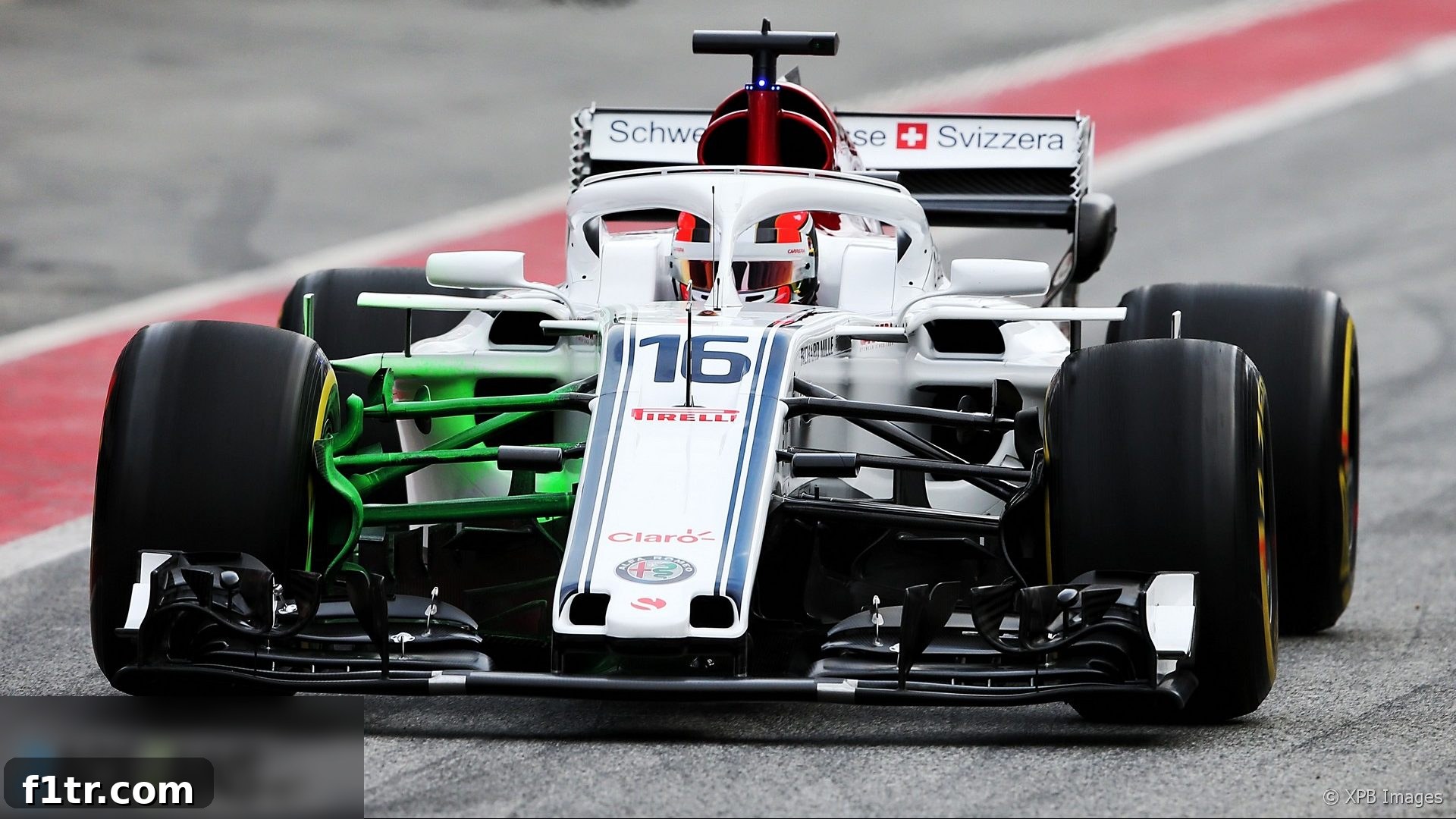
Charles Leclerc continued his impressive run for Sauber in the C37. As a Ferrari junior driver making his F1 debut, Leclerc’s learning curve was steep, and testing provided an invaluable opportunity to gain experience and provide feedback. Sauber, with their newly liveried car and a closer technical alliance with Ferrari, focused on improving overall performance and reliability. Leclerc’s smooth adaptation and feedback were crucial for the team’s development path.
Technical Highlights and Innovations
Beyond the drivers and teams, day two of testing offered a closer look at the technical intricacies of the 2018 cars. The introduction of the Halo safety device was a prominent visual change, and teams continued to gather data on its aerodynamic impact and driver visibility. Aero rakes adorned many cars during initial runs, meticulously mapping airflow across critical surfaces. Various tire compounds, ranging from the ultrasoft to the medium, were evaluated, providing crucial data on degradation rates and optimal operating windows for the season’s diverse circuits. Fuel flow sensors and pitot tubes were also visible, highlighting the continuous data collection efforts.
Outlook for the 2018 Season
While testing results should always be taken with a grain of salt, day two at Circuit de Catalunya provided compelling glimpses into the pecking order and potential narratives for the 2018 Formula 1 season. Mercedes and Ferrari continued to look strong, hinting at another intense championship battle. Red Bull showed promising pace and chassis stability, while McLaren’s adaptation to Renault power and Toro Rosso’s new Honda partnership generated significant interest. The midfield battle promised to be as fierce as ever, with Renault, Force India, Haas, and Williams all showing signs of competitiveness. The relentless pursuit of performance continues, setting the stage for an exhilarating F1 season.
Below, you can find an extensive gallery of pictures from the second day of 2018 F1 pre-season testing at Circuit de Catalunya, featuring all the cars and drivers in action.
More on the 2018 F1 Season
- F1 feared “death knell” for Drive to Survive after Ferrari and Mercedes snub
- McLaren staff told us we were “totally crazy” to take Honda engines in 2018 – Tost
- ‘It doesn’t matter if we start last’: How Red Bull’s junior team aided Honda’s leap forward
- Honda’s jet division helped F1 engineers solve power unit problem
- McLaren Racing losses rise after Honda split
Browse all 2018 F1 season articles