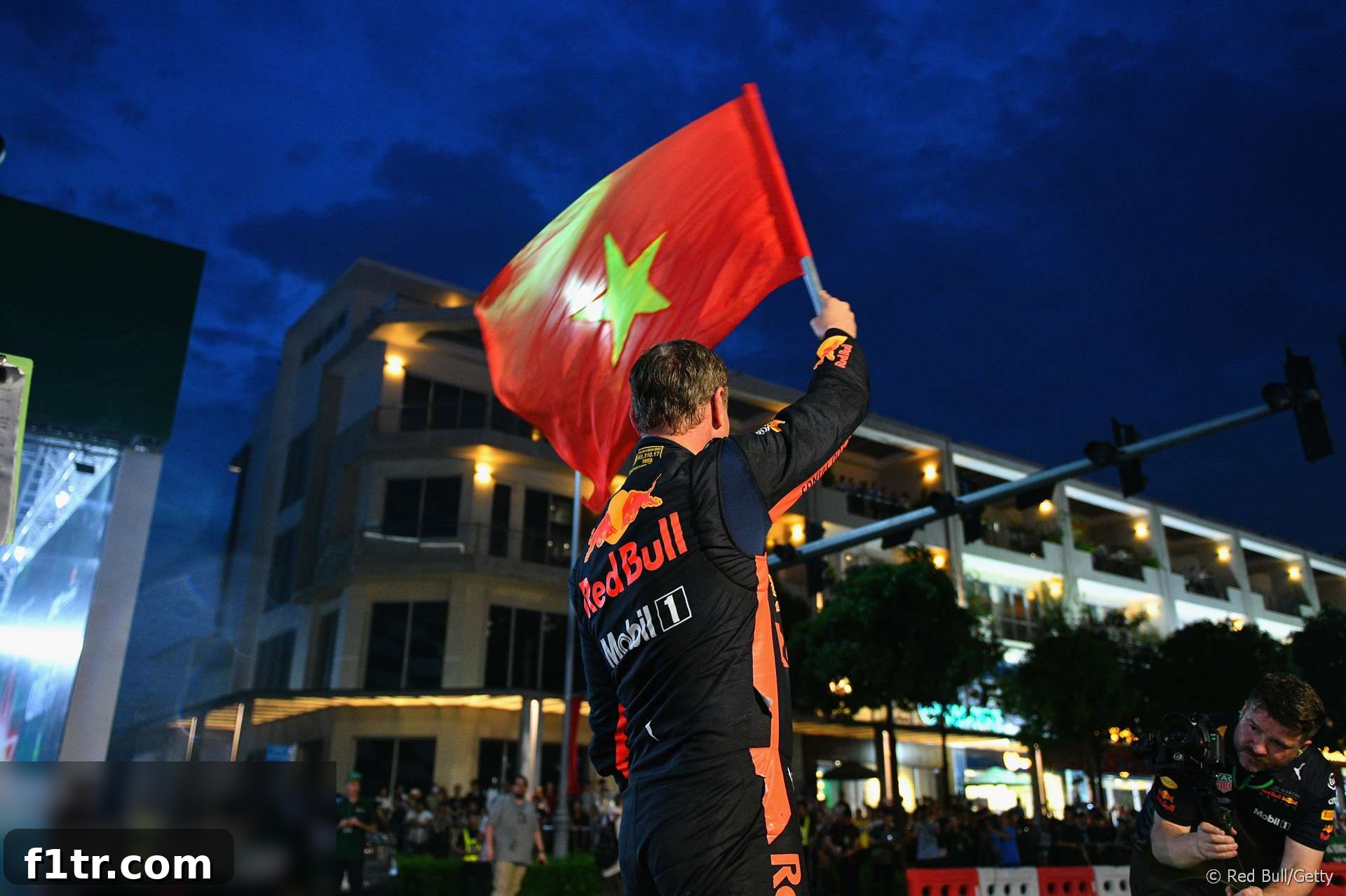
The exhilarating world of Formula 1 motorsport continually seeks new frontiers, and the planned inaugural Vietnam Grand Prix in Hanoi was poised to be a landmark event, introducing the pinnacle of racing to a vibrant new audience. However, as the global community braced for the 2020 racing season, an unprecedented health crisis emerged from Wuhan, China: the novel coronavirus. This unforeseen development quickly cast a long shadow over major international events, including the highly anticipated F1 debut in Vietnam, forcing organizers and governing bodies to confront the delicate balance between sporting ambition and public safety.
The Highly Anticipated Vietnam Grand Prix: A New Era for Formula 1
Vietnam’s entry into the illustrious Formula 1 calendar marked a significant strategic move for the sport, reinforcing its commitment to expanding into dynamic new markets, particularly in Asia. The Hanoi Street Circuit, a challenging blend of purpose-built sections and existing urban roads, was designed to be a spectacle, offering a unique character that promised thrilling racing. Scheduled for April, the event represented not just a new race, but a powerful statement about Vietnam’s growing global presence and its potential as a destination for major international events.
The anticipation surrounding the Vietnam Grand Prix was immense, both locally and internationally. For Vietnam, hosting an F1 race was expected to deliver a substantial economic boost, stimulating tourism, hospitality, and infrastructure development. It was an opportunity to showcase Hanoi, a city rich in history and culture, to a global audience of hundreds of millions. Race organizers had projected a healthy split in ticket sales, with roughly half expected from enthusiastic local fans and the other half from international visitors eager to witness the sport’s expansion into Southeast Asia. This diverse audience was crucial for the event’s financial success and its broader impact on the national economy.
Beyond the economic aspects, the Vietnam Grand Prix was also about prestige and national pride. It symbolized Vietnam’s modernization and its emergence as a key player on the global stage. The meticulous planning involved in constructing the circuit, organizing the logistics, and promoting the event demonstrated the country’s capability to host world-class competitions. Drivers and teams were eager to tackle the new challenge presented by the Hanoi track, which promised high-speed sections combined with technical corners, designed to push both man and machine to their limits. This debut race was meant to be a celebration of speed, innovation, and international cooperation.
The Shadow of a Global Health Crisis: Understanding the Coronavirus Threat
As preparations for the Grand Prix intensified, a new and alarming threat began to dominate global headlines: the coronavirus. Originating in Wuhan, China, a major transportation hub, the virus demonstrated a rapid and concerning spread. Initially confined to China, its highly contagious nature soon led to cases appearing in numerous countries, sparking fears of a global pandemic. The early weeks of 2020 saw a dramatic escalation in reported infections and, tragically, a rising death toll. By late January and early February, the number of fatalities had surpassed 300, with at least one confirmed death occurring outside of mainland China, underscoring the virus’s cross-border danger.
The speed and severity of the outbreak prompted governments worldwide to implement stringent public health measures, including travel restrictions, quarantines, and recommendations against large public gatherings. Airlines began cancelling flights to affected regions, and border controls were tightened. These measures, while critical for containing the virus, inevitably created a complex and challenging environment for international sporting events that rely heavily on the free movement of athletes, support staff, media, and spectators from diverse nationalities. The close proximity of Hanoi to China’s northern border added a layer of specific concern for the Vietnam Grand Prix, given its geographical vulnerability.
The global medical and scientific community mobilized swiftly to understand the virus, develop testing protocols, and explore potential treatments and vaccines. However, in the absence of immediate solutions, public anxiety escalated. The fear of infection, coupled with official advisories against non-essential travel and mass gatherings, began to exert significant pressure on event organizers everywhere. For a sport like Formula 1, which involves thousands of personnel traversing continents and attracting tens of thousands of spectators, the coronavirus posed an existential threat to its meticulously planned season calendar.
Immediate Repercussions: Motorsport Events Under Pressure
The motorsport world was among the first sectors to experience the direct impact of the burgeoning health crisis. A stark illustration of this came with the cancellation of the Formula E race in Sanya, China. Scheduled for March 21st, the all-electric championship’s event was called off by organizers following extensive consultations with local authorities and the FIA, citing the “continued spread of coronavirus” as the primary reason. This decision sent a clear signal across the entire motorsport community: health and safety concerns would take precedence, even if it meant disrupting established schedules and incurring significant financial losses.
The Formula E cancellation served as a crucial precedent and a sobering harbinger for other major events slated for the region, including the Vietnam Grand Prix and the Chinese Grand Prix. The Sanya race was set to take place just two weeks before the planned F1 debut in Hanoi on April 5th, and several weeks before the Chinese Grand Prix, traditionally held later in April. The proximity of these dates and locations meant that logistical challenges, such as the transport of equipment and personnel, became immensely complicated due to evolving travel restrictions and heightened health screening requirements. Teams and drivers faced the very real prospect of being unable to travel to races, or worse, being placed under quarantine.
The concerns extended beyond logistics to the fundamental issue of spectator safety. Large-scale events like Formula 1 races are designed to bring people together, creating an atmosphere of shared excitement. However, in the context of a highly contagious virus, this very congregation became a significant public health risk. Organizers had to grapple with the ethical responsibility of ensuring the well-being of not only the participants but also the tens of thousands of fans who would flock to the circuit. The decision-making process became fraught with complexities, requiring careful consideration of expert medical advice, government directives, and the contractual obligations inherent in hosting an international sporting event.
Vietnam’s Response and the Road Ahead for the Hanoi Race
In response to growing international apprehension, the promoters of the Vietnam Grand Prix adopted a stance of vigilant observation. When queried about the potential threat, they issued a statement affirming their proactive approach: “We are actively monitoring the situation as it develops. For now we don’t anticipate any significant impact on our April event. We will continue to work with our relevant authorities to closely monitor the situation.” This statement, while reassuring in its immediate outlook, also conveyed the inherent uncertainty of the rapidly evolving circumstances. It highlighted a commitment to collaboration with local and national health authorities, emphasizing that decisions would be guided by official guidance and expert assessment.
The phrase “actively monitoring” encapsulated the precarious position of the organizers. It implied daily assessments of new infection rates, travel advisories, and public health directives. While they expressed confidence in avoiding “significant impact,” the very act of monitoring suggested a readiness to adapt should the situation deteriorate. This delicate balance reflected the immense investment and planning that had gone into Vietnam’s F1 debut, an event that had been years in the making and carried substantial national significance. To cancel or postpone would not only entail financial losses but also a missed opportunity for global exposure.
The challenge for Vietnamese organizers was multi-faceted. They needed to instill confidence in international teams, sponsors, and fans that the event could proceed safely, while simultaneously preparing for contingencies that might become necessary. This included developing robust health screening protocols at entry points, considering enhanced sanitation measures at the circuit, and potentially adjusting spectator management plans. The proximity of Hanoi to China, while geographically relevant for the spread of the virus, also made Vietnam a frontline for demonstrating effective containment and safety measures, adding a layer of responsibility to their planning.
FIA’s Stance and the Broader F1 Calendar Implications
Beyond individual race promoters, the Fédération Internationale de l’Automobile (FIA), as the governing body of motorsport, played a critical role in navigating the unprecedented challenges posed by the coronavirus. Recognizing the seriousness of the threat, the FIA had already indicated its preparedness to make significant alterations to its meticulously planned schedule of races. This proactive stance underscored the global nature of the crisis and the necessity for a coordinated, sport-wide response.
The implications of such alterations were profound. Formula 1’s calendar is an intricately woven tapestry of international events, with teams, personnel, and freight moving across continents on a tight schedule. Rescheduling a single Grand Prix can trigger a domino effect, impacting subsequent races, logistics, and contractual obligations with venues, broadcasters, and sponsors. The prospect of having to postpone or cancel multiple races, including the Chinese Grand Prix which typically follows the Vietnam event by a couple of weeks, presented a logistical and financial nightmare for the sport.
The FIA’s readiness to adapt signaled a prioritization of health and safety above all else. Any decision regarding the Vietnam Grand Prix, or any other race, would be made in close consultation with relevant national authorities, local organizers, and medical experts. This collaborative approach was essential to ensure that any measures taken were proportionate, effective, and respected the sovereignty of host nations. The possibility of races being held behind closed doors, with no spectators, or even being moved to later in the year, became subjects of intense speculation and contingency planning within F1 circles, highlighting the sport’s desperate attempts to mitigate the impact of the crisis while upholding its commitment to its global fanbase.
Economic and Social Dimensions: The Stakes for Vietnam
The potential disruption of the Vietnam Grand Prix carried immense economic and social weight for the host nation. Le Ngoc Chi, chief executive of the Vietnam Grand Prix Corporation, had previously highlighted that the event’s success hinged significantly on attracting a diverse audience, anticipating an almost equal split between local and international spectators. This 50-50 projection underscored the importance of global tourism to the race’s economic viability and its overall impact.
However, with the escalating coronavirus concerns, this delicate balance was severely threatened. International travel restrictions, combined with widespread public fear and caution, created a scenario where international visitor numbers could plummet drastically. For a country aiming to boost its tourism sector and showcase its global appeal through such an event, a significant drop in foreign attendance would represent a major setback. Hotels, restaurants, local businesses, and ancillary services that had geared up for the influx of visitors would face substantial losses. The ripple effect across the local economy, particularly in Hanoi, would be considerable.
Beyond the immediate financial implications, there were broader reputational considerations for Vietnam. Successfully hosting a major international event like an F1 Grand Prix would have cemented its image as a capable and vibrant global destination. Conversely, any cancellation, postponement, or widespread health concerns associated with the event, however unavoidable, could temporarily tarnish this aspirational image. The stakes were incredibly high, forcing organizers to weigh not just the immediate health risks, but also the long-term economic and social consequences of their decisions, balancing the desire to proceed with the paramount need to ensure public confidence and safety.
Prioritizing Public Health: The Ultimate Decision Factor
Ultimately, the decisions surrounding the Vietnam Grand Prix, and indeed the entire Formula 1 calendar, boiled down to one non-negotiable priority: public health and safety. While the economic incentives and sporting ambitions were substantial, no organization or government could afford to compromise on the well-being of participants, staff, or spectators. The escalating nature of the coronavirus outbreak mandated a cautious and responsible approach, where scientific and medical advice superseded all other considerations.
Potential scenarios ranged from enhanced health screenings at the circuit and strict hygiene protocols, to holding the race without spectators, or, in the most severe case, outright postponement or cancellation. Each option presented its own set of challenges, but the guiding principle remained the protection of human life. The global community watched closely, understanding that the decisions made for such high-profile events would set precedents for how societies collectively respond to a rapidly evolving health crisis.
The situation highlighted the interconnectedness of the modern world, where a virus originating in one city could directly impact a sporting spectacle thousands of miles away. It underscored the critical need for robust public health infrastructures, international cooperation, and responsible leadership in times of crisis. For Formula 1, an organization built on speed and precision, the coronavirus forced a moment of unprecedented pause and reflection, challenging it to adapt to a new global reality where flexibility and vigilance became as crucial as horsepower and aerodynamics.
As the world grappled with the unfolding coronavirus crisis, the fate of the Vietnam Grand Prix hung precariously in the balance. The excitement of a new F1 frontier clashed with the grave reality of a global health threat, forcing organizers, governing bodies, and nations to make difficult choices. The commitment to “actively monitoring” the situation reflected a hope for the best, but also a sober recognition of the need for preparedness. The inaugural race in Hanoi, meant to be a celebration of sport and progress, became an early symbol of the profound impact a global pandemic could have on the international calendar of events, emphasizing that in the face of such a challenge, public health must always remain the ultimate priority.
Related F1 Articles
- Grosjean to make F1 test return tomorrow for first time since Bahrain horror crash
- Pictures: Wrecked chassis from Grosjean’s Bahrain fireball crash to go on display
- Bottas vs Rosberg: Hamilton’s Mercedes team mates compared after 78 races each
- F1 revenues fell by $877 million in Covid-struck 2020 season
- Hamilton and Mercedes finally announce new deal for 2021 season
Browse all 2020 F1 season articles