Advert | Become a Supporter & go ad-free
Vettel Suggests Hamilton Lost Interest in 2019 Australian GP, Calls His Race “Playing”
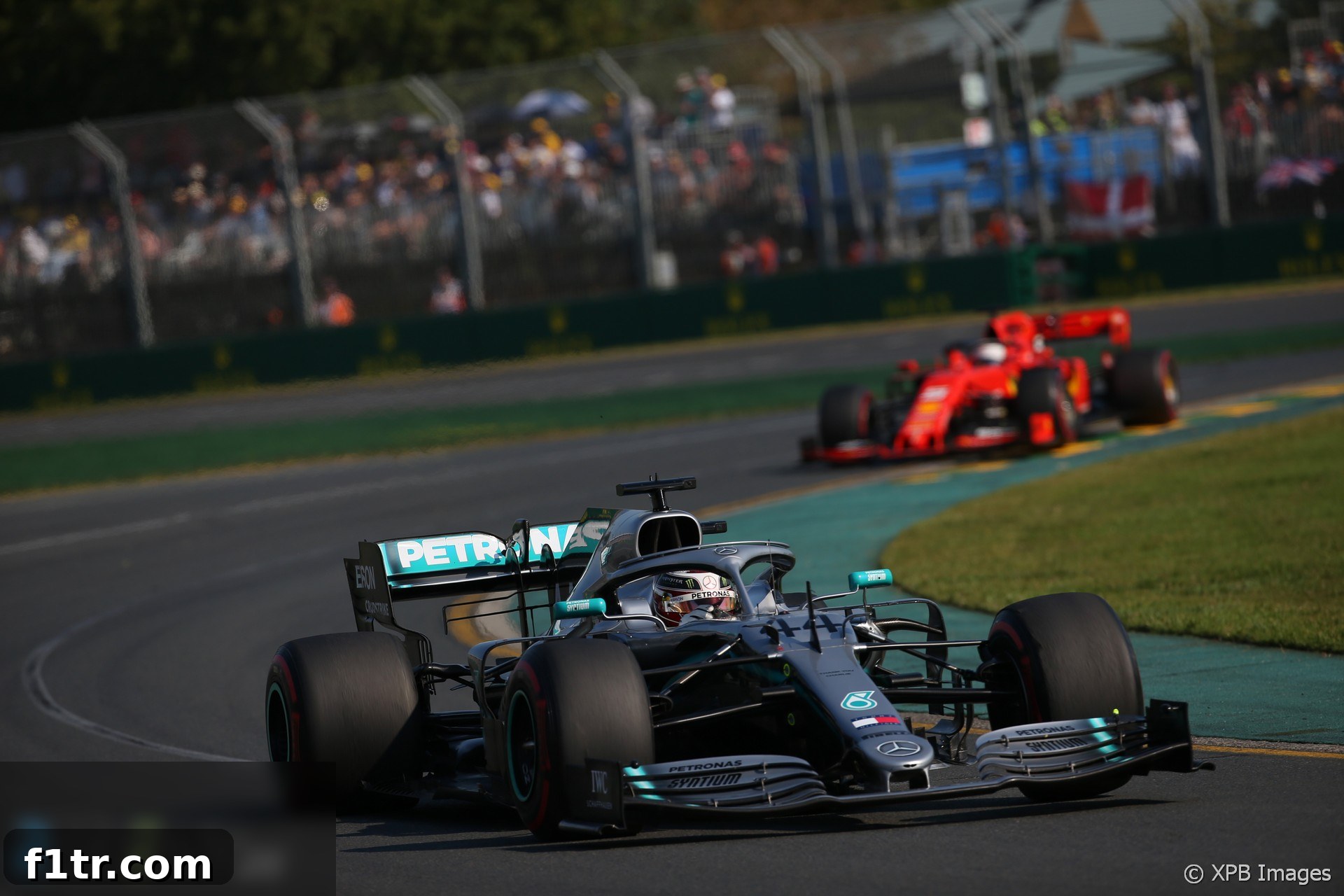
In a candid post-race assessment following the opening round of the 2019 Formula 1 season, Sebastian Vettel offered a rather pointed explanation for why he was able to momentarily close the gap on Lewis Hamilton. The Ferrari driver speculated that Hamilton might have simply lost interest in the Australian Grand Prix, suggesting this was the sole reason he could narrow the distance to the Mercedes star.
The highly anticipated 2019 season kicked off at Albert Park, a circuit often known for its unpredictable nature and dramatic starts. Heading into the weekend, the reigning champions Mercedes and their fierce rivals Ferrari were expected to resume their battle for supremacy. Lewis Hamilton, the reigning world champion, was naturally a favorite, while Sebastian Vettel aimed to challenge for the title after a frustrating end to his 2018 campaign. However, the race unfolded in a way that surprised many, laying the groundwork for Vettel’s intriguing post-race comments.
Dominance and Disappointment: The 2019 Australian Grand Prix Overview
The 2019 Australian Grand Prix quickly established a new narrative for the Mercedes team. While Lewis Hamilton secured pole position, it was his teammate Valtteri Bottas who seized the moment on race day. Bottas, starting from second, executed a phenomenal launch, snatching the lead from Hamilton before the first corner. From that point onwards, the Finn delivered a commanding performance, utterly dominating the race to cross the finish line a staggering 20 seconds ahead of Hamilton.
Hamilton’s race, by contrast, seemed to lack its usual spark. After losing the lead at the start, he struggled to match Bottas’s relentless pace and ultimately finished a distant second. This significant gap to his teammate, especially at the season opener, raised eyebrows and prompted questions about Hamilton’s performance. For Sebastian Vettel, the race was equally challenging. Despite hopes of a strong start for Ferrari, the German driver found himself battling to maintain position. He eventually took the chequered flag over half a minute behind Hamilton, having also been overtaken by Max Verstappen in the Red Bull, highlighting Ferrari’s unexpected deficit in pace. It was amidst this backdrop of differing fortunes that Vettel’s provocative observations about Hamilton emerged.
Vettel’s Controversial Assessment: Hamilton Was “Bored” or “Playing”
Vettel’s post-race remarks provided a fascinating glimpse into the mind of a rival driver, offering an alternative interpretation of Hamilton’s subdued performance. “I don’t know what Lewis was doing,” Vettel stated, his words hinting at bewilderment rather than direct criticism. He quickly followed this with a highly speculative conclusion: “I think he was probably bored and not happy because he lost the start.”
This suggestion that a driver of Hamilton’s calibre, competing at the pinnacle of motorsport, could be “bored” during a Grand Prix race, especially one where his teammate was romping to victory, certainly captured attention. Vettel elaborated on his theory, adding, “I think it’s not the first race where he’s doing something just to go round, he was just playing at that point.” This comment suggested a pattern, implying that Hamilton, when not in a direct fight for the lead, might sometimes cruise or conserve energy, perhaps even experimenting with different race management techniques. However, for Vettel to describe it as “playing” indicated a level of detachment or lack of intensity that he found unusual, especially given Hamilton’s fierce competitive spirit.
The implication behind Vettel’s words was multifaceted. It could be seen as a subtle jab, questioning Hamilton’s motivation or focus when not directly contending for the win. Alternatively, it might have been a way for Vettel to rationalize his own team’s significant performance deficit to Mercedes. If Hamilton wasn’t pushing to his absolute maximum, it made Ferrari’s gap to the Mercedes slightly less alarming, though still substantial. The thought that Hamilton might not have been fully engaged, due to losing the lead early on, certainly resonates with the psychological aspect of elite sports, where momentum and position can heavily influence a competitor’s drive.
Hamilton’s Tyre Concerns: Reality or Strategy?
Throughout his second stint in the race, Lewis Hamilton was heard on team radio expressing concerns about the longevity and performance of his tyres. These messages were evidently communicated to rival teams, including Ferrari. Vettel confirmed this, stating, “I was told also on the radio that he’s complaining about his tyres but I think he made it quite safely to the end.” He then connected this back to his earlier observation: “Maybe he wasn’t too happy driving from that point onwards.”
Hamilton’s tyre management is a well-documented aspect of his racing style. While he is often exceptional at extending tyre life, concerns, real or feigned, are also a common tactic in Formula 1. Drivers sometimes report tyre issues to manage expectations, influence rival strategies, or even mask their true pace. Vettel’s perspective, however, leans towards the latter, suggesting that Hamilton’s complaints might have been symptomatic of his broader disengagement or frustration with his race position rather than an imminent threat of tyre failure. The fact that Hamilton managed to bring the car home “safely to the end” with no apparent significant drop-off in performance, beyond what would be expected from degrading tyres, added credence to Vettel’s interpretation that the complaints were perhaps more about a mood than a critical technical issue. This further fueled the notion that Hamilton’s race wasn’t about pushing to the absolute limit, but rather managing an undesirable situation.
Ferrari’s Early Season Setback and Vettel’s Personal Frustrations
For Ferrari, the 2019 Australian Grand Prix was a harsh reality check. After showing promising pace in pre-season testing, the Scuderia arrived in Melbourne with high hopes of challenging Mercedes from the outset. However, the race revealed a significant performance gap, not only to Valtteri Bottas’s dominant Mercedes but also a surprising deficit to Max Verstappen’s Red Bull, which managed to overtake Vettel for the final podium spot. Vettel finished a distant fourth, well off the pace of the leaders, and his teammate Charles Leclerc was instructed to hold position behind him, underscoring the team’s struggles.
Vettel’s own performance in Australia was overshadowed by a lack of grip and balance in his SF90. His comments about Hamilton, therefore, can also be understood in the context of his own frustrations. When a driver struggles, they often look for external factors or psychological insights into their rivals to process the outcome. For Vettel, witnessing Hamilton’s race from behind, coupled with the intelligence from his own team about Hamilton’s radio communications, might have led him to form a conclusion that eased the sting of Ferrari’s performance. If Hamilton wasn’t fully committed or was merely “playing,” it implied that the Mercedes car’s true potential was even higher than what Hamilton showed, and that perhaps his own pace deficit was not as damning in comparison to Hamilton’s actual effort.
Implications for the Intense F1 Rivalry
The exchange between Sebastian Vettel and Lewis Hamilton, even if one-sided in terms of public commentary, underscored the intense psychological warfare that often plays out between elite Formula 1 drivers. Their rivalry had been one of the defining narratives of the previous seasons, marked by periods of fierce on-track battles and strategic mind games off it. Vettel’s suggestion that Hamilton was “bored” or “playing” added another layer to this complex dynamic.
While Hamilton did not directly respond to Vettel’s specific comments, his own reflections on the race focused on understanding Mercedes’ performance gap between his car and Bottas’s, and acknowledging that he simply hadn’t had a good day. This particular Grand Prix served as a stark reminder that even the most dominant drivers can have off-days, and that team dynamics, such as the sudden surge of a teammate like Valtteri Bottas, can profoundly influence a race outcome and a driver’s approach. For the fans, it ignited further debate and intrigue, setting the stage for what promised to be another compelling season of Formula 1 where not just raw pace, but also mental fortitude and perceived commitment, would be under constant scrutiny.
The 2019 Australian Grand Prix proved to be an unexpected season opener, not only for the surprising dominance of Valtteri Bottas but also for the intriguing psychological observations made by Sebastian Vettel about his fiercest rival. It highlighted the intricate layers of competition in Formula 1, where every move, every comment, and every perceived attitude is analyzed under the microscope of rival teams and passionate fans alike. The season had truly begun with a bang, promising more thrilling battles and sharp analyses to come.
Don’t miss anything new from RaceFans
Follow RaceFans on social media:
- Join RaceFans on Facebook
- Follow RaceFans on Twitter
- Get daily email updates from RaceFans
Advert | Become a RaceFans supporter andgo ad-free
2019 F1 season: Related Articles
- Crying in the Melbourne car park at 2019 grand prix was my career low – Ocon
- McLaren Racing reports reduced £71 million loss in 2019
- Kvyat: Hockenheim podium last year was “my biggest achievement” so far
- How the FIA’s new encrypted fuel flow meter targets Ferrari’s suspected ‘aliasing’ trick
- “He smashed my office door”: 23 must-see moments from ‘Drive to Survive’ season two
Browse all 2019 F1 season articles