The 2023 Formula 1 season unfolded as a testament to unparalleled dominance, with Max Verstappen setting new benchmarks for performance. Against such a formidable backdrop, it was inevitable that the performance of his teammate, Sergio Perez, would come under intense scrutiny. While Perez initially emerged as Verstappen’s closest challenger, the championship narrative quickly diverged, leaving an undeniable chasm between the two Red Bull drivers that sparked considerable discussion and analysis across the F1 paddock and among fans.
Advert | Become a Supporter & go ad-free
The early rounds of the 2023 Formula 1 campaign hinted at a genuine rivalry within Red Bull Racing, with Sergio Perez securing two victories in the first four races, seemingly positioning himself as a legitimate contender for the Drivers’ Championship. However, this promising start soon gave way to a stark reality. As the season progressed, Verstappen’s relentless pace and consistency propelled him to an unprecedented level of supremacy, leaving Perez struggling to maintain any semblance of a challenge. The gap between the teammates widened dramatically, transforming the initial title fight into a one-sided procession. By the penultimate round of the season, Perez finally managed to secure the runner-up position, a testament more to Red Bull’s dominant RB19 than to his sustained challenge to Verstappen’s throne.
The stark reality of Perez’s 2023 performance is encapsulated in the final points tally: he concluded the year with less than half of Verstappen’s score, specifically 49.6%. This figure is a critical metric for evaluating intra-team performance, and it paints a clear picture of the significant disparity between the two drivers. To find a world champion’s teammate performing so far adrift by this measure, one only needs to look back to Perez himself in 2021. However, that year’s context was different; Verstappen was locked in an epic, season-long title battle with Lewis Hamilton, which inadvertently overshadowed Perez’s struggles. The intensity of that championship fight meant less focus was directed towards the points gap within Red Bull. In contrast, 2023 offered no such distraction; Verstappen’s dominance was absolute, spotlighting Perez’s relative underperformance. Before 2021, the last driver to register a lower percentage of his title-winning teammate’s score was Giancarlo Fisichella in 2005, when Fernando Alonso clinched the championship for Renault, illustrating just how rare and significant Perez’s 2023 points deficit truly was.
Sergio Perez holds the distinction of being Max Verstappen’s longest-serving teammate at Red Bull Racing, having completed three full seasons and contested 66 races alongside the prodigious Dutch talent. His arrival at the team in 2021 marked a pivotal moment for Red Bull, as they had previously struggled to find a consistent and effective partner for Verstappen. Following Daniel Ricciardo’s departure at the end of 2018, Red Bull cycled through several drivers – namely Pierre Gasly and Alex Albon – in a bid to fill the highly coveted, yet notoriously challenging, second seat. Both Gasly and Albon, despite their talent, found themselves unable to match Verstappen’s pace or adapt sufficiently to the demanding Red Bull machinery, leading to their eventual demotions. Perez, with his wealth of experience and proven race-winning ability, was brought in to stabilize the team and provide a reliable points scorer, crucial for the Constructors’ Championship.
The comprehensive nature of Perez’s defeat in the 2023 season inevitably reopens a crucial debate: has he genuinely performed significantly better than his predecessors who were swiftly moved aside? While Perez has certainly shown flashes of brilliance and demonstrated resilience that perhaps Gasly and Albon lacked, the question of his consistent lap time deficit to Verstappen, particularly in qualifying, demands a closer look. For instance, considering Gasly’s 12-race stint at Red Bull before his mid-season demotion in 2019, the performance gap to Verstappen was considerable. Yet, in 2023, Perez’s struggles in qualifying often placed him similarly far down the grid from his teammate, leading many to ponder if the fundamental issue of adapting to the Red Bull car’s specific characteristics, especially as it evolved, remains a significant hurdle for any driver alongside Verstappen.
When Sergio Perez joined Red Bull in 2021, the team was operating with a mildly evolved version of its previous car. His initial unfamiliarity with the machinery, relative to Verstappen who was deeply entrenched in its development, was logically cited as a disadvantage. However, a significant shift appeared to occur at the beginning of the 2022 season with the introduction of new technical regulations, primarily focusing on ground effect aerodynamics. This regulatory overhaul meant a fundamentally different car philosophy, offering a reset for all drivers. Over the course of 2022, while Verstappen once again asserted his dominance, Perez notably improved his overall performance, concluding the season with more than two-thirds of his teammate’s points tally – a clear and encouraging step forward that suggested he was adapting well to the new generation of F1 cars and beginning to genuinely challenge for victories.
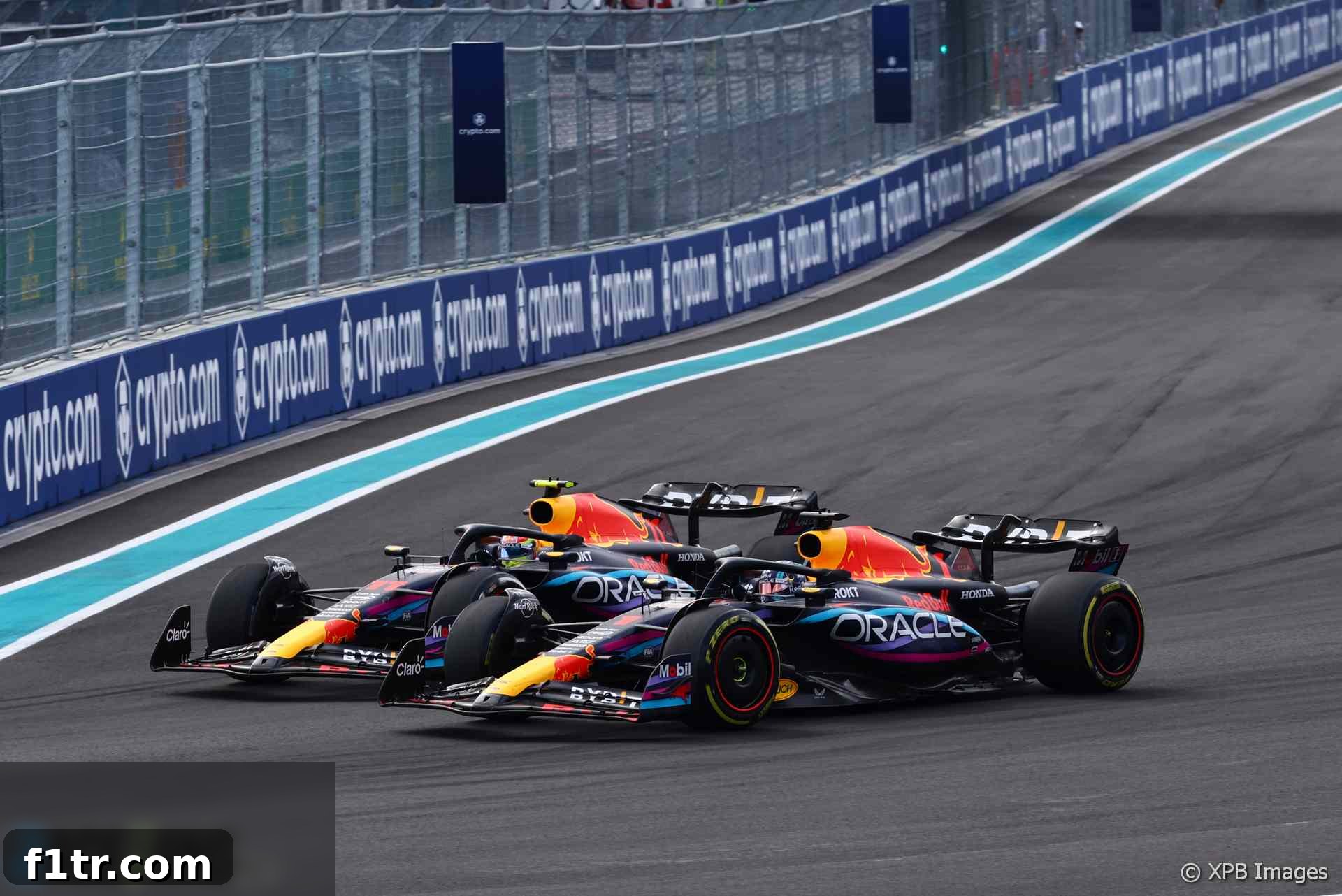
The progression seen in 2022, however, was brutally reversed in 2023, particularly after the initial four races. The RB19, while undeniably the fastest car on the grid, proved to be a complex beast. Max Verstappen spoke of a crucial “breakthrough” in understanding the car’s nuanced handling after the Baku Grand Prix, where he followed his victorious teammate home. Yet, for Perez, the RB19 became increasingly difficult to manage as the team continued to refine its setup and aerodynamic characteristics. The car’s handling, reportedly biased towards a strong front end and a loose rear under braking, suited Verstappen’s aggressive, pinpoint driving style, allowing him to extract maximum performance. Conversely, Perez, who typically prefers a more stable rear end, found the car a “handful,” struggling to replicate Verstappen’s confidence and speed. This challenge was compounded by pivotal moments such as the Miami Grand Prix, where Perez started from pole position, a remarkable eight places ahead of Verstappen, yet still succumbed to his teammate’s superior race pace and strategy, losing the lead and ultimately the victory. This loss in Miami proved to be a significant psychological blow, from which Perez struggled to fully recover throughout the remainder of the season, highlighting the chasm in confidence and car mastery that had developed.
Advert | Become a RaceFans supporter andgo ad-free
From the mid-point of the season onwards, on-track encounters between Max Verstappen and Sergio Perez became increasingly rare, a stark indicator of the burgeoning performance gap. While Perez managed to put up a brief but spirited fight against Verstappen at the start of the Austrian Grand Prix, it felt like an isolated moment, almost a parting shot, rather than a sustained challenge. On the infrequent occasions Verstappen found himself behind his teammate, he would typically dispatch Perez with remarkable ease. Whether it was through a perfectly executed pit strategy in Zandvoort or a dominant on-track overtake in Las Vegas, Verstappen’s ability to bypass Perez underscored the overwhelming advantage he held in terms of raw pace and strategic execution. These moments served as further evidence of the Red Bull RB19’s immense capabilities in the hands of its primary driver, and how much Perez was struggling to unlock the same level of performance.
Towards the latter stages of the season, Sergio Perez did show some signs of addressing his critical qualifying slip-ups, which had previously led to an unacceptable succession of eliminations before the crucial Q3 session. These early exits not only hindered his own race prospects by forcing him to start further down the grid but also added immense pressure, requiring him to fight through midfield traffic to salvage points. While Verstappen effortlessly cruised to win after win in the overwhelmingly dominant RB19, often leading from pole or the front row, Perez was frequently engaged in battles against midfield competitors, making hard work of securing valuable points. This persistent disparity between the two Red Bull drivers naturally led to persistent questioning directed at team principal Christian Horner. Queries about the team’s tolerance for Perez’s underperformance became a regular fixture in press conferences, frequently accompanied by speculation regarding Daniel Ricciardo’s return to AlphaTauri and whether it was an elaborate dress rehearsal for a potential comeback to the main Red Bull Racing squad, placing even more pressure on Perez’s shoulders and raising doubts about his long-term future with the championship-winning team.
Advert | Become a RaceFans supporter andgo ad-free
| BAH | SAU | AUS | AZE | MIA | MON | SPA | CAN | AUT | GBR | HUN | BEL | NED | ITA | SIN | JAP | QAT | USA | MEX | BRZ | LAS | ABU | ||
| Verstappen | Q | ||||||||||||||||||||||
| R |
Unrepresentative comparisons omitted. Negative value: Verstappen was faster; Positive value: Perez was faster
Advert | Become a RaceFans supporter andgo ad-free
Formula 1
- F1 returning to India soon after 2027 sounds like wishful thinking
- Verstappen loathes F1’s new generation of cars – but what do his rivals reckon?
- The ‘throwback weekend’ is back in fashion. But it’s a flawed concept – especially for F1
- Is Formula 1’s double race cancellation a blessing in disguise?
- Todt admits Schumacher crashed on purpose – but did it really cost him two titles?
Browse all Formula 1 articles