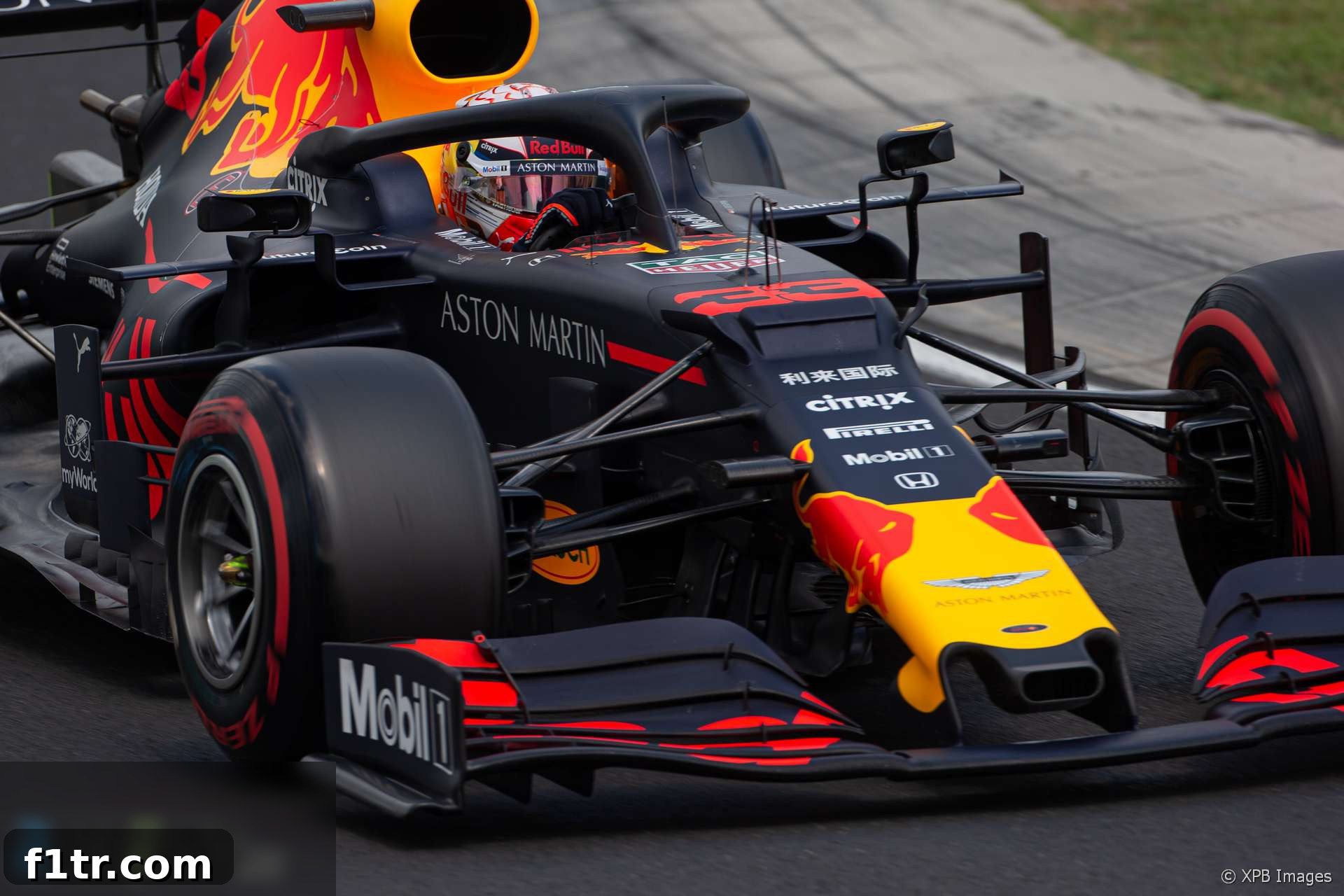
Max Verstappen Unveils Bold Tyre Strategy for 2019 Italian Grand Prix at Monza
The highly anticipated 2019 Italian Grand Prix at Monza, often dubbed the “Temple of Speed,” promised exhilarating racing, and the pre-race tyre selections offered a fascinating glimpse into the strategic minds of Formula 1’s elite. Among the front-runners, Max Verstappen stood out with a notably aggressive choice, opting for a higher number of the softest Pirelli compounds available compared to his direct rivals.
The Red Bull Racing driver’s selection of ten sets of the soft C4 compound tyres for the Monza weekend marked a distinct departure from the norm. This particular compound, being the second-softest in Pirelli’s extensive range, is renowned for its exceptional grip and ultimate lap time potential, albeit at the cost of increased degradation. In stark contrast, both Mercedes and Ferrari drivers, representing the other top teams, largely settled on a more conservative allocation of eight sets each of the C4 softs.
This strategic divergence immediately ignited discussions across the paddock regarding potential qualifying advantages and race day implications. While the softest tyres offer undeniable speed over a single lap, their durability in race conditions, especially at a high-energy circuit like Monza, presents a significant challenge. Verstappen’s choice indicated a clear intent to maximize performance in qualifying, potentially securing a stronger grid position, and then manage tyre wear diligently during the Grand Prix itself.
Understanding the Pirelli Tyre Compounds at Monza
For the 2019 Italian Grand Prix, Pirelli brought their C2 (Hard), C3 (Medium), and C4 (Soft) compounds. Each compound has specific characteristics tailored to different circuit demands and race strategies:
- C2 (Hard): The most durable tyre, designed for long stints and offering greater resistance to degradation. While slower per lap, its longevity can be crucial for one-stop strategies.
- C3 (Medium): A versatile compound offering a balance between grip and durability. Often considered the preferred race tyre for its ability to last a reasonable distance without a significant drop-off in performance.
- C4 (Soft): The fastest tyre over a single lap, providing maximum grip and allowing drivers to extract peak performance from their cars. However, its high wear rate makes it challenging for extended race stints, potentially forcing multi-stop strategies.
Verstappen’s decision to commit heavily to the C4 softs highlighted his confidence in Red Bull’s ability to manage degradation, or perhaps a tactical gamble to push the limits from the outset. This aggressive approach could translate into blistering pace during the crucial qualifying sessions, where every tenth of a second counts.
Strategic Nuances Across the Grid
It’s worth noting that Max Verstappen wasn’t entirely alone in his bold selection. The Racing Point drivers were the only other competitors to match his ten-set allocation of soft tyres, suggesting a similar high-risk, high-reward strategy for their respective machinery. This indicates that some teams, perhaps those aiming to punch above their weight, were willing to embrace an aggressive tyre plan to gain an edge at Monza.
Conversely, McLaren presented an interesting deviation by opting for two sets of hard tyres (C2) for both of their drivers. Most other teams only supplied an extra hard set to one of their two cars. This choice by McLaren could signify a focus on a more robust, potentially one-stop race strategy, aiming for consistency and avoiding unexpected pit stops due to tyre wear. Their decision might have been influenced by their car’s characteristics or a desire for strategic flexibility in what is often a chaotic race at Monza.
Even among teammates, slight variations were visible. For instance, while Alexander Albon inherited the tyre allocation chosen by his predecessor, Pierre Gasly (who in turn inherited Albon’s former Toro Rosso allocation), both had independently arrived at a nine-set soft tyre choice. This consistency across the Red Bull senior and junior teams for the second driver suggests a broadly similar philosophy, albeit slightly less aggressive than Verstappen’s.
2019 Italian Grand Prix Tyre Selections: Detailed Breakdown
The following table provides a comprehensive overview of the tyre selections made by each driver for the 2019 Italian Grand Prix, illustrating the diverse strategies deployed across the Formula 1 grid:
| Driver | Team | Hard (C2) | Medium (C3) | Soft (C4) |
|---|---|---|---|---|
| Lewis Hamilton | Mercedes | 2 | 3 | 8 |
| Valtteri Bottas | Mercedes | 1 | 4 | 8 |
| Sebastian Vettel | Ferrari | 1 | 4 | 8 |
| Charles Leclerc | Ferrari | 2 | 3 | 8 |
| Max Verstappen | Red Bull | 1 | 2 | 10 |
| Alexander Albon | Red Bull | 1 | 3 | 9 |
| Daniel Ricciardo | Renault | 2 | 2 | 9 |
| Nico Hulkenberg | Renault | 1 | 3 | 9 |
| Kevin Magnussen | Haas | 1 | 3 | 9 |
| Romain Grosjean | Haas | 2 | 2 | 9 |
| Carlos Sainz Jnr | McLaren | 2 | 2 | 9 |
| Lando Norris | McLaren | 2 | 2 | 9 |
| Sergio Perez | Racing Point | 1 | 2 | 10 |
| Lance Stroll | Racing Point | 1 | 2 | 10 |
| Kimi Raikkonen | Alfa Romeo | 2 | 2 | 9 |
| Antonio Giovinazzi | Alfa Romeo | 1 | 3 | 9 |
| Daniil Kvyat | Toro Rosso | 2 | 2 | 9 |
| Pierre Gasly | Toro Rosso | 1 | 3 | 9 |
| George Russell | Williams | 1 | 3 | 9 |
| Robert Kubica | Williams | 2 | 2 | 9 |
Implications for Qualifying and Race Day at Monza
Monza is a unique challenge, characterized by long straights and fast chicanes, which place immense stress on tyres, particularly during braking and traction zones. Max Verstappen’s generous supply of soft tyres gave him more flexibility during practice sessions to fine-tune his car’s setup for optimal single-lap pace and allowed for more attempts in qualifying. This could be a significant advantage, particularly if he aimed to challenge the dominant Ferrari cars, who were expected to be strong at their home circuit.
However, the trade-off for this qualifying focus is often a more complicated race strategy. With ten sets of softs, Verstappen would likely burn through several sets in Free Practice and Qualifying, leaving fewer fresh sets for the Grand Prix itself. The critical question would be whether he could make a one-stop strategy work on the C4s, or if he would be forced into an early second stop. The Mercedes and Ferrari drivers, with their eight sets of C4s and typically more C3 mediums, appeared to hedge their bets for a more conventional race, potentially aiming for a one-stop race using the medium compound for a significant portion of the Grand Prix.
The “Temple of Speed” demands efficient aerodynamics and engine power, but tyre management is equally crucial. The high average speeds and heavy braking zones contribute to rapid tyre wear and overheating. A daring strategy like Verstappen’s relies heavily on effective car balance, driver skill in preserving tyres, and the team’s ability to react to changing race conditions, such as safety car periods or fluctuating temperatures. A well-timed safety car could neutralize tyre degradation worries, potentially turning a risky strategy into a race-winning move.
The Thrill of Strategic Diversity in F1
Ultimately, the diverse tyre selections for the 2019 Italian Grand Prix underscored the intricate strategic battles that unfold behind the scenes in Formula 1. From Max Verstappen’s aggressive soft tyre gamble to McLaren’s conservative hard tyre approach, each team and driver meticulously planned their attack on Monza, weighing the risks and rewards of every compound choice. These decisions not only set the stage for thrilling qualifying sessions but also promised a fascinating strategic chess match on race day, where the ultimate success would depend on a myriad of factors beyond sheer speed alone.
This varied approach ensures that every Grand Prix is not just a test of machinery and driving talent, but also a showcase of strategic acumen, keeping fans on the edge of their seats until the very last lap.
Want more in-depth analysis and exclusive content? Become a RaceFans supporter and go ad-free to enjoy uninterrupted Formula 1 insights.
More from the 2019 F1 Season
- Crying in the Melbourne car park at 2019 grand prix was my career low – Ocon
- McLaren Racing reports reduced £71 million loss in 2019
- Kvyat: Hockenheim podium last year was “my biggest achievement” so far
- How the FIA’s new encrypted fuel flow meter targets Ferrari’s suspected ‘aliasing’ trick
- “He smashed my office door”: 23 must-see moments from ‘Drive to Survive’ season two
Browse all 2019 F1 season articles