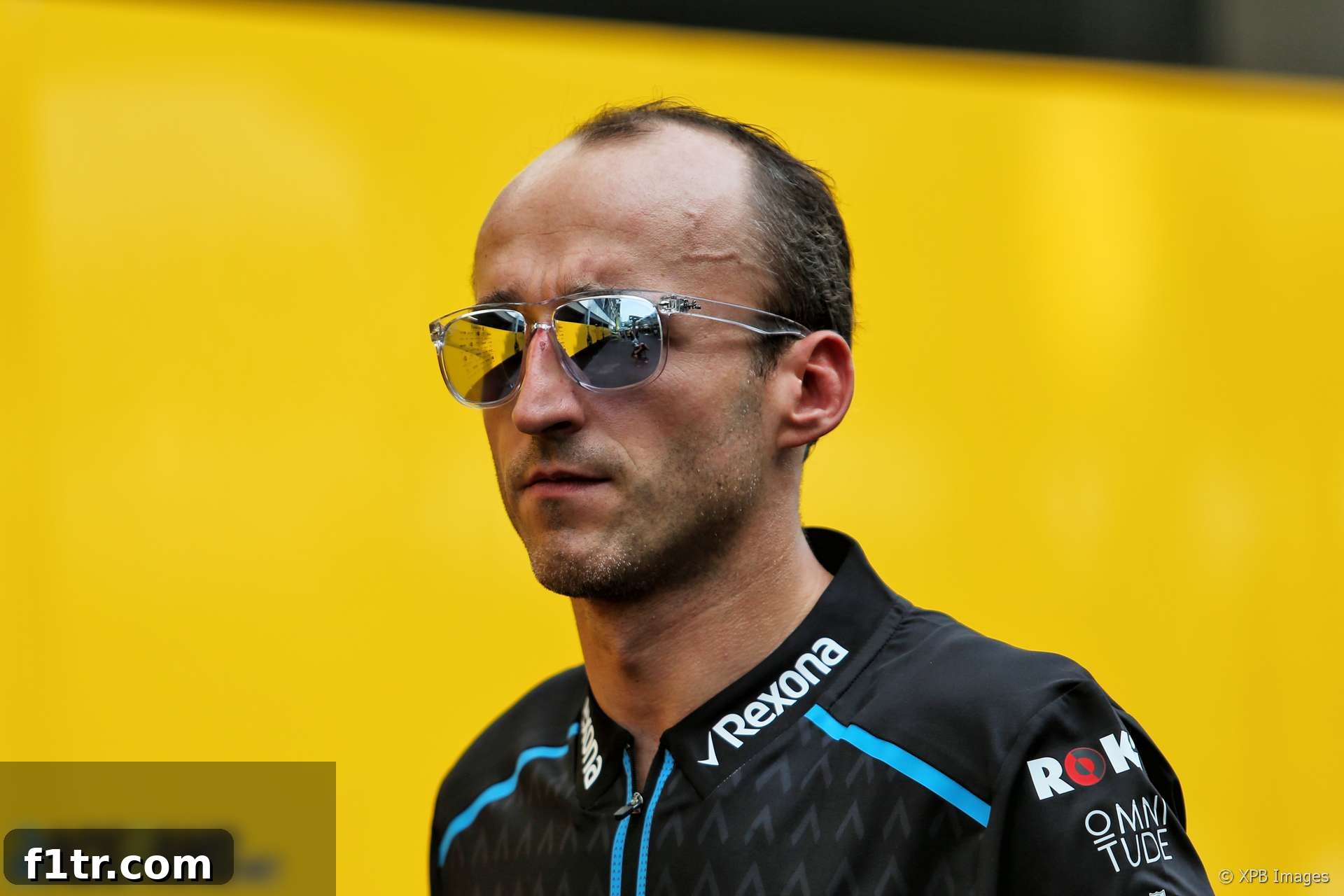
In the latest motorsports round-up, the focus is squarely on the anticipated future of Robert Kubica. The Polish driver, renowned for his remarkable comeback to Formula 1, has indicated his strong intention to be racing competitively in the upcoming year. While the specific championship or series for his next challenge remains unconfirmed, his statement suggests a firm resolve to continue his illustrious career on track. Kubica’s journey has been one of resilience and unwavering determination, making any announcement about his future a significant talking point in the racing world. Fans and pundits alike are eagerly awaiting details of where this veteran talent will next apply his exceptional skills.
Robert Kubica’s Future: F1 Reserve and DTM Speculation
Speculation surrounding Robert Kubica’s next career move has intensified, with strong links suggesting a potential foray into the DTM (Deutsche Tourenwagen Masters) championship. This move could potentially run in parallel with a continued role in Formula 1 as a reserve and test driver, leveraging his vast experience and technical insights. Kubica himself has been candid about his expectations for the upcoming season, expressing a clear desire to remain an active participant in top-tier motorsport.
I would be surprised if I will not be racing next year. My passion for motorsport is as strong as ever, and I am actively exploring opportunities that align with my ambitions and capabilities. However, a lot will probably depend on what options become concretely available.
Of course, we can discuss extensively what I personally would like to do, and explore various scenarios, but ultimately, there’s no real point in dwelling on hypotheticals. The crucial aspect is to objectively choose between the viable propositions that will eventually be presented on the table. My focus is on securing a competitive seat where I can contribute and perform at my best.
This statement underscores Kubica’s pragmatic approach to his career decisions. His potential move to DTM would mark a new chapter, bringing his renowned precision and race craft to the fiercely competitive touring car series. Simultaneously, retaining an F1 reserve role would allow him to stay connected to the pinnacle of motorsport, offering invaluable input to a team while keeping his hand in at the highest level. The balancing act between these two demanding commitments would be a testament to his enduring dedication and physical capabilities, especially given his past injuries.
Quotes: Dieter Rencken
Advert | Become a RaceFans supporter andgo ad-free
Social Media Pulse: F1 Aerodynamics, Gaming & Community Insights
The world of motorsports is incredibly active on social media, offering fans unique insights and engagement. Here’s a snapshot of notable posts from Twitter and other platforms that have captured attention:
For context, a 2008 #F1 car had a coefficient of lift of 3.5ish. McLaren initially set a target of 2.5 for 2009 car under new rules. But Honda were well ahead of that early in the development of the car which became the Brawn BGP-001. (Data: @Autocourse1)https://t.co/9K7neeFYlz
— Keith Collantine (@keithcollantine) October 4, 2019
This fascinating tweet from Keith Collantine sheds light on the dramatic aerodynamic shifts in Formula 1, particularly between the 2008 and 2009 seasons. The coefficient of lift is a crucial metric in F1 car design, indicating how much downforce a car generates relative to its drag. A 2008 car’s approximate coefficient of lift around 3.5 highlights the era of extreme aerodynamic complexity. The subsequent rule changes for 2009 aimed to reduce downforce significantly, making McLaren’s initial target of 2.5 ambitious. However, the revelation that Honda (which later became Brawn GP) was already surpassing this target during early development explains much about the Brawn BGP-001’s immediate and dominant success. This car, designed under the radically altered regulations, exploited loopholes and innovative design concepts, most famously the double diffuser, to gain a significant performance advantage, ultimately leading to Jenson Button’s fairytale championship win.
Look out for RaceFans’ review of Grid on the site next week – here’s the launch trailer. pic.twitter.com/lddLHH372Y
— RaceFans (@racefansdotnet) October 4, 2019
Beyond the real-world circuits, the world of racing simulations and video games continues to thrive. RaceFans announced an upcoming review of the popular racing title, Grid, alongside its launch trailer. The Grid series is known for its blend of arcade accessibility and simulation depth, offering players a diverse range of racing experiences across various car classes and tracks. Such games play a vital role in engaging racing enthusiasts, often introducing new fans to the sport and allowing seasoned followers to experience the thrill of competition virtually. Anticipation for reviews like this helps gamers decide on their next virtual racing adventure.
- Find more official F1 accounts to follow in the F1 Twitter Directory
Further Motorsports Reading: Key Developments and Debates
Here are more motor racing links of interest, providing deeper dives into current discussions and developments across various championships:
Advert | Become a Supporter & go ad-free
Alesi calls for penalties for speeding on asphalt run-offs (Motorsport)
Former Formula 1 star Jean Alesi has voiced a strong opinion regarding the controversial use of asphalt run-offs on modern racetracks, advocating for the introduction of penalties for drivers who exploit these areas by speeding across them. His comments come in the tragic wake of the Anthoine Hubert accident, which reignited debates about track design and safety. Alesi argues that while he doesn’t wish to assign blame, the current design encourages drivers to exceed track limits without immediate consequence, potentially leading to dangerous situations. He suggests that a more stringent approach, perhaps involving time penalties or even track limits violations, would discourage drivers from using these run-offs as an extension of the track, thereby encouraging greater precision and respect for track boundaries. This move, he believes, would ultimately enhance safety and sporting fairness.
Final calendar revealed for season six of Formula E (Formula E)
Formula E has officially unveiled its final calendar for Season Six, showcasing a thrilling lineup of races across the globe. The electric street racing championship continues its unique blend of sustainable technology and urban excitement, with a diverse schedule that reflects its growing international appeal. The season promises intense competition, transitioning from the challenging heat of desert venues to the vibrant, bustling cityscapes of South and Central America, including the Santiago E-Prix on January 18 and the Mexico City E-Prix on February 15. Notably, the Marrakesh E-Prix will step in to replace Hong Kong as the fifth round of the 2019/20 calendar, marking Formula E’s return to the African continent. This strategic calendar ensures a dynamic and geographically varied championship, bringing electric racing to a broad global audience and further solidifying Formula E’s position as a leading motorsport series.
Official ‘rookies’ announced for WEC Bahrain test in December (FIA WEC)
The FIA World Endurance Championship (WEC) has announced the official lineup of ‘rookies’ selected to participate in the prestigious Bahrain test scheduled for December. This test offers emerging talents a unique opportunity to experience the cutting-edge machinery of top-tier endurance racing. Headlining the list is newly crowned FIA Formula 2 Champion Nyck de Vries, who will undoubtedly generate significant interest. De Vries is set to get his first taste of the immensely powerful Toyota TS050 Hybrid, a car boasting over 1000 bhp, showcasing the pinnacle of hybrid LMP1 technology. This WEC rookie test serves as a critical stepping stone for young drivers aspiring to a career in endurance racing, providing invaluable seat time and exposure to factory teams. For de Vries, it represents a potential pathway to a future in sports prototypes, following his impressive success in the single-seater ladder.
Is a Vettel fightback on at Ferrari? (Motorsport magazine)
Motorsport Magazine explores the critical question of whether Sebastian Vettel is poised for a significant fightback at Ferrari. The German four-time world champion has faced intense scrutiny and a challenging period, particularly with the emergence of his highly competitive teammate Charles Leclerc. The article delves into recent race performances, suggesting that away from the immense pressure of qualifying on the absolute limit, Vettel has demonstrated glimpses of his former brilliance. When able to drive more instinctively and within the car’s sweet spot, he has shown the capability to manage races effectively and position himself for victory. However, the narrative also points to instances where “intense, unreasonable Seb” – referring to his occasional costly errors under pressure – has reappeared. The piece examines the internal dynamics at Ferrari and the psychological battle Vettel faces, questioning if his recent strong performances indicate a sustainable return to form, or if the pressure will continue to reveal his vulnerabilities in the fierce competition at the top of Formula 1.
We always endeavour to credit original sources. If you have a tip for a link to feature in the next RaceFans round-up, please send it in via the contact form. Your contributions help us keep our readers informed and engaged with the diverse world of motorsports.
Advert | Become a RaceFans supporter andgo ad-free
Comment of the Day: The American F1 Conundrum – Driver vs. Race
Today’s featured comment from @GechiChan sparks a pertinent debate regarding Formula 1’s strategic expansion in the United States. The core argument suggests that F1’s leadership, specifically Liberty Media, might be prioritizing a second American Grand Prix—such as the proposed Miami race—prematurely, before adequately cultivating a domestic fanbase through a more organic connection: a successful American driver.
I understand that Liberty Media is strongly advocating for a race in Miami, or even additional races in the US, but it feels somewhat forced or perhaps ahead of its time. The fundamental question is whether there’s a sufficiently broad and engaged audience there right now to truly support such a high-profile race and all the surrounding hype. A critical missing element is the absence of American drivers competing in Formula 1, or even a highly competitive, high-profile US-based team consistently fighting for wins. If the ultimate goal is to genuinely capture the attention of American sports fans with an F1 race, the most effective way to involve them is by providing national heroes to support – either through talented US drivers or strong American teams.
Perhaps for US F1 stakeholders and backers, a more strategic approach would be to first focus on cultivating and securing an American driver in F1 – someone genuinely talented, charismatic, and capable of inspiring a nation. Drivers like Alexander Rossi or Colton Herta immediately come to mind as ideal candidates who possess both the skill and personality. Furthermore, Carey has expressed a desire for an American team that is better funded and more competitive than Haas, with the ambition to challenge for race victories. That would indeed be a transformative development. Only after establishing these foundational elements – a competitive American driver and a strong, winning American team – am I confident that a new race in the United States would achieve massive, unequivocal success and truly resonate with the American sporting public.
@GechiChan
This perspective highlights a crucial point: while new races generate immediate buzz, sustained interest often hinges on national pride and direct engagement with local heroes. The success of F1 in other regions is often tied to the performance of national drivers or teams. For the US market, which has a rich motorsport heritage but a complex sporting landscape, establishing relatable figures in F1 could be far more impactful than merely adding another event. The suggestions of fostering talent like Alexander Rossi or Colton Herta, both highly regarded in IndyCar, and supporting a more competitive US-funded team, offer a long-term vision for truly embedding Formula 1 within the American consciousness. This debate continues to be central to F1’s global growth strategy.
From the RaceFans Forum: Vietnam Grand Prix Anticipation
Our vibrant community forum is always buzzing with discussions on the latest in Formula 1. Among the many exciting topics, @Jeremy8764 shares his personal plans regarding the newest addition to the F1 calendar: the Vietnam Grand Prix.
- @Jeremy8764 is planning to go to the newest addition to the F1 calendar next year – the Vietnam Grand Prix. This news has generated considerable excitement among fans, marking F1’s continued expansion into new territories. The Hanoi street circuit promises a fresh challenge for drivers and a unique spectacle for spectators, blending modern infrastructure with the rich cultural backdrop of Vietnam. Discussions on the forum likely revolve around travel tips, circuit expectations, and the overall fan experience for this inaugural event.
Happy Birthday to Our RaceFans Community Members!
We extend our warmest wishes to all our community members celebrating their birthdays today. A huge happy birthday goes out to Cholle, Yorricksfriend, Jason Sultana, and Ddoc! We hope you all have a fantastic day filled with joy and celebration.
If you’d like to receive a special birthday shout-out on RaceFans, simply let us know when yours is by reaching out via the contact form or by adding your date to our dedicated list here. We love celebrating with our readers!
On This Day in F1: Remembering Jules Bianchi
- Five years ago today, on October 5, 2014, the world of Formula 1 was struck by tragedy during the Japanese Grand Prix. Jules Bianchi crashed heavily during the race at Suzuka, sustaining severe head injuries from which he tragically died several months later. This devastating event served as a profound turning point for Formula 1 safety, prompting a significant re-evaluation of procedures and car design. Bianchi’s accident led directly to the introduction of the Virtual Safety Car (VSC) system, designed to slow down cars uniformly under hazardous conditions, and ultimately paved the way for the mandatory implementation of the Halo cockpit protection device. His legacy continues to influence the sport’s relentless pursuit of enhanced driver safety, ensuring that future generations of racers are better protected.