Max Verstappen Calls for Greater Consistency in Formula 1 Penalties
In a candid interview, two-time Formula 1 world champion Max Verstappen voiced strong opinions regarding the application of penalties in Formula 1, highlighting what he perceives as a significant lack of consistency throughout the season. This sentiment resonates with many within the F1 community who often debate the fairness and clarity of stewarding decisions, especially in the heat of competition.
Verstappen’s Stance: Racing Incidents and Stewards’ Decisions
Full F1 Penalties Data: A Historical Overview (2011-2018)
Understanding the evolution and application of penalties in Formula 1 requires a look back at historical data. The links below provide comprehensive penalty statistics for each season, offering valuable insights into the types of infringements, the severity of punishments, and potential trends in stewarding decisions over the years. This data is crucial for analyzing consistency and fairness in the sport’s regulatory framework.
- 2011 Penalties Index
- 2012 Penalties Index
- 2013 Penalties Index
- 2014 Penalties Index
- 2015 Penalties Index
- 2016 Penalties Index
- 2017 Penalties Index
- 2018 Penalties Index
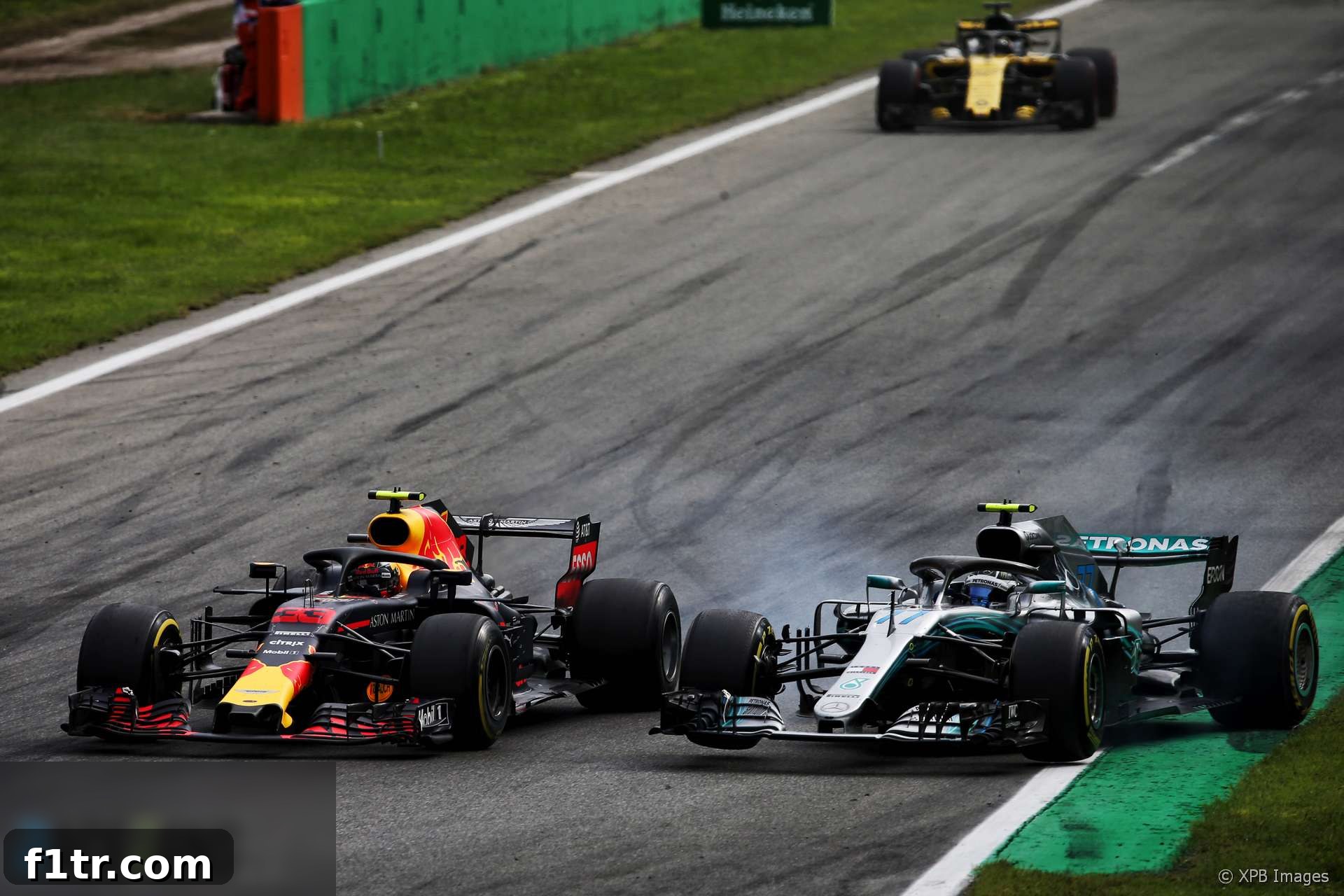
Verstappen’s frustration stems partly from a specific five-second penalty he received during the Italian Grand Prix, where he was judged to have failed to leave Valtteri Bottas sufficient space during an on-track battle. This incident ignited a debate about the fine line between aggressive, hard racing and maneuvers deemed dangerous or unfair by the stewards. For Verstappen, the ruling felt unjust, reinforcing his broader concern about the unpredictable nature of penalty enforcement in Formula 1.
“For me, to be honest, I think it was still unfair because I did leave him a car’s width. I think it happened the year before as well with Felipe and his teammate at the time,” Verstappen stated, reflecting on the Monza incident. His reference to a similar previous event highlights a perception that established precedents or comparable situations don’t always lead to consistent judgments.
“I think penalties in general the whole season have been a bit all over the place. Sometimes yes, sometimes not.” This summary from Verstappen encapsulates the core of the issue: the perceived subjective nature of penalty decisions, which can leave drivers, teams, and fans feeling bewildered. The lack of a clear, predictable framework for judging racing incidents can undermine confidence in the sport’s officiating and create a sense of unfairness, especially when championship points are on the line.
Acknowledging the complexity of high-speed racing, Verstappen added, “Of course, looking back at it, I could have braked a bit straighter instead of going to the left but when you’re in the car it’s really difficult to judge that when you arrive at 300 [kph].” This honest assessment underscores the incredible demands on drivers, who must make split-second decisions at extreme speeds, often with imperfect visibility and under immense pressure. It also implicitly suggests that while drivers bear responsibility, the stewards also face a challenging task in retrospectively analyzing these moments. “But for those moments for sure next time I’ll leave a bit more space just to be safe. But I’m also there to race hard; I’m not there to give up my podium position.” This final remark perfectly illustrates the perennial dilemma for F1 drivers: balancing aggressive, competitive racing with the need to avoid penalties. Verstappen’s commitment to “racing hard” is a hallmark of his style, and his willingness to adapt while still fighting for every position reflects the intense competitive spirit required at the pinnacle of motorsport.
The sentiment expressed by Verstappen is not isolated. Debates about penalty consistency frequently dominate post-race discussions and online forums, leading to calls for clearer guidelines and more transparent decision-making processes from the FIA. The ongoing challenge for Formula 1’s governing body is to balance the need for fair competition and driver safety with preserving the thrilling, wheel-to-wheel racing that fans love, all while ensuring that rules are applied uniformly across the grid.
Beyond individual incidents, the overall tally of penalty points can also paint a picture of driver conduct and stewarding patterns. For example, recent reports indicated that Verstappen and Grosjean led F1’s penalty points table, further fueling discussions about aggressive driving styles and the thresholds for penalization.
Quotes: Dieter Rencken
Advert | Become a RaceFans supporter andgo ad-free
Social Media Pulse: Key F1 and Motorsport Updates
Social media platforms offer a direct window into the world of Formula 1 and broader motorsport, providing real-time updates, driver insights, and fan engagement. Here’s a curated look at notable posts from Twitter and Instagram, reflecting diverse aspects of the racing universe:
Five-times @F1 world champion (and vegan) @LewisHamilton has been named Person of the Year by @Peta.
“Lewis Hamilton’s healthy vegan eating and kind heart make him a winner and a role model,” says PETA President Ingrid Newkirk. pic.twitter.com/Zzj6qpVXZW
— RaceFans (@racefansdotnet) December 6, 2018
This post celebrates Lewis Hamilton’s recognition by PETA as Person of the Year, highlighting his commitment to a vegan lifestyle. Hamilton has been a vocal advocate for animal rights and environmental causes, using his global platform to promote conscious living. His influence extends beyond the racetrack, making him a significant role model for many.
#BREAKING. The only real #F3 Championship of the world, our #Formula #European #Masters series receives 25 SuperLicense Points. Really happy the #FIA World Council understands the true value of a proper #Formula3 series. #2019ISON #STILLTHEBESTTHEREIS
— Van Amersfoort Racing (@VARmotorsport) December 5, 2018
This announcement from Van Amersfoort Racing highlights a significant development for young drivers aspiring to Formula 1. The awarding of 25 Super License Points to a specific Formula 3 series is crucial, as accumulating enough Super License points is a mandatory step for any driver wishing to compete in F1. This recognition by the FIA World Council underscores the championship’s perceived quality and its importance in nurturing future F1 talent.
Great car, great debut, awful haircut. #MyFirstFormulaSeason #TBT pic.twitter.com/ZqeabfwKNa
— Giedo van der Garde (@GvanderGarde) December 6, 2018
Former F1 driver Giedo van der Garde shares a nostalgic #TBT (Throwback Thursday) post, showcasing an image from his early racing days. Such personal glimpses are popular on social media, allowing fans to connect with drivers and appreciate their journey through the motorsport ranks. The self-deprecating humor about his “awful haircut” adds a touch of relatable charm.
20 years since it left @F1 and @goodyear still has the ‘Eagle F1’ in its range:https://t.co/QojEqmkYol#F1
— Keith Collantine (@keithcollantine) December 6, 2018
Keith Collantine’s tweet points to the enduring legacy of Goodyear in Formula 1, even two decades after their departure from the sport. The continued presence of the ‘Eagle F1’ branding in Goodyear’s consumer tire range is a testament to the iconic status and brand recognition gained through their long and successful involvement in Formula 1. It highlights how motorsport sponsorships can create lasting brand impact.
- For more official F1 accounts and insights, explore the F1 Twitter Directory.
Further Insights: Key Motor Racing Headlines & Analysis
Stay informed with the latest developments and in-depth analyses from across the motor racing world. These carefully selected links offer diverse perspectives on F1 safety, driver reflections, team news, and the expanding landscape of electric motorsport.
Advert | Become a Supporter & go ad-free
Halo saved Leclerc from visor strike in Spa crash (Autosport)
This Autosport report details a critical moment from a Spa crash involving Charles Leclerc, where the Halo cockpit protection device played a vital role in preventing a potentially severe injury. Initial data and video analysis suggest that while the wheel would not have directly hit Leclerc’s helmet, Alonso’s front wing endplate was on a trajectory to contact Leclerc’s visor. This incident serves as a powerful validation of the Halo’s introduction, silencing many of its initial critics by demonstrating its undeniable safety benefits in real-world scenarios, particularly concerning flying debris or car-to-car contact.
Montoya on driving for Helmut Marko, beating the Schumachers and why he quit F1 (F1)
In this revealing interview with Formula1.com, Juan Pablo Montoya offers a fascinating look into his F1 career, touching upon his experiences driving for Helmut Marko, his memorable battles against the Schumacher brothers, and the reasons behind his eventual departure from the sport. He vividly contrasts his era of racing with modern F1, noting: “Nowadays with the DRS you get within a second, you’re going to drive past. When we race, there was no DRS. You get within a second and you’ve still got another second to go.” Montoya’s perspective highlights how DRS has fundamentally changed the art of overtaking, making it less of a strategic challenge and more of a predictable outcome compared to the raw, unassisted duels of his time. His candid reflections provide a valuable historical perspective on the evolution of F1 racing dynamics.
Mercedes F1 boss Wolff injured knee during post-season celebrations (Crash)
Crash.net reports a lighter, more personal story about Mercedes F1 boss Toto Wolff sustaining a knee injury during the team’s post-season celebrations. This amusing anecdote provides a glimpse into the human side of the intense world of Formula 1, reminding us that even the most stoic team principals can let loose after a grueling season. Wolff humorously quoted a famous racing driver, stating, “One of the very famous racing drivers who was there at the party said in your body only your brain works and the rest is a wreck,” highlighting the physical toll even management positions can take, or perhaps just the enthusiasm of victory.
Gold in the Desert (The Players’ Tribune)
Romain Grosjean’s article for The Players’ Tribune offers a deeply personal and reflective account of his journey in Formula 1, focusing on the mental and emotional aspects of being a professional racer. He shares a profound lesson learned from a significant crash, likely referring to the infamous 2012 Spa incident, stating: “Above everything else, I’m glad nobody was hurt. I learned a lesson — a big one — that day: An F1 race is not a sprint, it’s a marathon.” This insightful piece delves into the psychological resilience required in motorsport, the importance of learning from mistakes, and the long-term strategic thinking needed to navigate a full season, emphasizing that endurance and consistency are as crucial as raw speed.
Ocean and Formula E team up for media partnership (Little Black Book)
This report from Little Black Book Online details a strategic media partnership between Ocean and the ABB FIA Formula E Championship. As Formula E continues to expand its global reach and appeal, such partnerships are crucial for increasing visibility and engaging new audiences. Ocean, as the official out-of-home partner, will broadcast race highlights across its extensive digital out-of-home (DOOH) network, “The Grid,” which spans eight UK cities and reaches over 15 million people. This innovative approach to media distribution allows Formula E to tap into urban environments and connect with a broader, more diverse demographic, reinforcing its commitment to urban racing and accessibility.
We always endeavour to credit original sources. If you have a tip for a link to feature in the next RaceFans round-up please send it in here:
- Contact RaceFans
Advert | Become a RaceFans supporter andgo ad-free
Comment of the Day: The Quest for F1’s Greatest Driver
The ambition of Lewis Hamilton to become F1’s all-time greatest driver is a topic that sparks continuous debate among fans and pundits. This aspiration, while motivational, inevitably invites comparisons across different eras and subjective interpretations of greatness. Today’s featured comment dives into the complexities of this discussion.
“I’m not sure I’d admit that if I were him; it invites all sorts of impossible direct comparisons and pointless debates, in my opinion, and gives his opponents an extra incentive to help derail his ambitions.
But I appreciate where he’s coming from and his approach in trying to achieve his goal: seeking to eliminate weaknesses in himself, and inviting criticism to help identify where those weaknesses might be. It’s funny how one of the biggest criticisms Lewis has gotten through the years has been his “inconsistency”, but by the numbers, none of his peers are remotely as consistent.
Also, it’s crazy to think that all it would have taken to be equal with Schumacher on titles already would have been a few more brain cells on the McLaren pit wall in 2007 and a reliable engine in Malaysia 2016.
Aldoid
Aldoid’s comment brilliantly captures the dual-edged nature of Hamilton’s public ambition. While some might view such a declaration as potentially providing opponents with additional motivation, it also reflects Hamilton’s intense self-belief and his methodical approach to continuous improvement. The comment thoughtfully challenges the common criticism of Hamilton’s “inconsistency,” pointing to his remarkable statistical regularity against his contemporaries. Furthermore, it highlights the ‘what if’ scenarios that define much of F1 history, particularly how minor strategic errors or mechanical failures in 2007 and 2016 prevented him from potentially equalling Michael Schumacher’s championship record even earlier. This discussion underscores that while talent and determination are paramount, the path to becoming a legend in Formula 1 is often shaped by a myriad of external factors, making the “greatest of all time” debate endlessly fascinating yet inherently unquantifiable.
From the RaceFans Forum: Your Voice Matters
- In response to Wednesday’s column on the cost of funding F1 journalism, several of you suggested you would like a non-PayPal option to become a RaceFans Supporter – let us know here if that’s something you’d like to see, and why: RaceFans Supporters: Who Wants a Non-PayPal Option?
Happy Birthday to Our Fellow RaceFans!
A big shout-out to Stretch and Matiascasali! We hope you both have a fantastic birthday filled with celebrations.
If you wish to receive a birthday shout-out on RaceFans, please let us know your birth date via our contact form or by adding your details to our dedicated list here. We love celebrating with our community!
On This Day in Formula 1 History
- Born today in 1984: Robert Kubica. We celebrate the birthday of Robert Kubica, the Polish racing driver whose career has been marked by remarkable talent, perseverance, and an inspiring comeback to Formula 1 after a life-altering rally accident.