Max Verstappen Unfiltered: Why Piastri Was Wrong on Team Orders and Sprints Miss the Mark
In the high-stakes world of Formula 1, decisions made under immense pressure can resonate far beyond the checkered flag. Red Bull Racing’s formidable champion, Max Verstappen, a driver renowned for his fierce competitive spirit and unvarnished honesty, has offered his perspective on two of the sport’s most enduringly debated topics: the contentious issue of team orders and the efficacy of the sprint race format. His insights provide a revealing glimpse into the mindset of a serial winner, highlighting the delicate interplay between team loyalty, individual ambition, and the fundamental integrity of motor racing.
The Monza Mandate: Piastri, Norris, and the Unseen Cost of Team Orders
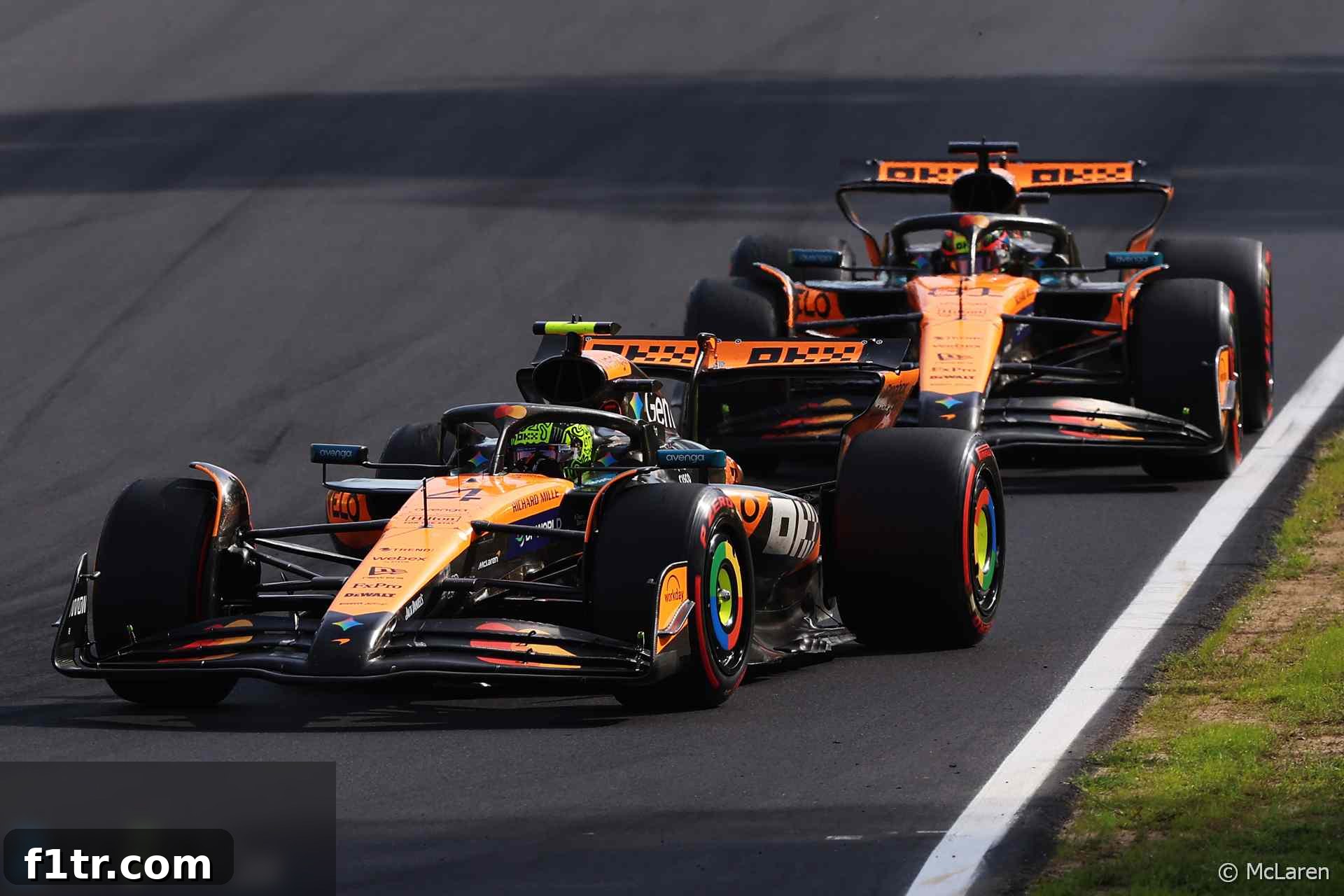
The 2023 Formula 1 season, while ultimately dominated by Verstappen, was punctuated by intense rivalries and strategic maneuvers further down the field. One particular incident at the Italian Grand Prix ignited significant discussion, involving McLaren drivers Oscar Piastri and Lando Norris. During a crucial phase of the race, Norris faced the risk of losing vital points to Piastri after a slightly compromised pit stop briefly placed him behind his teammate. McLaren, aiming to uphold a pre-race agreement to maintain the “original running order” – a strategy designed to manage the competitive threat from Charles Leclerc behind them – issued a controversial instruction. Piastri, a promising rookie who was making a strong impression, complied, allowing Norris to regain his position.
This decision, while seemingly a minor procedural adjustment, carried significant weight, particularly for Norris, who was engaged in a spirited championship battle within the constructors’ standings and against other midfield competitors. Max Verstappen, the reigning world champion, wasted no time in offering his candid assessment of the situation. When directly asked whether he would have obeyed such a team order, his response was immediate and unequivocal: “Certainly not. If you do that once without a clear reason, you sell your soul. The team can then do whatever it wants with you.” This powerful statement encapsulates Verstappen’s philosophy of fierce independence and unwavering personal ambition. For a driver of his caliber, relinquishing a legitimately earned track position is anathema to the very essence of competitive racing. He further emphasized the gravity of Piastri’s compliance, reminding everyone: “And let’s not forget: Piastri was right in the middle of the title fight.” Indeed, Piastri, despite being a rookie, was demonstrating exceptional pace and was a key player in McLaren’s resurgence, making every point valuable for his personal trajectory and the team’s overall performance.
The Ethical Tightrope: Loyalty vs. Ambition in F1
Verstappen’s comments bring into sharp focus a perennial dilemma that has long plagued Formula 1: the inherent conflict between team loyalty and individual driver ambition. Teams invest colossal resources in their drivers, naturally expecting them to act in the collective best interest, especially when championship points, financial bonuses, or strategic advantages are at stake. However, for a driver, particularly one like Piastri who was demonstrating immense promise and consistently outperforming expectations, being asked to surrender a hard-won position can be a deeply personal and potentially damaging experience. It challenges the very competitive instinct that propels them to the top echelon of motorsport, where every millisecond and every track position is fought for with unwavering intensity.
The history of Formula 1 is replete with contentious team order incidents that have sparked outrage among fans and raised profound questions about sporting integrity. Infamous moments, such as Rubens Barrichello being forced to yield to Michael Schumacher at the 2002 Austrian Grand Prix, remain vivid in the sport’s collective memory. While McLaren’s instruction to Piastri was framed within the context of a pre-agreed strategic plan to counter a rival’s threat, the immediate impact was a tangible loss of track position and potential points for Piastri. Verstappen’s strong reaction suggests that for elite drivers, maintaining their competitive edge and fighting for every advantage is paramount, even when it involves a teammate. Such moments can define a driver’s perceived strength and their standing within the paddock.
The implication of “selling your soul,” as articulated by Verstappen, is that once a driver compromises their individual battle for a team’s directive without an absolutely compelling justification, they risk losing a degree of autonomy and control over their own career trajectory within the team. It can inadvertently set a precedent that might undermine their long-term perceived competitiveness and decision-making authority. At that stage of the season, Piastri was performing at a remarkably high level, often outqualifying and outracing his more experienced teammate, making the decision to obey an even more significant moment in his nascent career. Verstappen, by stark contrast, has consistently built his championship legacy on prioritizing his own performance and refusing to yield, a philosophy that has ultimately brought unprecedented success to Red Bull Racing.
While Verstappen characteristically maintains a strict policy of non-interference in the internal affairs of rival teams, he couldn’t resist a pointed observation regarding his own capabilities. When asked hypothetically if he would have secured the championship significantly earlier had he been driving for McLaren, he agreed it was “correct” to assume so. He swiftly added, “But I never really interfere in my rivals’ internal issues. I can always give them a fighting answer on track.” This statement powerfully encapsulates his core belief that the most effective and definitive way to address any perceived injustice or strategic misstep is through unparalleled performance and dominance on the circuit – a philosophy that has undeniably fueled his record-breaking success and established him as one of Formula 1’s all-time greats.
Beyond the Main Event: Verstappen’s Unwavering Critique of F1 Sprint Races
Shifting from the internal politics of team strategy to the broader structure of the race calendar, Max Verstappen also holds firm and well-known opinions on Formula 1’s relatively new sprint race concept. Despite having comprehensively dominated the sprint format since its inception, securing 13 victories out of the 24 sprint races held – a tally greater than all his rivals combined – Verstappen remains an unyielding critic. His track record in these shorter Saturday contests is undeniably stellar, yet his sentiment is clear and consistent: “The six sprints do not give me any feelings of happiness.”
Disruption, Disinterest, and the Toll on Team Personnel
Verstappen’s reasons for disliking the sprint format are multifaceted, extending far beyond mere personal preference to touch upon fundamental aspects of the sport’s ethos and operational realities. Firstly, he frequently finds these “unnecessary Saturday appearances” to be “boring.” Unlike the main Grand Prix on Sunday, which offers complex strategic layers, intricate tire management challenges, and the dramatic ebb and flow of a longer race distance, sprint races, in his view, often devolve into predictable processions. With fewer laps, a reduced scope for creative strategy, and drivers generally less inclined to take significant risks due to the looming threat of compromising their main race, the entertainment value can be considerably diminished.
Secondly, and arguably more critically for the overall integrity and flow of a Grand Prix weekend, Verstappen contends that sprints “disrupt the normal build-up for our real show on Sunday.” The traditional Formula 1 weekend structure is meticulously crafted: multiple practice sessions for setup optimization, qualifying to determine the grid, and then the crowning event on Sunday. Sprint weekends drastically compress this, often leading to only a single practice session before immediate qualifying for the sprint, and then the stringent parc fermé conditions that lock in car setups. This reduced preparation time can compromise optimal car performance, limit strategic development throughout the weekend, and for purists, removes a cherished element of F1’s technical and tactical appeal.
Beyond the sporting and strategic arguments, Verstappen powerfully shines a light on a critical issue that often goes unnoticed by casual fans: the significantly increased burden on team personnel. “And something most fans forget: this constant workload is particularly stressful for the mechanics. In most teams they are already working in two shifts.” This insight is absolutely vital. Formula 1 teams operate under relentless pressure, enduring rigorous travel schedules, exceptionally long hours at the track, and the physically demanding nature of preparing and maintaining highly complex machinery. Adding sprint races to the calendar effectively creates two competitive events instead of one, which dramatically amplifies this workload. Mechanics frequently work late into the night, travel extensively across time zones, and face the constant stress of ensuring absolute perfection under extraordinarily tight deadlines. The sprint format, by demanding additional competitive sessions, pushes these dedicated individuals further, potentially leading to burnout, compromising mental and physical welfare, and straining the human resources of the teams.
A Format Divided: F1’s Vision vs. Reality on the Ground
Formula 1 initially introduced the sprint format with the explicit and commendable goal of increasing fan engagement, offering more competitive action throughout the weekend, and attracting new demographics to the sport. The underlying idea was to create more “meaningful” sessions on both Saturday and Sunday, ensuring that every day of a Grand Prix weekend held significant appeal. However, as Verstappen’s consistent and vocal critique illustrates, the implementation and execution of the sprint format have been met with a wide spectrum of reactions, particularly from those intimately involved in the sport at its highest level.
While a segment of the fanbase undoubtedly appreciates the added racing spectacle, many others, including prominent figures like Verstappen, argue that sprint races dilute the prestige and unique intensity of the main Grand Prix. They contend that the format often fails to offer enough genuine excitement or strategic depth to truly justify the significant logistical, financial, and human cost it imposes. The debate surrounding sprint races continues to rage within the F1 community, with the sport’s governing bodies constantly evaluating the format and attempting tweaks to enhance its appeal and address criticisms. Yet, for a champion like Max Verstappen, who embodies the relentless pursuit of perfection and the unadulterated purity of racing, the current sprint format simply falls short of adding true, unquestionable value to the pinnacle of motorsport.
Conclusion: The Champion’s Pursuit of Sporting Integrity
Max Verstappen’s candid and consistent observations on both team orders and the sprint race format reveal a driver profoundly committed to the unadulterated essence of Formula 1. His steadfast belief that drivers should fiercely compete for every position, coupled with his skepticism towards formats that he perceives as diluting the sport’s core integrity or unfairly burdening its dedicated workforce, underscores a consistent philosophy centered on genuine competition and meritocracy. As Formula 1 continues its dynamic evolution, striving to balance commercial imperatives with the foundational principles of sporting purity and driver achievement will remain a critical challenge. The invaluable insights of champions like Verstappen offer a compelling compass, serving as a powerful reminder that at its heart, Formula 1 thrives on authentic competition, strategic brilliance, and the extraordinary human endeavor that collectively fuels its spectacular global show.
Formula 1 Related Articles
- The ‘throwback weekend’ is back in fashion. But it’s a flawed concept – especially for F1
- Is Formula 1’s double race cancellation a blessing in disguise?
- Todt admits Schumacher crashed on purpose – but did it really cost him two titles?
- 25 of the most memorable radio exchanges from the ‘Max and GP show’
- FIA explains next steps after first meeting to discuss fixes for 2026 F1 rules
Browse all Formula 1 articles