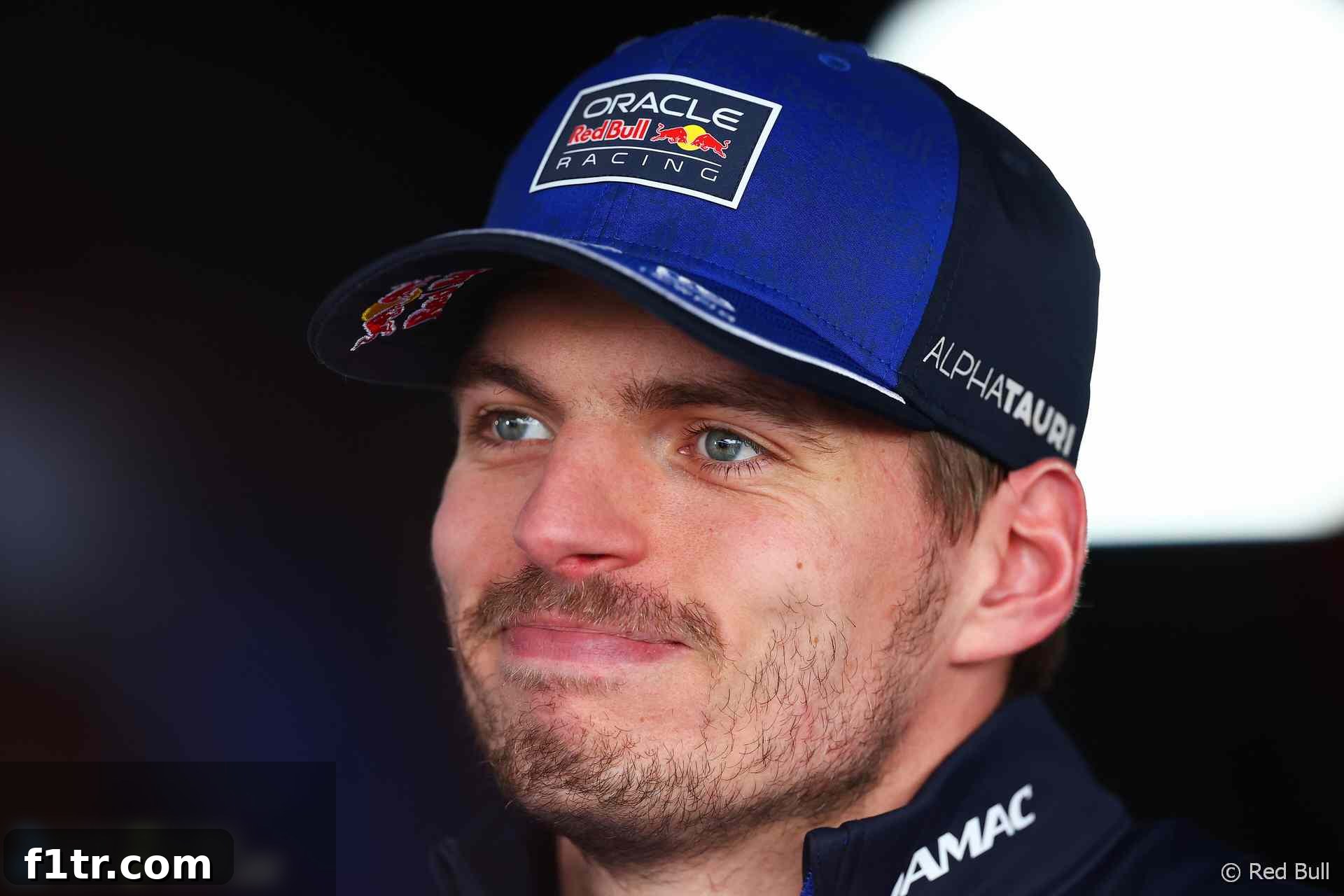
In a candid and revealing interview, Max Verstappen, the formidable Red Bull Racing driver, has ignited a significant debate within the Formula 1 community by hinting at a potential departure from the sport as early as the end of the current season. His burgeoning dissatisfaction stems primarily from a profound disconnect with the current generation of F1 cars and the resulting racing dynamics, which he increasingly finds to be ‘unexciting’ and ‘anti-driving’. This bold stance from one of motorsport’s most prominent figures underscores a growing concern among drivers about the direction of the pinnacle of racing.
Verstappen’s Growing Disenchantment with Modern F1
Verstappen’s comments are not new; he has consistently voiced his frustrations regarding the evolution of Formula 1 machinery. He believes the current regulations, intended to foster closer racing, have inadvertently created cars that diminish the raw thrill and skill requirement he associates with top-tier motorsport. When pressed by the BBC about the possibility of leaving F1 if his unhappiness persists, Verstappen’s response was unequivocal: “That’s what I’m saying. I’m thinking about everything inside this paddock.”
His reflection delves deeper than mere performance anxiety, touching upon a fundamental re-evaluation of his priorities. “You just think about: ‘is it worth it, or do I enjoy being more at home with my family?'” he articulated. “Seeing my friends more when you’re not enjoying your sport?” This sentiment speaks volumes, indicating that the emotional and personal toll of competing in a sport he no longer finds fulfilling could outweigh the considerable professional benefits and global prestige. For a driver whose career has been defined by his relentless pursuit of victory and an almost primal love for pure racing, such introspection suggests a critical juncture in his relationship with Formula 1.
Beyond Competition: A Question of Passion and Purity of Racing
Mercedes team principal Toto Wolff, a vocal proponent of F1’s current rulebook, had previously suggested that Verstappen’s criticisms were merely a byproduct of his car’s diminished competitiveness. However, Verstappen vehemently refuted this claim, emphasizing that his concerns transcend the immediate battle for podiums and championship points. “I can easily accept to be in P7 or P8 where I am,” he asserted, highlighting his realistic understanding of racing’s ebb and flow. “Because I also know that you can’t be dominating or be first or second or whatever, fighting for a podium every time. I’m very realistic in that and I’ve been there before. I’ve not only been winning in F1.”
This perspective is crucial. Verstappen’s career has seen its share of challenging seasons and less competitive machinery, yet his passion remained undimmed. His current discontent, therefore, is not rooted in a temporary dip in form or a lack of personal success. Instead, it stems from a more fundamental issue: the intrinsic joy of driving itself. “But at the same time when you are in P7 or P8 and you are not enjoying the whole formula behind it, it doesn’t feel natural to a racing driver,” he explained. He views the current racing style as “anti-driving,” a term that powerfully encapsulates his frustration with cars that seem to restrict, rather than enable, a driver’s natural instincts and skill. This distinction reinforces that for Verstappen, the ultimate reward in Formula 1 is not solely financial gain or even trophies, but the unadulterated pleasure and challenge of mastering a truly engaging racing machine. “And of course you can look at it and make a lot of money. Great. But at the end of the day it’s not about money any more because this has always been my passion.”
The Japanese Grand Prix: A Vivid Illustration of F1’s Challenges
The recently concluded Japanese Grand Prix served as a stark, real-time illustration of the issues Verstappen has been highlighting. His experience at Suzuka, a circuit celebrated for its demanding layout and flowing corners, seemed to crystallize his growing disillusionment. He openly admitted to “counting them off” – the laps until the race ended – a telling sign of a driver far from fully immersed in the thrill of competition. “Fifteen to go, ten to go, five to go. Come on, yes, it’s over.”
The race saw Verstappen making some initial progress, gaining three positions in the opening laps. However, his subsequent efforts to overtake Pierre Gasly’s Alpine became a protracted and frustrating battle, epitomizing the difficulties of close-quarters racing with the current cars. “I was behind him in China as well, though in China I was behind a lot of cars,” Verstappen recalled. “But with these cars you just cannot overtake properly.” This isn’t to say overtaking is impossible, but rather that it comes at a significant cost, often draining the crucial energy recovery systems (ERS) and leaving a driver vulnerable on subsequent straights. “You can overtake, but then you have no battery left on the next straight. I try to laugh about it, because there is no point getting frustrated all the time. It is obviously not how it should be.” This cycle of gaining a position only to immediately lose it due to energy management, as he experienced on lap seven with Gasly, points to a fundamental flaw in the racing spectacle, turning what should be exhilarating wheel-to-wheel combat into a strategic energy conservation exercise.
Technical Realities and the Art of Overtaking
Verstappen’s observations shed light on the complex technical factors that hinder overtakes in modern Formula 1. The current aerodynamic philosophy, while designed to allow cars to follow more closely, still creates a significant amount of ‘dirty air’ for the following car, reducing its grip and making it difficult to maintain speed through corners. Coupled with the powerful hybrid ERS, which drivers must meticulously manage throughout a lap, an overtake becomes a delicate balance of timing, energy deployment, and tire preservation. A surge of power to pass one car can leave a driver defensively compromised against the next, or simply without the necessary boost for subsequent straight-line speed.
For a driver of Verstappen’s caliber, renowned for his aggressive yet precise overtaking maneuvers, the inability to execute these moves effectively and consistently is profoundly frustrating. It transforms the art of racing into a more calculated, almost chess-like exercise, stripping away some of the spontaneity and raw instinct that defines the sport’s greatest battles. The ‘anti-driving’ label, therefore, captures this feeling of being constrained by the machinery and regulations, rather than empowered by them.
Red Bull’s Challenge: Addressing Driver and Car Limitations
Verstappen’s dissatisfaction extends to the performance of his Red Bull car, particularly following a package of upgrades introduced prior to the Japanese Grand Prix. Despite these enhancements, he found little improvement in the car’s balance and drivability during the race compared to qualifying. He underscored the urgency for significant improvements, stating that the team needs to enhance the car “quite a lot” before the next race in Miami, a mere five weeks away, “because we have got plenty of problems.”
“Hopefully it all becomes a bit more driveable, because the race was the same as qualifying. I can move forward a bit, but that is about it.” This direct feedback puts immense pressure on Red Bull Racing to not only improve their car’s outright pace but also its inherent characteristics to make it more amenable to Verstappen’s aggressive driving style and the demands of modern F1 racing. Team principal Laurent Mekies acknowledged the task ahead, stating that the race “revealed a lot more about where our car’s current limitations are.” He emphasized the importance of data gathering from both Max and Isack Hadjar completing the race distance, concluding, “Of course, we have a lot of work to do and we now have a few weeks to try and find some fixes for those limitations.” The convergence of a disgruntled star driver and acknowledged car deficiencies presents a significant challenge for the team as they navigate the remainder of the season.
Broader Implications for Formula 1 and its Future
Max Verstappen’s outspoken comments carry considerable weight, resonating far beyond his immediate team or championship aspirations. As one of the sport’s most electrifying talents, his threat to withdraw serves as a potent warning to Formula 1’s governing bodies and stakeholders. It compels a re-evaluation of the current regulatory framework and its impact on the fundamental enjoyment of racing for drivers and spectators alike. If top drivers find the racing unfulfilling, it poses a severe threat to the sport’s long-term appeal and authenticity. It raises questions about whether the pursuit of technical parity and spectacle (through artificial means like DRS) might inadvertently stifle the very essence of competitive driving skill and passion.
The conversation Verstappen has initiated extends to the very identity of Formula 1. Should the sport prioritize technological innovation at the expense of pure, unadulterated racing? Are the current regulations fostering genuine competition, or merely creating a more predictable, process-driven form of motorsport? These are critical inquiries that the sport must confront, especially as it looks towards future rule changes and strives to captivate new generations of fans. The threat of losing a driver of Verstappen’s caliber underscores the urgent need for Formula 1 to ensure that its foundational appeal – the thrilling blend of human skill and cutting-edge machinery – remains at its core.
As the Formula 1 circus prepares for the Miami Grand Prix, all eyes will be on Verstappen and Red Bull. The coming weeks will not only test the team’s ability to extract more performance from their car but also the sport’s capacity to address the deeper philosophical questions raised by one of its biggest stars. Whether Max Verstappen’s frustrations are a transient phase or a harbinger of a more profound shift in his relationship with Formula 1 remains to be seen, but his words have undoubtedly sparked a vital dialogue about the future direction of motorsport’s premier category.