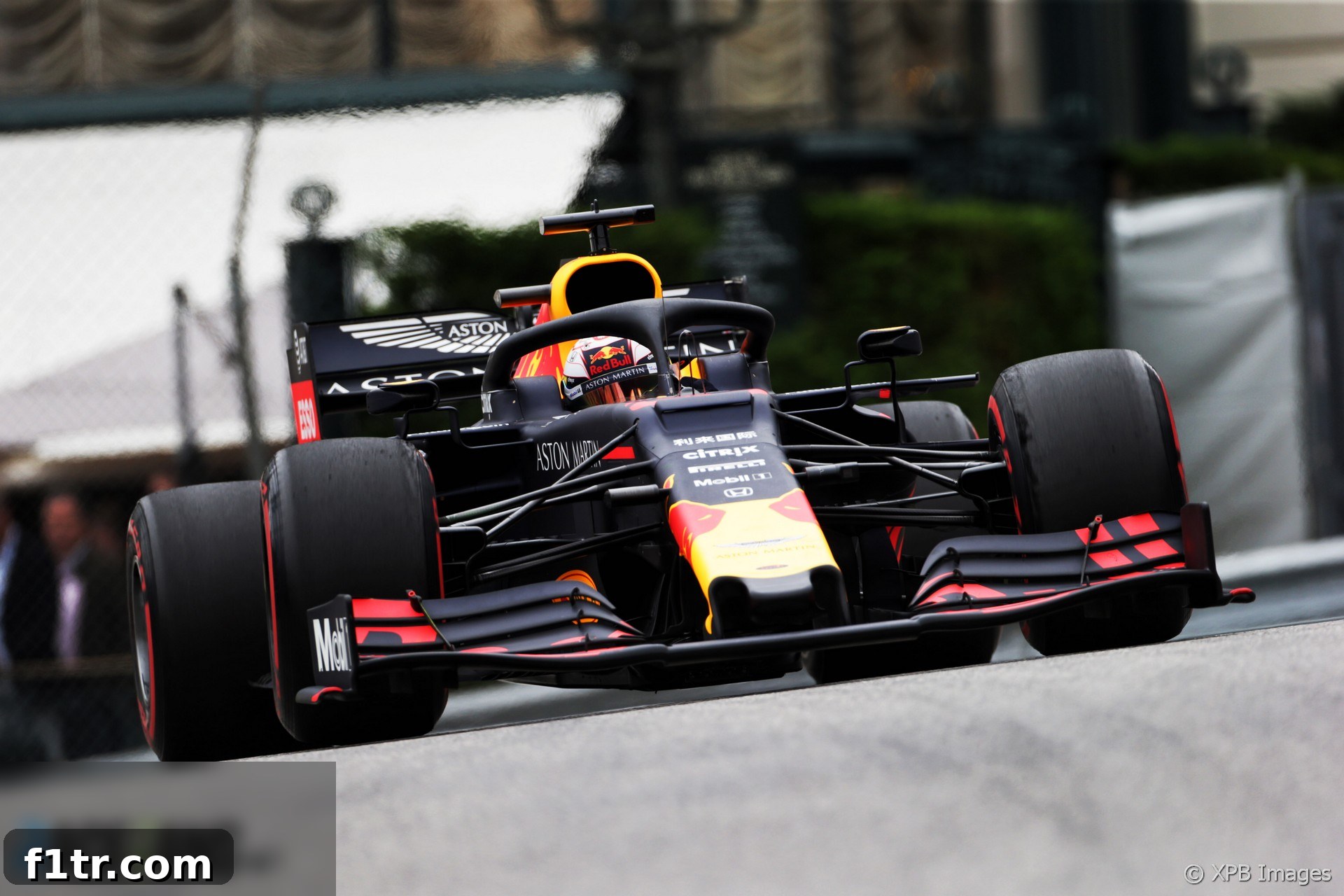
Verstappen Eyes Ferrari in Monaco, Acknowledges Mercedes’ Dominance
The iconic streets of Monte Carlo once again played host to the pinnacle of motorsport as teams and drivers prepared for the 2019 Monaco Grand Prix. As Friday’s practice sessions concluded, the paddock buzzed with the familiar assessments of pace and potential. Among the most candid was Red Bull Racing’s Max Verstappen, who, despite showing promising speed, conceded that Mercedes AMG Petronas seemed “too quick” to realistically challenge for victory. However, the tenacious Dutchman remained optimistic about his chances against the Scuderia Ferrari drivers, setting his sights on a strong performance.
Monaco, a circuit that rewards precision, bravery, and an impeccably balanced car, often brings unexpected twists. The initial Free Practice 1 session offered a glimpse of Verstappen’s raw talent, where he impressively split the dominant Mercedes pair, indicating that Red Bull’s RB15 possessed inherent strengths around the principality’s tight confines. This early showing fueled hopes that Verstappen could be a dark horse contender, especially on a track where driver skill can sometimes overshadow outright car performance.
Mercedes’ Unrelenting Pace: A Formidable Challenge
Mercedes, having enjoyed a near-flawless start to the 2019 season, arrived in Monaco with a significant performance advantage, and Friday’s running only served to underscore their formidable pace. By the close of Free Practice 2, the silver arrows had established a dominant lead, with over seven-tenths of a second separating them from the next quickest competitor. This substantial gap sent a clear message to the rest of the grid: beating Mercedes in Monaco would require something truly extraordinary.
“I think Mercedes is too quick,” Verstappen openly admitted, reflecting the sentiment shared by many in the paddock. The W10 chassis, coupled with Mercedes’ powerful engine, seemed perfectly suited to the unique demands of the street circuit, allowing their drivers to exploit every inch of the barriers. This consistent and significant margin of advantage across both practice sessions suggested that the German outfit had found a sweet spot, making them the undeniable benchmark heading into the crucial Saturday qualifying session.
For Verstappen and Red Bull, this meant a strategic shift. While outright victory might seem a stretch, securing the best possible position among the chasing pack became the immediate priority. The narrow, twisty nature of Monaco makes overtaking notoriously difficult, placing immense pressure on qualifying performance. Therefore, minimizing the gap to Mercedes and maximizing their position against Ferrari and other midfield contenders would be paramount for a successful race weekend.
Red Bull’s Setback and Resilient Outlook
Verstappen’s Free Practice 2 session was not without its dramas. A radiator leak, caused by debris flying into the airbox, forced him to sit out a significant portion of the session. In Monaco, where every lap is critical for building confidence and refining the car’s setup, losing track time can be a severe handicap. Data gathering, tire degradation analysis, and fine-tuning suspension settings all suffer when a driver is confined to the garage. However, the young Dutchman remained unfazed, believing his car held more potential than the afternoon’s limited running demonstrated.
“I think we are still quick,” Verstappen affirmed, despite the technical hiccup. “In the second practice, when everybody went onto their second set, we had a radiator leak because some debris flew into the airbox and damaged one of the radiators so we had to replace it. In general, it’s alright.” His calm assessment highlighted not only his confidence in the team’s ability to rectify issues swiftly but also his unwavering belief in the core performance of the RB15.
Upon his return to the track, Verstappen was heard over team radio expressing concerns about his car’s balance. He later clarified that this was a deliberate part of their experimentation process. “We did a set-up change while changing the radiator to see if that works or not,” he explained. “It didn’t work but I know that if we go back to the other set-up it’s not too bad.” This insight offers a window into the intricate world of F1 setup work during practice. Teams often use these sessions to push the boundaries of car configuration, exploring different philosophies to unlock hidden performance, even if it means momentarily compromising balance.
“The balance is OK,” he added, addressing the broadcast comments. “They only broadcast, of course, the negative things at the end. But in general it was alright. Of course, you try different things in practice. Some work, some don’t so it’s alright.” This pragmatic view underscores the iterative nature of race weekend preparation. Drivers and engineers continuously experiment, gather data, and refine their approach, understanding that not every modification will yield positive results. Verstappen’s ability to compartmentalize these experimental setbacks and maintain a positive outlook is a testament to his experience and mental fortitude.
The Ferrari Challenge: Verstappen’s Immediate Target
While Mercedes seemed to be in a league of their own, the battle for the “best of the rest” position was intensely competitive, with Ferrari expected to be Red Bull’s primary adversaries. Verstappen explicitly stated his ambition to surpass the Ferrari drivers, namely Sebastian Vettel and Charles Leclerc, who were also fighting for track position and crucial qualifying spots. The gap between Mercedes and the second-fastest car on Friday was significant, and Verstappen aimed to “fill that up,” positioning himself as the leading challenger behind the silver arrows.
Monaco’s unique characteristics often play into Red Bull’s hands. The high-downforce, low-speed corners of the street circuit traditionally suit the agile chassis that Red Bull engineers produce. With their car showing signs of strong performance, especially in FP1, the focus for Saturday would be on extracting every ounce of speed from the RB15, particularly during the single-lap qualifying runs. Beating Ferrari would not only be a moral victory but also strategically vital for the race, given the near-impossibility of overtaking.
The Scuderia Ferrari team had a mixed start to the 2019 season, often struggling to match Mercedes’ consistent pace. However, their car possessed significant straight-line speed, which, while less critical in Monaco, could still play a role in certain sections. The internal rivalry between Vettel and Leclerc also added an extra layer of intrigue, as both drivers pushed hard to establish dominance within their team. Verstappen’s target was clear: to leverage Red Bull’s chassis strengths and his own aggressive driving style to outmaneuver the Prancing Horse.
Looking Ahead: The Road to Qualifying and Race Day
The insights gained from Friday’s practice sessions set the stage for a thrilling Saturday in Monaco. Qualifying, often described as 80% of the race outcome here, would be absolutely critical. Verstappen’s lost track time in FP2 meant that Red Bull had less data to analyze, but his confidence in reverting to a known good setup suggested they had a clear direction. The team’s engineers would work tirelessly overnight to perfect the car’s balance, maximize tire performance, and optimize the engine’s power delivery for the unique demands of the street circuit.
For Max, extracting absolute maximum performance from every corner in qualifying would be the key. His aggressive yet precise driving style is well-suited to the unforgiving nature of Monaco, where brushing the barriers is often necessary to find the limit. A strong qualifying performance, ideally ahead of both Ferraris, would put him in an excellent position to capitalize on any opportunities that arise during the Grand Prix, whether through strategy or the inevitable safety car periods that frequently punctuate races in Monaco.
While the prospect of challenging Mercedes directly might seem out of reach based on Friday’s evidence, Verstappen’s determination to lead the charge behind them remains undimmed. His resilient spirit, combined with Red Bull’s proven ability to perform on tight circuits, means that he cannot be discounted. The 2019 Monaco Grand Prix promised a captivating strategic battle, where precision, adaptability, and a touch of daring would ultimately define success.
2019 F1 season
- Crying in the Melbourne car park at 2019 grand prix was my career low – Ocon
- McLaren Racing reports reduced £71 million loss in 2019
- Kvyat: Hockenheim podium last year was “my biggest achievement” so far
- How the FIA’s new encrypted fuel flow meter targets Ferrari’s suspected ‘aliasing’ trick
- “He smashed my office door”: 23 must-see moments from ‘Drive to Survive’ season two
Browse all 2019 F1 season articles