The Flexible Wing Controversy: Verstappen Demands FIA Clarity Amid McLaren’s Resurgence
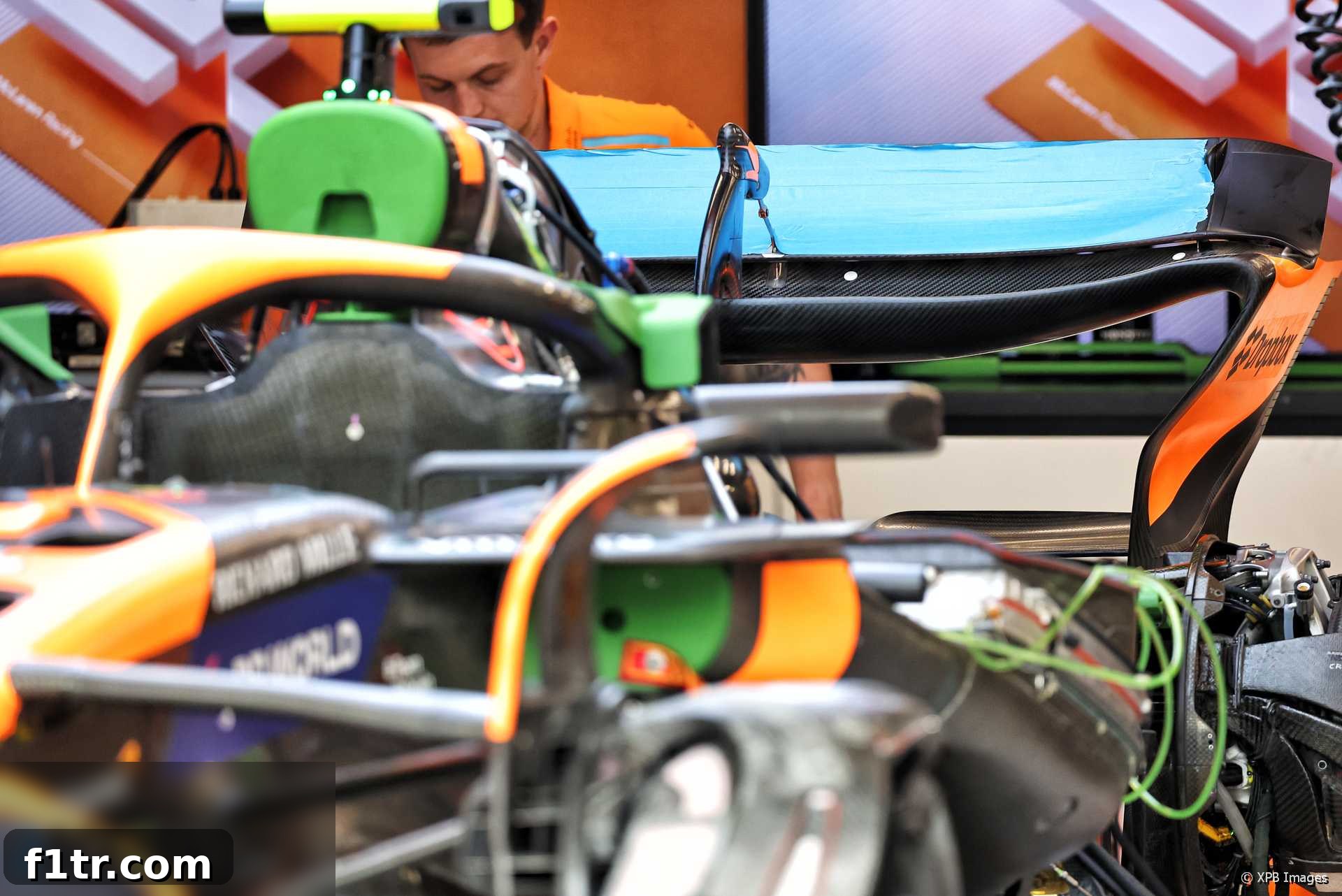
The exhilarating world of Formula 1 is often a battleground not just for drivers and teams, but also for engineers pushing the boundaries of aerodynamic design. The 2024 season has brought renewed scrutiny to one such area: flexible bodywork. Following the Azerbaijan Grand Prix, Red Bull Racing’s reigning champion, Max Verstappen, publicly voiced his concerns regarding McLaren’s controversial rear wing design, asserting that it wasn’t the first time the Woking-based outfit had utilized the suspected design. His comments have reignited calls for the FIA, Formula 1’s governing body, to provide definitive clarification on the legality of such innovative, yet potentially rule-bending, aerodynamic components.
Verstappen’s Observations and the Call for Definitive Clarification
The heart of the controversy lies in footage from the recent Baku race, which appeared to show the DRS (Drag Reduction System) flap on the McLaren MCL38 subtly flexing or opening slightly at extremely high speeds. This dynamic deformation under peak aerodynamic loads is a phenomenon that immediately catches the eye of rival teams and drivers, as it could confer a significant performance advantage. A wing that flexes strategically could reduce drag on long straights, allowing for higher top speeds, while maintaining rigidity in corners to provide crucial downforce.
Verstappen, who finished fifth in the Azerbaijan Grand Prix, confirmed he had reviewed the footage, stating unequivocally, “It’s quite clear, of course, that it’s moving, like, it’s at speed.” His directness underscores the perceived obviousness of the issue from a competitor’s perspective. While acknowledging the potential ingenuity behind such a design – “It might be smart, might not be smart” – Verstappen firmly placed the onus on the FIA. “At the end of the day it’s up to the FIA to decide if it’s legal or not,” he added, emphasizing that the governing body’s ruling is paramount.
Crucially, Verstappen also highlighted that Baku was not an isolated incident. “Baku is not the first time that it was used, so there were other tracks as well,” he revealed, suggesting a pattern of use throughout the season. This broader context makes the need for clarification even more pressing, as it implies a systemic design approach rather than a one-off anomaly. The Red Bull driver extended his concerns beyond just the rear wing, advocating for a comprehensive review of flexible bodywork regulations across the entire car. “But that’s not only on the rear wing it’s the front wing as well. What is allowed? How much is it allowed to bend? All these kind of things, right? So we just have to wait and see from our side.” This comprehensive call for clarification highlights the intricate balance between engineering innovation and adherence to technical regulations, a balance that can often become a contentious point in a sport driven by marginal gains.
The FIA’s Stance and the Enduring Challenge of Aerodynamic Compliance
In response to the growing whispers and direct comments from drivers like Verstappen, the FIA issued a statement indicating they are actively “considering whether to revise its rules on flexible bodywork.” This acknowledgement from the governing body signals that the issue is on their radar and potentially warrants a deeper look into the efficacy of current testing methodologies. Historically, Formula 1 regulations have stipulated strict limits on the flexibility of aerodynamic components, primarily enforced through static deflection tests. These tests involve applying specific loads to various parts of the car, such as wings, to ensure they do not bend beyond a prescribed limit. The FIA confirmed on Thursday that, according to current protocols, “all teams are considered to comply with the rules if their wings pass deflection tests.” Furthermore, they stated that no official complaint had been lodged against any team’s design.
However, the challenge with flexible bodywork has always been the discrepancy between static tests conducted in a garage and the dynamic forces experienced on track at speeds exceeding 300 km/h. A component might pass a static test but exhibit significant deformation under the immense aerodynamic pressures of high-speed corners or DRS activation. This gap in regulatory oversight is what teams often exploit, leading to a continuous cat-and-mouse game between engineers pushing the envelope and regulators striving to maintain a level playing field. The history of F1 is replete with examples of flexible bodywork controversies, from Mercedes’ ‘bendy’ rear wing in 2021, which garnered the infamous ’50K touch’ incident involving Verstappen, to earlier instances of Red Bull and Ferrari facing scrutiny for allegedly flexible front wings. These past episodes underscore the difficulty the FIA faces in defining and enforcing ‘flexibility’ in a sport where microscopic gains can translate into significant performance advantages.
The potential revision of rules suggests the FIA might introduce more dynamic testing methods or tighten the existing static deflection limits. This would be a substantial undertaking, requiring careful consideration to avoid penalizing legitimate design solutions while effectively curbing those that contravene the spirit of the regulations. The absence of an official complaint, while noted by the FIA, does not diminish the internal discussions and suspicions among rival teams, which often prefer to exert pressure through public statements and informal channels rather than formal protests that can escalate tensions.
McLaren’s Defense and the Inevitability of Scrutiny for Front-Runners
On the other side of the garage, McLaren, riding a wave of impressive performance, maintains absolute confidence in the legality of their design. Oscar Piastri, who secured a victory for McLaren at the Azerbaijan Grand Prix, unequivocally stated, “It’s legal.” He elaborated, “As long as it passes all the tests – we get tested a lot – and it passes.” Piastri’s calm reassurance reflects McLaren’s official position that their car, including the rear wing, has undergone rigorous checks and conforms to all current FIA regulations. He also sought to downplay the wing’s individual impact on their overall performance, insisting, “It’s certainly not the magic bullet for why we’re competitive.” This highlights the holistic nature of F1 car development, where success is the sum of countless incremental improvements across all areas, not just one component.
McLaren’s recent resurgence has indeed been remarkable. While Red Bull, previously dominant, hasn’t clinched a victory in any of the last seven rounds, McLaren has secured three wins in the last five events, demonstrating a dramatic shift in the competitive landscape. This reversal of fortunes naturally draws attention, and Piastri acknowledged that such scrutiny is an inherent part of being a leading team in Formula 1. “I think you look at any car that’s been competitive and it always gets scrutinised to the highest level,” he remarked. He cited historical examples, reinforcing that this intense examination is not unique to McLaren. “You look at the Mercedes a few years ago with their rear wing and the infamous ’50K touch’. You look at a lot of the teams trying to work out Red Bull’s DRS effect for the last couple of years. We’ve seen flexi front wings in the past and all sorts.”
Piastri articulated that this constant observation and analysis is simply “natural” and not a personal attack on McLaren. He believes it stems from a universal curiosity among competitors to understand where rivals are finding performance advantages. “So I think naturally there’s going to be scrutiny of just people curious to know why your car is competitive. I certainly don’t think it’s personal to us,” he clarified. He further emphasized that McLaren themselves are engaged in the same process: “All the other teams are trying to find [performance] including ourselves, we’re not just thinking that we’re the best out there and we don’t need to learn anything from anyone else. We’re always looking at the other teams as well.” The increased visibility of their car, particularly with rival teams having onboard cameras fixed on their rear wing for extended periods, inevitably amplifies this scrutiny. “When you’re at the front and when you have a car within a second of you for 30 laps and the rear wing camera on there for 30 laps, then naturally people are going to notice it more too,” Piastri concluded.
Broader Implications for Formula 1 and the Championship Battle
The flexible wing debate extends beyond McLaren and Red Bull; it touches upon the core principles of fair competition and technological innovation in Formula 1. The sport prides itself on being the pinnacle of motorsport engineering, yet it must operate within a meticulously defined set of regulations. If ambiguities exist or if current testing methods are insufficient to capture dynamic aerodynamic behaviors, it undermines the integrity of the competition and fuels distrust among teams. The FIA’s forthcoming clarification, whether through a new Technical Directive or revised regulations, will have significant ramifications for car design and the competitive balance for the remainder of this season and beyond.
A tightened regulatory framework could force teams to redesign components, potentially impacting their performance trajectory. Conversely, if the current design is definitively deemed legal, it could encourage other teams to explore similar aerodynamic solutions, leading to an ‘arms race’ of flexible bodywork development. The outcome of this debate could significantly influence the championship battle, especially in a season where the performance gap between the top teams appears to be narrowing. As Max Verstappen and Oscar Piastri both highlighted, clarity is key – not just for McLaren’s specific design, but for all teams to understand the precise boundaries within which they must operate when designing and developing their cars. The FIA’s challenge is to balance the spirit of innovation with the imperative of equitable competition, ensuring that the spectacle on track remains a fair fight determined by driver skill and true engineering prowess, not loopholes in the rulebook.
As the F1 season progresses, all eyes will be on the FIA to see how they address this complex technical and sporting issue. The decision will undoubtedly shape the narrative and potentially the outcome of what promises to be an enthralling championship fight.
Miss nothing from RaceFans
Get a daily email with all our latest stories – and nothing else. No marketing, no ads. Sign up here:
2024 Azerbaijan Grand Prix
- Verstappen: “Important” for FIA to clarify legality of McLaren’s ‘mini DRS’ wing
- Hamilton explains suspension set-up change behind “miserable” Baku weekend
- Piastri needs “crazy” results to become title contender despite Baku win
- FIA taking new look at flexing bodywork amid intrigue over McLaren’s rear wing
- Norris knew Verstappen broke VSC rules in Baku because he did the same in Melbourne
Browse all 2024 Azerbaijan Grand Prix articles