The exhilarating world of Formula 1 is not just about the nineteen seasoned drivers battling it out on track; it’s also a high-stakes arena for a vast array of junior talent, constantly vying for their chance at glory. Discussions perpetually revolve around which promising Formula 1 junior driver will be the next in line for a promotion, whether it’s a coveted test, reserve, or ultimately, a full-time race seat. Equally, significant attention is drawn when young hopefuls are dropped from their backing programs or choose to part ways with their sponsors, highlighting the brutal competitive nature of motorsport’s talent pipeline.
While the ultimate goal for these junior drivers is an F1 seat, many also serve a vital role as a marketing tool for their respective teams. These academies often nurture a wide pool of talent, showcasing the brand’s commitment to future generations of racing. However, it’s at the pinnacle of junior single-seater racing – typically Formula 2 and Formula 3 – where the true pressure mounts. Here, strong on-track performances are expected to translate directly into tangible F1 opportunities, defining career trajectories and making or breaking dreams.
Alpine, for instance, has faced considerable criticism regarding its management of junior talent, most notably with the reigning Formula 2 champion, Oscar Piastri. The young Australian’s private F1 test program initially only materialized due to the financial backing of a fellow junior driver, rather than a direct investment from the team itself. His eagerly anticipated free practice debut was delayed for so long that Piastri eventually opted to seek a race seat elsewhere, ultimately leading to a high-profile contractual dispute during the summer break. This saga underscored a broader challenge: how F1 teams effectively integrate and promote their most promising young drivers, and the potential pitfalls of mismanaging such valuable assets.
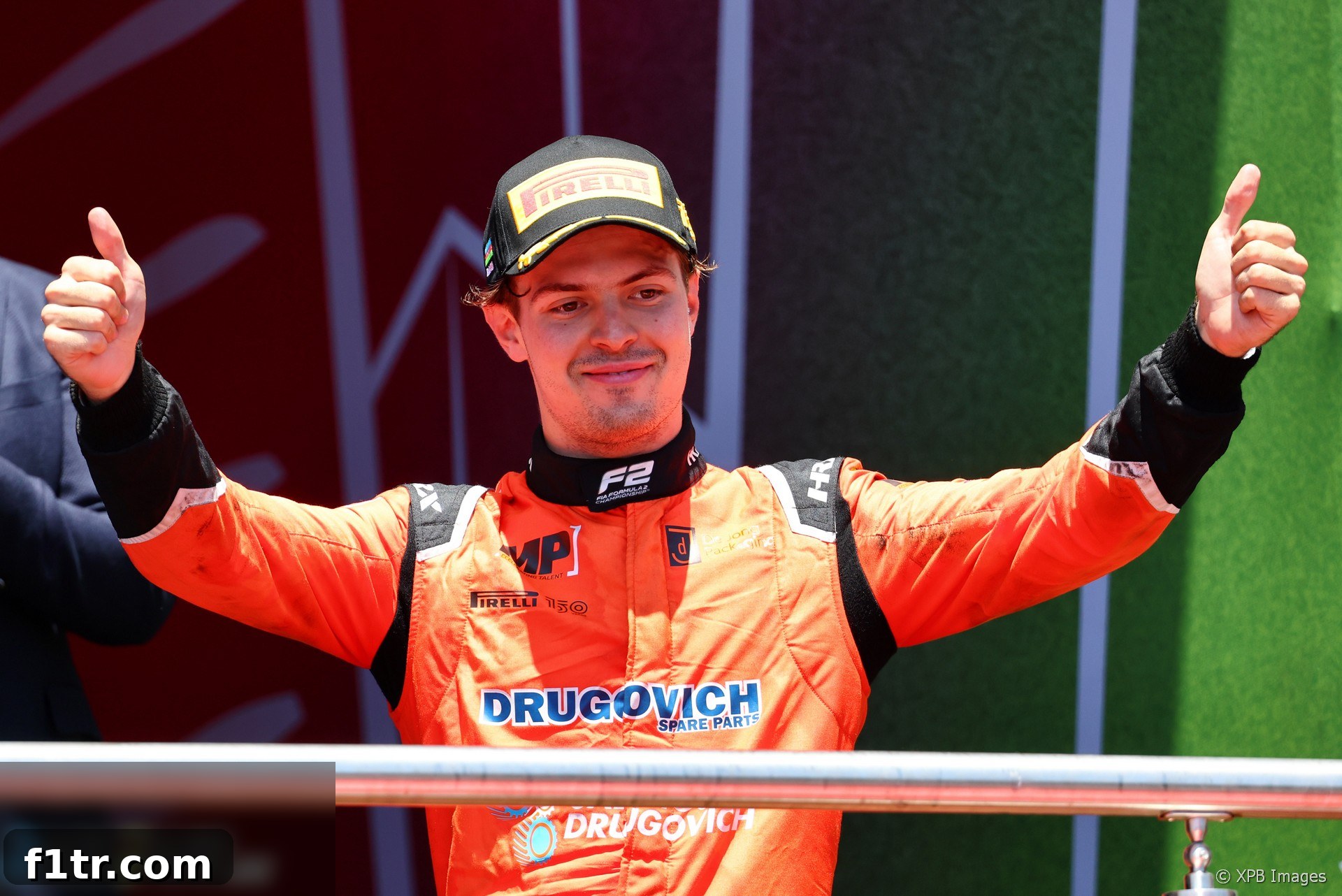
One exceptional talent who currently stands outside the traditional F1 affiliation structure is Felipe Drugovich, a potential successor to Piastri’s F2 crown. The 22-year-old Brazilian has emerged as a dominant force in the exceptionally long 14-event F2 season, leading the championship by a comfortable 21 points after ten rounds. Yet, despite his stellar performances, Drugovich has no formal ties to any Formula 1 team, a stark contrast to many of his peers.
This raises a pertinent question: have the ten Formula 1 teams simply overlooked a shining star amidst the hundreds of gifted young drivers competing today? The reality is more nuanced. Drugovich has, on multiple occasions this year, publicly expressed the benefits of his unattached status. This freedom of choice allows his management to explore a wider range of opportunities for 2023, not just within the F1 paddock but also in other premier single-seater categories like IndyCar. Reports suggest his team has actively pursued options, including a potential seat at Chip Ganassi Racing if Alex Palou’s planned transfer to McLaren SP proceeds.
Drugovich’s impressive resume undeniably marks him as one of the top drivers currently without connections to Formula 1. His seven F2 victories are a testament to his prowess, complemented by an utterly dominant 2018 Euroformula title, where he secured an incredible 14 wins in just 16 races. Prior to that, his deeply impressive 2017 ADAC Formula 4 season saw him narrowly miss out on the championship, further solidifying his reputation as a prodigious talent. However, his development hasn’t been without its twists. Noticeable weaknesses were identified during his Euroformula campaign, and his F2 journey hasn’t been a linear upward trajectory. After a starring rookie season with MP Motorsport in 2020, he moved to the highly-regarded Virtuosi team in 2021 but struggled to consistently deliver at the expected level, even as his then-teammate Zhou Guanyu secured an F1 graduation. This period prompts speculation: had Drugovich been part of an F1 junior program during his time at Virtuosi, would the structured support and pressure have helped him maximize his potential and improve as a driver? While we may never know the answer, his current form makes a compelling case for any F1 team to secure his services, ensuring he is race-ready should an F1 opportunity arise.
Beyond Drugovich, the feeder series are brimming with talent, many of whom could benefit immensely from shedding their free agent status, either for their individual careers or for the teams that choose to invest in them. The strategic acquisition of such drivers can provide a crucial advantage, offering future flexibility and strengthening a team’s long-term driver development pipeline.
One such promising prospect is the Brazilian-American F2 rookie Enzo Fittipaldi. His surname carries significant weight in motorsport, as he is the younger brother of Haas reserve driver Pietro Fittipaldi and the grandson of two-time Formula 1 world champion Emerson Fittipaldi. In 2022, Enzo has surprised many with a remarkably strong season, competing with the often-struggling Charouz team. Despite a challenging start where he failed to score points in the first five races, Fittipaldi has since amassed 100 points, securing runner-up finishes in three feature races and two third-place finishes in sprint races. This impressive turnaround has propelled him to fifth in the standings.
Despite his family connections and his visible presence in the Haas F1 garage alongside his brother, there has been a curious lack of ‘hype’ surrounding Fittipaldi’s career. His journey through junior categories has been a mixed bag. Starting in Ginetta Juniors, a series he reportedly never truly embraced, he moved into open-wheel racing in Formula 4 with Prema, but initially failed to set the world alight. However, a second season with the dominant Prema outfit saw him claim the Italian F4 title and finish third in the competitive ADAC F4 championship. Continuing with Prema, he secured second place in the inaugural Formula Regional European Championship season, though only winning two races that year tempered expectations for his move to FIA Formula 3. F3 has proven to be a particularly challenging series, where being stuck with a midfield team often makes it difficult to convert raw talent into significant results, especially with the reverse grid format favoring those closer to the points positions. Interestingly, Fittipaldi spent his first four years in single-seaters as part of the prestigious Ferrari Driver Academy. It was only after his voluntary departure from their ranks that he truly began to forge his own identity and mature into a more well-rounded driver than many had previously anticipated. Rejoining the F1 junior fraternity might not directly enhance his immediate performance, but his iconic surname would undoubtedly be a significant draw for any team looking to boost its profile, especially as he is expected to complete a second F2 season in 2023.
Moving further down the F2 standings, Hitech’s two former F1 juniors, Jüri Vips (Red Bull) and Marcus Armstrong (Ferrari), sit 10th and 11th respectively. Both possess undeniable talent and are capable of earning another shot within an F1 academy. However, a more intriguing option for a potential second junior stint could be Trident’s Richard Verschoor, currently placed 13th in the standings. The Dutchman started the 2022 season with a bang, winning the first race and securing a podium finish in the Jeddah feature race just a week later. Unfortunately, his form has since dipped, with only three points finishes recorded since. While Verschoor would require a significant upturn in results to crack the top ten by year-end, the F2 sophomore’s raw pace has been commendable, and the 21-year-old clearly possesses untapped potential.
Verschoor carried Red Bull patronage as a rookie in Formula 4, where he demonstrated impressive dominance by winning both the North European Zone and Spanish championships in 2016. This was followed by a strong Toyota Racing Series campaign in New Zealand, where he narrowly missed out on the title. His subsequent Formula Renault stint was more inconsistent, yielding a win in the Northern European Cup but only a single podium in the more competitive Eurocup. After his departure from the Red Bull program, Verschoor took a considerable amount of time to consistently find his form. He once again came close to the TRS title and famously won the prestigious Macau Grand Prix in 2019, yet his more critical European programs only produced three podiums over three years. Stepping up to F2 last year on a limited budget showcased his ability to compete with the best, but he now appears to be losing momentum again. An F1 affiliation could provide the necessary boost and stability for his career, but such an opportunity would need to materialize sooner rather than later to truly make an impact.
Even further back in the F2 standings than Verschoor is Felipe Drugovich’s teammate at MP Motorsport, Clement Novalak. Despite an erratic rookie season, Novalak has managed to secure three points finishes, two of which were impressive top-five results in feature races. Novalak is another driver whose career in single-seaters has been characterized by significant ups and downs. When he has found success, it has often come through a ‘lowest common denominator’ approach to winning, focusing on consistency rather than outright dominance. He earned the moniker ‘Mr. Consistent’ during his title-winning BRDC British F3 season, which featured seven fourth-place finishes, and a subsequent FIA F3 campaign last year where he maintained an outside title shot through five fifth places and three podiums, remarkably without securing a pole position or a race win. Despite this, he was, on average, the fastest driver over a single lap and boasted the highest average finishing position in the entire field.
Given his past consistency, the current messiness of his F2 season has been all the more perplexing. While Drugovich has consistently performed at the front with clean drives, Novalak needs to significantly raise his game to support MP Motorsport’s bid for the teams’ title. Despite his fluctuating form in 2022 – a season that initially seemed destined to be spent with Virtuosi before a change of mind and a move to be managed by Fernando Alonso – and his echoing of his teammate’s comments regarding the benefits of being a free agent, Novalak undeniably remains one of the top talents deserving of an F1 junior berth. His raw speed and potential, though inconsistently shown this year, are still evident.
FIA Formula 3 driver Franco Colapinto is another strong candidate for F1 support, having already committed to embarking on a second season in the series next year. The 19-year-old Argentinian boasts an incredibly diverse and impressive resume, including a Youth Olympics medal, being a former protégé of Fernando Alonso, and a champion in Spanish F4. He has also secured race wins in FR Eurocup, TRS, and FREC. Last year, he emerged as one of the hottest young talents in sportscar racing, delivering stellar performances for G-Drive Racing in LMP2 prototypes. Were it not for the geopolitical conflict in Ukraine, the Russian outfit G-Drive would likely have retained Colapinto’s services in some capacity for 2022. Instead, he has focused solely on FIA F3 with the debuting Van Amersfoort Racing team.
This new combination immediately showed immense promise, securing pole position on their very first attempt and clinching a victory on their third start. Two subsequent podium finishes have placed him ninth in the standings, a highly respectable achievement for a new team and a driver making his mark. If his management team opts not to reintroduce him into the sportscar driver market for 2023, then it is arguably high time for F1 teams to open their doors to Colapinto, who has been consistently knocking on them with his impressive performances and diverse skillset.
It’s important to remember that F1 teams are not the only entities with junior driver programs. The broader motorsport ecosystem offers numerous pathways for talent development. Formula E, IndyCar, and Super Formula teams all operate their own junior initiatives, as do prominent engine suppliers like Honda and Toyota. Furthermore, outside of Europe, professional racing teams in various series often compete in the lower ranks themselves, providing an incredibly effective method for training both aspiring drivers and engineers, creating a cohesive and comprehensive development ladder.
The current landscape of junior motorsport is densely populated with talent. Formula 2 this year features 11 active junior drivers affiliated with F1 teams, alongside mid-season casualty Jüri Vips and Venturi’s Formula E reserve driver Jake Hughes. At the FIA Formula 3 level, there are 14 young driver program members, plus Togo Suganami (B-MAX Racing) and Yuga Furutani (TOM’S) who race for the Super Formula Lights branches of Super Formula teams, highlighting the integrated development within different regions.
Similarly, the Indy Lights series, a critical step towards IndyCar, currently boasts only one de facto junior in Ganassi’s development driver Kyffin Simpson. However, Andretti Autosport actively competes with a trio of potentially IndyCar-capable young drivers: reigning Indy Pro 2000 champion Christian Rasmussen, his predecessor Sting Ray Robb, and Hunter McElrea, showcasing a more direct development approach within the US single-seater ladder.
At the Formula Regional level, seven junior drivers or junior team affiliates are active, complemented by mid-season signing Kazuki Oki at TOM’s and Aston Martin ambassador Jessica Hawkins competing in W Series. Further down, Meyer Shank Racing supports Braden Eves in Indy Pro 2000, while Alfa Romeo’s F1 operator Sauber backs Roberto Faria in GB3, demonstrating a global reach of support. IndyCar team Juncos Racing is also making its presence felt in Indy Pro 2000 this year with two cars, investing in grassroots talent.
Formula 4, the entry-level category for single-seater racing, exhibits the largest presence of professional open-wheel outfits backing drivers. Once Red Bull-linked Arvid Lindblad makes his F4 debut this autumn, there will be 11 F1 juniors competing. Additionally, Super Formula team and manufacturer KCMG supports Stephane Sarrazin’s son Pablo in French F4. Honda and Toyota further solidify their commitment to junior talent by running their own official junior teams in Japanese F4, adding another seven drivers to the list of formally backed prospects. This extensive network at the F4 level underscores the critical importance of early identification and nurturing of talent.
Even in karting, the very foundation of motorsport, F1 teams have a significant presence. Ignoring current superstar Arvid Lindblad, there are eight F1-backed talents in karting, including two drivers directly managed by Sauber. IndyCar also maintains a presence through Sebastian and Oliver Wheldon, the sons of the late 2005 IndyCar champion Dan Wheldon, both of whom are signed as juniors to Andretti. This comprehensive approach across all tiers of racing highlights the intensity of the search for the next generation of champions.
At the other end of the career spectrum, five F1 juniors find themselves in more complex and precarious positions. Oscar Piastri and Ferrari junior Robert Shwartzman, who finished one-two as Prema teammates in F2 last year, are currently not racing at all, a concerning situation for such high-caliber talent. Both Alpine and Ferrari would naturally prefer they don’t move elsewhere next year, creating a tense standoff. Similarly, Red Bull’s Japanese duo Ren Sato and Yuki Tsunoda, along with Ferrari’s Mick Schumacher, are currently racing in professional single-seater categories, but face the very real risk of entirely losing their crucial backing if they fail to retain their current seats for 2023. This illustrates the brutal “up or out” nature of F1 academies.
Schumacher and Tsunoda directly compete against each other in F1 for Haas and AlphaTauri respectively, carrying immense pressure to perform. Meanwhile, Ren Sato, the 2020 Japanese F4 runner-up, was fast-tracked to Super Formula after impressing significantly in Super Formula Lights last year. He is now under intense scrutiny from Red Bull’s motorsport advisor Dr. Helmut Marko as he navigates a typically challenging rookie season in Japan’s top-tier series. The careers of these drivers serve as a stark reminder of the continuous evaluation and immense pressure placed upon F1-backed talent, even once they reach the professional ranks.
With an abundance of talent like Piastri, Shwartzman, Jack Doohan, Theo Pourchaire, and many other F1-backed junior drivers seemingly on the cusp of breaking into the highest level of motorsport, there is no shortage of individuals itching for an opportunity. However, it is crucial to look beyond those already formally affiliated with Formula 1 teams. There are countless other drivers, like Drugovich, Fittipaldi, Verschoor, Novalak, and Colapinto, who possess just as much ambition, skill, and potential, and who undoubtedly deserve to be taken into serious consideration for future F1 opportunities. The true depth of motorsport talent extends far beyond the established junior academies, and recognizing these independent stars could unlock the next wave of F1 legends.
2022 F1 season
- Mercedes told me “you’re wrong” about 2022 car’s problems – Hamilton
- FIA confirms all 10 F1 teams complied with 2022 cost cap
- Steiner “not ashamed” of panning “slow” Schumacher in Drive to Survive
- Albon believes year out of F1 improved him as a driver
- Hamilton sees diversity gains in F1 years on from his ‘traumatising’ experience of racism
Browse all 2022 F1 season articles