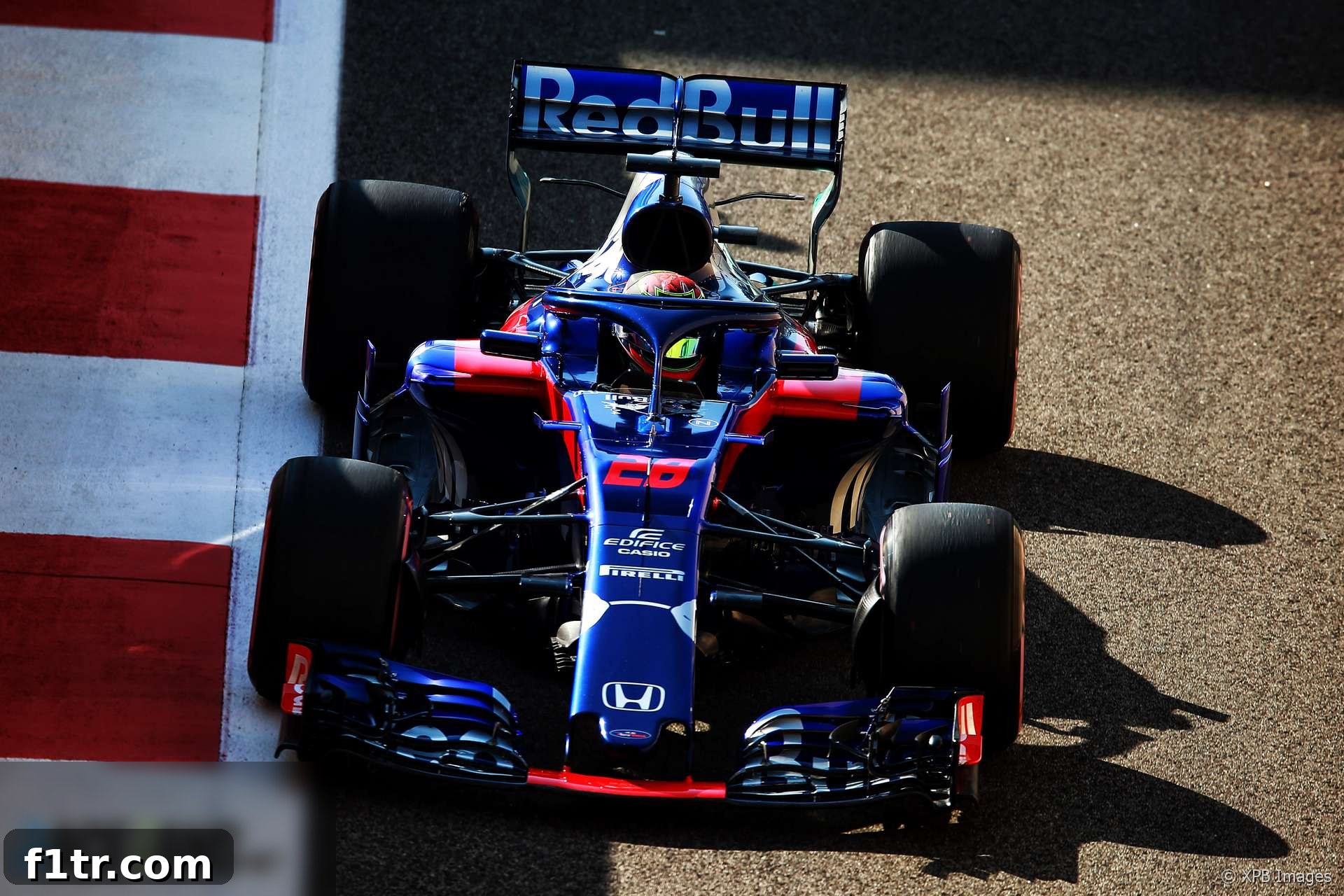
Brendon Hartley’s F1 Tire Challenge: Adapting to High Degradation Demands
Brendon Hartley, a driver with a distinguished background in the World Endurance Championship (WEC), has openly faced a steep learning curve in adapting to the unique demands of Formula 1’s notoriously high degradation tires. This challenge was particularly highlighted by his Toro Rosso team principal, Franz Tost, following the intense F1 season finale at the Abu Dhabi Grand Prix.
Advert | Become a Supporter & go ad-free
Tost, reflecting on Hartley’s performance in Abu Dhabi, specifically pointed to the Kiwi driver’s struggles during a prolonged 53-lap stint on super-soft tires. This immense duration on a compound known for its limited lifespan underscores the difficulty Hartley encountered in managing tire wear and temperature – a crucial skill in modern Formula 1 that differs significantly from endurance racing.
Strategic Gambit and Early Race Setback in Abu Dhabi
The Abu Dhabi Grand Prix presented a complex scenario for Toro Rosso. “Brendon started the race on the ultra-softs as we decided to put him on an alternate strategy to Pierre [Gasly],” explained Franz Tost. This strategic divergence aimed to give Hartley a different race dynamic and potentially unlock an advantage. However, fate intervened early in the race. “Unfortunately, he was caught in the middle of the first lap accident in turn eight, so we had to call him in to change his front wing much earlier than planned.” This unscheduled pit stop not only cost him track position but also forced him onto his primary race tires significantly earlier than intended, disrupting the carefully planned strategy.
The subsequent long stint, exacerbated by the early stop, proved arduous. Tost elaborated on the consequences: “Then he started to struggle with his rear tyres because of overheating and he ended up finishing in 12th position, out of the points.” The high temperatures and the aggressive nature of the Yas Marina Circuit further complicated Hartley’s tire management. F1 tires are designed to operate within a very specific temperature window, and overheating can lead to rapid degradation, loss of grip, and a significant drop in performance. For a driver transitioning from the WEC, where tire management often involves consistent, long-term performance rather than peak-and-degrade cycles, this presents a formidable challenge.
Tost acknowledged the inherent difficulty of Hartley’s transition: “Of course, it wasn’t easy to come here from LMP1; it’s always a challenge to get familiar with everything in Formula 1 and especially tyre management is a big task to cope with.” The demands of F1, from the sheer speed and downforce to the intricate electronic systems and the nuanced tire characteristics, are unparalleled. Mastering tire management is not just about extending their life but also about extracting optimal performance at crucial moments, understanding how they react to different fuel loads, track conditions, and driving styles.
Hartley’s Season-Long Pressure and Evident Progress
Throughout the season, Brendon Hartley has been under considerable pressure to demonstrate his capabilities and secure his place within the team for the following year. Stepping into Formula 1 mid-season in 2017 and then embarking on a full campaign in 2018 with a developing car, Hartley faced scrutiny from all angles. Despite the challenges and the relentless competition, Tost affirmed the progress made by the young New Zealander. “He has been unlucky sometimes, but he has improved in the course of the season,” Tost stated, highlighting Hartley’s resilience and dedication to adapting to the pinnacle of motorsport.
This improvement, often unseen by external observers, involves countless hours of simulator work, debriefs with engineers, and a relentless pursuit of understanding the complex interplay between car setup, driving technique, and tire behavior. While results haven’t always gone his way, particularly due to reliability issues or unfortunate race incidents, the internal assessment from the team indicates a positive trajectory in his development as a Formula 1 driver. The mental fortitude required to perform under such intense pressure, coupled with the technical mastery needed for tire preservation, is a testament to the growth Hartley has shown throughout his tenure at Toro Rosso.
Pierre Gasly’s Impactful Farewell and Red Bull Ascent
The Abu Dhabi Grand Prix also marked a poignant occasion for the team as it was the final race for Pierre Gasly with Toro Rosso before his highly anticipated move to Red Bull Racing for the 2019 F1 season. Gasly, who had delivered several standout performances throughout the year, was aiming for a strong finish to his time with the Faenza-based squad.
His race started exceptionally well, as Tost recounted: “Pierre had a very good start, he moved himself into 13th position and he improved throughout the race, showing good pace which could have brought him to finish in 10th.” Gasly consistently demonstrated his natural speed and racecraft, pushing the Toro Rosso-Honda package to its limits and proving his capability to fight for points. His ability to navigate the opening laps cleanly and then maintain strong pace against more experienced rivals had become a hallmark of his 2018 season.
However, an unfortunate technical issue brought his final race to an early end. “Unfortunately, a few laps before the end he had to retire due to an issue we need to investigate further,” Tost confirmed. Despite the disappointing retirement, Gasly’s overall performance in Abu Dhabi and throughout the entire season left an indelible mark on the team. He had consistently showcased the talent that made him a prime candidate for a top-tier seat.
Tost’s praise for Gasly was effusive and heartfelt, reflecting the strong bond formed over their time together: “This was Pierre’s last race with us; he showed fantastic cooperation during the year and he improved a lot, showing he deserves his place in Aston Martin Red Bull Racing. I want to thank him for his great performance and I wish him all the best.” Gasly’s promotion to Red Bull Racing is a testament to the success of the Red Bull junior driver program and Toro Rosso’s role as a proving ground for future champions. His season was characterized by memorable drives, including a stellar fourth-place finish in Bahrain and consistent points scoring, truly earning his step up to the senior team. His journey from a promising junior driver to a Red Bull racer highlights the effectiveness of the system in identifying and nurturing elite talent.
Looking Ahead: The Legacy and Future of Toro Rosso Drivers
The 2018 F1 season for Toro Rosso was a period of significant development, both for its drivers and its partnership with Honda. It was a year that saw the team navigate challenges, celebrate moments of brilliance, and prepare its rising stars for bigger stages. While Brendon Hartley’s future remained uncertain, his dedication to overcoming the steep learning curve of F1 tire management demonstrated his commitment to the sport’s highest echelons. For Pierre Gasly, his move to Red Bull Racing represented the culmination of years of hard work and a clear validation of his undeniable talent, poised to take on new challenges at the forefront of Formula 1.
Advert | Become a RaceFans supporter andgo ad-free
2018 F1 Season Highlights and Insights
- F1 feared “death knell” for Drive to Survive after Ferrari and Mercedes snub
- McLaren staff told us we were “totally crazy” to take Honda engines in 2018 – Tost
- ‘It doesn’t matter if we start last’: How Red Bull’s junior team aided Honda’s leap forward
- Honda’s jet division helped F1 engineers solve power unit problem
- McLaren Racing losses rise after Honda split
Browse all 2018 F1 season articles